Category: Historical

  • A Visit Remembered

    The Korean peninsula extends from the Asian mainland into the Pacific Ocean south and east, towards Japan.  It’s sometimes referred to as the “Land of the Morning Calm”.  However, that’s a misnomer; Korea’s history has been anything but calm.  Korea has the misfortune to be located between three powerful and aggressive neighbors:  Japan, China, and Russia.  Add periodic internal strife, and throughout history Korea has seen substantially more than its fair share of war.

    It’s a rugged, harsh, mountainous land.  It’s bitterly cold in winter – think  Great Plains/Great Lakes cold – and at times is Dixie hot and humid in summer.  Other than its river valleys it has precious little flat land.  Only about 30 percent of Korea’s land is arable.

    A notable exception is the region extending from the Osan/Seoul/Pyongtaek area generally northwest past Panmunjom towards Pyongyang.  This area includes the lower portion of the valleys of the Han and Imjin Rivers, as well as other reasonably (by Korean standards) open country.  Though nowhere near Great Plains flat, the region is less mountainous than most of the rest of the peninsula.  It’s one of the few such regions in either North or South Korea.

    This region is called the Western Corridor.  It is so named because the area has been the primary route of armies traveling north-to-south and south-to-north in Korea throughout history.  The historical Korean capital, Seoul, sits square in the middle of the Western Corridor.

    — — —

    In the early/mid 1980s, there was still only one major road heading north from Seoul.  This road went north to a town called Uijeongbu.  Yes, that Uijeongbu – the town made famous in the book/movie/TV show MASH.

    (Historical note:  there really was a US MASH unit based at Uijeongbu during much of the Korean War.  That unit was the 8055th MASH, to which the book’s author was assigned.  The book/movie/TV show is based, presumably loosely, on his experiences at that unit. In the 1980s the 8055th’s old compound was still used by the Republic of Korea [ROK]Army. I ran or bicycled by that compound on occasion while I was a youngster stationed in the Uijeongbu area.)

    At Uijeongbu, the road split.  From Uijeongbu north toward Dongducheon and Camps Casey/Hovey/Castle/Nimble, the road was called MSR3 by US forces.  It continued northward from there, crossing the 38th Parallel and passing through the towns of Jeongok-eup and Yeoncheon.  The branch of the road from Uijeongbu west led past Third  ROK Army (TROKA) HQ.  It then joined another major route – called MSR1 by US forces – northwest towards Munsan-ri.  On its way to Munsan-ri this road passed by Camp Howze.

    The road did not end at Munsan-ri.  It continued to the Imjin River, crossed to the north bank of the Imjin, and continued on to Panmunjom.

    The bridge where the road crossed the Imjin was called Freedom Bridge.  It was so named because it was the bridge across which POWs released at Panmunjom at the end of the Korean War crossed the Imjin on their way south to freedom.
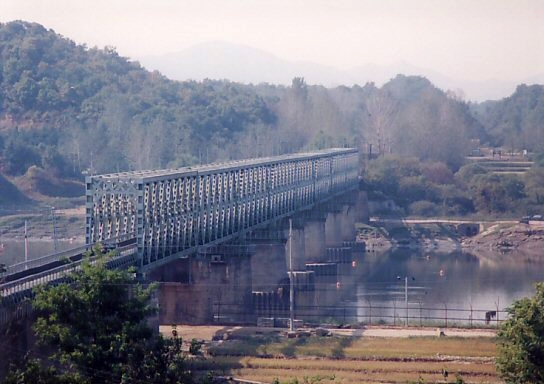
    Freedom Bridge
    (more…)

  • Veteran’s Day

    Today is Veteran’s Day.  And it’s a good time to reflect not only on service, but on how we as a nation have honored it.

    Until relatively recently we really didn’t do such a good job of doing that as a nation.  Historically, we did a decent job of remembering and honoring those who died – but not so much those who served and lived.

    Veteran’s Day is actually one of the youngest US holidays.  And it’s purpose was not always what we celebrate today.

    In fact, what we today celebrate as Veteran’s Day on 11 November was not originally even called Veteran’s Day.  It also was not originally a holiday to celebrate the service of all US military veterans.

    In its original incarnation, it was Armistice Day.  Its original purpose was to commemorate the “heroism of those who died in the country’s service and with gratitude for the victory” in World War I.

    The holiday’s purpose, but not its name, was again changed in 1938 when Congress formally declared Armistice Day a Federal holiday.  Now the purpose of the holiday was “a day to be dedicated to the cause of world peace”.  The date remained fixed as 11 November.

    The current Veteran’s Day owes its existence to one Raymond Weeks of Birmingham, Alabama.  In 1945, Weeks – a World War II veteran – began a campaign to change the purpose of the holiday then called Armistice Day to a day honoring the service of all US military veterans.  In 1954, Congress did so, and also changed the name of the holiday to “Veteran’s Day”.  The date of 11 November was retained.

    Weeks was honored by President Reagan in 1982 for being the driving force behind the creation of today’s Veteran’s Day.  Reagan honored Weeks via presenting him the Presidential Citizenship Medal – the nation’s second-highest civilian decoration.

    Veteran’s Day is one of the four US Federal holidays with a fixed date – 11 November.  (The other three are New Year’s Day, the Fourth of July, and Christmas.  The other Federal holidays have fixed calendar slots – e.g., Thanksgiving is the fourth Thursday in November – but not fixed dates.)  Veteran’s Day is being observed this year on Monday solely due to the longstanding policy of observing a Federal holiday the preceding day (Friday) when a fixed-date holiday falls on a Saturday and the following day (Monday) when a fixed date holiday falls on a Sunday.

    Best Veteran’s Day wishes to all of TAH’s readers.  And special thanks to all Veterans who have served honorably.

  • A Final Homecoming for “Big E”

    The USS Enterprise is expected to return to Norfolk, VA, today – from her final deployment.  She will be decommissioned on 1 December 2012.

    The USS Enterprise was commissioned in November 1961.  At the time of her decommissioning, she will have served the US Navy for in excess of 51 years.  No other carrier has served the Navy as long.

    The USS Enterprise was the US Navy’s first nuclear-powered carrier, and is still today the longest warship in the world.  She has seen duty in virtually every major US naval operation or conflict from the Cuban Missile Crisis to today’s hostilities in Afghanistan.

    Every ship eventually reaches end of life.  But this one has indeed been special.

    Sadly, because of her design it will likely not be possible to convert the USS Enterprise into a museum after decommissioning.  Her design included eight nuclear reactors.   The extensive disassembly of the ship necessary to allow  removal of her eight reactors and associated equipment will likely make conversion to a museum afterwards impractical.

    In the end, though, the final disposition of her steel hull is not what really matters.  What does matter is the service – and the history – the USS Enterprise gave this nation and the Navy.  So long as there is a US Navy, that history will be remembered and treasured.

    Welcome home one last time, grand lady.

  • A Code Talker Passes

    One of the few remaining Navajo Code Talkers from World War II has passed.

    George Smith died Tuesday, 30 October 2012, aged 90.  He will be buried with full military honors on Saturday, 3 November 2012 at Rehobeth Cemetery near Gallup, NM.

    During World War II, Smith served with the 2nd Marine Division at Saipan, Okinawa, and other locations.

    The story of the Navajo Code Talkers is fairly well known.  If you don’t know it, you should visit this site and spend a few minutes.

    Rest in peace, my elder brother in arms.


  • 29th anniversary of Urgent Fury

    Today marks the 29th anniversary of Operation Urgent fury in which elements of the 82d Airborne Division, US Marines, 1st and 2d Ranger Battalions, Navy SEALs and others liberated the island of Grenada from Communist control. About 7600 troops pried loose the relatively light Cuban and Soviet presence on the island. Of course, the UK and Canada complained that invasion was a flagrant violation of international law, despite the pleas to the US from Organization of American States for intervention when the prime minister of Grenada was murdered in a power struggle.

    Wiki says about the casualties;

    Nearly eight thousand soldiers, sailors, airmen, and marines had participated in Operation Urgent Fury along with 353 Caribbean allies of the Caribbean Peace Forces (CPF). U.S. Forces sustained 19 killed and 116 wounded; Cuban forces sustained 25 killed, 59 wounded and 638 combatants captured. Grenadian forces casualties were 45 killed and 358 wounded; at least 24 civilians were killed, several of whom were killed in the accidental bombing of a Grenadian mental hospital.

  • Three years after COP Keating

    Our buddy, Parachutecutie remembers that today is the third anniversary of the Battle at COP Keating.

  • Gothic Serpent; 19 years later

    This is republished from 2008, but Operation Gothic Serpent was 19 years ago today. It’s lessons live on and we’re still waging a war that has it’s roots in that battle;

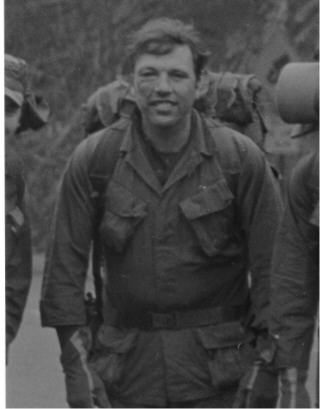
    15 years ago today I lost a dear friend. Tim Martin and I showed up at the Reception Station in Fort Polk Louisiana – I won’t mention the year, the fact that they were still doing Basic and Infantry AIT at Ft Polk should be enough to narrow it down for you. He was a huge, quiet and friendly guy and I felt lucky that we were attached alphabetically through those 16 weeks. I can’t count the times that I’d stumbled and looked up to see his outstretched hand to help me up.

    After those 16 weeks, then four weeks together at the Basic Airborne Course in Georgia then he went to the 2d Ranger Battalion at Lewis and I went to Fort Stewart (yes, the 1st Battalion was actually on Fort Stewart in those days). We went off in our separate directions for four years and then ended up in the same SFQC class at Fort Bragg – alphabetically attached once again. After that six months, we rarely saw each other, but each time we met, the conversation picked up right where it had left off the last time.

    I’ve never met anyone who ever met him that had a bad word for him. He loved the Army, and later I learned he loved his family more.

    I discovered his final fate on October 18th, 1993 while I was leaving my last duty station as a retired soldier when I read the casualty list from what is now known as the “Blackhawk Down” fiasco and found his name.

    I spent the next seven years trying to find out what happened to him. I became a member of the fine Paratrooper.net forum, run by my good friend Mark (back when Mark and I were the only participating members). As the forum grew, I put together bits and pieces of the story and some wonderful soul sent his wife, Linda, my way. She sent me pictures of him which I’ve put on my accompanying website as a memorial to Master Sergeant Tim “Griz” Martin.

    The movie Blackhawk Down did a great job capturing his personality and immortalizing his love for his daughters.

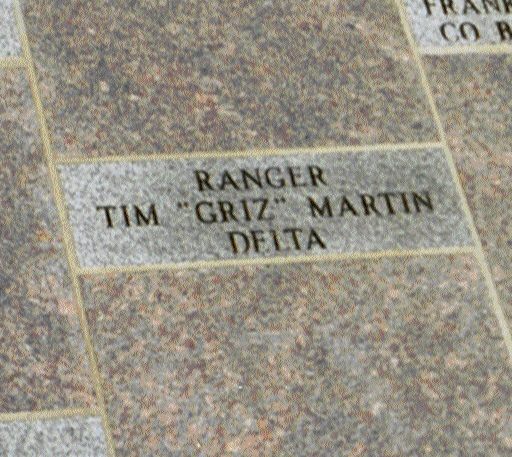
    Another friend at paratrooper.net, 509thTrooper, helped me get Tim a brick at the Ranger Memorial in Fort Benning. Then Trooper went and took a picture of the brick for me.


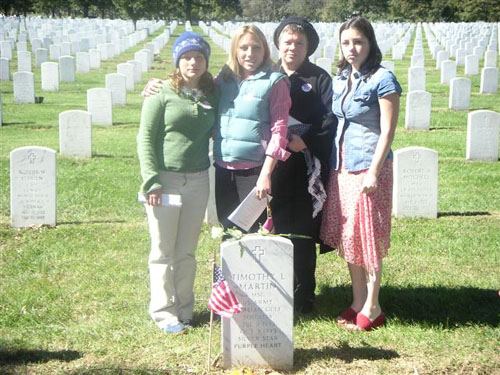
    I stop and visit with Tim at Arlington at least twice every year on Veterans’ Day and Memorial Day and every Christmas when I make my rounds there. And every day I give thanks for men like Tim Martin who are willing to put everything on the line for the rest of us. But today, especially, I save for Tim. And for Linda and their girls who sacrificed everything for us as well.

    And thanks to COB6 for reminding me to share it with you.

  • 150th anniversary of “bloodiest day in American history”

    September 17th, 1862 will forever be known as the single bloodiest day in American History for the more that 23,000 casualties at Antietam Creek near Sharpsburg, MD.

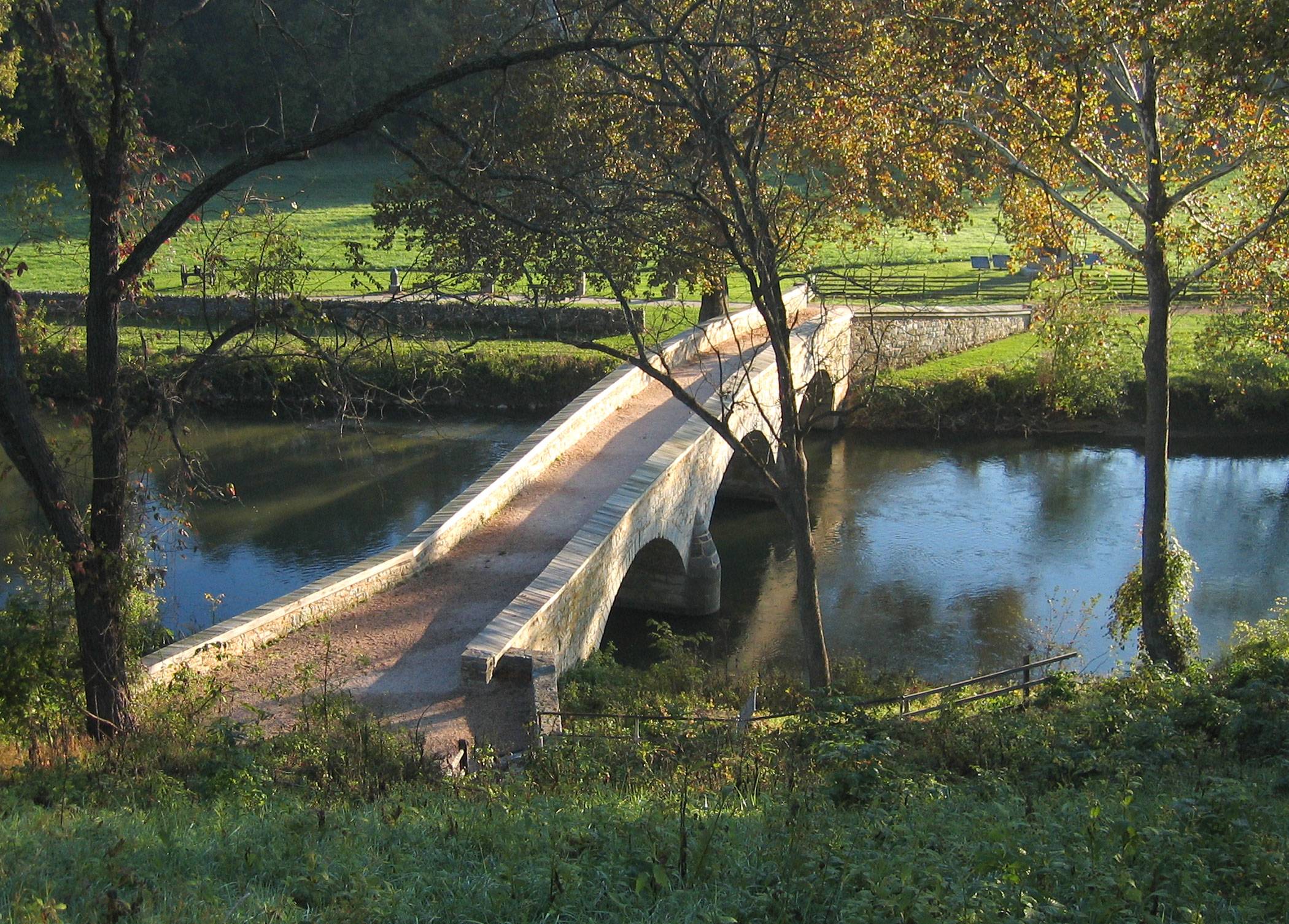
    Burnside Bridge from the perspective of the Georgia Brigade as they faced the 51st regiments of both New york and Pennsylvania.

    Wesley Clark, I mean George McClellan faced Robert E. Lee in the battle. Clark…I mean McClellan, was unable to coordinate the attacks against the Confederates which would have smashed the Army of Northern Virginia decisively. McClellan also failed to effectively pursue Lee as he left the field and allowed the war to drag out for nearly another three years. McClellan also had the unmitigated gall to run as the anti-war candidate in the 1864 election against President Abraham Lincoln. I really hate that guy.