Category: Blue Skies

  • Another Hall-of-Famer Passes

    Ralph Kiner passed away the yesterday.  He was 91.

    Kiner was a longtime broadcaster for the New York Mets – for over 50 years, actually.  He was noted for his baseball malaprops, and for “Kiner’s Corner” – an area near the leftfield corner of Shea Stadium where Kiner held his post-game show.

    But Kiner should be remembered for more.  He was a legitimate Hall of Famer based on his performance on the diamond.  His career was cut short – 10 seasons, the bare minimum for HOF consideration – due to chronic back issues.  Yet at the time he retired, he was 6th on the all-time home run list with 369 – and had hit 329 in his first 8 seasons, leading his league 7 times and both leagues 6 times.

    Kiner’s career slugging percentage was nearly .550 (.548), and his career on-base percentage was nearly .400 (.398).  He had over 1450 hits, over 1000 RBIs, and over 1000 walks during his career.  Though his election took until his last year of eligibility, Kiner was a legitimate HOFer.  Had his career not been cut short by injury we might be talking about him in the same breath as other legendary baseball power hitters like Mantle, Ruth, Mays, Williams, and Aaron.

    Kiner played mostly for the Pittsburgh Pirates.  They weren’t good enough during his playing days to make the World Series.  Had they done so, or had Kiner played mostly in NY or Chicago – we’d likely remember more about his career.

    Why post this here?  Because Kiner’s MLB career spanned the immediate post-World War II years:  1946-1955.  It began a bit late for that era, at age 22.

    It began late because prior to 1946 he was otherwise occupied.  Kiner was a US Navy pilot during World War II.  He flew ASW missions in the Pacific theater.

    Baseball historian Marty Noble has called Kiner “one of baseball’s genuine and most charming gentlemen”.  That’s a fine tribute to a truly fine man – and for 10 years, a truly great player.

    Rest in peace, Mr. Kiner.
  • Maj. Gen. Charles Echols “Pete” Spragins passes

    Charles Spragins

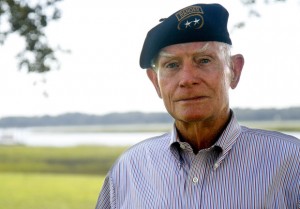
    1AirCav69 sends us the sad news that Army Maj. Gen. Charles Echols “Pete” Spragins, the fellow who brought the black beret to Rangers during the Korean War, has passed at the tender age of 90. He had an impressive lineage;

    His great-grandfather, Maj. Gen. Stewart Van Vliet, served on Ulysses S. Grant’s staff as quartermaster of the Union Army during the Civil War. His father, Maj. Gen. R.L. Spragins, served at Guadalcanal and with the “Iron Men of Metz,” ultimately pushing through the Vosges with the 44th during the bitterly cold winter of 1944 to liberate Strasbourg during World War II.

    Spragins volunteered for the Korean War and joined the Rangers at Fort Benning, Ga., as commander of the 10th Ranger Infantry Company (Airborne). In commemoration of the grueling training, mostly in the dark of night, he introduced the Rangers’ signature black beret.

    The beret was wildly popular with his troops and was worn unofficially through the Vietnam War. It was officially designated as part of the newly created battalions of U.S. Army Rangers in 1975, according to several online sources.

  • John J. McGinty III passes

    John J. McGinty III

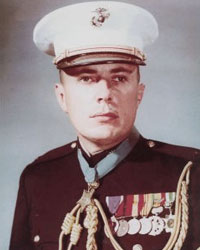
    The sad news comes to us that Medal of Honor recipient, Captain John J. McGinty III has passed at the age of 73. He was a staff sergeant on July 15th, 1966 when he and his battalion landed on a hot LZ where they had expected VC guerrillas, but, instead bumped into a regiment of North Vietnamese regulars. His citation tells the tale;

    2d Lt. McGinty’s platoon, which was providing rear security to protect the withdrawal of the battalion from a position which had been under attack for 3 days, came under heavy small arms, automatic weapons and mortar fire from an estimated enemy regiment. With each successive human wave which assaulted his 32-man platoon during the 4-hour battle, 2d Lt. McGinty rallied his men to beat off the enemy. In 1 bitter assault, 2 of the squads became separated from the remainder of the platoon. With complete disregard for his safety, 2d Lt. McGinty charged through intense automatic weapons and mortar fire to their position. Finding 20 men wounded and the medical corpsman killed, he quickly reloaded ammunition magazines and weapons for the wounded men and directed their fire upon the enemy. Although he was painfully wounded as he moved to care for the disabled men, he continued to shout encouragement to his troops and to direct their fire so effectively that the attacking hordes were beaten off. When the enemy tried to out-flank his position, he killed 5 of them at point-blank range with his pistol. When they again seemed on the verge of overrunning the small force, he skillfully adjusted artillery and air strikes within 50 yards of his position. This destructive firepower routed the enemy, who left an estimated 500 bodies on the battlefield. 2d Lt. McGinty’s personal heroism, indomitable leadership, selfless devotion to duty, and bold fighting spirit inspired his men to resist the repeated attacks by a fanatical enemy, reflected great credit upon himself, and upheld the highest traditions of the Marine Corps and the U.S. Naval Service.

    The Washington Post says that McGinty became a devout Christian when he returned from Vietnam, shying away from wearing the Medal of Honor because the medal bears the image of the Roman goddess Minerva; “The medal is a form of idolatry because it has a false god on it.”

    God is getting Himself a heck of an Army up there.

  • RIP, Tyler Doohan – Young Hero

    I can’t really say too much about this story; not much needs saying.

    Suffice it to say that a young man died too soon – at age 8.  After saving several people’s lives at the risk of his own.  And while trying to save another.

    Details are found here.  It’s worth your time to read the story.

    Rest in peace, Tyler Doohan – young hero.  I’m certain the welcoming committee at the Pearly Gates was one to behold.


    (Hat tip to TAH reader ArmyATC for posting the link to this story in the comments to another article.)

  • Hiroo Onoda Passes

    A story from CNN tells of the passing of Lieutenant Hiroo Onoda, a Japanese soldier who followed his last orders and held out in the jungles of the Philippines for nearly three decades until convinced the war was in fact over. Even after he was initially found, he refused to believe the war was in fact over, relenting only when his former commanding officer returned to inform Lt. Onoda that he was no longer subject to the orders he had been given 30 years before.

    In 1944, Onoda was sent to the small island of Lubang in the western Philippines to spy on U.S. forces in the area. Allied forces defeated the Japanese imperial army in the Philippines in the latter stages of the war, but Onoda, a lieutenant, evaded capture. While most of the Japanese troops on the island withdrew or surrendered in the face of oncoming American forces, Onoda and a few fellow holdouts hid in the jungles, dismissing messages saying the war was over.

    While extreme, his case was certainly not unique. Sergeant Shoichi Yokoi held out on Guam until 1972–28 years after the battle which liberated that island. Private Teruo Nakamura held out for even longer. I remember seeing pictures of Sergeant Yokoi after he was found, and wondered how an island like Guam could allow him to hide for as long as he did, or how he could have lasted as long as he did.

    And while they were all (former) enemies of our country, one can’t help but either admire, or at least give grudging respect, to a man whose dedication and tenacity enabled them to last in the face of impossible conditions. It’s folks like these who held out on islands across the Pacific and in isolated pockets for years after the end of the war.

    He returned to a hero’s welcome in Japan, but even after a pardon from then-president Ferdinand Marcos, the citizens of Lubang were not so eager to forgive, even to the point of demanding reparations when he returned in the mid-1990’s. But despite all of this, he never thought that he was doing the wrong thing, once saying, “I became an officer and I received an order. If I could not carry it out, I would feel shame. I am very competitive.”

    RIP, Lieutenant.

  • RIP Dave Madden

    Dave Madden

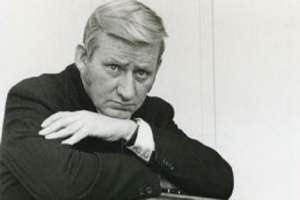
    Another actor has passed. Dave Madden known as Ruben Kincaid, the manager for the Partridge Family, passed at the age of 82. And, he was a veteran says Wiki;

    Madden spent one semester at Indiana State Teachers College, and in 1951 dropped out to enlist in the United States Air Force. Assigned to Special Services, he was sent to Tripoli, Libya, where he was a hit as an entertainer in camp shows and native theater, even performing before Idris of Libya, ruler at the time.

    Thanks to Andy for the link.

  • RIP “Professor”

    russell-johnson

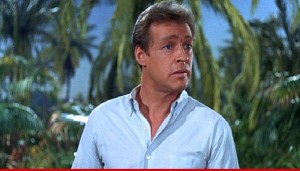
    ROS and Eggs send us a link to the sad news that Russell Johnson, better known as “The Professor” on Gilligan’s Island has passed at the age of 89. He was the last surviving male member of the cast. Of course, because we’re mentioning him here, you know he was a veteran. Wiki says;

    After high school, in the midst of World War II, Johnson joined the United States Army Air Forces as an aviation cadet and was commissioned as a second lieutenant. He flew 44 combat missions as a bombardier in B-25 bombers. While flying as a navigator in a B-25 with the 100th Bombardment Squadron, 42nd Bombardment Group, 13th Air Force, his plane and two other B-25s were shot down in the Philippines in March 1945 during a low level bombing and strafing run against Japanese targets. The planes were hit by intense flak and had to ditch in the waters off the port of Zamboanga. During the ditching, he broke both his ankles and the radioman next to him was killed. Johnson earned a Purple Heart for this mission. He was also awarded the Air Medal, the Good Conduct Medal, the Asiatic-Pacific Campaign Medal with three service stars, the Philippine Liberation Ribbon with one service star, and the World War II Victory Medal. He was honorably discharged with the rank of first lieutenant on November 22, 1945. He then joined the Army Reserve and used the GI Bill to fund his acting studies at the Actors Lab in Hollywood. At acting school he met actress Kay Levey, and they married on July 23, 1949.

    I’m so old that I remember watching the summer previews of the Gilligan Island pilot show and barely able to contain myself waiting for the program to start.

    Well, it’s all blue skies from here, Lieutenant.

  • Just Because

    Some songs are just apropos at certain times. And they have a way of showing up when they are.

    This one’s apropos today.


    If someone you’re close to is still around, it might be a good idea to tell them what they mean to you the next time you see them. And if you haven’t seen someone you care about in a while – or if there are issues between you that need to be talked out – it might be a good idea to do that.

    Tomorrow doesn’t come with a guarantee.