Category: Blue Skies

  • Spooky 8 passes

    Spooky 8 passes

    bob03_small

    Most of you were young (in stolen valor years) when we busted out Bob “Spooky 8” King for his book Spooky 8; the Final Mission Not only was it the biggest pile of crap I’ve ever read, it wasn’t entertaining in the least. In fact Bob’s emails to me were far more entertaining. After we got his actual records, he tried to convince me that the government had heavily redacted all of his secret squirrel stuff and basically I was holding toilet paper in my hands.

    Well, it’s my sad duty to inform you that poor Bob has passed on to his great reward. It’s my understanding that it was cancer that got him and it took him quickly, in a matter of months, if folks are to be believed. I wouldn’t wish that on anyone who wasn’t a member of al Qaeda.

    My prayers and best wishes go out to his family.

  • Mark Mayo to be awarded NMCM

    PO2 Mayo

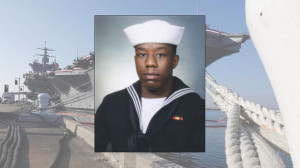
    We got news last night that Master-at-Arms 2nd Class Mark Mayo will be awarded the Navy-Marine Corps Medal for his actions on March 24 which saved the life of at least one fellow sailor when he put himself between gunman Jeffrey Savage and another sailor taking the bullet himself at Naval Station Norfolk aboard the USS Mahan.

    Military decorations expert Doug Sterner said the medal is among the rarest given by the Navy. Sterner estimates that it has only been awarded between 5,000 and 10,000 times, though an exact number is difficult to pin down.

    Mayo, a native of Hagerstown, Md., served seven years in the Navy. The Navy held a memorial service at Naval Station Norfolk on April 7, which was attended by his command, as well as sailors and officers from the Mahan.

    According to the Navy Times, he will receive the award when he buried Friday. I can’t think of anyone who deserves it more.

  • RIP, John Houbolt

    John Houbolt, former employee of NASA, died a few days ago.  He was 95.

    Most Americans do not have a clue as to who he was.  Frankly, until today I didn’t either.

    That’s a shame.  Because Houbolt is arguably the individual most responsible for the US moon landing on July 20, 1969.

    During the early 1960s, NASA debated the various options for landing humans on the moon.  There were three:

    • Direct ascent – which would fly a craft directly to the moon from the earth’s surface.
    • Earth orbit rendezvous – which would assemble the lunar vehicle in low earth orbit, but would require the successful launch 2 or more rockets for each lunar mission as well as assembly in space;
    • Lunar orbit rendezvous – the option ultimately selected for the Apollo program (orbiter orbits moon while smaller module descends to moon, returns, and rendezvous with orbiter to allow crew to return to earth).

    Houbolt was a very vocal proponent of the Lunar rendezvous option.  He took the unusual step of going around his management to present the concept directly to senior NASA officials.    He held that it was the only viable option to succeed prior to 1970.  He bluntly asked, in a 1961 letter to NASA Associate Administrator Robert Seamans, “Do we want to go to the moon or not?”

    Houbolt was at the time ridiculed by many of his peers.  Some went as far as to claim he was lying, or to imply that he was professionally incompetent. (In truth, though Houbolt was in general correct, some of his initial estimates did turn out to be substantially off-the-mark.)

    But Houbolt stood his ground, and in the end was proven right.  The risks associated with the earth orbit rendezvous option were too large; initial studies showed up to 15 initial-design Saturn launches might be required (final studies and Saturn design refinements allowing larger payload finally showed that two redesigned Saturn-III vehicles might possibly work).  The direct ascent option would require the development of rockets even larger than the Saturn V (the never-built Nova) – which simply couldn’t be done in time, as development and production would require construction of new facilities to build them.  And both direct ascent and earth orbit rendezvous missions would require landing massive, complex vehicles on the moon – inherently a risky operation – which in the end was also deemed too risky.

    NASA’s internal debates and final decision are documented here.  The story is fascinating reading – and clearly illustrates Houbolt’s critical role in the decision.  Without his persistent advocacy, the decision process would have stretched out far longer, delaying the US moon mission – and given the rising demands of Vietnam in the 1960s and the economic downturn of the 1970s, the delay perhaps would have been permanent.

    In the end, NASA selected the concept Houbolt championed, and developed a final Saturn modification (the Saturn-V) that would perform the mission with a single launch.  And on 20 July 1969, mankind’s long dream of humans walking on the moon became reality – courtesy of the USA.

    Without John Houbolt, that reality might still be a dream.

    Rest in peace, Dr. Houbolt.

    Many thanks.

  • Les Parraines d’Épinal

    There are many towns in the French province of Lorraine.  One of those towns – about 40 miles SSE of Nancy – is called Épinal.

    During both World Wars, Épinal was occupied by Germany.  In World War II it was liberated by forces of the US 7th Army on 23 September 1944.

    War has many costs; some of those costs are measured in terms of lives.  Thus, not long after its liberation a wartime cemetery was established near Épinal.  By the end of the war over 6,000 German dead were buried there – along with over 7,750 Americans.

    The cemetery remains today, as the Épinal American Cemetery and Memorial.  It is the final resting place for 5,255 American war dead.

    Shortly after the cemetery began operations, the mayor of Épinal asked members of his town to “adopt” American graves in the cemetery as a way of thanking their liberators.  Those adopting graves would tend them, and bring them flowers from time to time.

    That tradition has continued until the present, continuously.  Sometimes the caretaker duty is performed by the same person for life.  At least one local resident has been doing exactly that for one of the Épinal graves for 68 years.

    The practice is called parrainage – literally, “sponsorship”.  Here, it refers to the adoption of a US grave for care.  Those adopting a grave refer to themselves as “godfathers” for that grave:  les parraines.

    . . .

    Most have never heard of les parraines d’Épinal.  And I probably would never have heard of them either.  Except . . . .

    I ran across a news article the other day.  The headline caught my attention, and I read it.

    It seems that one of the grave caretakers in Épinal – M. Joel Houot – wanted to know more about the individual buried in the grave for which he cared.   He sought assistance.

    Houot was able to determine that the soldier was from Wisconsin.  So last fall, Houot found the e-mail address of a Professor of History at the University of Wisconsin – Dr. Mary Louise Roberts – and e-mailed her, requesting her assistance.

    Call it fate, luck, or whatever – the hand of God, if you like.  But it turns out that Professor Roberts had written professionally about World War II, and teaches a popular undergraduate course on the subject.  She was teaching her World War II course last fall.

    Roberts thought helping M. Houot would make an excellent extra credit project for one of her students.  So one day, she told the class about the request, and asked for a volunteer for an extra-credit project.

    Forty-three hands went up.  The entire class volunteered.

    Roberts then corresponded with M. Houot.  She asked for additional names of soldiers from Wisconsin who might be buried at Épinal.

    Two weeks later, a list of 30 names of Wisconsin natives buried at Épinal arrived from the current director of parrainage at Épinal, Mme. Jocelyne Papelard-Brescia.  Roberts’ students were able to find good information on 25 of the individuals.

    The class’ research was called, simply, The Épinal Project.  It is introduced here; the full project may be viewed here.  It documents the class’ work; IMO, it’s worth a look.

    . . .

    In the great scheme of things, perhaps all of this is “small stuff”.  And yet . . . IMO it matters.

    I think for most soldiers the greatest fear isn’t death or disability.  Rather, that greatest fear is the fear of being abandoned  – and forgotten – after they’re lost.  Indeed, I believe that’s why the US military goes to such great lengths to account for each and every missing Soldier/Sailor/Airman/Marine, to rescue those captured – and to recover each and every set of remains that can possibly be recovered, so that they can receive a proper burial.

    Les parrianes d’Épinal prevented that fate for the US war dead buried at Épinal American Cemetery and Memorial.  They made sure these US war dead were not abandoned, not forgotten.  Dr. Roberts’ and her class provided faces and history for some of those honored dead.  They enhanced the legacy – the memory – of those fallen.

    Each of those is a “good thing”, and is indeed worthwhile.

    As a nation and a society, from a US perspective the French certainly have their faults.  But regardless of their faults, the French do indeed have a sense of honor, and of gratitude.

    If you doubt that, visit Épinal.

    . . .

    À chacun des parrianes d’Épinal – Merci, mes amis. Merci beaucoup.
  • Mickey Rooney passes

    Mickey_Rooney

    ROS sends us the sad news that Mickey Rooney (Joseph Yule), one of the last silent film stars has passed. Like most of his generation, he served in the Army during World War II. Says Wiki;

    In 1944, Rooney enlisted in the United States Army. He served more than 21 months, until shortly after the end of World War II. During and after the war he helped entertain the troops in America and Europe, and spent part of the time as a radio personality on the American Forces Network and was awarded the Bronze Star Medal for entertaining troops in combat zones. In addition to the Bronze Star Medal, Rooney also received the Army Good Conduct Medal, American Campaign Medal, European-African-Middle Eastern Campaign Medal, and World War II Victory Medal for his military service.

    ROS says that I should note that Mickey and I share a birthday.

  • Coby Dillard: Remembering four who stood watch

    Sailors

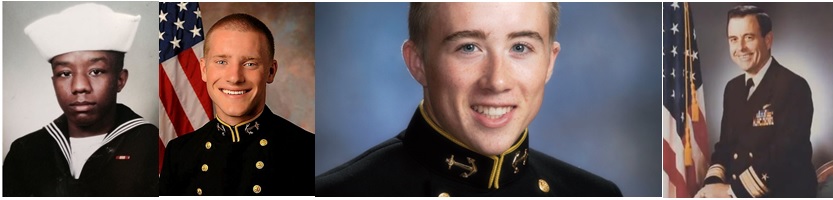
    Our buddy, Coby Dillard writes in the Hampton Roads Pilot about the four sailors who’ve passed on unexpectedly in the last week;

    Early last week, on the destroyer Mahan, Master at Arms 2nd Class Mark Mayo was killed while repelling an unauthorized individual attempting to board the ship. The details are still being investigated, but we know that he shielded another sailor from attack, offering his life in protection of hers.

    On Tuesday, Midshipman Fourth Class Will McKamey died in Baltimore, three days after collapsing in football practice at the Naval Academy, where he was a freshman running back. On Saturday, Midshipman Third Class Hans Loewen died from injuries received in a skateboarding accident.

    And Rear Adm. Jeremiah Denton, who spent eight years as a prisoner of war in Vietnam and later became a U.S. senator from Alabama, died Friday in Virginia Beach.

    Each of these men joined the Navy for different reasons, in different times and during different conflicts.

    […]

    For those of us who call them brother, we salute their service, ready to continue the work from which they stand relieved.

  • About That USAFR Lt Col With A CIB . . . .

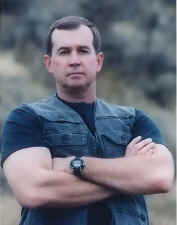
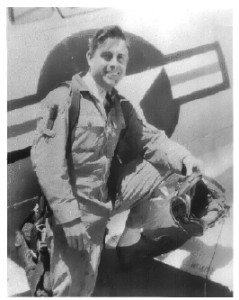
    Multiple TAH commenters have raised questions about the guy in this photo:


    The man in the photo is the late Lt Col Paul A. Bailey, USAFR (Ret).  He passed away last year.  You’ve probably heard about him from this (or a similar) article.

    The specific question most had about him was, “A CIB??  In the USAFR?  What the . . . ?”

    It turns out the guy’s CIB is in fact legit.

    Prior to entering the USAFR, Bailey served in the US Army – in the 82nd Airborne.  He was among those deployed to the Dominican Republic in 1965, and was awarded the CIB there.  The FOIA reply from NPRC regarding his Army records can be viewed here.

    Whether his CIB is authorized for wear on the USAF uniform he’s wearing in the picture is a question someone with a USAF background will have to answer; my background was Army, so I’m not up on the “ins and outs” of what sister-service badges/decorations/badges are and are not authorized for wear on USAF uniforms.   But unlike many fakes and frauds we see here, this man’s CIB  is  legitimate.

    It’s kinda nice to see a “corner-case” claim turn out to be the truth for a change.  I think that now makes about 3 such “corner-case” claims I’ve seen turn out to be legit in the last 2 years.

    Rest in peace, Lt Col Paul A. Bailey.  You’ve earned it – honorably.

  • Admiral Jeremiah Denton passes

    Jeremiah Denton

    SJ sends us a link to the sad news that Admiral Jeremiah Andrew Denton has passed at the ripe young age of 89. More than seven years of his life were spent in a Vietnamese prison. From Wiki;

    Denton served as United States Naval Aviator during the Vietnam War and was the Commanding Officer (CO) of Attack Squadron Seventy-Five (VA-75) aboard the aircraft carrier USS Independence (CVA 62). On 18 July 1965, then-Commander Denton, was leading twenty-eight planes flying an A-6A Intruder (Bureau Number 151577), off the Independence on a bombing mission with Lieutenant Bill Tschudy, his navigator/bombardier. Their jet was shot down over the city of Thanh Hoa in North Vietnam, and they were captured and taken prisoner by the North Vietnamese.

    The rest of the story of his captivity is in his citation for his Navy Cross;

    The President of the United States of America takes pleasure in presenting the Navy Cross to Rear Admiral [then Commander] Jeremiah Andrew Denton, Jr. (NSN: 0-485087), United States Navy, for extraordinary heroism while serving as a Prisoner of War in North Vietnam from February 1966 to May 1966. Under constant pressure from North Vietnamese interrogators and guards, Rear Admiral Denton experienced harassment, intimidation and ruthless treatment in their attempt to gain military information and cooperative participation for propaganda purposes. During this prolonged period of physical and mental agony, he heroically resisted cruelties and continued to promulgate resistance policy and detailed instructions. Forced to attend a press conference with a Japanese correspondent, he blinked out a distress message in Morse Code at the television camera and was understood by United States Naval Intelligence. When this courageous act was reported to the North Vietnamese, he was again subjected to severe brutalities. Displaying extraordinary skill, fearless dedication to duty, and resourcefulness, he reflected great credit upon himself, and upheld the highest traditions of the Naval Service and the United States Armed Forces.

    Rear Admiral Denton wrote a book in 1976 titled “When Hell was in Session” about his captivity which became a movie. He was also a Senator from Alabama 1981-1987, the first admiral to become a Senator and the first Republican from Alabama since Reconstruction. he lost in his reelection bid to Richard Shelby. In 2007, his wife preceded him in death after 61 years of marriage.