Category: Big Army

  • “Oh. I guess maybe you are setting the right example.”

    Dave Hardin’s comment here about a LSoS former cook, fake SF, and congressional candidate reminded me of one of the funniest things that I ever saw in the military. So I thought I’d relate it here.

    At Fort Bragg years ago, the XVIII Airborne Corps at one time had a formal IG Inspection – and no, I’m not talking about what later came to be called an “IG assistance visit”. This was a freaking formal, unannounced, full-blown no-notice inspection.

    I understand the change to a different form of IG inspection (the IG assistance visit) happened during the early 1980s. However, my unit was one of the ones tagged for the formal hoo-hah before the change occurred. Lucky us. (smile)

    Under the old-style IG inspection procedure, a unit would be called at 0500 and would be notified it was having an IG inspection that day. You might hear a rumor that your unit was a “possible” beforehand, but the date was almost never known.  Or you might get completely blindsided.  That depended on how good your higher HQ was at working the “BRAGG RUMINT” pipeline.

    After notification, the unit would recall its personnel, get gear and records laid out for inspection.  Everything had to be ready for inspection by 0900 that same day.

    The IG Inspection team – a slew of folks – would then descend on the unit like ravening locusts, looking for whatever they could find wrong. Equipment, personnel, unit area, arms room, operational/maintenance/supply/administrative records – you name it, the team looked at it.

    Some of it was kinda over the top.  One example:  the arms room inspector used a damn dental pick – the kind a dentist uses to probe for cavities – he’d obtained somewhere when inspecting rifles and pistols in order to find traces of carbon.

    Good times. (smile)

    The formal inspection began with an in-ranks inspection of the unit, in unit formation arranged by MTOE slot number, by the inspection team. Dogtags and ID card out, checked against unit roster – the whole bit. That formal in-ranks inspection was conducted by the head of the IG team and his NCOIC.

    The IG Team OIC at the time was a Major (remember, this was the XVIII Airborne Corps IG conducting the inspection). The guy wore an eyepatch; as I recall, he was indeed a Ranger – though not, as I recall, SF.  He appeared to have been fairly recently injured (hence the eyepatch and probably the assignment to the IG team). But regardless, he was still a rather imposing, mean looking SOB – especially to a youngster like myself.  And from having crossed paths with him elsewhere, I knew he could indeed be a SOB at times.

    At the time, my duty assignment put me fairly close to the unit’s Mess Sergeant in the unit formation – but not immediately next to him. During the inspection, out of the corner of my eye I could see the IG Inspection Team OIC talking to our Mess Sergeant – first quietly, then rather angrily. Then suddenly the IG Team OIC stopped talking, went quiet for a second or so, said something quietly to the Mess Sergeant – and moved on to the next soldier in the ranks.

    The inspection took a few hours, but was done that afternoon. We did well as I recall – not 100% perfect, but well enough to stay off the Corps (and our Brigade’s) “sh!t list” and out of trouble. No serious problems or issues were found.

    After the outbrief, I ran into our Mess Sergeant, SFC Smith (I’ve changed the last name here). He was smoking a cigarette, and chuckling to himself.

    A bit of background: SFC Smith was a damned fine Mess Sergeant. He ran a good mess hall, and could – within limits – still do a bit of wheeling and dealing to take care of the troops, food wise (that had become much more difficult in the late 1970s and early 1980s than it had been a few years earlier).

    He obviously enjoyed good food, too – like many mess sergeants of the day, he was a touch heavy. Not sloppy-fat heavy, but maybe 5 to 10 pounds over the screening weight for his height.

    This was also about the time the Army had started to tighten up on height/weight standards.

    Our conversation went something like this (SFC Smith’s words in italics):

    . . .

    “Hey, Sergeant Smith – what’s so funny?”

    “You wouldn’t believe me if I told you.”

    “Try me.”

    “Remember the in-ranks inspection? What happened there still cracks me up every time I think about it?”

    “Yeah, I was wondering about that. It looked like the Major was reaming you a new one. What was that all about?”

    “Damnedest thing I ever saw. He looked at my ID card and asked me my name. I told him. He looked at my uniform.

    Then he asked me how tall I was. So I told him that, too.

    Then he asked me, ‘How much do you weigh, Sergeant Smith?’ So I told him.

    Then he kinda went off. He told me, ‘That’s more than Army regs say you should. That’s unacceptable.  Sergeant, you’re setting a poor example for your soldiers! Sergeant, what is your job?!!”

    So I told him, ‘Sir . . . I’m the Mess Sergeant.’

    Then the major’s face went blank and he was quiet for a little while. Then he told me, ‘Oh. I guess maybe you are setting the right example.’ And after that, he made a right-face and went to inspect the next guy in line.”

    . . .

    Personally, IMO the Major had a point.  Think about it – would YOU really want to eat at a mess hall that had a skinny Mess Sergeant? (smile)

    And, for what it’s worth:  as I recall there was no mention of SFC Smith being over his DA screening weight in the IG Inspection Report.

    No, I’m not making this up – this actually happened.  I was there to see it myself.
  • Army prosecutor reprimanded, will retire

    From the Washington Post comes the story of Lieutenant Colonel Joseph “Jay” Morse, formerly the Army’s sex-crime prosecutor, who was charged with inappropriately kissing and groping another Army officer while they were at a sexual-assault prevention conference;

    The Army had not disclosed the outcome of the investigation until Thursday, when it confirmed the result in response to queries from The Washington Post. Lt. Col. Alayne P. Conway, an Army spokeswoman at the Pentagon, said in a statement that Morse was subjected to “appropriate disciplinary action” but did not provide details.

    The female captain filed a complaint against Morse in February, nearly three years after she alleged that he groped and kissed her in a hotel room in Alexandria, Va., where both officers were attending a legal conference on sex crimes.

    The Army conducted an investigation, but officials in charge of the case concluded that they lacked evidence to file criminal charges.

    Now, they didn’t have evidence, but they reprimanded him any way. That makes perfect sense to me. But women in uniform will be safe now – LTC Morse is retiring.

    Army officials said Morse has served notice that he plans to retire. Until then, he has been temporarily assigned to duty at the Pentagon, where he serves in the office of the Army’s judge advocate general. Morse did not respond to e-mails or a request for comment placed through the Army’s public affairs office.

    So, all is well, again.

  • Pentagon pays for research on memory-aid implant

    The LA Times writes about a Pentagon-funded program to build a “neuroprosthetics” device that they hope will improve memory functions in folks who have suffered traumatic brain injuries;

    Its first beneficiaries may be wounded warriors. But if the effort succeeds, healthy people too may one day clamor for implantable brain gear that can turbocharge human cognition.

    The Defense Advanced Research Projects Agency announced this week that it has contracted with the University of California, Los Angeles and the University of Pennsylvania to lead a four-year effort to develop such a device. Teams of scientists from the two institutions will be aided by neural technology experts at California’s Lawrence Livermore National Lab, and by a pair of giants in the design and manufacture of brain-stimulating devices, Medtronic Inc. and Neuropace Inc.

    I think that if they do perfect it, they should test it on flag officers that can’t remember the significance of the terms “Bull Run”, “Task Force Smith” or “Kasserine Pass”, or try and make them remember the Carter years, or even just as far back as the year 2000.

  • Berghdal Completes “Reintegration Process”

    The Army Times reports that Bowe Bergdahl has completed his “reintegration process.” He will be returned to duty with US Army North, duty station Joint Base San Antonio-Fort Sam Houston. He will reportedly be assigned administrative duties.

    That same Army Times article also notes the following:

    An Army fact-finding investigation conducted in the months after Bergdahl’s disappearance concluded he walked away from his post of his own free will, CNN reported, citing an official who was shown the report.

    But the report said there was no definitive conclusion Bergdahl was a deserter because that would require knowing his intent — something officials couldn’t learn without talking to him, a U.S. military official has said.

    Well, duh – of course the conclusion that Bergdahl was a deserter involves a determination that he intended to remain away permanently.  That’s the essential distinction between AWOL/UA and desertion:  the intent to remain away permanently.

    But there are ways to infer intent that don’t involve interviewing the individual in question and accepting their words at face value. Like maybe interviewing those he actually served with immediately before he went “over the hill”, maybe.

    You can also examine other related reports.  It also seems that the US Intelligence Community (IC) was not exactly sitting on their hands during Bergdahl’s absence from military control.  Specifically, the IC apparently conducted a substantial investigation regarding Berghdal and his activities while “out and about”. The file resulting from that IC investigation is reportedly quite extensive.

    As of early June, no relevant Congressional committee had asked to see the IC’s Berghdal files. It’s unclear whether or not that’s happened since early June or not.

    Hmm. Perhaps MG Dahl can quicken the pace of his investigation. Maybe he will get around to re-interviewing the folks who served in Afghanistan “real soon now”. They might be able to shed some light on the guy’s intent through statements he made to or around them.

    And maybe he’ll take a look at what the IC has regarding the matter, too. That just might shed a bit of light on the subject as well.

  • Pink Slips for Soldiers

    We all knew this was coming.  Last week, the Pentagon announced it was becoming reality.

    Last Thursday, the VCSA, GEN John Campbell, indicated that 1,100 Army officers had been identified for involuntary separation due to “sequestration”.  Now, it appears that the planned overall total planned for involuntary release from active duty is 2,600 officers – predominantly Captains, but with some of other ranks included.  Additional cuts are expected at a later time.

    No specific figures were made public regarding planned enlisted involuntary separations.  However, there are far more enlisted troops than officers.  And with the Army planning to draw down from an active duty strength of 520,000 to 450,000, well . . . I think we’ll be hearing about a fair number of enlisted soldiers receiving involuntary separations notices PDQ.

    To add insult to injury, some of those identified to receive “pink slips” are currently serving in Afghanistan.  Yeah, that’ll be really great for morale.

    Hat tip to Fox News for the source article.


  • David W. Barno: The Army’s next enemy? Peace.

    Retired Lieutenant General David W. Barno, writes in Washington Post about the challenges facing the force in the coming years that lack the intensity and demands of combat. I never thought that I’d agree with a fellow of the Center for a New American Security, but here I am. General Barno writes from the experience of being an infantry company commander in the late 70s. At about the same time I was a young infantry squad leader.

    I’ll be the first to admit that I was probably the worst private in the Army to ever wear the rank, but I was the product of one of the brightest things the Army ever did. The Ranger Battalions were initially formed, not as an elite fighting force that they became, but rather a continuing education project from initial entry training. We had specially-selected officers and NCOs. Nearly every NCO above the rank of Buck Sergeant were Vietnam veterans, some company commanders and most of the staff had survived the war, too. The plan was for that cadre to pass on the lessons that they learned and pass it on to young privates who would rotate out of the unit after 18 months. I learned more about how to train soldiers in those 18 months than I did the rest of the time I spent in the Army – from the heroes of the last conflict.

    I was insulated from the rest of the Army during that time while the rest of the Army was wrestling with the social changes and garrison regulations after Vietnam. It made me a little arrogant when I left the 1/75th and went to an airborne company in Panama, but it was because I was better trained than many of the NCOs in my new unit. Not to disparage them, but just stating a fact. I guess that arrogance made me a terrible private.

    What I learned in the Ranger Battalion experiment stayed with me and made me a better NCO when I finally made that rank. But General Barno says pretty much the same thing in his Washington Post piece;

    The Army’s senior leaders of the 1970s had endured the trials of Vietnam as mid-grade combat commanders, and they understood that the traits required for battlefield success — bold decision-making and individual leadership — would be quickly stamped out in a peacetime, rule-focused force. So they took action.

    In 1979, the Army chief of staff, Gen. Edward “Shy” Meyer, advanced the controversial idea of “selective disobedience” as a way to empower junior leaders in the face of stultifying Army bureaucracy. His comments sparked a furious debate in the force, but as a young infantry company commander at the time, I knew exactly what he meant. He did not mean that we should ignore laws or violate ethical standards. But in a peacetime Army, the demands of burgeoning policies, regulations and requirements vastly exceeded the time available to comply, so leaders were empowered to set priorities and make choices. We could say no — we were even expected to say no. As I recall Gen. Robert Shoemaker telling us in a 1980 speech to leaders of the Army’s 25th Infantry Division in Hawaii: You will impress me, he said, if I come to your training site and you tell me what parts of my guidance you have chosen not to follow. You will really impress me if you have already told my staff and explained why.

    It’s doubtful that any Army Chief of Staff in the next few years will have a policy like General Myers (who, by the way, is universally hated by many airborne troops, tankers and Cav guys for taking away their distinctive head gear when he took over the ACoS job). As they advanced through the field grade ranks, those Vietnam-era officers understood the value of a force that was essentially run by squad leaders who weren’t afraid of making training decisions and taking responsibility for the readiness of their small units.

    Most of the NCOs from my age group flourished under the loosened restrictions, while others fell by the wayside. Units that didn’t give NCOs authority and responsibility to lead their units paid for it eventually. The unit that I went to Desert Storm with fired no fewer than seven Sergeants First Class before the opening shot was fired because they couldn’t adjust to the stress of being in charge without an officer looking over their shoulders.

    This Army, that we have today, seems to be hell-bent on driving out the experienced veterans. For example, the new tattoo policy that came out of no where. And now, the Sergeant Major of the Army released guidance on what boots the Army will allow, and I’ll be damned if I can tell what the hell Smadge is talking about.

    The same shit happened after Desert Storm, too, believe it or not. My battalion sergeant major would co-opt our weekly “Sergeants’ Time” for sales pitches from USAA and the NCOA. Nothing gets a force ready for combat like a car insurance sales pitch. The lessons from Desert Storm should be that training wins wars – the war with Iraq was only 100 hours long because we’d been training for that war every day for more than ten years. Well, that and the fact that the politicians didn’t have gumption to follow through on our gains.

    But, I don’t see this crowd running the Army today to have the courage to let their junior leaders make decisions on how to train and prepare their small units even though it makes sense as budgets and resources shrink in this administration’s rush to balance the budget on the back of readiness for the next conflict.

    Thanks to Chief Tango for the link.

  • Squirrel!

    Ya know what bothers me? Its not the fact that this administration is cutting pay raises among the troops and raising the cost of medical care when they retire. It’s not that good combat experienced soldiers are being considered for elimination from the service – and that they’re not likely to get the medical treatment they earned when they do get tossed. It doesn’t bother me that our military is getting slashed to the bone while the world is becoming more dangerous every minute. Nope, what bothers me is the fact that the troops can’t roll up their sleeves when it’s hot.

    Long-sleeves are not only hotter, but also dirtier, said Pfc. Ian Strutt-Kist, a 19-year-old who works at the Tustin, California, Army Reserve. It was a problem in California’s 80- and 90-degree summers, but also when he was digging foxholes in Basic Combat Training.

    “When working with dirt, if dirt gets on your forearms under your jacket and you’re sweaty, it basically becomes mud up your sleeve and it is very uncomfortable,” Strutt-Kist said.

    Most soldiers told Army Times the heat was the primary reason they want the OK to roll sleeves, adopting the “suns out, guns out” mentality of their Marine brethren.

    Other soldiers chimed in to say rolled sleeves could actually improve a soldier’s appearance.

    I’m guessing that now that the Army Times has properly focused us on this issue, soon Big Army will hear our pleas and correct this problem like the Marines did recently to prove how much leadership listens to the rank and file to mollify your concerns.

  • Army needs a new pistol

    Army needs a new pistol

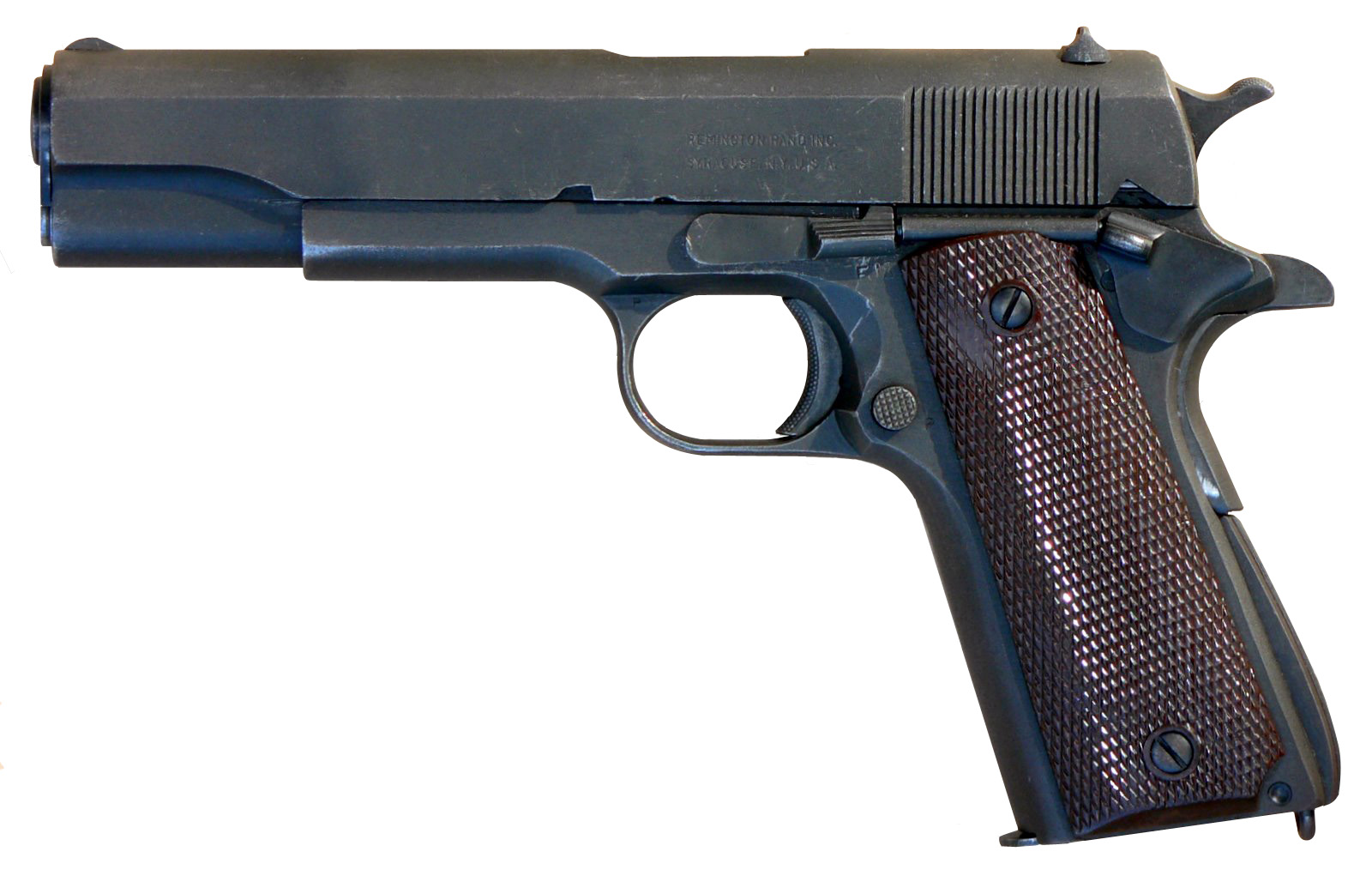
    Fox News reports that the Army thinks that it needs a new pistol. I remember about thirty years ago when they bought that Beretta thing that they were so proud of, replacing the 1911 .45 caliber with the Euro-wienie 9mm. Meanwhile, special forces-type troops have been turning back to the 1911 for it’s hitting power and dependability. The Marines just bought one a few years back for their special operators. The Army doesn’t need a new pistol, they need the old one that dominated in the 20th Century. From Fox;

    The [Modular Handgun System or MHS] will be an open-caliber competition that will evaluate larger rounds such as .357 Sig, .40 S&W and .45 ACP.

    The FBI and several major police departments recently decided to return to using the 9mm round after finding that .40 caliber ammunition was causing excessive wear on its service pistols. The heavier bullet and greater recoil over time resulted in frame damage to well respected makes such as Glock and Beretta, according to Ernest Langdon, a shooting instructor and respected competitive pistol shooter who has worked for gun makers such as Beretta, Smith & Wesson, and Sig Sauer.

    “Most of the guns in .40 caliber on the market right now were actually designed to be 9mm originally and then turned into .40 calibers later,” Langdon told Military.com.

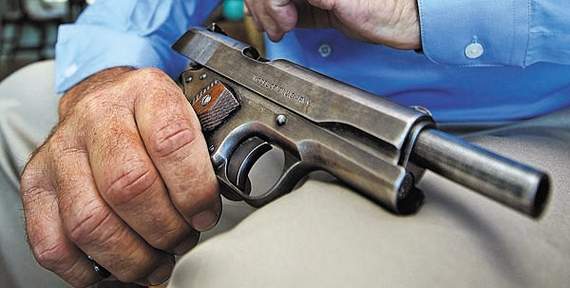
    Yeah, I just bought a 1911 today that was manufactured by Remington Rand which only made 1911s from 1942-1945, so it’s about 70 years old and there is no unnatural wear on it. It still shoots straight and doesn’t malfunction. The Fox article goes on to tell the story of a Chicago cop who had to shoot a criminal eight times with a .45 to put him down. I’m thinking that rounds 6, 7 & 8 were passing through gaping holes. But, the lesson of the story was supposed to be that more rounds is better than bigger rounds. Or Officer Chicago should spend more time at the range.

    The Army should stop wasting time and money on searching for a new handgun when the whole world knows how it will end up – the 1911 met the requirements for combat through most of the 20th Century wars and it withstood the test of time.