Category: Army News

  • Lt. Col. John Hall saving the world

    Lt. Col. John Hall saving the world

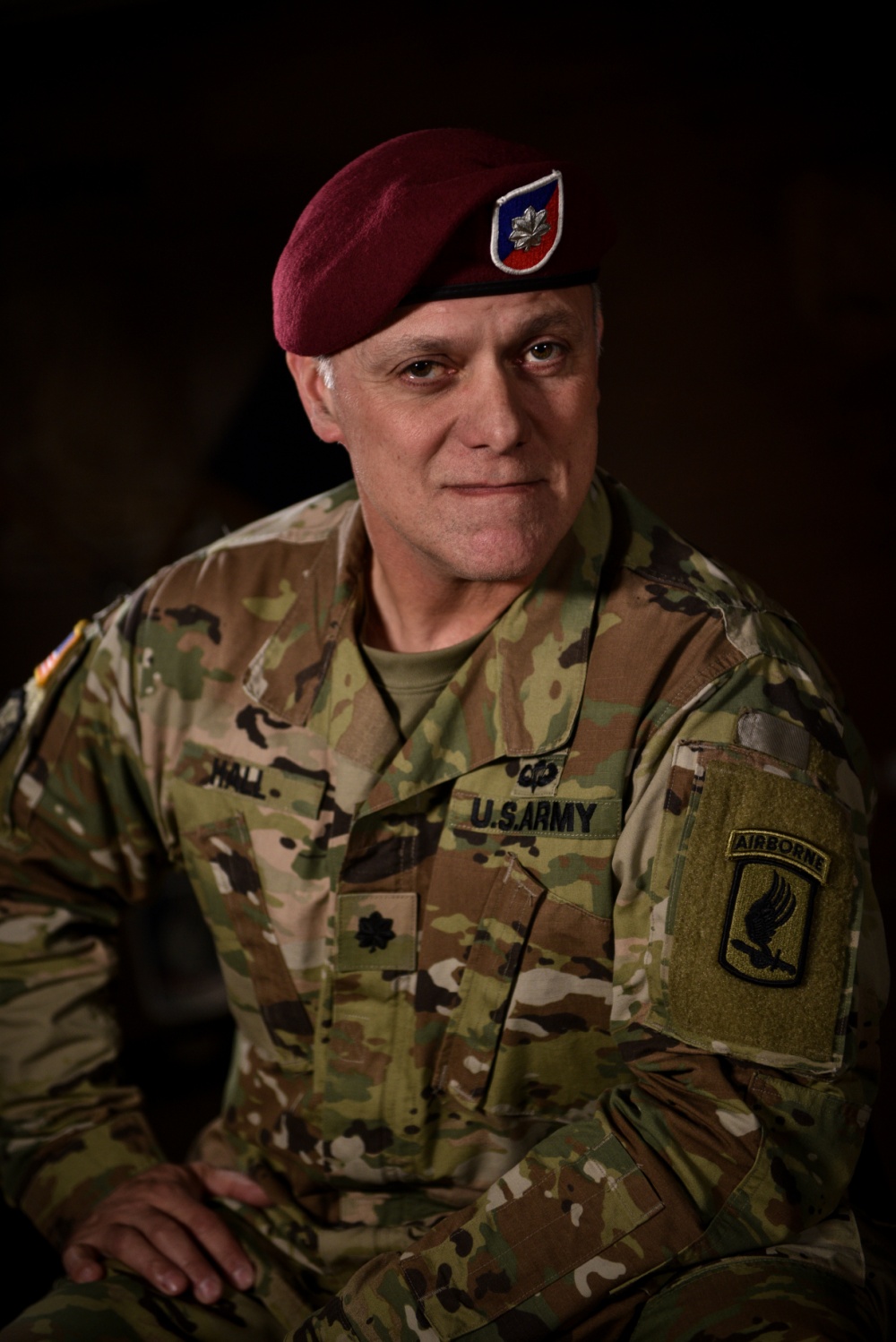
    Stars & Stripes tells the story of Lieutenant Colonel John Hall, a 53-year-old Michigan Guardsman serving with the 173rd Airborne Brigade in Italy who was enjoying a family outing at a swimming hole on the Astica River in Italy when he saw an Italian man struggling in the water;

    “I thought something has to happen right now. I thought I’m the only guy in a position to do something,” Hall said in an interview Friday. “So I just jumped.”

    He spread his arms wide as he descended in his shorts, Hawaiian shirt, shoes and socks, he said. Then he started swimming.

    “I came up from behind him and I just wrapped my arm around his throat and immediately turned into a sidestroke. I popped him on my hip,” Hall said. “He completely quit fighting. I think he’d given up at that point. The look in his eyes — he was in shock or terrified.”

    Hall swam the man to the steep riverbank and along with the other two Italians helped push him up the rocks to safety.

    Hall credits his paratrooper training for his heroic rescue;

    “We’re asked to drop into situations where we don’t have all the support — so we have to be very agile,” Hall said. “You have to go into it with a great deal of confidence, and that’s what I did. By the grace of God it turned out well for everybody.”
  • Army to add 8 weeks to infantry training

    Army to add 8 weeks to infantry training

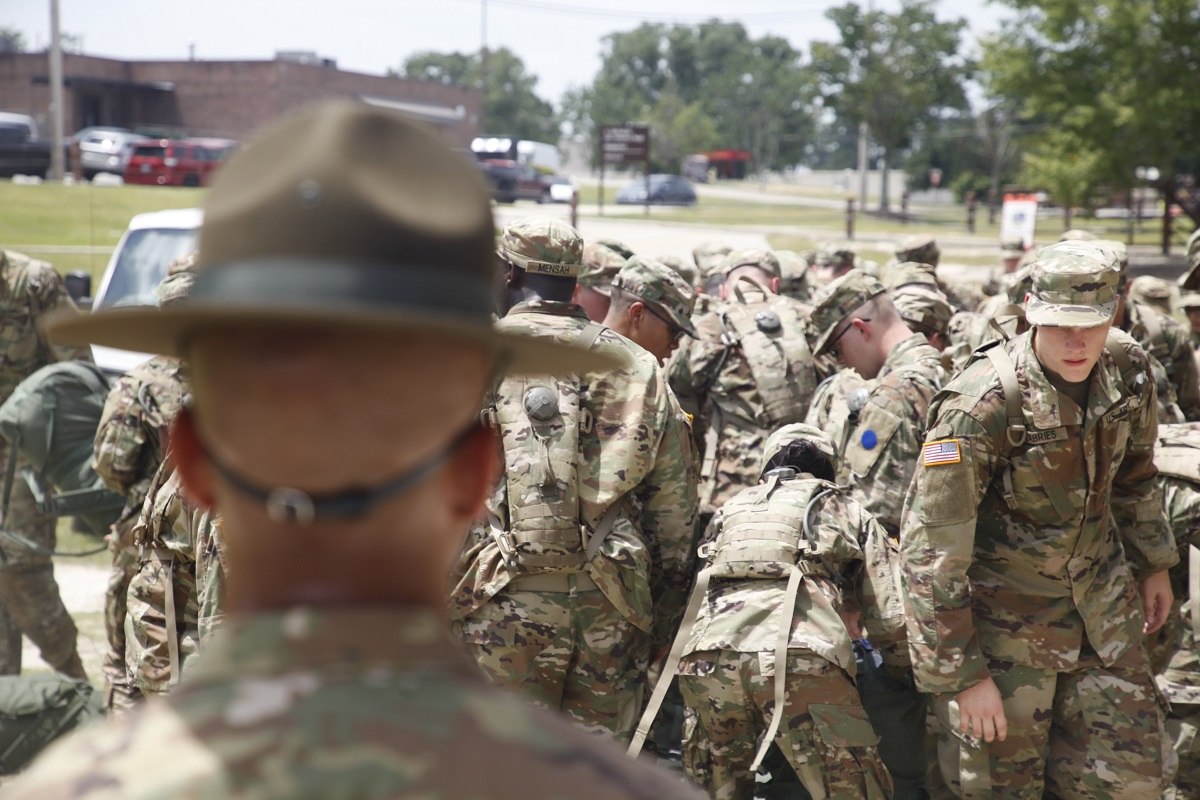
    Military.com reports that infantry training for new soldiers in that specialty will be extended by two months from the current four-and-a-half weeks to more than 12 weeks;

    Currently soldiers in infantry OSUT go through nine weeks of Basic Combat Training and about 4.5 weeks of infantry advanced individual training. This would add an additional 8 weeks of advanced individual training, tripling the length of the instruction soldiers receive in that phase.

    “It’s more reps and sets; we are trying to make sure that infantry soldiers coming out of infantry OSUT are more than just familiar [with ground combat skills],” Col. Townley Hedrick, commandant of the Infantry School at Benning, told Military.com in a June 21 interview. “You are going to shoot more bullets; you are going to come out more proficient and more expert than just familiar.”

    I’m an advocate for more training – more training means less bleeding. The extra training time means that soldiers arriving at their units will be better prepared for deployments sooner.

    With 22 weeks of infantry OSUT, “you can see right off that bat, we are going to have a hell of a lot better soldier,” [Col. Kelly Kendrick, the outgoing commander of 198th Infantry Brigade at Benning] said. “I will tell you, we will produce infantry soldiers with unmatched lethality compared to what we have had in the past.”

    The new pilot will start training two companies from July 13 to mid-December, Kendrick said. Once the new program of instruction is finalized, trainers will start implementing the 22-week cycle across infantry OSUT in October 2019.

    I don’t know when infantry training went to 4 1/2 weeks, it was 8 weeks for me back in the Jurassic Epoch.

  • SPC Calyn McLemore passes during training

    SPC Calyn McLemore passes during training

    AW1Ed sends us a link to Fox News which reports the sad news that Army Reserve Specialist Calyn McLemore passed away while he was engaged in a Land Navigation Course in Alabama.

    Searchers have discovered the body of an Alabama Army Reserves soldier who was reported missing during a training exercise at Camp Blanding in Florida.

    The search began when Spc. Calyn McLemore failed to return from the exercise as scheduled Wednesday, according to reports.

    The Clay County Sheriff’s Office reported Friday evening that the body was found in the woods and that the cause of death hadn’t been determined.

    From the Florida Times;

    McLemore was with about 70 other soldiers on a course designed to test their navigation skills through heavy vegetation. Participants are given a map, compass, protractor, pencil and coordinates, according to National Guard information about land navigation courses.

    [Sheriff’s Office Sgt. Keith] Smith said the soldiers work the course individually, although they may come across each other as they navigate the grid. The terrain can be grueling, he said.

    “And with all the rain that we have had, and it’s a kind of swampy area anyway … waist-high to chest-high swamp, mud and water,” Smith said. ”… It’s taken [our searchers] a lot to get through there and we have to make sure we keep our guys hydrated. It is a meticulous and methodical search.”

    The Sheriff’s Office said “there’s nothing that gives us any indication” that McLemore might have just run away, nor that any foul play has occurred. It was still believed the Alabama soldier got off course. They were also concerned about some of the wildlife he might encounter, said Smith, who has trained at the camp himself.

    A reminder that training for war can be as deadly as the war itself.

  • US Army 243rd Birthday

    US Army 243rd Birthday

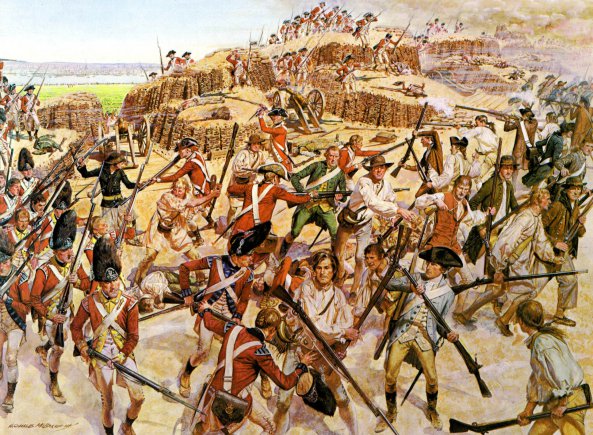
    WASHINGTON (Army News Service, June 5, 2014) — When the American Revolutionary War broke out in 1775, the original 13 colonies did not have a shared army, but instead, a collection of independent colonial militias.
    The first battles of that war were fought April 19, 1775, in Middlesex County, Mass., by patriots of the Massachusetts militia. They were the Battles of Lexington and Concord, the first hostilities between the colonies and Great Britain.
    Following the Battles of Lexington and Concord, and as British troops moved back across Massachusetts toward Boston, colonial militia from around New England began massing around that city. Within days, thousands of militia members under the leadership of Artemas Ward of Massachusetts had Boston under siege.
    By May 10, just weeks after hostilities began in Massachusetts, the Second Continental Congress convened in Philadelphia. On the agenda: creating a common army to defend the colonies.
    A month later, on June 14, the Congress approved the creation of that army, the Continental Army. The new force was made of those militiamen already gathered outside Boston, some 22,000 of them, plus those in New York, about 5,000.
    The following day, the 15th, the Congress named Virginian George Washington as commander-in-chief of the Continental Army, and named Ward his second in command the following day.
    The Congress also resolved to form a committee “to bring in a draft of rules and regulations for the government of the Army,” and voted $2 million to support the forces around Boston, and those in New York City.
    Congress authorized the formation of 10 companies of expert riflemen from Pennsylvania, Maryland, and Virginia, which were directed to march to Boston to support the New England militia. These were the first troops Congress agreed to pay from its own funds, and the units later became the 1st Continental Regiment.

    Facts About the United States Army:

    Twenty-four U.S Presidents served in the United States Army
    George Washington chose the colors of the modern U.S Army uniform
    The U.S Army is older than the United States
    Over the past 10 years, Green Berets have been deployed in over 135 countries worldwide
    The U.S Army is the second largest employer in the U.S
    In 2011, the U.S Army estimated it used 1 billion gallons of gasoline

    From AL.com;

    Today, the Army has about 467,000 active duty soldiers, with another 343,000 in the U.S. Army National Guard and 206,000 in the Army Reserves.

  • Bragg troops’ nonstop flight to Eastern Europe

    Bragg troops’ nonstop flight to Eastern Europe

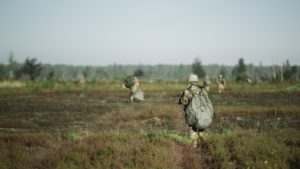
    Stars & Stripes reports that troops of the 82d Airborne Division made a nonstop flight from Fort Bragg, North Carolina to drop zones in Poland, Lithuania and Latvia.

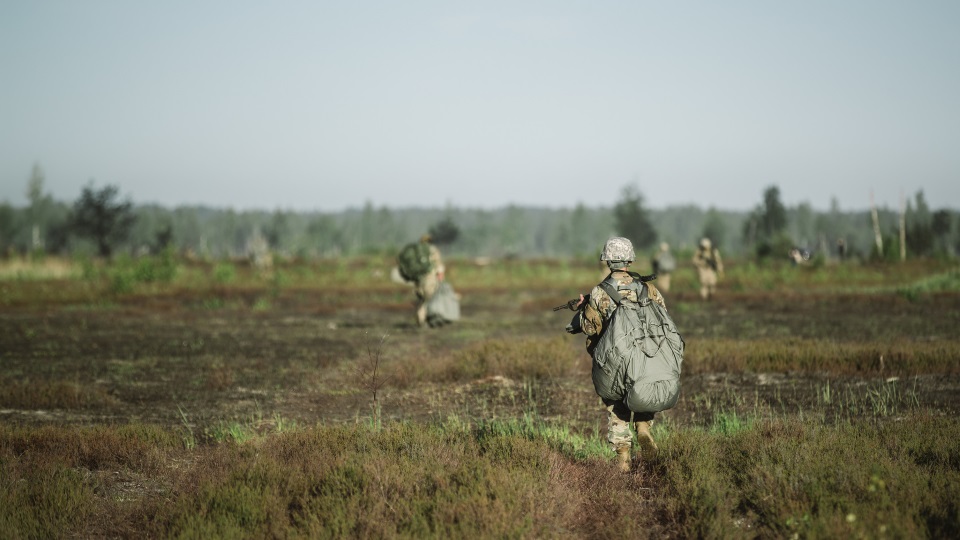
    More than 600 paratroopers from the 82nd Airborne Division and the British army’s 16 Air Assault Brigade made nonstop flights from Fort Bragg to Eastern Europe, traveling more than 4,300 miles before leaping onto drop zones near Riga, Latvia and Rukla, Lithuania, on Saturday.

    “This is about global readiness for us,” said Maj. Gen. Erik Kurilla, the commanding general of the 82nd Airborne Division. “This is a package that can go anywhere in the world very quickly. Speed matters. This is just a small portion of the [Global Response Force]. The [Global Response Force remains scalable in size and tailorable in scope to a wide array of crises contingencies.”

    I once made a jump into Alaska after a nine-hour flight from Hunter Army Airfield, Georgia, so I can only imagine a 4300-mile flight.

    n addition to American and British paratroopers, Swift Response also featured airborne forces from Israel, Italy, Latvia, Lithuania, Poland, Portugal and Spain.

    “The 82nd Airborne Division is committed to supporting European security,” [Maj. Gen. Erik Kurilla, the commanding general of the 82nd Airborne Division] said. “We maintain a broad interoperability agenda with a fully developed partnership with multinational airborne forces. This kind of complex operation is the result of that partnership. In fact, we incorporate multinational officers at all echelons of the division, to include our British deputy commanding general. Our allied partners do not operate as liaisons; they serve as leaders and planners alongside the rest of us.”

    From Latvian public broadcasting;

    Eight U.S. C-17 transport planes arrived from Fort Bragg, North Carolina and dropped more than 500 soldiers from the 82nd [Airborne] Division and the British Parachute Regiment.

    Swift Response 2018 continues until 15 June, with approximately 2,300 participants from NATO member states and partner countries including the United States, Israel, Italy, Great Britain, Poland, Portugal and Spain.

  • Spenser Rapone discharged?

    Spenser Rapone discharged?

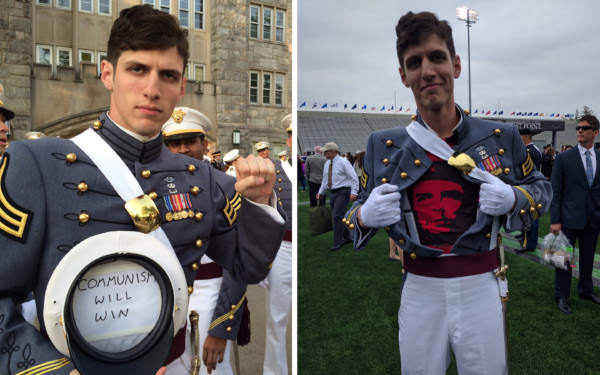
    According to Breitbart, PJMedia and SOFREP, Spenser Rapone is being discharged this month from Fort Drum;

    Recently, Spenser Rapone re-tweeted a post on Twitter which announced that he would be speaking at a socialist event in July as he was being processed out of the Army this June with an other than honorable discharge. This was likely the harshest punishment the Army could give Rapone unless they decided to charge him with something like sedition. With an other than honorable discharge, Rapone will not be entitled to VA benefits, the GI Bill, and may have difficulties in finding employment.

    There is nothing official from the Department of the Army, so this is nothing more than a rumor at this point.

  • Bergdahl sentence approved

    Bergdahl sentence approved

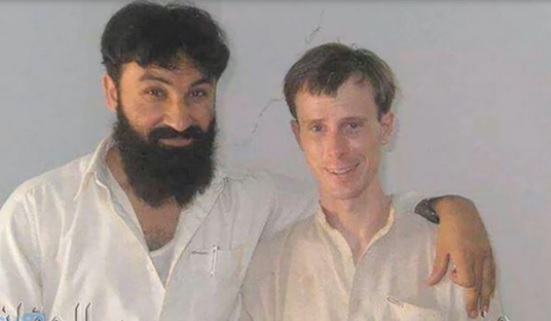
    Private Bowe Bergdahl’s sentence was approved by General Robert Abrams, the chief of U.S. Army Forces Command, sparing him a prison term, according to Stars & Stripes;

    Gen. Robert Abrams, the chief of U.S. Army Forces Command, upheld the sentence handed down by the judge, Army Col. Jeffery R. Nance, in November at that conclusion of a weeklong sentencing hearing in Bergdahl’s court-martial, FORSCOM spokesman John Boyce said Tuesday in a statement. Abrams was the convening authority in the court-martial, the senior official who oversees the case and must review and approve the judge’s findings.

    Nance sentenced Bergdahl to forfeit $10,000 in pay, a drop in rank from sergeant to E-1 private and a dishonorable discharge, which stops him from receiving any medical or other benefits offered to most veterans. The judge could have sentenced him to as much as life in prison. Prosecutors had requested Bergdahl serve 14 years confinement.

    Bergdahl was charged with “misbehavior before the enemy by endangering the safety of a command, unit or place” and “desertion with intent to shirk important or hazardous duty” after he was released from captivity by the Haqqani network of terrorists in exchange for five dangerous detainees. Bergdahl explained that he set off across the desert to warn some commander of his unit’s toxic leadership.

  • State Police chase M577 in downtown Richmond

    State Police chase M577 in downtown Richmond

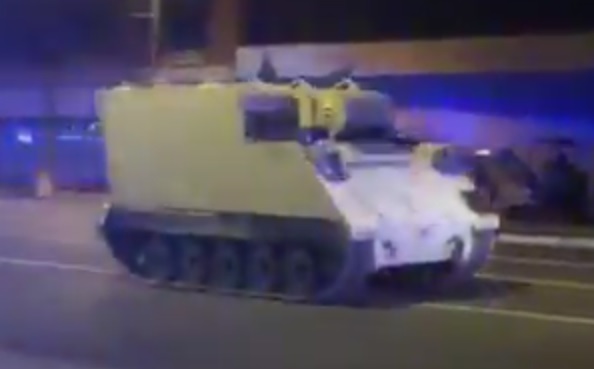
    A soldier at Fort Pickett, Virginia took an eleven-and-a-half-ton M577 armored command vehicle for a joyride through downtown Richmond, Virginia last night according to WUSA9.

    Police were notified around 7:55 p.m. the vehicle was taken from the Army National Guard Maneuver Training Center and followed it on I-85 to I-95.

    Video footage posted to Facebook shows the vehicle traveling north near the Dinwiddie area. Virginia State Police said the vehicle traveled at a maximum speed of about 40 miles per hour.

    There is no information regarding how the driver gained access to the vehicle and there have been no crashes or injuries involved with the chase.

    The driver stopped around 9:40 p.m. at East Broad Street and 11th Street, surrendering to police, according to NBC 12 in Richmond.

    From the Burn Pit.

    Thanks to Bobo for the link.

    From Stars & Stripes;

    The Richmond Times-Dispatch reported the driver was Joshua Phillip Yabut, a 29-year-old who identifies himself as a lieutenant in the Virginia Army National Guard in social media posts. State police arrested Yabut on suspicion of driving under the influence of drugs and charged him with eluding police and unauthorized use of a vehicle.