Category: Army News

  • Fort Lee, VA; active shooter

    Fort Lee, VA; active shooter

    Terror Exercise

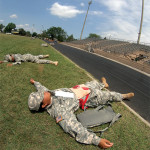
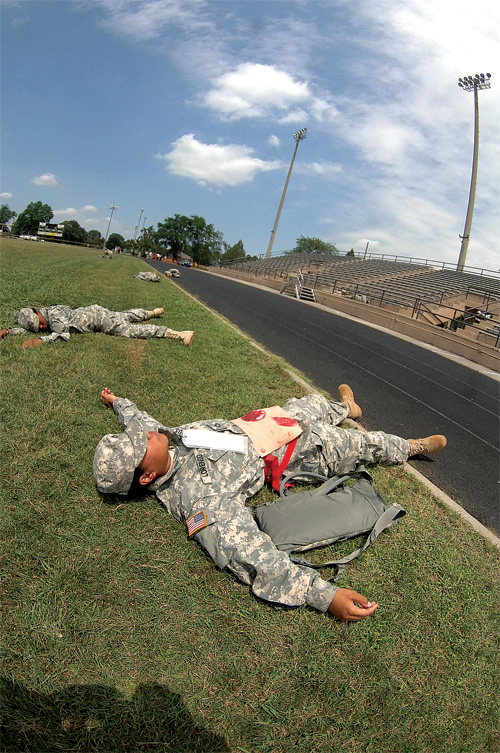
    The picture above is from an article a few years back about a Fort Lee mass casualty exercise.

    There is very sparse news coming from Fort Lee, Virginia in regards to an “active shooter”;

    CASCOM, of course means the Combined Arms Support Center Command.

    ADDED: “All clear” has been given.

    NBC12- Richmond, VA News

    ADDED at 10:30 AM; Some of our LEO friends are reporting that a female E-7 shot herself at Fort Lee. We’ll see, I suppose.

  • 2d Ranger Company vets recall their service

    2d Ranger Company

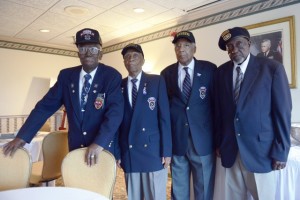
    Army.mil interviews four of the surviving veterans of the Second Ranger Company – the Buffalo Rangers. We’ve talked about them before – they were the only Ranger Company that was all black, recruited from the 555th Parachute Infantry Battalion – the Triple Nickel – which was an all-black unit before desegregation. The Second Ranger Company deployed to Korea in December, 1950 and were attached to the 7th Infantry Division. In February, 1951 they were reattached to the 187th Airborne Regimental Combat Team.

    From the interview;

    The four men — Donald Allen, Richard Briscoe, Herculano Dias, and Winston Jackson — proudly served in this historic company, [Sergeant Major of the Army Raymond] Chandler said.

    “I was fascinated by their incredible stories of heroism and danger in wartime and their continued service as mentors and trainers of young Soldiers at home stations,” he said.

    Dias, a sergeant who served in the Army four years, noted the company was the “first and only all-black Airborne Ranger outfit” in the whole Army.

    “We were the only all-black Ranger outfit to make a combat jump. We jumped March 23, 1951, in a place called Munsan-Ni, Korea,” Dias said.

    He recalled losing fellow members, seeing intense combat, and enduring the brutal winter. When he and his fellow Rangers arrived in Korea, in December 1950, snowfall accumulations were high and temperatures were sub-zero, Dias said.

    “A lot of guys were evacuated for frostbitten feet because the equipment we had was not sufficient,” he said.

  • Army’s 239th Birthday

    Army birthday

    When the American Revolution broke out, the rebellious colonies did not possess an army in the modern sense. Rather, the revolutionaries fielded an amateur force of colonial troops, cobbled together from various New England militia companies. They had no unified chain of command, and although Artemas Ward of Massachusetts exercised authority by informal agreement, officers from other colonies were not obligated to obey his orders. The American volunteers were led, equipped, armed, paid for, and supported by the colonies from which they were raised.

    In the spring of 1775, this “army” was about to confront British troops near Boston, Massachusetts. The revolutionaries had to re-organize their forces quickly if they were to stand a chance against Britain’s seasoned professionals. Recognizing the need to enlist the support of all of the American seaboard colonies, the Massachusetts Provincial Congress appealed to the Second Continental Congress in Philadelphia to assume authority for the New England army. Reportedly, at John Adams’ request, Congress voted to “adopt” the Boston troops on June 14, although there is no written record of this decision. Also on this day, Congress resolved to form a committee “to bring in a draft of rules and regulations for the government of the Army,” and voted $2,000,000 to support the forces around Boston, and those at New York City. Moreover, Congress authorized the formation of ten companies of expert riflemen from Pennsylvania, Maryland, and Virginia, which were directed to march to Boston to support the New England militia.

    George Washington received his appointment as commander-in-chief of the Continental Army the next day, and formally took command at Boston on July 3, 1775.

    John R. Maass
    Historian
    U.S. Army Center of Military History

  • Poll: Army most important service

    Hey, that’s not me talking, it’s the poll of Americans from Gallup at the Washington Times;

    Gallup started asking Americans about the importance of U.S. military branches in the 1940s, using a variety of questions over the years.

    Americans until the mid-2000s always viewed the Air Force as the most important branch of the military. While it still ranks high today, it no longer dominates, the pollsters said.

    Importance does not necessarily equal prestige.

    The Marine Corps has consistently been considered the nation’s most prestigious military branch, even if not the most important, with nearly half of Americans — 47 percent — saying they respect Marines the most.

    The Air Force was a distant second, with 17 percent saying is was the most prestigious branch, said the poll.

    “Despite successful Navy SEALs raids that killed al Qaeda leader Osama bin Laden in 2011 and helped rescue the captain of the merchant marine vessel Maersk Alabama from pirates in an incident that was the basis of the movie ‘Captain Phillips,’ the Navy’s image has not benefited,” Gallup noted.

    Yeah, this is me gloating over here; Chief Shipley and I have a running email battle in regards to Army/Navy insults. Maybe the Navy needs to make more movies about what .01% of their personnel do to improve their image.

  • 25th Infantry Division change of command

    25th Infantry Division change of command

    25th ID CoC

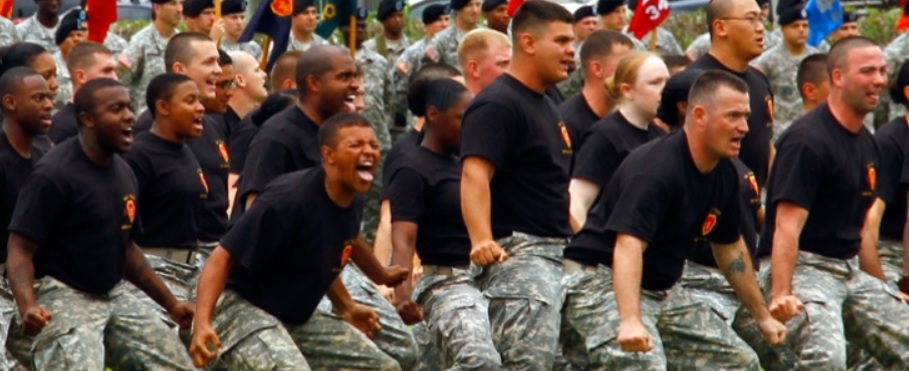
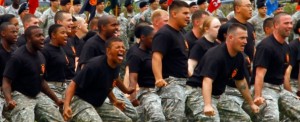
    The Stars & Stripes reports that last week, Major General Charles A. Flynn assumed command of the 25th infantry Division in Hawaii from Major General Kurt Fuller. We’ve all been through these ceremonies and they’re not really all that exciting, but this one differed from most because they opened the ceremony with the traditional Hawaiian warriors dance;

    The Hawaiian warriors dance that opened the ceremony was “a way to show our admiration and respect for the Hawaiian and Pacific islands culture,” Fuller said. The 25th was activated in Hawaii just months before the Pearl Harbor attack in December 1941.

    The division’s deep roots here make it “forever part of Hawaii,” Fuller said.

    For your viewing pleasure;

  • JOTC reborn

    JOTC reborn

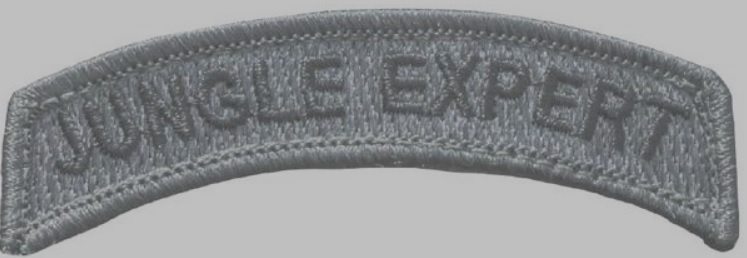
    JE Tab

    Got enough tabs? Well, probably not. There’s a new one on the horizon if the folks at the new Jungle Operations Training Course, under the auspices of the 25th Infantry Division in Hawaii get their way, according to the Army Times;

    “When you look at the area we operate in, from India all the way through Bangladesh, Burma, Laos, Thailand, Vietnam, and into the Philippines, Malaysia and Singapore, to East Timor and Papua New Guinea, all of them are jungle,” said Maj. Gen. Kurt Fuller, commanding general of 25th ID.

    But the training won’t be limited to Hawaii-based grunts.

    “We’re offering it up to the Army,” Fuller said. “If that’s something they’re interested in doing, we’d be happy to support it with the right resources.”

    The ability to operate in the jungle is important not only for troops aligned with Pacific Command, but also potentially for those working in Africa and other places around the world, Fuller said.

    “Eventually, I think it would be a healthy thing to have it as an Army course,” he said.

    I went to the old JOTC in Panama a year before the Army stationed me there, so I’d been dipped in the experience and knew what to expect when I got there. Of course, I ran into some folks who had been stationed in Panama for years who were a little jealous that I’d spent two weeks there once and got a badge. But, hey, there’ll be a tab! I wonder how soon the phonies will be wearing that one. They had Sapper tabs before I knew such a thing existed.

    I’m behind the concept, though. Even a few weeks in the jungle stays with you a lifetime and if the Army needed to drop someone off in the jungle somewhere, Africa, for example, they won’t be panicking right off the bat. Hawaii is a far piece to send CONUS-based units, though. Panama was a five hour flight, Hawaii is a bit further.

  • More About the Current Army Cutbacks

    Many have probably heard that the Army is cutting 10 Brigade Combat Teams (BCTs) this year and next .  It’s doing this in order to reduce end-strength to 490,000 (active component) by the end of FY 2015.

    For those interested, here’s the list of which units have/are scheduled to inactivate.

    Already inactivated:

    • 4th BCT, 1st Cavalry Division (Fort Hood) – inactivated last October
    • 4th Stryker BCT, 2nd Infantry Division (JB Lewis-McChord) – inactivated in March
    • 4th BCT, 101st Airborne Division (Fort Cambell) – inactivated in April

    Scheduled to be inactivated:

    • 4th BCT, 82nd Airborne Division (Fort Bragg) – to be inactivated in June
    • 3rd BCT, 1st Infantry Division (Fort Knox) – to be inactivated in July
    • 3rd BCT, 10th Mountain Division (Fort Drum) – to be inactivated this fall
    • 2nd BCT, 3rd Infantry Division (Fort Stewart) – to be inactivated during winter 2015
    • 2nd BCT, 4th Infantry Division (Fort Carson) – to be inactivated during winter 2015
    • 3rd BCT, 1st Armored Division (Fort Bliss) – to be inactivated during spring 2015
    • 4th BCT, 1st Infantry Division (Fort Riley) – to be inactivated during summer 2015

    The unit inactivations at Forts Knox, Carson, Bliss, and Riley will require a substantial number of soldiers to PCS.  The unit inactivations at Forts Drum and Stewart will not require very many PCS moves, as soldiers assigned to the inactivating BCTs at those locations will be reassigned to other units on their current installation.

    The current reductions are in conjunction with scheduled Army end-strength reductions.  They will reduce the Army’s overall end strength to 980,000 (450,000 Active/195,000 USAR/335,000 ARNG) by FY 2017.

    Additional unit inactivations may be forthcoming.  The Army is looking at potential options reducing the Army’s overall strength further after 2017, to a possible end-strength of 920,000 (420,000 Active/185,000 USAR/315,000 ARNG).

    The Army Times has a decent article giving more details.  It’s worth reading if you have the time and inclination.

    Yeah, we can give out free phones and pay for people’s groceries while they sit on their azz, eat Cheetos, and play X-Box.  And we can keep funding Social Security “disability” and unemployment, and giveaway “free” medical care subsidies.

    But we can’t figure out how to pay for an adequate defense.  And we don’t seem to be able to figure out that Social Security and Medicare  are about to go belly up – in about 20 years.

    Ain’t life wonderful?
  • Army Marksmanship Unit News

    Horner

    The folks at the Army Marksmanship Unit PAO sent us the following press release;

    RELEASE No. 20140423-01 April 23, 2014

    Army Marksmanship Unit Action Shooting team doubles down in Vegas

    By Michael Molinaro

    USAMU PAO

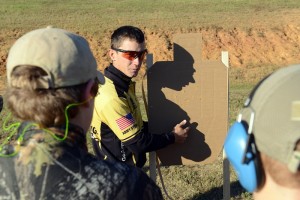
    LAS VEGAS – Soldiers from the U.S. Army Marksmanship Unit (USAMU) Action Shooting team won two titles at the 2014 U.S. Practical Shooting Association Multi-gun National Championships, April 18-20.

    Staff Sgt. Daniel Horner won the overall title and first place in the Tactical Ops Division for an unprecedented sixth time, while Sgt. Matthew Sweeney won in the Heavy Metal Tactical Division.

    “This is a huge match and being crowned a national champion is very prestigious,” said Sweeney, a Pinckneyville, Ill native. “We train up year-round just to get the title so it’s a great achievement for me.

    “We have a great team behind us. We have unlimited support from the chain of command, great gunsmiths and a great unit behind us.”

    It has been an impressive April for Horner. The Suffolk, Va.,native started off the month winning the U.S. Special Operations Command International Sniper Competition with teammate Sgt. Tyler Payne. After that, he won his second straight 3-Gun Nation Pro Series Tour win before securing this latest national championship in Las Vegas. The win marks his sixth national title in the Tactical Ops Division, the first shooter to ever accomplish the feat in the sports largest division.

    “2014 has been good,” Horner said. “No one guy is great but together we can accomplish some pretty good things. We all support each other to make good decisions and come up with a good plan. You are still on your own when the clock goes off, but we keep each other focused on the goal at hand.”

    All five USAMU shooters who competed this year finished in the top five in their respective divisions.

    Unlike other competitions that focus on short-range shooting and shooting on the move, the Practical Shooting Association Multi-gun National Championships test shooters using odd-positions, barricades, stage planning, and long-range rifle targets in addition to moving quickly through stages.

    “This year the shooting was difficult, but the speed at which you had to make the shots was so high that you couldn’t make any mistakes,” Horner said. “You would run out of shotgun ammo at some point if you missed one shot and (that’s a ten point penalty.)”

    Highlighting the difference between AMU shooters and their civilian counterparts, after the awards ceremony, Horner and Sweeny jumped on a plane to train Soldiers preparing for deployment. Besides showcasing the very best of Army skills in competition, the unit applies lessons learned from marksmanship competitions to training Soldiers for combat and raising the Army’s Marksmanship proficiency.

    Even after six national titles and a ranking as one of the best sniper teams currently in the world, Horner said he’ll never get to a point where he thinks he knows it all.

    “I learn something every day,” Horner concluded. “I can learn something from every single person shooting and use it to help someone else or help me.”