Category: Army News

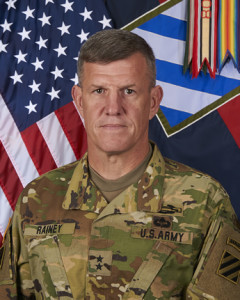
  • Major General Jim Rainey: I think [allowing women in combat is] going to make the Army stronger in the long run.

    Major General Jim Rainey: I think [allowing women in combat is] going to make the Army stronger in the long run.

    MG James E. Rainey

    Military.com reports that Fort Stewart commander, Major General Jim Rainey, during a press conference, praised the Army for allowing women to serve in jobs that will eventually take them to direct combat with America’s enemies.

    Despite some initial challenges, allowing female soldiers to serve in combat jobs that have long been closed to women should ultimately “make the Army stronger,” the top general at Fort Stewart said Friday.

    […]

    As long as the right soldiers are chosen for the right jobs, based on their abilities, he said, “I think it’s going to make the Army stronger in the long run.”

    I’ve read the article three times and I’ll be damned if I can see where the good general explains how this will make the Army stronger. General Rainey has a long and experienced career in the infantry, you’d think that he could be a bit more clear on this decision will make the Army stronger – maybe even answer the question that I’ve been asking for years now – how will this decision help us kill our enemies in greater numbers?

    Thanks to Chief Tango for the link.

  • More of the Sikh debate

    More of the Sikh debate

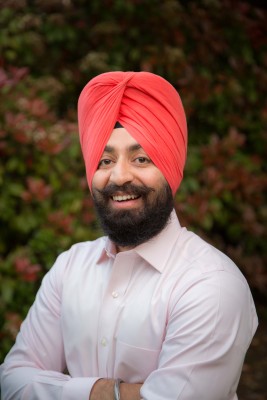
    Specialist Harpal Singh

    We talked the other day about the Army capitulating to Captain Simratpal Singh and they’re allowing him serve with his beard and his turban. Well, The Becket Fund writes to tell us that there are three more Sikhs in the wings who have filed a lawsuit so they can serve in uniform. Specialist Kanwar Singh, Specialist Harpal Singh, and Private Arjan Ghotra are scheduled to go through Basic Combat Training next month and without special dispensation, they’ll have to shave to begin their training.

    “The Army’s delays leave Sikh soldiers uncertain about their future for months on end,”?said [Eric Baxter, senior counsel at Becket].?“In the meantime, they are often treated like second-class soldiers. The Army needs to stop sending the message that religious minorities are not welcome in the military.”

    I don’t think the Army is sending that message at all. They’ve caved every time. The gas chamber just might weed these guys out, though. And, I’m sure the Army is is going on a case-by-case basis.

  • Simratpal Singh; Sikh Captain keeps his beard

    Simratpal Singh; Sikh Captain keeps his beard

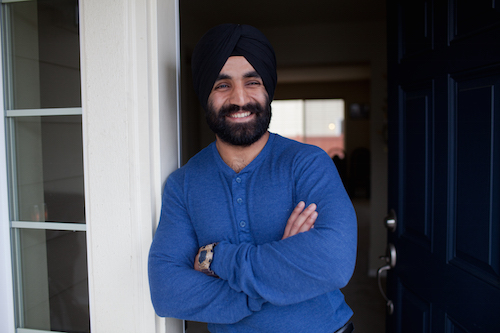
    Simratpal Singh

    Simratpal Singh, an Army Captain, West Point grad, Ranger and combat veteran, recently decided to take the Army to court to force them to allow his distinctive Sikh headwear and his beard while he continued to wear the uniform. Thursday, the Army decided to change the policy rather than battle the issue in court. The Army had previously allowed doctors to wear their religious accoutrements, but not other career fields. From the Becket Fund for Religious Liberty, which represented Captain Singh;

    Captain Singh initially received a temporary accommodation in mid-December, allowing him to report to his new assignment in Fort Belvoir, Virginia, with beard and turban in place. In early March, however, the Army tried to subject him to heightened testing for his gas mask and safety helmet, even though he had already passed the standard safety testing all soldiers undergo. On March 4, 2016, a U.S. District Court in D.C. ordered the Army to stop imposing discriminatory testing and to treat Captain Singh under the same rules that apply to everyone else. The Army’s decision yesterday confirms that Captain Singh’s religious turban and beard have no impact on his ability to serve.

    Sikh warriors have a long and storied military tradition, but, that was before chemical warfare. While I agree that the good captain should be able to serve, he should also understand the risks associated with facial hair on the modern battlefield. If he’s willing to take the risk, well, fine.

  • We do more before noon….

    Remember when “we do more before 9AM than most people do all day” was a selling point for Army recruiting? Well according to Fox News that may be a part of history as Fort Carson dabbles in later “first calls”;

    Fort Carson’s policy to allow soldiers to begin work later and exercise in the afternoon during a 2014 pilot program was one of several factors that made it stand out in the Health of Force report.

    […]

    The change in the Fort Carson exercise schedule, a 2014 experiment at the post, was credited for countering the Army’s chronic problem with sleep deprivation. [Col. Deydre Teyhen, assistant chief of staff for the Army Medical Specialists Corps] and other experts say a lack of rest is one of the Army’s biggest health concerns.

    “We are sleeping much worse than the average American,” she said, noting that 85 percent of soldiers lack adequate sleep.

    The Fort Carson experiment allowed soldiers to sleep in by moving physical training, normally conducted before sunrise, to the end of the duty day.

    Yeah, well, even after I got out of the Army, I still liked getting my PT in early in the day than have it looming at me throughout the day.

    Thanks to HMC Ret for the link.

  • AP scrutinizes the Army’s fugitive program

    AP scrutinizes the Army’s fugitive program

    Hazelbower

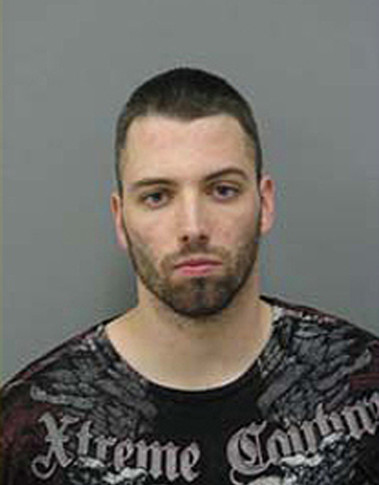
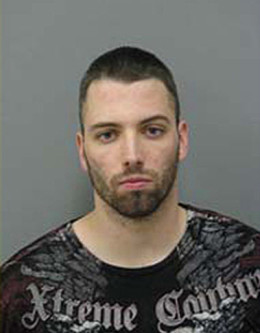
    The Associated Press reports on the arrest and conviction of a 24-year-old Fort Campbell soldier, Private Jameson T. Hazelbower who went AWOL while he was being investigated by the Army’s criminal Investigation Division for sexual assault on under-aged teenager girls.

    In fact, there was a lack of urgency to locate Hazelbower despite strident warnings from his superiors at Fort Campbell, Kentucky, the records show. The military’s version of an arrest warrant described him as a “sexually violent predator” and a known drug abuser. Also, he had gone AWOL before. “CAUTION – ESCAPE RISK” is stamped in bold letters on the right side of the document.

    The Army declined to discuss Hazelbower’s court-martial and why service officials chose not to pursue him. Army spokeswoman Tatjana Christian said the service typically does not conduct searches or pursuits to physically apprehend deserters “due to jurisdictional issues unique to each military installation.” She declined to say what those issues are.

    “We can’t really speculate on what happened in the specific case of Hazelbower,” Christian said.

    Well, Hazelbower was eventually arrested by local police when he was caught with his drawers past his knees with another 14 year-year-old girl. They ran him through background checks and found the warrant issued by the Army. In my opinion, that’s all the Army can do – I’m pretty sure a bunch of ARMY CID agents running around the country looking for AWOL soldiers would piss off the local police as well as civilians. I know the media and the general public think that there is an Army of Jethro Gibbs and Tony DiNozzos searching for criminals in the civilian world like they do on TV, but, no. The Military depends on locals to scoop up their criminals.

    I know, here on this blog, we’ve seen AWOL soldiers arrested six and seven years after their offense during routine traffic stops. That’s the way the system works.

    By the way, Hazelbower blames the Army for his illness (he’s in Leavenworth doing 50 years now);

    He said since enlisting in the Army, he had become a sex addict and an alcoholic and was suffering from depression. Yet the Army had ignored his problems, he said.

    “I was literally laughed at,” Hazelbower told the general. “How could I be completely to blame?”

    No one is to blame for anything – and it’s all the Army’s fault, always.

  • 101st unit rescinds “no combat patch” policy

    101st unit rescinds “no combat patch” policy

    I noticed a lot of activity on a post that I wrote last year about a 4th Division Brigade commander in Colorado who had a brain fart and was tempted to make his combat veterans remove their earned combat patches from their right shoulders to make the newbies feel better about themselves. Now I find that folks were confusing my post with events at the 101st Division where another officer listened to the Good Idea Fairy and wanted to make a Brigade in that division more inclusive according to a link sent by Sparky;

    According to a news release from the 101st Airborne Division, soldiers from the 3rd BCT, while completing a gunnery exercise at Fort Knox, were told to remove their combat patches to “build cohesion.”

    On Thursday, 101st officials said no such directive was given from brigade leadership. The directive, according to the release, came from somewhere else in the brigade.

    The soldiers will now be permitted to wear their combat patches during training.

    “This was a well-intended action taken by a leader that was not well thought out and was quickly corrected,” said Brig. Gen. Scott E. Brower, acting senior commander of the 101st, in a news release.

    When my battalion came back from Desert Storm, we had a change of command at the battalion and at brigade, both of the incoming commanders were slick-sleeves who hadn’t deployed to our little adventure, somehow they didn’t feel a need make us take off our combat patches or our CIBs to feel included in our activities.

  • The future of Army Airborne

    The future of Army Airborne

    jump-wings

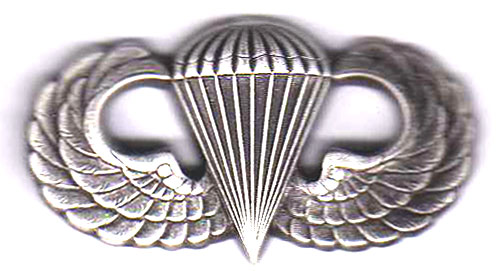
    The Army Times has a rather long discussion concerning the future of Army Airborne. Apparently there’s some “Big Parachute” lobby to keep the 82d Airborne Division as a light, quickly deployable force that can respond to any trouble in the world within hours. Of course, during the cost-cutting fervor at the Pentagon, there is Big Nasty Leg lobby that says that Airborne forces are outdated;

    MacGregor does not see significant tactical need for a mass combat jump of infantry forces. He says even basic air defense renders an airborne attack suicidal.

    “Airborne requires fixed-wing airlift. These forces cannot ‘get in under the radar’ against a major theater power’s defenses,” the unapologetically blunt West Point graduate said. “As seen repeatedly in Eastern Ukraine, anything flying low and slow, especially in the large numbers that are needed to move a militarily-useful conventional ground force, is toast in a real war.”

    But leaders say the training and resources invested are worth it from a capability and deterrence standpoint, even before accounting for intangibles.

    “Today the application of a large-scale airborne assault is low probability, but it’s high consequence if we’re not absolutely prepared to do it and do it right,” said Brig. Gen. Brian Winski, deputy commanding general of the 82nd Airborne Division.

    I’ll grant the naysayers that there haven’t been any mass-tactical drop of paratroopers on the scale of World War II in recent history, however the paratroopers have been used in every conflict (with the exception of Desert Storm) on a smaller scale. To take the tool of a Division-sized air-deliverable unit out of planners’ toolbox leaves big gaps. It’s better to have them trained and ready that to need them and have none.

    If the Army wants to save money, they should stop training people who have no intention of ever jumping with a TO&E airborne unit. I’ll bet there are three-times as many 5-jump-chumps as there are people on jump status. When was the last time you saw a second lieutenant who wasn’t wearing jump wings? They’re few and far between. In my career, I had one leg platoon leader – but he was still Ranger qualified.

    Yeah, if the Army wants to cut waste, don’t cut from the actual force, cut from the badge hunters who need a new shiny thing on their uniform. Cut out things that don’t actually make the US Army a lethal force that is feared by bad guys around the world.

  • Specialist Skylar Anderson; the first female Army Combat Engineer

    Specialist Skylar Anderson; the first female Army Combat Engineer

    Skylar Anderson

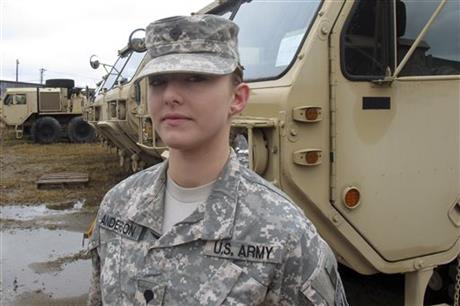
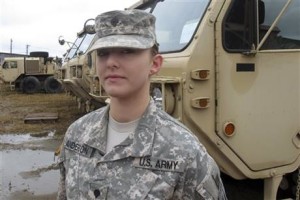
    Since we’ve been on Private Lopez’ case all morning, I think it’s only fair that we mention the first female graduate of the Army’s Combat Engineer course, Skylar Anderson, who lives in Colchester, Vermont while she attends the University of Vermont. The big difference between Specialist Anderson and Private Lopez is that Anderson wasn’t even aware of her status as the first woman graduate until after the fact, according to the Associated Press;

    Anderson, 20, said it was a “big eye-opener” when her instructors told her that she was the first woman to complete the course allowing her to work alongside combat troops to solve battlefield challenges as varied — and dangerous — as clearing minefields, building bridges under fire or destroying structures to block the enemy’s advance.

    Such an opportunity comes with responsibility, Anderson said.

    “It’s time to step up and not hide in the shadows,” she said.

    [..]

    Anderson, of Derry, New Hampshire, said her interest in the military was sparked by her grandfather. She began talking to a recruiter in high school and took the oath on her 18th birthday, while still a senior in high school, and left for training days after graduation. She first joined the New Hampshire National Guard and transferred to the Vermont National Guard after enrolling at the University of Vermont.

    […]

    In civilian life, Anderson hopes to become an equine veterinarian, but she plans to stay with the National Guard, never knowing when her unit could be called to active duty.