Category: Air Force

  • Valor Friday

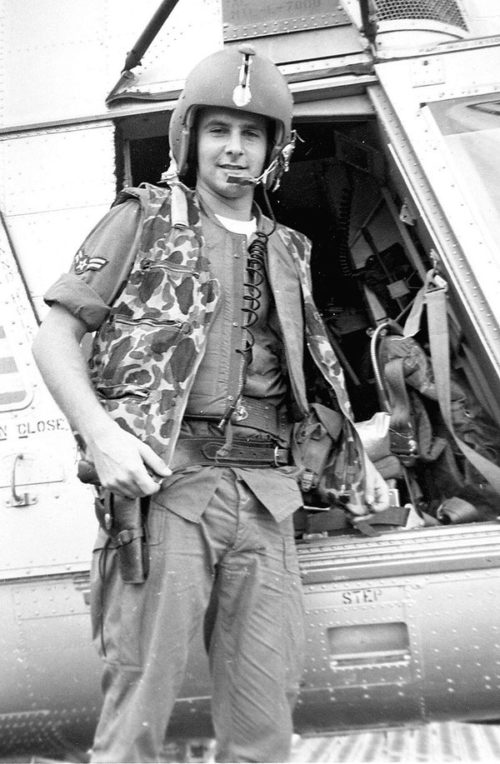
    Airman First Class William Airman First Class William “Pits” Pitsenbarger was awarded the Medal of Honor posthumously after he sacrificed himself to save numerous wounded soldiers. (Air Force)

    Yes, I know late again. Seems this thing called “work” interfered with my schedule. But better late than never, especially for “Pits.”

    Pararescue airman received Medal of Honor for saving soldiers, refusing to leave firefight

    A call for a medevac went out on April 11, 1966, after soldiers from the Army’s 1st Infantry Division positioned near Cam My, Republic of Vietnam, began taking extreme casualties during a lengthy firefight.

    Airman First Class William H. Pitsenbarger, a Pararescue crew member assigned to the 38th Aerospace Rescue and Recovery Squadron, was dispatched with a team to evacuate the wounded soldiers.

    As the helo approached the combat zone, Pitsenbarger, sensing the urgency of the situation, volunteered to ride the rescue hoist from over 100 feet in the air to the jungle floor, where he immediately began rendering aid to the wounded and preparing casualties for evacuation.

    Despite recovering nine casualties, ”Pits,” as his friends called him, repeatedly refused to leave the ground, insisting on trying to get even more wounded to safety.

    Another helo eventually arrived on scene to take more wounded, but as it approached, the assault by the Viet Cong intensified, forcing the helicopter to evacuate. Instead of leaving with the helicopter, Pits waved the pilots off to tend to the beat-up Americans on the ground who were being battered by sniper and mortar fire.

    On the ground with the other men, Pitsenbarger took up arms and fought back the Viet Cong for an hour and a half while repeatedly exposing himself to heavy enemy fire to make improvised splints and stretchers out of surrounding vegetation.

    With ammunition running low, Pits ran to the positions of mortally wounded soldiers to collect ammunition and distribute it to those still in the fight. He was wounded three times in the process.

    Ignoring his wounds, he continued to repel the attack and treat wounded soldiers up until the point the American perimeter was finally breached.

    He was mortally wounded by a sniper when the line was overrun. In the end, the Americans on the ground suffered 80 percent casualties.

    Pits was clutching a med kit in one hand and a rifle in the other when his body was recovered.

    For ignoring his own safety and remaining behind to treat and evacuate as many wounded as possible, Pitsenbarger was posthumously awarded the Air Force Cross, which was later upgraded to the Medal of Honor.

    The Piqua, Ohio, native was 21 years old when he was killed.

    Medal of Honor
    AWARDED FOR ACTIONS
    DURING Vietnam War
    Service: Air Force
    Battalion: 38th Aerospace Rescue and Recovery Squadron
    Division: DaNang Air Base, Vietnam
    GENERAL ORDERS:

    CITATION:

    The President of the United States of America, in the name of Congress, takes pride in presenting the Medal of Honor (Posthumously) to Airman First Class William H. Pitsenbarger (AFSN: 15680744), United States Air Force, for conspicuous gallantry and intrepidity at the risk of his life above and beyond the call of duty. Airman First Class Pitsenbarger distinguished himself by extreme valor on 11 April 1966 near Cam My, Republic of Vietnam, while assigned as a Pararescue Crew Member, Detachment 6, 38th Aerospace Rescue and Recovery Squadron. On that date, Airman Pitsenbarger was aboard a rescue helicopter responding to a call for evacuation of casualties incurred in an on-going firefight between elements of the United States Army’s 1st Infantry Division and a sizable enemy force approximately 35 miles east of Saigon. With complete disregard for personal safety, Airman Pitsenbarger volunteered to ride a hoist more than one hundred feet through the jungle, to the ground. On the ground, he organized and coordinated rescue efforts, cared for the wounded, prepared casualties for evacuation, and insured that the recovery operation continued in a smooth and orderly fashion. Through his personal efforts, the evacuation of the wounded was greatly expedited. As each of the nine casualties evacuated that day were recovered, Pitsenbarger refused evacuation in order to get one more wounded soldier to safety. After several pick-ups, one of the two rescue helicopters involved in the evacuation was struck by heavy enemy ground fire and was forced to leave the scene for an emergency landing. Airman Pitsenbarger stayed behind, on the ground, to perform medical duties. Shortly thereafter, the area came under sniper and mortar fire. During a subsequent attempt to evacuate the site, American forces came under heavy assault by a large Viet Cong force. When the enemy launched the assault, the evacuation was called off and Airman Pitsenbarger took up arms with the besieged infantrymen. He courageously resisted the enemy, braving intense gunfire to gather and distribute vital ammunition to American defenders. As the battle raged on, he repeatedly exposed himself to enemy fire to care for the wounded, pull them out of the line of fire, and return fire whenever he could, during which time, he was wounded three times. Despite his wounds, he valiantly fought on, simultaneously treating as many wounded as possible. In the vicious fighting which followed, the American forces suffered 80 percent casualties as their perimeter was breached, and airman Pitsenbarger was finally fatally wounded. Airman Pitsenbarger exposed himself to almost certain death by staying on the ground, and perished while saving the lives of wounded infantrymen. His bravery and determination exemplify the highest professional standards and traditions of military service and reflect great credit upon himself, his unit, and the United States Air Force.

    No greater love…

    Perhaps a bit late as well, but still deeply felt- Fair winds and following seas, Airman First Class Pitsenbarger.
    Military Times Link

  • Saving the World

    aeromeds

    Is there a doctor on the flight? Airmen save life on commercial airliner

    A group of Air Force reservists were credited with saving the life of a man suspected of having a heart attack on a commercial flight on 19 Sept.

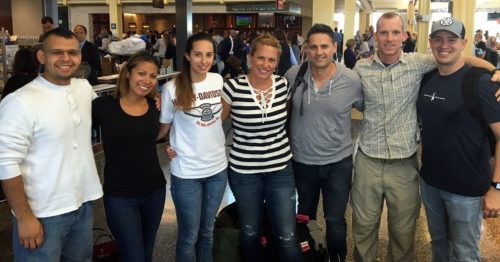
    The airmen were part of a reserve aeromedical evacuation crew from the 433rd Airlift Wing out of Joint Base San Antonio-Lackland, Texas.

    The team was traveling on a commercial airliner from Dallas, Texas, to support patient transport missions out of Andrews Air Force Base, Maryland. Roughly 45 minutes into the flight, a 74-year-old man sitting next to Staff Sgt. April Hinojos, an aeromedical evacuation technician, complained to his wife that he felt faint, according to an Air Force press release.

    The elderly man’s eyelids began to flutter, and he stopped responding to questions. That’s when Hinojos helped move him to the floor and evaluated the man’s condition.

    “He didn’t have a pulse, so we immediately started [chest] compressions,” Hinojos said.

    Around then, the pilot came over the intercom and asked if any medical personnel were on the plane.

    “I had just started the movie and through my headphones I hear someone screaming for help,” said Maj. Carolyn Stateczny, an Air Force flight nurse.

    The rest of the aeromedical crew was scattered throughout the plane and began working their way through the aisles to Hinojos and the man.

    1st Lt. Laura Maldonado, another flight nurse, gathered the plane’s medical supplies for the airmen and Stateczny prepared an automated external defibrillator.

    Capt. Justin Stein, the third flight nurse on the team, was unable to start the man on intravenous fluids because his blood vessels were constricted, possibly due to the suspected heart attack.

    Tech. Sgts. Robert Kirk and Edgar Ramirez, both aeromedical evacuation technicians, worked on the man’s airway and provided oxygen.

    “I’ve been a nurse for 16 years; in my expertise, I thought he was dead,” Stateczny said in the release. “He was completely grayish, his lips were blue, and his eyes had rolled to the back of his head. He was not responding at all. He had no pulse.”

    The elderly man’s wife, naturally distraught, was moved to the rear of the plane.

    Stateczny then requested the pilots land the plane at the next airport available so the man could get the required medical attention.

    After getting the automated external defibrillator pads on the man, Stateczny said, he moaned, developed a pulse and started to recover.

    They continued with oxygen and kept trying to start an IV.

    “He slowly started arousing,” said Statezcny. “It took some time, and he could tell us his name. He started getting some color, and then asked ‘What’s going on?’”

    The man thought he had just passed out, according to the release.

    The plane diverted to Little Rock, Arkansas, where emergency medical services were waiting to take over patient care.

    Aeromedical evacuation squadron members serve in a variety of military occupations, including nurses, medical technicians and administrative specialists. The crews are typically tasked out to help with events like natural disasters, caring for war wounded or routine medical transportation by air.

    The crews usually consist of five people — two nurses and three medical technicians — and they carry with them all the necessary equipment to turn any cargo aircraft into a flying ambulance.

    Bravo Zulu, AeroMeds. Damn fine job, and the stricken gentleman was very lucky to have chosen this flight.

    The article may be viewed Here.

  • Saving the World- Airman helps save lives of three families caught in fire

    tsgt clearyThe Air Force Times reports Tech Sgt. Michael Cleary, while home on leave, rushed into multiple burning buildings to awaken residents and usher them out of danger.

    While visiting his hometown of Manteca, California, on July 14, he smelled smoke and noticed ash drifting through the air. Shortly afterward, he saw flames coming over some houses, according to an Air Force press release.

    The blaze was spreading through the entire neighborhood, engulfing trees and cars. Recognizing the danger to the residential area, he jumped from his vehicle and ran to the scene of the fire.

    “My first thought was to see if anyone needed help, so I ran up to the first house. where the tenants were still inside sleeping, woke them up and helped them exit,” Cleary said in the release.

    The fire was spreading rapidly, though, and Cleary saw two other homes nearby that were in immediate danger, so he ran to alert those residents as well.

    Carin Rhodes, a tenant of one of the properties, heard Cleary shouting just outside, “Hey! Hey! There’s a fire in your backyard!”

    “I rushed to a window where I could see that there were three Modesto ash trees on fire,” Rhodes said. “I could feel the searing heat through the window. As I ran to the front door, I could still hear the yelling man alerting my neighbors. I watched this man go from house to house alerting the neighborhood without hesitation. All the while, I was completely amazed at how quickly he reacted to everything and how fluid he was.”

    After alerting the neighborhood, Cleary grabbed a water hose and began trying to prevent the spread of flames before the local fire department arrived.

    The Air Force said he risked his physical safety and health by exposing himself to the flames and smoke.

    “I had a cough for the next two days, but it was all worth it knowing that I played a small part in preventing three families from possibly losing their homes,” Cleary said.

    With a half-hour, Cleary and the Manteca Fire Department had not only cleared the residents from the three burning homes but also extinguished the flames.

    Cleary credited his Air Force training for helping him respond quickly.

    As an aircraft maintenance professional, Cleary is routinely trained in fire safety, especially in fire prevention and how to slow or stop the spread of aircraft-related blazes when they occur.

    “That training helped me remain calm throughout the situation,” Cleary said. “The whole process felt instinctual; [I needed] to prevent the spread of fire the best I could.”

    Bravo Zulu, Tech Sgt. Michael Cleary, damn well done.

  • Air Force Veteran Reality Leigh Winner

    Air Force Veteran Reality Leigh Winner

    I have never been in Reality and I cannot stand a leaky Leigh, Winner has lost.  I doubt this poor girl had much of a chance from birth.

    Prosecutors say a Georgia woman who pleaded guilty to mailing a secret U.S. report to a news organization faces the “longest sentence” ever for a federal crime involving leaks to the media.

    Ex-National Security Agency contractor Reality Winner is scheduled for sentencing Aug. 23 by a federal judge in AugustaShe pleaded guilty in June.

    Winner’s plea deal calls for a prison sentence of five years and three months. The judge isn’t bound by that agreement, and the charge carries a maximum penalty of 10 years.

    Prosecutors said in a court filing Tuesday their recommended sentence is stiffer than punishments in prior leak cases.

    Winner’s arrest last year was announced the same day The Intercept published a story on a classified NSA report on Russian hackers and the 2016 election. She is a former Air Force linguist who speaks Arabic and Farsi and had a top-secret security clearance.

    I thought they stopped arresting people who leaked information to the press.  Link to story HERE 

  • Major Michael Tolzien, special operations pilot, awarded DFC

    Major Michael Tolzien, special operations pilot, awarded DFC

    In another Air Force Distinguished Flying Cross story, the Air Force Times recounts the actions of Major Michael Tolzien, who at the time, was a special operations pilot of a MC-130J Commando II aircraft two years ago in Afghanistan, when he was tasked to get relief supplies to a Speciql Forces team who was critically short of war-fighting supplies. Tolzien lifted off with 1600 pounds of equipment.

    After loading up and taking off, Tolzien’s aircraft began cruising toward the drop zone, which was changed multiple times due to the shifting nature of the ground combat situation.

    The fluidity of the battle forced Tolzien’s crew to recalculate the perfect release point several times to ensure the supplies landed where U.S. forces, and not the enemy, could retrieve them.

    Conditions were quickly deteriorating as the crew neared their objective and looked for the best spot to drop their haul. Tolzien’s aircraft was struck multiple times by enemy fire as it flew slow and low, at about 800 feet above the ground, looking for the drop point.

    Despite the incoming rounds, Tolzien was able to remain calm and fly the plane steady enough that his crew dropped the supplies within 50 meters of the ground forces, “halting any further loss of life,” according to the Air Force. The drop “directly contributed to a successful counterattack.”

  • B1B crew earn Distinguished Flying Cross

    B1B crew earn Distinguished Flying Cross

    2-BIT sends us a link to the story of a Dyess Air Force Base B1B crew when their aircraft caught fire and their ejection seats failed over the Texas desert.

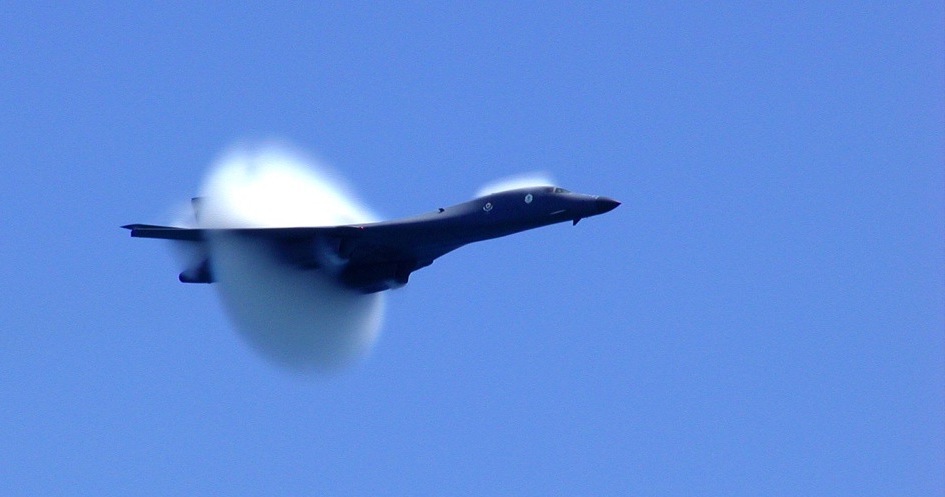
    When the first crew ejection seat failed to leave the plane successfully, the aircraft commander ordered the crew to immediately stop the escape procedure and managed to fly the damaged and burning aircraft with a crew hatch missing and the cockpit open to the surrounding wind blast to the Midland Air and Space Port near Odessa, Texas where the crew made a successful emergency landing.

    Last week at Dyess Air Force Base, the Air Force Global Strike Command commander formally recognized the heroism and extraordinary aerial achievement of that B-1B Lancer aircrew. The quick-thinking actions of the aircrew resulted in the first-ever successful emergency landing of a B-1B experiencing this series of serious malfunctions.

    USAF General Robin Rand, Commander of the Air Force Global Strike Command at Barksdale AFB awarded the Distinguished Flying Cross medal to B-1B crewmembers Major Christopher N. Duhon, Air Forces Strategic – Operations Division chief of future operations at Barksdale AFB, and an instructor pilot with duties at the 28th Bomb Squadron; Captain Matthew Sutton, 28th BS weapon systems officer instructor; 1st Lieutenant Joseph Welch, 28th BS student pilot; and 1st Lieutenant Thomas C. Ahearn, then 28th BS student weapon systems officer who has since completed training and is currently assigned to the 37th BS, Ellsworth AFB, S.D.

    .

  • Thai soccer team found

    Thai soccer team found

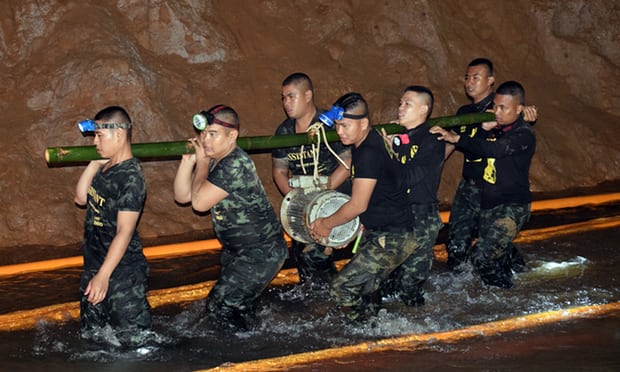
    For some reason, 11 days ago, a soccer coach took his 12 boys into a cave. Their ages range from 11 to 16, and their 25-year-old coach. Torrential rains flooded the cave. Rescue crews from the US and the UK as well as Thai SEALs have penetrated the dark, dank depths of the cave in hopes of saving the boys.

    Yesterday, their efforts were rewarded when the crews located the team three miles beneath the surface of the Earth. However, search efforts have switched to rescue efforts as crews try to determine the safest way to extract the boys from the flooded portions of their escape route, according to Stars & Stripes;

    When the group will be able to leave the cave isn’t known due to flooding and other factors that could make their extraction dangerous. Experts have said it could be safer to simply supply them where they are for now. Thailand’s rainy season typically lasts through October.

    Family members of the missing hugged each other and cheered as they heard they had been found.

    Rescue crews took enough food to last the the boys for four months in the event that it takes that long to safely extract them from the cave.

    Experts in cave rescues from around the world had gathered at the site. An official Australian group has followed a U.S. military team, British cave experts, Chinese lifesaving responders and several other volunteer groups from various countries.

    “These are challenging conditions and there’s a lot of consideration for safety as well as, the environment outside is contributing to the environment inside,” said U.S. Air Force Capt. Jessica Tait, part of a 30-member U.S. military team assisting in the search, referring to the rain that has been flooding the cave. “So I’d say, yeah, it’s an accurate statement that it’s challenging.”

    They only have to rescue the boys. Let that dumbass coach find his own way out.

  • That “bad day” photo

    That “bad day” photo

    Photo of an enlisted man’s car parked in the designated commander spot and the commander’s car parked so that it blocked the airman’s escape, made the social media circuit this past weekend speculating that an airman was about to have a bad day at Yokoto Air Base, Japan. Stars & Stripes tells the actual story;

    “An airman and his wife had left their car there after having drinks the night prior and didn’t want to be irresponsible,” [Col. Kenneth Moss, commander of the 374th Airlift Wing] explained. “I reassured them I wasn’t mad.”

    Moss did not identify the airman.

    “Parking that way allowed me to thank an airman and his family as well as uncover a problem,” he said.

    It turned out that not only had the couple made a responsible choice in not driving after enjoying a few drinks, the space wasn’t even marked as reserved when they’d parked.

    The wing commander’s parking space is marked in two ways — a curbside label and a removable sign hanging from a frame. But the curbside label had fallen off and the sign was only hung when the commander had official business at the club.

    “The signs were placed after the car was already in the spot so the airman did nothing wrong,” Moss said.