Category: Air Force

  • PT test tracks too long for Air Force

    PT test tracks too long for Air Force

    The Air Force Times reports that PT test tracks at Goodfellow Air Force Base in Texas and Hanscom Air Force Base in Massachusetts were too long, 85 feet and 360 feet respectively, and may have cost 59 airmen their careers as a result.

    The Goodfellow track was last accurately measured in 2010. At some point, its lanes were adjusted, Brzozowske said, and were either not remeasured afterward or were remeasured inaccurately. This caused 18 airmen to fail the fitness test who would otherwise have passed, the Air Force said.

    The Hanscom track had construction done after its last accurate measure in 2008 and was similarly not remeasured or remeasured inaccurately, Brzozowske said. As a result, 41 airmen there failed their fitness tests.

    However, it may be difficult to tell whether the Air Force’s estimates include every airman negatively affected by the incorrectly measured tracks.

    Yeah, well, they might have tried to pass with the max score rather than the minimum.The Air Force should have kept their mouths shut, fixed the problem and never admitted that this was a problem.

    The Air Force said all affected airmen are being notified and will be provided avenues for remedy.

    Brzozowske said that for airmen who are still on active duty, this means their fitness scores will be adjusted and any personnel actions that were taken as a result of those fitness scores will be remedied. She said airmen who were affected should work with their chain of command, force support squadron, legal office and the Air Force Personnel Center to correct their records.

    Airmen who have since left should contact the Discharge Review Board or the Board for Correction of Military Records, she said.

    They should publish a list so we all know who the hairy-backed Marys are who only do the bare minimum.

  • The Senior Military Service Sends Its Regards . . . .

    . . . to a bunch of youngsters that ran away from home years ago.  (smile)


    Today is the 69th birthday of the United States Air Force.  The USAF was created by the passage of the National Security Act of 1947.  While the act itself was signed by the POTUS on 26 July 1947, many of its provisions did not come into effect until 18 September of that year.

    What is today the USAF had previously been a part of the US Army – in fact, several different parts.  Here they are, in chronological order, courtesy of Wikipedia:

    Aeronautical Division, Signal Corps – 1 August 1907 to 18 July 1914

    Aviation Section, Signal Corps – 18 July 1914 to 20 May 1918

    Division of Military Aeronautics – 20 May 1918 to 24 May 1918)

    U.S. Army Air Service – 24 May 1918 to 2 July 1926)

    U.S. Army Air Corps – 2 July 1926 to 20 June 1941) and

    U.S. Army Air Forces – 20 June 1941 to 18 September 1947

    Yes, you read that correctly:  what is today the USAF was once part of the US Army’s Signal Corps.  Go figure.

    The USAF was made an independent military service by one of the provisions of the National Security Act of 1947.  It became an independent service on 18 September 1947.   As a result, the USAF celebrates 18 September as its official birthday.

    So, since it’s official:  Happy Birthday, Zoomies.

    But we still need to talk about your service’s policy of giving priority to building on-base golf courses, clubs, and quarters – then asking Congress for more money so you can buy planes and finish building runways. (smile)


    (Historical note:  two other US Army organizations exist which could conceivably be viewed as USAF parent organizations.  However, neither of these is generally regarded as being a predecessor organization of the USAF.

    The Union Army created a Balloon Corps during the Civil War.  This organization existed from 1861 to 1863, and was generally used for observation of the enemy.  Many if not most of those in the organization were civilians accompanying the Union Army vice Union military personnel; the organization’s leadership was civilian.  Though of some military utility – particularly during the Peninsula Campaign’s Battle of Seven Pines – the organization was effectively disbanded in the summer of 1863.

    The US Army Signal Corps in 1893 also created a War Balloon Company.  This was a military organization, and over its lifetime appears to have had a total of two balloons (consecutively; the second was produced after the first was no longer serviceable).  The second was reputedly named the Santiago and saw some use during the Spanish-American War.  The unit appears to have been disbanded prior to the creation of the Signal Corps’ Aeronautical Division in 1907.)

  • Fuelers get Hoyt Award

    Fuelers get Hoyt Award

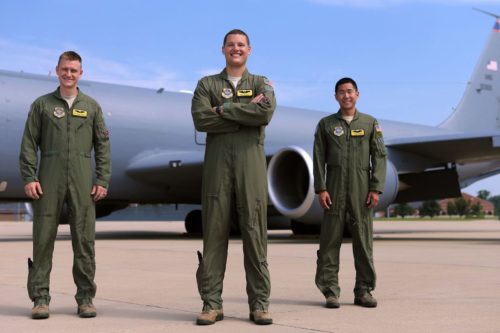
    KC135 crew

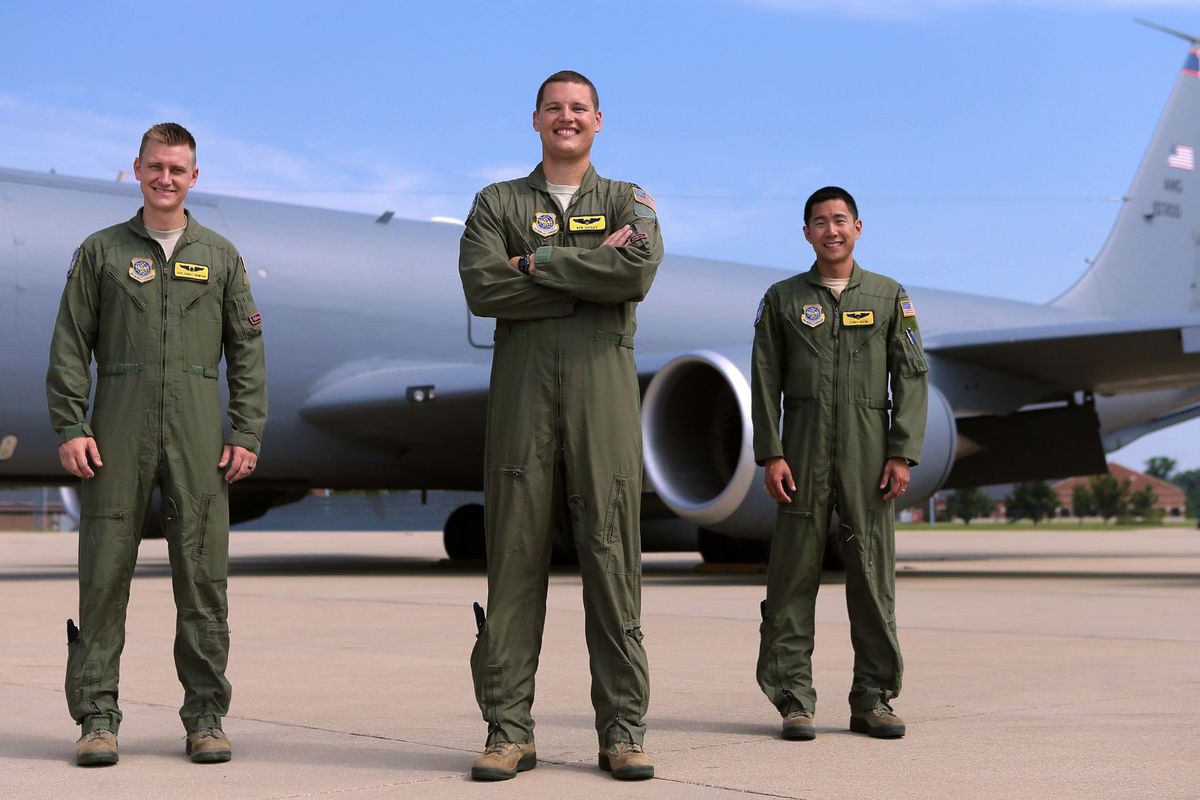
    Marine_7002 sends us a link to the story of three crew members of a KC-135 aerial refueling tanker who earned the Hoyt Award, named for Brigadier General Ross G. Hoyt, who took part in experimental refueling flights in 1929. It’s given every year for outstanding service by an aerial-refueling crew among the 400 crews that do that dangerous job. Captains Benjamin Oatley and James Quon, and Master Sergeant Jarrett Crawford had just finished fueling some aircraft over Syria when they noticed an A-10 which had lost an engine;

    The three-person crew of a KC-135 tanker, from Scott Air Force Base, had just completed an in-air refueling when the ground-attack jet’s left engine disintegrated.

    The tanker crew stayed within view of the A-10 at an unusually low altitude for more than an hour, arranged for escort from other fighters and supervised its safe landing at Al Asad in northern Iraq.

    That American-occupied forward base is north of Ramadi and, at the time, was within territory claimed by the Islamic State and subject to occasional attack. Air Force and Marines personnel repaired the Warthog, which was flown to a secure base five days later.

    I don’t need to tell you how much guts it takes to fly a 31,000 gallon gas can over enemy air space at a low altitude, but these three did just that to help a fellow pilot get home that night.

  • GAO scolds Air Force on plan to scrap A-10

    GAO scolds Air Force on plan to scrap A-10

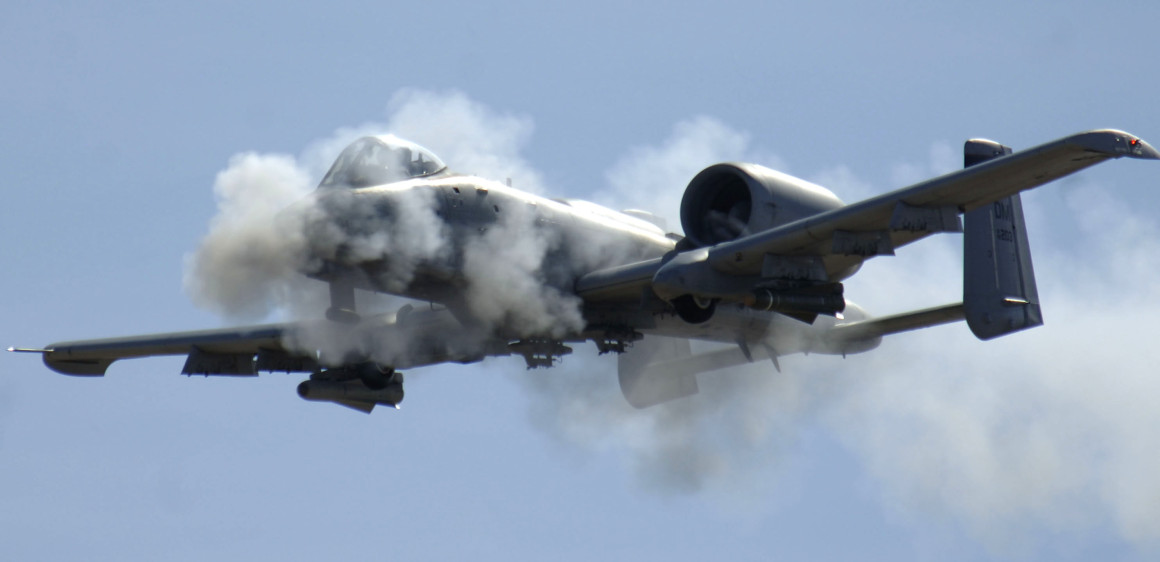
    A10 Thunderbolt

    Poetrooper sends us a link to a report by the Government Accountability Office entitled “Better Information Needed to Support Air Force A-10 and Other Future Divestment Decisions” in which the agency scolds the Air Force for it’s lack of a plan to replace close air support capabilities of the A-10 Thunderbolt when they finally scrap the program;

    [T]he Air Force has not established clear requirements for the missions the A-10 performs, and in the absence of these requirements, has not fully identified the capacity or capability gaps that could result from the A-10 divestment. Without a clear understanding of the capability or capacity gaps and risks that could result from A-10 divestment, it is also unclear how effective or necessary the Air Force’s and the department’s mitigation strategies will be. For example, although the Air Force has several efforts underway to generally mitigate the loss of capabilities that would result from A-10 divestment, it has not identified how or if it will replace the A-10’s role in combat search and rescue missions. Depending on the specific mitigation strategy chosen, the Air Force may have to address a number of different secondary impacts that could affect its ability to execute existing missions. The A-10 is one example of a challenge DOD could continue to face as it balances current needs against investing in the future force to replace aging systems.

    The report says that the Air Force hasn’t discussed the issue with A-10 pilots or crews to fill the gap that, if they had their way, would already exist. The Air Force is pinning it’s hopes on the F-35 which won’t even be able to engage in close air support for at least five more years. Of course, the problem rests with the politicians who only want to save money without a thought for how it would affect the ability of the military to fight and win wars.

  • The USAF Is Short Pilots and Maintenance Personnel. SECAF Solution? Raise Pilot Bonuses and Pay Them to Drone Drivers.

    Jonn mentioned this in an article earlier today.  But I’ve got a bit of a different take on it than he did.

    Per this report from Fox News, the USAF is short 700 pilots, and the SECAF expects the pilot shortage to increase to 1,000 over the next few years.  The shortage is greatest among fighter pilots.

    The SECAF also indicated the service is short 4,000 mechanics.  Both shortages are causing issues.

    Now, the reason given by the SECAF for the pilot shortage is that the current deployment cycle is causing lowered quality of life among pilots, causing many to leave the service.  She also says that “airlines are forecast to be hiring a lot more” in the near-term future, which will make the problem worse soon.

    The SECAF’s proposed solution?  Increase the USAF pilot bonus to $35k annually – and pay that bonus to drone drivers also.

    Maybe raising the pilot bonus is necessary; maybe not.  At this point, I’m not really convinced  that that’s either necessary or will work.  I’m willing to listen to a good argument – but I haven’t yet heard one.

    And maybe it’s just me, but from what the SECAF’s saying . . . I just don’t “get it”.

    Per the SECAF, the biggest current USAF shortage seems to be among fighter pilots.  I thought airlines generally preferred to try and hire those with multi-engine ratings and experience flying larger aircraft – like C-17s and C-130s.  Maybe I’m wrong.

    Plus, I need an explanation of how paying drone drivers a bonus would help.  Aren’t many of them not rated to fly manned aircraft?  And even if some RPA pilots are qualified to fly manned aircraft, doesn’t my question in the previous paragraph apply?  Do airlines really go after RPA pilots?

    In short – is this bonus proposal by the SECAF something that might actually work?  Or is it a “solution in search of a problem” that will suck up money but will do little or nothing to fix the actual problem at hand?  At this point, I’m just not convinced it will work as advertised.

    If “quality of life issues due to multiple deployments” are driving this, it seems to me that a better solution to the pilot shortage problem might be for the USAF to simply train more pilots – then use some of those additional pilots to “spell” those who have done repeated deployments and/or replace those who choose to depart.  Alternatively, if instead it’s lack of flight time due to ground duty assignments that’s driving experienced pilots to “punch out” and leave the service . . . I’m not sure that a bigger bonus will work particularly well.

    Finally, I also don’t see how increasing the pilot bonus will do a damn thing to cure the shortage in maintenance personnel.  Someone needs to explain that one to me, too.  Last time I checked, you can’t fly an aircraft that’s grounded due to lack of maintenance.

    Well, Madame SECAF?  Could you perhaps enlighten us?  What are we missing?

  • Air Force admits pilot shortage

    The Associated Press reports that the Air Force is struggling with a shortage of pilots. Yeah, we’re mired in an endless air war and the Air Force cut back flying time, bonuses and air frames – who knew that pilots who couldn’t fly would leave the service? The Air Force blames the commercial airlines for luring away the talent, because it certainly couldn’t be Air force policies that’s chasing them away;

    The Air Force has grappled with pilot retention for some time, particularly as airlines look to hire them, promising higher salaries and benefits. James said the pilot shortage could grow to 1,000 in a couple years.

    “The airlines are forecast to be hiring a lot more,” she said, adding that the Air Force also needs to increase its training of new pilots.

    Meanwhile, they planning on increasing bonuses for drone crews;

    Air Force Secretary Deborah Lee James also told Pentagon reporters Wednesday that she is planning to pay drone pilots a $35,000 a year retention bonus to encourage them to stay in the service.

    The 35,000 a year retention bonus would be an increase over $25,000 bonus the service has been allowed to provide. And all drone pilots would be eligible once their service contract is up. She added that Air Force needs the authority to increase bonuses for all pilots in order to address the shortage.

    More opportunities for pilots to stay on the ground – that should bring them in herds.

    Who knew that focusing on social warfare instead of the actual national security warfare would impact readiness?

  • Colonel William Jones; perv

    Colonel William Jones; perv

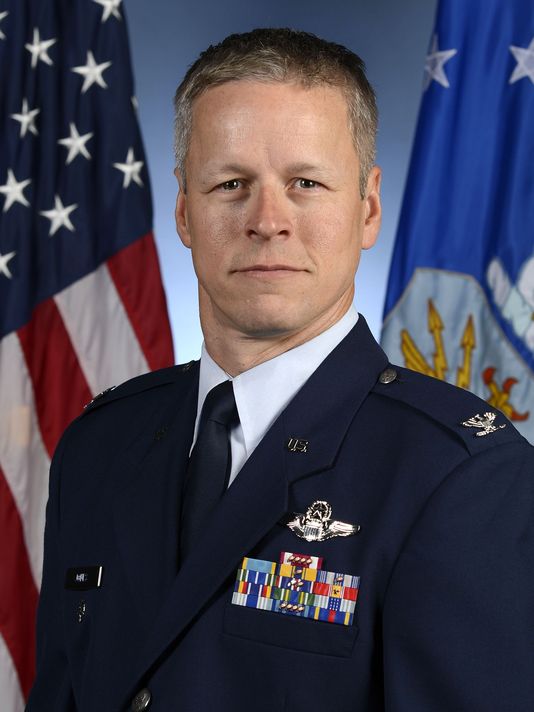
    William Jones

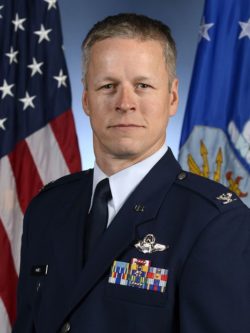
    A number of readers have sent us links to this story in the Air Force Times in regards to Colonel William Jones, the former vice commander of the 20th Fighter Wing at Shaw Air Force Base, South Carolina.. Apparently, he’s been arrested on charges that he possessed nasty pictures of children and that he unsuccessfully obstructed justice;

    “The charges are being worked through the legal process outlined in the UCMJ, and Col. Jones is presumed innocent until proven guilty by a court of law,” Col. Stephen Jost, commander of the 20th, said in the release.

    Jost relieved Jones of command Feb. 17. At the time, the wing said it was due to a loss of confidence, but did not offer any further explanation as to why Jones was relieved.

    I’m sure that Colonel Jones won’t be the only one punished – every Airman will be subjected to hours of training slides explaining why they shouldn’t have dirty pictures of children. Field grade and Flag officers will be exempt from the lectures.

    Bobo and I discussed the picture yesterday and it seems that Jones missed participation in the GWOT. Maybe if he’d had a deployment or two, he would have been too busy to be a criminal.

  • Air Force Master Sgt. Aaron Frederick and Staff Sgt. Bradley Mock and their Bronze Stars

    Air Force Master Sgt. Aaron Frederick and Staff Sgt. Bradley Mock and their Bronze Stars

    Master Sgt. Aaron B. Frederick and Staff Sgt. Bradley D. Mock

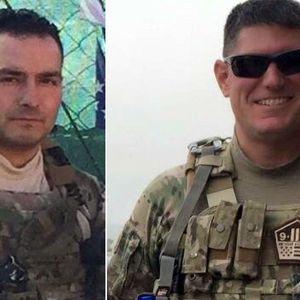
    Military Times reports that two airmen, Master Sergeant Aaron B. Frederick and Staff Sergeant Bradley D. Mock were awarded Bronze Star Medals with Valor and an Air Force Combat Action Medal and the Purple Heart for their actions while on patrol in Afghanistan on December 21st;

    Both Frederick and Mock were on an outside-the-wire mission approximately three miles north of Bagram when their patrol was approached by a Taliban terrorist operating a motorcycle loaded with explosives, according to their award citation. Frederick, the team’s patrol leader, lunged toward the attacker, just 15 feet away.

    The suicide bomber detonated his device, mortally wounding six airmen and critically injuring five others. Disoriented and badly burned, Frederick quickly came to and led the remaining survivors to establish a security perimeter in the area, and directed back-up forces to send in medical evacuation. He insisted that survivors receive treatment once the medevac arrived as he remained on the battlefield confirming all were accounted for, the citation continues.

    In the meantime, Mock received cuts to his face and lost consciousness for a few minutes during the blast. When he woke up, Mock, a tactical security element radio telephone operator, called in for immediate assistance to the back-up security team while simultaneously administering triage to two severely wounded teammates. He also helped secure sensitive equipment and intelligence, the citation said.

    Together, he and Frederick coordinated medevac and treatment for six wounded teammates, and the extraction of 12 personnel total within 40 minutes of the blast.