Author: TSO

  • The legacy of a fallen Marine, and how his Mom channels her loss

    Bears

    This is a sad and yet beautiful story.  One place to start is with Matthew Freeman’s final diary entry:

    Mom, Dad, I can never repay you for all you have done for me. You made me into the man I am today. I hope that I have made you proud. That has always been my goal. I love you both so much. Tell the girls that I love them and couldn’t be a prouder older brother. I have always tried to be an honorable man and I truly believe in what we are doing here. I am doing this for my family; so that they need not fear, My country, so that it can be a beacon of light for the entire world; the men around me, because no one could ask for a more august company than the men of the US Armed Forces and finally I do this for myself so that I might know the measure of myself and in the end not be found wanting. I believe that it is my duty to fight and having done all that I can to simply stand against this and all the evil works upon this Earth.

    I love what he says here, because almost to a man this was the feelings expressed by the guys I served with.  We were where we needed to be.  Not where we wanted to be neccessarily, but where we needed to be.

    Matt grew up in Richmond Hill, Georgia, became an Eagle Scout, loved reading Shakespeare and playing Tennis.  He was accepted and enrolled at the US Naval Academy, and upon graduation became a Marine Officer.  On his website bio it states

    Matthew’s true passion though, was flying. As a young boy he fell in love with flying and went on to become a Marine pilot – the third generation of Freemans to wear Navy wings. In 2009, he married his childhood sweetheart, Theresa Hess. Three weeks later, he opted out of the relative safety of the cockpit and volunteered for ground action when he heard the Marines needed more ground forces – in Afghanistan.

    At the age of 29, while conducting combat operations in Kapisa province, Afghanistan, Matthew Freeman would be killed in action.

    Flash forward now to a seemingly unrelated story out of Poland:

     A newborn baby in Poland carries the name of a hero soldier from Staten Island who died two years ago saving the life of the infant’s father.

    U.S. Army Staff Sergeant Michael Ollis, 24, a lifelong resident of New Dorp, sacrificed his life on Aug. 28, 2013, while shielding Lt. Karol Cierpica from a suicide bomber in Afghanistan.

    SAM_0043[4].JPG
    Newborn baby Michael Cierpica lies with a teddy bear made from the Army fatigues of Staff Sgt. Michael Ollis, the soldier from New Dorp who sacrificed his life saving the infant’s father during an attack in Afghanistan. (Photo courtesy of Ollis family)
     
     Earlier this month, the Polish soldier became the proud father of a baby boy he named in honor of Ollis.

    Robert Ollis and his wife, Linda, called the tribute to their son “unexpected” and “wonderful.”

    “I thought of the baby as a grandson,” Ollis Sr. said “We are very happy and honored.”

    To thank Cierpica and his wife, the Ollis family sent the couple a teddy bear they had specially made out of their son’s Army fatigues.

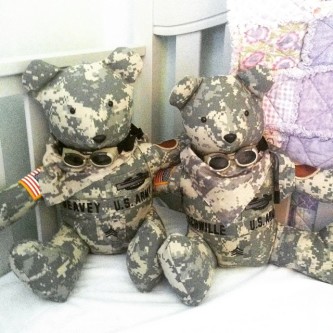
    Now, the reason these two stories are related is because of Matthew Freeman’s Mom, Lisa, who to honor her son, and the sons, daughters and siblings of our fallen heroes has been making these bears (in fact her nonprofit made the very one pictured above with the Polish baby) and raising funds for scholarships of siblings who have suffered loss.  

    Anyway, it came to my attention yesterday because of an article in Stars and Stripes:


    Friends and family recall how Matthew Freeman always tried to help others. It’s been more than six years since the Marine captain fell in combat, but that legacy lives on through those who serve in his name.


    A C-130 pilot who didn’t have to pick up a rifle and fight, Freeman volunteered for the ground force when the call came for more troops. The 29-year-old died bravely leading his men onto an Afghan rooftop during an intense firefight with the Taliban on Aug. 7, 2009.


    The Matthew Freeman Project started inauspiciously at his direction shortly before his death when he requested school supplies for Afghan children. The nonprofit continued after he was gone, and when ensuring the delivery of supplies became impossible, it focused on college scholarships for the oft-overlooked casualties of war, Gold Star siblings and the siblings of combat-related suicide victims.


    The project didn’t stop there: mother Lisa Freeman and a small army of craftsmen began sewing “Matthew Bears” for the children of fallen servicemembers, using their uniforms as material.


    “Even as a kid he was always looking to help,” Lisa Freeman said. “He always believed he could make a difference.”

    I’m not going to steal any more of Stripes story, because you should go read the whole thing for yourself.  YOU CAN READ ABOUT IT BY CLICKING HERE.

    As luck would have it, my wife and the wife of my battle buddy from Afghanistan were pregnant at the same time, right when the story came out about the Polish baby, and the story really touched me deeply, because my battle buddy and I had served on the very same FOB where Michael Ollis had saved Karol Cierpica, FOB Ghazni.  And my awesome mother in law graciously offered to not just make one for my new born, but also for my battle buddy.  Now 8 months old my daughter mostly just gnaws on his ear, but as she gets older I hope to explain to her what the bear is made of, and why Daddy had to go far away to stop people from hurting other people.  And when I read yesterday the words that Matthew Freeman wrote I thought that that was exactly what I felt, even if I couldn’t express it as well as Matthew.

    But, if you are interested in making bears for other families who have lost loved ones, or if you just want to send Mrs. Freeman a nice email to support her, you should definitely go to the website for more info.  I emailed with Lisa yesterday, and she’s just an absolute wonderful lady, and took time out of her busy day to email back and forth with me for quite a while.

    So again, if you know how to sew, and you have some extra time in your day, maybe you could help out the project,

    For more information on The Matthew Freeman Project, how to donate or to request a Matthew Bear, visit www.freemanproject.org or https://www.facebook.com/TheMatthewFreemanProject/

    [NOTE:  The bears at the top of this blog posting are the ones that my mother in law made for my baby and that of my battle buddy.]


    Cross-posted from paying gig.

  • The VA firings and the MSPB

    Jonn stole my thunder by putting his post up first.  It’s not a real red meat piece either way, since it is muddled with various branches, too many villains to count, and chalk full of legal BS.  But for the 2 or 3 interested, I actually read the decision yesterday and broke down what happened.

    Cross-linked from paying home.

    MSPB


    There is a lot of confusion over what happened with VA Employees Rubens and Graves and how they were fired or demoted, and then later not only had the demotions overruled, but got back pay and lawyers fees.  Obviously people are super upset with it, as am I.  But it is important to look at who is actually responsible on this one, and who is not.  Most people think it is the VA protecting their own, and just letting people get away with whatever they want.  That’s not really the case.  This is actually an interesting look at the Federal Government as a whole, because it addresses all three branches of Government, and none of them escape this cloaked in glory.

    Let’s start with the VA’s Inspector General report, looking only at Graves, because the other one is substantially similiar, but gets more convoluted in other ways.  So let’s just look at Graves.

    Ms. Kimberly Graves was reassigned from her position as the Director of VBA’s Eastern Area Office to the position of Director, St. Paul VARO, effective October 19, 2014. VA paid $129,467.56 related to Ms. Graves’ PCS move. We determined that Ms. Graves also inappropriately used her position of authority for personal and financial benefit when she participated personally and substantially in creating the St. Paul VARO vacancy and then volunteering for the vacancy.

    Mr. Antione Waller, former St. Paul VARO Director, told us Ms. Graves initiated discussion with him about relocating to the Philadelphia VARO. Once he expressed a willingness to accept the reassignment, she did an apparent “bait and switch.” She told him that the Philadelphia position was no longer available and he would be considered for the Baltimore VARO Director position. When he said he was not willing to move to Baltimore, Ms. Graves told him, “you will probably get another call, this probably won’t be the last conversation about Baltimore.” In an email, Ms. Beth McCoy, who at the time was the Assistant Deputy Under Secretary for Field Operations and Ms. Rubens’ subordinate, told Ms. Graves that she spoke to Mr. Waller and told him his name was already submitted to the VA Secretary for Baltimore, so “saying no now is not a clean or easy option.” Once the St. Paul Director position was vacant, Ms. Graves said she contacted Ms. Rubens and said, “I’d like to throw my name in for consideration for St. Paul … I feel like I’ve done my time and I’d like to put my name in.”

    Ms. Rubens’ and Ms. Graves’ reassignments resulted in a significant decrease in job responsibilities, yet both retained their annual salaries—$181,497 and $173,949, respectively.

    Put more succinctly, Ms. Graves convinced the St Paul director to go to Baltimore, signed off on the paperwork, and then immediately arranged her own transfer from being the East Regional Director to just being the St Paul Director.  At the same time, despite having less responsiblity, she not only kept the same salary, but she also got hundreds of thousands of dollars in relocation fees.

    After both Congress and Veterans Service Organizations called for their firing, the VA Employees were each demoted:

    The VA said in a statement that Diana Rubens and Kimberly Graves were demoted from senior executives — the highest rank for career employees — to general workers within the Veterans Benefits Administration….

    This satisfied nearly no one.

    Rep. Jeff Miller, R-Fla., chairman of the House Veterans Affairs Committee, said Rubens and Graves “clearly should have been fired,” adding that, “for those wondering whether VA is committed to real accountability for corrupt employees, VA leaders answered that question (Friday) with a resounding ‘no.’”

    The VA’s failure to fire Rubens and Graves “gives me no hope the department will do the right thing and take steps to recover the more than $400,000 in taxpayer dollars Rubens and Graves fraudulently obtained,” Miller said. “The millions of American veterans who depend on VA and the hundreds of thousands of VA employees who are dedicated professionals deserve better than this broken status quo.”

    Dale Barnett, national commander of the American Legion, said the VA’s failure to fire Rubens and Graves was “an insult and a disgrace to all veterans. Any promises that VA officials make about accountability in the future need to be taken with a grain of salt.”

    So at this point, it appeared the VA was going soft on them, and it still appears that way.  But at least they were being demoted.  And the VA IG report specifically called for the relocation funds to be repaid.

    And so, while we were unhappy, at least something was happening….until the Merit Systems Protection Board got involved.  Since most don’t know what that is, I’ll give you the wiki version:

    The Merit Systems Protection Board (MSPB) is an independent quasi-judicial agency established in 1979 to protect federal merit systems against partisan political and other prohibited personnel practices and to ensure adequate protection for federal employees against abuses by agency management.

    When an employee of most Executive Branch agencies is separated from his or her position, or suspended for more than 14 work days, the employee can request that an employee of MSPB conduct a hearing into the matter by submitting an appeal, generally within 30 days.[1] In that hearing, the agency will have to prove that the action was warranted and the employee will have the opportunity to present evidence that it was not. A decision of MSPB is binding unless set aside on appeal to federal court.

    So anyway, both Graves and Rubens appealed their demotions.  And the Administrative Law Judges (ALJs) in both cases overturned the demotions, allowed them to keep the reimbursements for moving, paid them wages that they missed, and even made the VA pay for all legal bills.

    Among others, House VA Chair Jeff Miller was incensed.  (Here he is discussing a different case, but it is in line with his thinking on the MSPB):

    But there are members of Congress that view MSPB’s recent rulings as no more than a stonewall preventing the VA from removing underperforming employees.

    Rep. Jeff Miller, R-Fla., as chairman of the House Committee on Veterans Affairs, has been a frequent critic of the MSPB’s rulings and said, in a statement on Feb. 8, that the board’s powers prevent the VA from being able to reform and recover from the scandals that have rocked it at late.

    “MSPB coddles and protects misbehaving employees rather than facilitating fair and efficient discipline,” he said. “And as long as we have a system in place that requires a similar standard to discipline federal workers as it does to send criminals to prison, accountability problems at VA and across the government will only continue.”

    So fast forward to yesterday.  My 7 month old was getting sleepy and making lots of noise, so my wife said to read to her.  I figure she doesn’t understand a word I am saying anyway, so I might as well read aloud the decision of Michele Szary Schroeder, Chief Administrative Judge that ruled on the Graves demotion.  My kid fell asleep, I got VERY angry.

    The judge looked at 3 basic things.

    1) Did the Agency prove its charge by preponderant evidence creating a rebuttable presumption that the transfer penalty was reasonable?  

    She concluded that yes, the Agency proved that, saying:

    The particular language of the statute at issue, Section 713(a)(1) of Title 38, authorizes the removal if the Secretary determines the performance or misconduct of the individual warrants it. This section gives very broad authority to the Secretary of Veterans Affairs in determining what constitutes misconduct for an employee in the Senior Executive Service at that Agency….

    …by failing to fully extricate herself from the activities surrounding Mr. Waller’s reassignment before and after June 5th, coupled with taking the position he used to hold, equaled the appearance of an impropriety. Bottom line, Ms. Graves should have known taking the job would not look good to the public the VA serves.

    So far so good.

    2) Did Ms. Graves’ affirmative defenses of harmful procedural error and  a due process violation necessitate overruling the decision?

    Again, she concluded that no, they did not.

    I conclude that Ms. Graves did not establish by preponderant evidence that the VA committed a harmful procedural error and I further do not find any due process violation.

    Again, so far so good.

    3)  Having found the first two prongs met, can Ms. Graves establish that the penalty was unreasonable under the circumstances of this case?

    Houston, we have our problem.

     Knowledge and acquiescence of Ms. Graves’ reassignment to St. Paul by Ms. Graves’ chain of command are readily apparent and if no one in her chain said, wait, this will not look right when they approved her reassignment, how can a penalty be imposed against Ms. Graves for not saying that.

    I conclude Ms. Graves put forward sufficient evidence to prove the penalty of transferring her out of the Senior Executive Service was unreasonable. Therefore, she rebutted the presumption and established that the penalty was unreasonable under the circumstances of this case.

    Basically the Judge found that there was so much of this type of activity going on in the upper echelons of VA that Ms Graves is being singled out for things that a whole slew of people ought be punished for, and thus her punishment is unjust.

    If that doesn’t make sense to you, you aren’t alone.  It doesn’t make sense to anyone else I’ve talked to either.  Taken a step further, now how could ANYONE be punished, even if they did the exact same thing?  Any VA employee can apparently get an easier job, keep their pay, and get relocation bonuses.  The Judge in this case said that Graves had no way of knowing she would be punished since others were doing it, thereby creating itself the presumption that future individuals who do the same thing are going to again get off without any punishment.

    Secretary McDonald was clearly incensed over the decision, as the previously linked Federal Times article makes clear:

    A series of scandals at the VA, coupled with appeal restrictions designed solely for the agency as a result of the Veterans Access, Choice and Accountability Act of 2014, have made the MSPB the central battleground pitting accountability versus federal employee rights.

    For its part, the MSPB has recently overturned or lessened several VA judgments, including the demotion of two Veterans Benefits Administration executives accused of using their positions for personal gain.

    That sustained struggle bubbled over last week, when VA secretary Bob McDonald suggested in a Feb. 10 hearing of the House Committee on Veterans Affairs that the agency shift senior executives from Title 5 to Title 38 status, a move that would limit grievance and appeals avenues for executives.

    So basically McDonald is looking to limit the Board by shifting where the employees are titled, taking the MSPB out of the equation.

    For now, that appears to be the legislative answer.  What is odd, I mean truly odd, is that the MSPB has a disclaimer up on their main page now that (while not intended as such) seems to even indicate that Congress can and should take action of the disapprove of how this went down, to wit:

    Recently, heightened attention has been paid to rulings by United States Merit Systems Protection Board (MSPB) administrative judges involving appeals filed by Senior Executive Service employees at the Department of Veterans Affairs under the Veterans Access, Choice and Accountability Act of 2014 (the 2014 Act). In response to these rulings, some have suggested that MSPB is protecting poor performing employees at the Department of Veterans Affairs. These suggestions are baseless and unfair.

    As an independent, quasi-judicial agency, MSPB is required to apply laws created by Congress and legal precedent, as established by Federal courts, when adjudicating appeals. With respect to burdens of proof applied by MSPB, they are contained in title 5 of the United States Code. Moreover, it should be noted that the 2014 Act made no changes to these burdens of proof. Indeed, as MSPB noted in itsAn accessible version of this document may exist, click here to access that version August 21, 2014 Report to Congress Opens a New Window. August 21, 2014 Report to Congress Opens a New Window. , the 2014 Act made only two changes to the MSPB adjudication process: 1) it shortened the time under which appellants must file appeals and which MSPB administrative judges must issue decisions; and 2) it removed the full Board from the MSPB adjudication process. The 2014 Act did not change any statutory burden of proof to be applied in these appeals. Therefore, unless the law is changed, these statutory burdens of proof continue to apply, as they do in all other appeals filed at MSPB. 

    None of this helps in the short term.  Both Rubens and Graves will get away what even the VA’s inspector general said was a brazen and perfidious attempt to get funds and the same salary for lessened responsibilities.  The Court itself found that the SES system at VA was so messed up that neither woman could anticipate being demoted, much less fired.   And VA itself is unable to do anything to correct the climate that exists without help from Congress.  And as soon as Congress starts trying to fix this, the SES lobby and unions will jump in with their opposition.

    I realize this is long and outside the knowledge scope of most readers, but trust me, VA can’t fix the climate issue right now without some help.  Help they don’t seem to be getting from the Courts, the SES system or anyone else.  And when Congress tries to correct the issue, they will likely run into a brick wall.  This is all looking like it could be one heck of a fight in Congress, and virtually no media will probably report it, and even fewer people will understand the ramifications of what might transpire.


  • Help honor the Arlington Caisson Platoon

    UPDATE: 2/12/16.  Even I underestimated how big you guys would come through for me.  It took less than 24 hours, and you raised $3304.98.  So I am shutting it down for now.  Any overage we’ll keep in the account for now.

    1 quick thing though, I got an email last night from a friend who works at the NRA National Firearms Museum who offered up a guided tour of the museum to anyone who donated.  If you happen to live in the area, it really is an awesome tour.  I took it a few years ago.  There’s stuff you never even imagined in there, like a shotgun that came over on the Mayflower.  Anyway, if you gave and you live somewhere in the area, send me an email if you are interested.  If I don’t hear anything, I will hold it for the next time we need to raise money.

    You guys are awesome, and I couldn’t appreciate it more.   I know some are sending checks and such as well, I can hold it or return it, whatever you want.  Just let me know.  Those that wanted posters, I should get them out on Tuesday (I forgot Monday was a holiday, and hope to get in touch with Sal for some books shortly!)

    Again, the TAH community is the best, and my sincere thanks to all of you who donated, shared, or even just offered your support.


    ryankyle

    Every time there is a snowstorm or rain or something in DC everyone sends up pictures of the guards at the Tomb of the Unknowns still out there walking.  And it chokes me up too.  But the Tomb Guards aren’t the only ones to work their asses off over there at Arlington.

    Most of you have friends that live there now.  I do certainly.  SSG Robert Burton.  CPT Lawrence Yacubian (who’s birthday would have been last week.)  My two best friends have their fathers buried there, and I just went there for my own personal hero, Colonel Henry Cook, a special forces legend from Vietnam.   And it’s not the guard guys who take them to their resting place, it’s the Caisson guys, and their equine battle buddies.

    And lest you forget, they are one of us (ie Infantrymen) as the website makes clear.


    Most of these men and women come to Ft. Myer, Virginia not as expert horseman, but as trained infantrymen, skilled in their individual fields and tactically proficient. A new Soldier on this team must undergo rigorous training on a riding style the Army hasn’t used anywhere else since 1948. In addition to caring for the horses, the Soldiers must learn to ride in the erect posture of solemn military attention and sitting in a McClellan saddle.  In addition to maintaining the ceremonial uniform of an Old Guard Soldier, the Caisson Soldiers must learn to use, clean and maintain ceremonial tack and harness that is unique to their mission in Arlington National Cemetery. Because of this extensive equine training and experience, the Army has labeled the Caisson Soldiers with the Additional Skill Identifier D2 – Army Horseman.

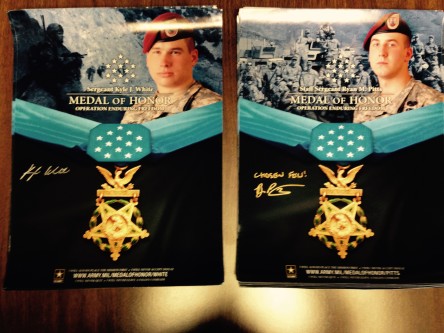
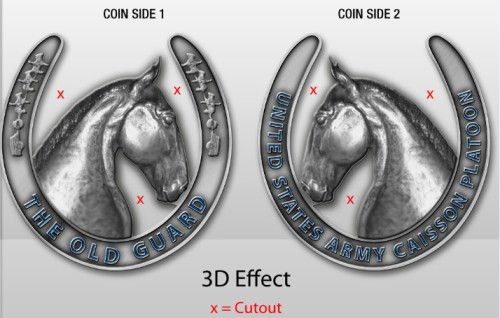
    Anyway, our long time friend and champion Parachutecutie had noticed for a couple of years that Caisson Platoon didn’t have challenge coins.  She surreptitiously asked around from time to time and learned from the Soldiers, many who are no longer with the unit, that they’ve just not had them for a while probably due to budget cuts.  And then she talked to the 173rd Medal of Honor Recipients, Sal Giunta, Kyle White and Ryan Pitts, and they wanted to pitch in to help.  Again, every one of us that have friends there, the Caisson guys are the one that took them there.  They put in a shit load of time getting ready and training, and get a fraction of the praise their more high profile brothers get.

    So anyway, I was going to get them all a boat with Leonardo DeiCaprio’s throw offs for them, but that might be out of the budget.  But they deserve something, and so Parachute Cutie and the MOH guys want to get them their own unique and well-made challenge coin.   I’ve offered to help raise funds.

    Here’s the thing: we’re getting the coins.  If you don’t contribute, I’ll pay the whole thing, and then either my wife will kill me, or I’ll have to sell a kidney.  All told it comes to just under $3000.   But, I have 15 posters each of Kyle and Ryan from their medal ceremonies that are autographed, and I am willing to send to anyone who donates at least $50.  But of course that won’t get me to the end either (that would be $1500).  Sal is offering up signed copies of his book too, also for the $50.  But if we are going to make the goal and get to the end, we’re going to need other donations too, be it $5 or $25, or any other number.   Jonn and I and others haven’t asked for much, so hopefully you can find it in your heart to donate just a little and help us to honor those who honor our friends as they go to their final formation in the sky.

    So, help us to honor those guys.  If you want the posters, hit up Jonn’s paypal at the side with $50, and then send me an email at seaveyattorney@gmail.com to let me know you did it, and whether you want a Ryan or a Kyle one, and I’ll get it out to you in the next day or two.  But my sincere hope is more so that every TAH reader who has a friend buried there will donate $5 in memory of each of their friends, and help us honor the Old Guard guys who did force protection on their last mission.   No matter how much you donate, do me a favor and send me a picture of your fallen friend, and what you would want to say to or about them.  Next summer I am taking 98 of America’s best and brightest rising seniors to visit people at Arlington during Boys Nation, and we’ll be visiting whomever you donate for.

    I’m not rich.  But again, I’ll pay if I have to, because the Caisson guys deserve to know that we love and respect them as our brothers, and for having to deal with the mental part that comes with taking others loved ones to their final rest.  But I don’t think I will have to pay, because TAH always comes through.  Come through for me  now.

    (If we go over the figure I am looking for the fund raiser, it will go into an account and I’ll give some of you the opportunity to get it back, or we can hold it for the next worthy endeavor.  Either way, I’ll keep on eye on our total and let you know when we reach it, but we know there’ll be other Medal of Honor events coming up, and it is always nice to know we have funds waiting.)

    Picture of the coins:

    Coin

  • 9th Circuit overturns portion of old Stolen Valor law [UPDATED]

    9th Circuit overturns portion of old Stolen Valor law [UPDATED]

    Guidi

    Let’s start by looking at the Defendant on this one, just so you get an idea of what he did.  From the opinion:

    Defendant Elven Joe Swisher enlisted in the United States Marine Corps on August 4, 1954, a little over a year after the Korean War ended. In August 1957, he was honorably discharged from the Marine Corps into the reserves. Upon discharge, Swisher was given a DD-214 discharge document, a typewritten form that provided his name, education, type of discharge, last duty assignment, last date of service, and similar information regarding his military service. The form required a listing of Swisher’s “decorations, medals, badges, commendations, citations and campaign ribbons awarded or authorized.” In the authenticated copy of Swisher’s original DD-214, the term “N/A” (not applicable) is written in the field.

    In 2001, more than forty years after his discharge, Swisher filed a claim for service-related Post-Traumatic Stress Disorder (PTSD). In his application, Swisher claimed he suffered from PTSD as a result of his participation in a secret combat mission in North Korea in August or September 1955. Along with his application, Swisher provided a self-published narrative that described the North Korea operation.

    According to the narrative, Swisher was wounded in battle, and subsequently presented with a Purple Heart by an unnamed captain who visited him in the hospital. The same captain told him he was “entitled to and should wear the National Defense Medal, Korean War Service Medal and the Korean War U.N. Service Medal and Ribbons.” Swisher claims he also received a Silver Star and a Navy Commendation Medal and Ribbon with a Bronze “V.”

    All of that was nonsense, he fraudulently created a DD214, applied for VA benefits, and got caught.  He apparently had to pay the VA back.  Nonetheless, at a trial for another individual, Swisher showed up wearing a variety of medals, including a purple heart, which got him busted under the Stolen Valor Act.

    Now, some background here so you understand what is going on.   The first Stolen Valor Act, passed in 2005 had two portions.  The first was that you couldn’t wear medals you didn’t earn, and the second is that you couldn’t claim to have earned medals that you hadn’t actually earned.  A guy named Xavier Alvarez was convicted on the second after claiming he’d received the Medal of Honor and a few other things.  It went up to the Supreme Court, who in a very convoluted and divided opinion said that that portion, the claiming medals part, violated the Constitution.  The vote on that was 3-2-4.  Three said it was always unconstitutional, two said that it was unconstitutional in this case because it needed a fraud element added, and four said it should stand.  [Correction on that as I think about it, it was 4-2-3 I believe.  Either way, a plurality, not a majority, so the 2 in the middle are the controlling ones.]

    Subsequently, the Congress fixed the law, said that claiming medals for the purpose of securing something of value was illegal, and that’s where we stood until yesterday.  Technically, we still stand there, because while numerous reporters are getting it wrong, what the 9h Circuit yesterday decided was that the original law’s prohibition on WEARING medals was also unconstitutional, basing it on the same grounds the Supreme Court found in Alvarez on the claiming medals portion.

    The opinion is not all that interesting or shocking, and I’m not going to quote from it, only because it is REALLY dense legal-ease that most people will not understand.  But it basically dealt with whether this was a compelling government issue, and if it was (and they agreed it was) whether the government answer to addressing it was the least restrictive method.  The majority felt that it was not, and again argued for a database or something similar.

    I, of course, found the dissent more compelling, but a few notes first before I go into what the dissent said.  This decision is not entirely unexpected and has a limited impact on things.  It actually goes directly against what another circuit (the 4th) decided in a substantially similar case, so it will likely end up at the Supreme Court again.  Worst case scenario there is that the Supreme Court says that the wearing medals portion has to be re-written just as the claims about military awards, to say something like “whoever wears unearned military medals with the intent to deceive for purposes of gaining something of tangible benefit shall be found guilty and…..”  Etc.  That’s worst case.

    Either way, it doesn’t effect the new Stolen Valor Act (Law) and it really doesn’t change anything.  Swisher was wearing the medal apparently to add credence to his testimony in a case, so if the law was rewritten, he probably would he been swept up under that one.  Either way, Swisher doesn’t get off scot free, because he was already convicted of a host of other things, like making false statements in court, altering a federal document (his DD-214) etc.

    But some portions from the dissent, which I found compelling.  They started by noting the difference between spoken words and the actions of wearing the medal.

    The statute at issue here, however, does not police “white lies,” nor does it prohibit lying generally. Instead, it targets a very specific lie that implicates a very specific government interest, an interest which the full court here and the Supreme Court in Alvarez agrees is significant. And importantly, the lie the government wishes to punish cannot be uttered with words; it can only be accomplished by falsely wearing the nation’s medals. Although the Court in Alvarez found that the harm caused by the form of the lie regulated by § 704(b) did not outweigh the First Amendment harm, the interests implicated by § 704(a) must be weighed differently from those at issue in Alvarez under § 704(b). The harm to the government’s interest in upholding the military honors system caused by the false wearing of its medals is greater than the harm caused by “bar stool braggadocio.”

    And then they talked about who the victims of this type of behavior are:

    The false and deceptive wearing of military medals “dilutes the value” of military honors generally, by conveying the impression that “everyone” earns them. Moreover, such conduct also dilutes the symbolic value of the medal itself, hampering the government’s ability to reward those it has concluded are worthy of recognition. The purpose of a military medal is not only that it conveys the government’s appreciation for an individual’s service to the individual, but that it conveys the government’s commendation of that individual to others, identifying the medal winner “as an example worthy of emulation.” United States v. Alvarez, 617 F.3d 1198, 1234 (9th Cir. 2010) (Bybee, J., dissenting). The value of the military medal, like the value of a trademark, is that it is both recognizable and publicly understood to convey a specific message: in this case, the message that the wearer has done something worthy of admiration. When those who are unworthy are allowed to wear the medal, the government can no longer identify its heroes in a way that is easily discernible by the public….

    This is a key response, because one of the complaints of the majority is that there was no specified harm to individuals by someone wearing the medal.  The dissent makes clear its opinion that anyone who actually earned those awards has the value of them diluted.

    Lastly, the dissent looked at the “proposed answer” to the Stolen Valor problem, a nation-wide database.  Now, opinions on this one differ amongst even those on our side, but I tend to agree with the justice writing the dissent here Circuit Judge Bybee:

    Finally, the majority, following Alvarez, 132 S. Ct. at 2550–51 (Kennedy, J.) (plurality opinion); id. at 2556 (Breyer, J., concurring in the judgment), proposes a database of medal winners as a means to counteract Swisher’s deception.10 Maj. Op. at 31–32. To my mind, this is no solution at all to the problem of individuals falsely wearing medals. If the public has to check the database to confirm that a medal wearer actually earned the medal, the purpose of the medal itself is utterly defeated. If we can no longer trust what we can see, the only honor the United States can confer on its heroes is a listing in a database. Once wearing the medal itself doesn’t signify anything more than a presumption of a property right, the nation’s highest honors will have become, literally, virtual.

    He addresses this more fully earlier too, which I include here out of order, because I think it makes a great deal of sense:

    But as anyone knows who has witnessed the President awarding the Congressional Medal of Honor or a promotion ceremony pinning a new officer—or even an Olympic medals ceremony or a Cub Scout court of honor—there is value, both symbolic and tactile, in the awarding of a physical emblem. If there is important value in the act of awarding a physical medal, there is important value in the wearing of it.

    Anyway, the bottom line is this: there is now a split in the courts on whether wearing of certain medals violates the law, and it will end up in the Supreme Court most likely, which will get another shot at explaining what the best way to deal with this is.  Various guys who lie about their military service are crowing about this “major victory” for them, but the exact opposite is true as it regards those of us who publish their falsehoods.  The courts have now twice said that the proper way to deal with such people is to take it to the court of public opinion, in other words, publish how these people lied and shame them for it.  The problem there is that they then sue us, and we have to go to court to defend actions which the Supreme Court explicitly told us to do.  Either way, this isn’t the great victory they think it is.  All this will do is push it up the chain again, get more publicity for the people that lied, and force the Supreme Court to enunciate more clear guidelines.

    But either way, the new Stolen Valor Act is completely intact, and if you try to scam the government or anyone else with your fake stories of heroism, you will likely get arrested.

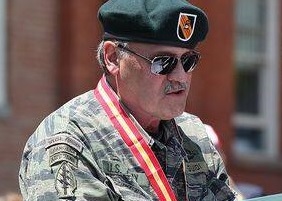
    Don’t believe me?  Just ask Robert Guidi of New Jersey (pictured above) who was arrested after claiming to be a Green Beret Sniper and POW during Vietnam in order to get a charitable group to build him a $30,000 deck which he can’t enjoy from his current residence at the Morris County Correctional Facility.

    UPDATE:  [DELETED]

    It appears I was wrong, and have deleted that portion.  It looks like the wearing portion was repealed.  But now I’m even more confused, because the 4th Circuit case upheld it.

    But a footnote in the dissent states:

    Both provisions of the Stolen Valor Act were amended following Alvarez, subsequent to the events that gave rise to Swisher’s case. Congress removed the “wearing” provision in § 704(a), apparently preemptively, and more substantively revised § 704(b) to comply with the Court’s holding in Alvarez. See Stolen Valor Act of 2013, Pub. L. No. 113-12, § 2, 127 Stat. 448 (2013). Thus, the precise provisions at issue here are no longer in effect. As amended, however, the statute would still appear to cover Swisher’s conduct. Section 704(b) now reads: “Whoever, with intent to obtain money, property, or other tangible benefit, fraudulently holds oneself out to be a recipient of a decoration or medal . . . shall be fined under this title, imprisoned not more than one year, or both.” 127 Stat. 448.

    But the dissent also notes that:

    Concomitantly, because § 704(a) requires proof of deceptive conduct, any harm to First Amendment interests is less than in Alvarez, and the less restrictive alternatives discussed in Alvarez, less effective.

    The majority today ignores these distinctions, and discusses the outcome of this case as though Alvarez renders it a foregone conclusion. But it is not. Alvarez does not clearly compel the result here—indeed, that was the conclusion reached by a panel of our court in United States v. Perelman, 695 F.3d 866, 872–73 (9th Cir. 2012), in which we upheld § 704(a) under the lesser scrutiny applied to conduct regulations laid out in O’Brien.1 It was also the conclusion reached by the Fourth Circuit, which found that § 704(a) would survive strict scrutiny. United States v. Hamilton, 699 F.3d 356, 371–74 (4th Cir. 2012). While I do not entirely agree with the reasoning in these cases, they demonstrate that the reach—and indeed the holding—of Alvarez is unclear. Alvarez gives uncertain guidance as to how false statements should be analyzed, especially if Justice Breyer’s opinion controls under Marks v. United States, 430 U.S. 188, 193 (1977).

    So I have no idea.

    UPDATE x2:

    I think I may have figured this out.  Congress seems to have taken out the bifurcated thing that they had about speech and wearing medals 704(a) & (b) and changed the wording.  So it now reads:

    “Whoever, with intent to obtain money, property, or other tangible benefit, fraudulently holds oneself out to be a recipient of a decoration or medal . . . shall be fined under this title, imprisoned not more than one year, or both.” 127 Stat. 448.

    My guess is that wearing a medal could be assumed to be “hold[ing] oneself out to be a recipient of a decoration or medal” and so they assumed that both now required the mens rea, or guilty mind, which means there was a fraud element.

    Which makes this case more interesting, because then the question becomes this:

    Does wearing a medal one did not earn while testifying before a court satisfy the requirement of the statute for “tangible benefit”?

    That’s a VERY interesting question.  Because Congress punted on what a tangible benefit was.  If you are asked to be Grand Martial (Marshall?) of a parade, is that a “tangible benefit”?  What exactly *is* a tangible benefit?

  • Kurds/Free Syrian Army closing in on Raqqa

    Isis

    This is really great news all around, and some reason for optimism after what happened last week in Mali and Paris.  Sure, the lone wolf packs that did those attacks will still be able to do attacks, but capturing Raqqa would REALLY hurt ISIS in terms of both having lost their capitol which hurts their PR in terms of viability, and deprives them of a lot of resources.

    First, from CNN:

    Raqqa is now firmly in the sights not only of the U.S.-led coalition, but also the French and Russian militaries. And in a few hours along the front line, you can periodically hear distant thuds.

    On the day CNN was at the front, they could have come from some of the four Russian missiles activists’ group Raqqa is Being Slaughtered Silently reported hit the town, or the four homemade Katyusha rockets they also reported were fired by ISIS. 
     
    The CNN piece is really good, but choppy in terms of what I can use in snippets so you should read the whole thing.  Also, they have great video there, but they don’t have an embed code for me to put it up here.  Nonetheless, more from that article:
     

    The move towards Raqqa will be difficult, given the open terrain between them and ISIS, but airstrikes will likely assist, if the Kurds ever decide to begin their advance.

    Fighting with the YPG is a new alliance called the Syrian Democratic Forces, a collection of Kurdish fighters and other Sunni Arab Syrian armed units.

    Many see the alliance as an American idea to try and secure Sunni Arabs as allies for the Kurdish units, so their advance into the predominantly Sunni areas ISIS currently holds is not seen as a land grab by Kurdish forces seeking to create their own homeland.

    These forces are the recipients of Pentagon training and equipment and are said to be where the 50 American special forces are applying their training efforts.

    Those would be the non-combat/combat forces that either are or are not boots on ground, depending on who you ask.

    To be honest though, this video is phenomenal as well, and I have no idea who made it.  I’ve never heard of this media outlet, but it has some pretty high-speed combat footage of the Pesh moving in, and more so it shows just how close they actually are.

    [NOTE: Apparently this video may be biased an inaccurate.  I’m not going to take it down to be accused of some ethical violation, and would ask that you watch the CNN report above.  I can’t vouch for that authenticity either, I’m just taking it at face value since I am roughly 30,000 miles from Raqqa.]

  • Help with a picture (Shutterstock type thing, NOT Stolen Valor)

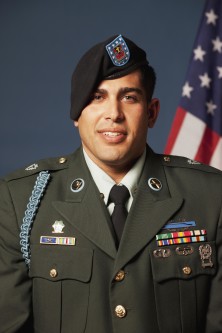
    Caucasian soldier in uniform
    Caucasian soldier in uniform

    Anything immediately wrong? I don’t recognize the shoulder DUI or whatever those are called. Anyone else? Someone is looking to use for some event, but wanted me to look at it first.

  • Politico reporter calls Jim Webb “creepy”

    Picked this up from Twitchy, but The Federalist has a much better explanation of what happened.

    Most of the Democrats at the debate gave predictably boring answers to Cooper’s question. Lincoln Chafee said he was proud that the coal industry disliked him. Former Maryland Gov. Martin O’Malley said the National Rifle Association. Bernie Sanders said Wall Street. What about Hillary?

    “Probably the Republicans,” Hillary responded, in the apparent belief that nearly half the country is her enemy.

    But the answer from former Virginia Sen. Jim Webb, a highly decorated Marine combat veteran, is what shook everyone awake.

    “Which enemy are you most proud of?” Cooper asked. “Senator Webb?”

    “I’d have to say the enemy soldier that threw the grenade that wounded me,” Webb calmly replied, “but he’s not around right now to talk to.”

    Webb was referring to an operation during the Vietnam War that eventually led to Webb being awarded the Navy Cross. After being repeatedly shot at while trying to clear enemy bunkers, Webb deliberately put himself between an enemy grenade and one of his fellow Marines in order to shield that Marine from the grenade blast.

    So let me give you my own take, not that anyone asked for it. I hated Jim Webb for the longest time. Not only did he run against Allen who I liked, but he always was in opposition to the surge. I respected him, but I didn’t like him. It was weird, because I also thought his book Fields of Fire was the best book ever written about Vietnam. And still believe that.

    But as a lobbyist, I sometimes get stuck in weird situations. Case in point was last year, when I was asked to greet Chairman Miller of the Veterans Affairs committee, and I was waiting for him to show up when in walked Dick Blumenthal. Everyone knows how I feel about him, and if I specialize in any one thing it is Stolen Valor. So, not exactly bosom buddies. But I’m also non-confrontational. Knowing that he was early, and the person designated to meet Blumenthal was running late I introduced myself and walked him backstage. We had a great conversation……about UCONN basketball. Some people would say I should have used the opportunity to light him up, but that’s just not my speed. I’m not that guy. I’m not confrontational, and I tend to look at peoples good sides. And Blumenthal has been pretty good at grilling the VA. But, UCONN basketball (and my hatred of that team) was a good ice breaker.

    Anyway, a few years ago the same sort of thing happened with Webb. I was supposed to greet Steve Buyer, but Webb arrived first. So I grabbed him, introduced myself, and took him to the Green Room. (He was speaking at our convention.) Now, the only people I hate more than Jets fans in general is the Secret Service. So I am sitting backstage with Webb, trying to not hate the dude, when in walks secret service and asks “does anyone in here have a gun on them.” Webb sits back, puts on a huge smile and responds “What do you think?” The poor secret service guy just ran away.

    Anyway, for the next hour I talked to Webb about all sorts of things, his book about the Scots in war, his own experiences etc. As much as I wanted to hate the guy, he’s actually an amazing guy to talk to. Later I would find out that in the USNA boxing championships Ollie North and he faced off. (Ollie won.) But I realized then that despite political differences, hating someone based on their beliefs is just a waste of time.

    But it REALLY pisses me off that some Politico asswipe would call Webb creepy for his comments last night.

    That’s the best debate moment since Admiral Stockdale. Don’t get me wrong, unlikely I will ever vote for Webb, but anyone who would try to ridicule that answer needs their head examined.

    As the Federalist reporter noted:

    Given what he must’ve experienced in combat — the physical and mental hardships, both of which I’m sure left scars that will remain forever — Jim Webb can “smirk” wherever and whenever he wants for all I care. He has every right to look back upon his actions and to be proud of them, because he did exactly what his country asked him to do. He did his job, and he did it well.

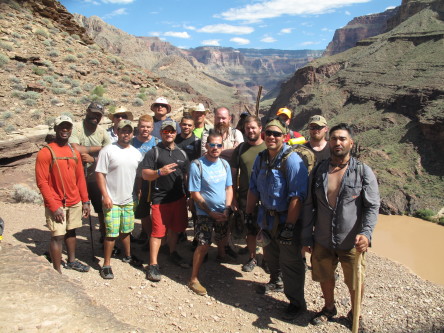
  • Rafting with wounded Marines and Corpsmen

    IMG_3820_zpsga0jh7qv

    As most of you know I’ve been out of comms for about two weeks going down the Colorado river in the Grand Canyon. 10 Days out there, 226 miles from Lee’s ferry to the debark place which was some creek that doubled as a road.

    Anyway, it was beyond amazing, and by far the best 10 days of my life. It was physically exhausting (hikes and paddling about killed me) and sleeping on the rocks and sand was something I had hoped to have left behind in Afghanistan. But having been home a week now, I find that more so I am struggling with some of the SUPER HEAVY SHIT we talked about. Don’t get me wrong, it was entirely cathartic, but tough.

    One example, and the person agreed to let me share his story. Dave was an 0311 in the Marine Corps, and he and his best friend of two years deployed together. His friend was killed, while he stood there, and there was nothing he could do. Instead of wanting out, Dave volunteered for every possible mission, every possible deployment. He wanted to kill as many of the bad guys as he could. And he did. And somehow he avoided getting himself killed, which he hadn’t really wanted to do. When he came home, he had trouble dealing with it. One night Dave hung himself. His wife came in, and cut him down, grabbed a paramedic down the street and they saved him. (Thank God.)

    Now Dave talks about what happened to him, as a tribute to his friend, and because no one should ever feel alone. When he talked about it, it opened up a log jam of others telling their stories as well. It was tough. Real tough.

    Anyway, you’ll read more about it when I write the article, but if some of you wondered if the DRC scared me off, HELLS NO. Just working my way through the trip, and leaving for Montana tomorrow. But wanted to share this video with you, thought some of you might enjoy it. And if you ever get a chance to go to Grand Canyon, GO.

    And for those that were hoping I died, I came damn close. (I’m front left on the paddleboat.)