Author: Sporkmaster

  • Fort Benning addresses Ebola infection case rumors. UPDATEDx2.

    It seems that a initial entry soldier was placed under isolation precautions at Martin Army Hospital at Fort Benning for suspicion of symptomatic Ebola. The person who has not been identified was reported to have recent travel to Nigeria and presented a high grade fever. As of this post, it is believed that the fever was caused by a reaction to one of the immunization shots given during inprocessing. The base commander Major General Scott Miller, spoke on record to address the rumors that there was a active Ebola case, about a possible ebola case on Fort Benning.

    During standard screening procedures, we identified a newly arrived Soldier with a recent travel history to Nigeria. The Soldier displayed an elevated temperature, and while he is not likely to have the Ebola virus, we have initiated necessary protocols out of an abundance of caution.

    The Soldier has been isolated and is being monitored, even though it’s likely that his fever can be attributed to immunizations he received during in-processing.

    We are currently in coordination with medical and CDC professionals to ensure testing is accurate and complete.

    Representatives from Fort Benning also made a statement to address the rumors that the base and hospital were placed on lockdown.

    “None of that’s true,” said Gary Jones, the Maneuver Center’s public affairs officer. “The gates were never closed. The hospital is not closed and will not be closed.”

    “The post itself is open for business, and it’s business as usual,” said Col. Patrick Donahoe, Chief of Staff at the Maneuver Center of Excellence.

    UPDATE: October 18th 2014.

    Just a few minutes ago Fort Benning gave a status update on how the Solider is doing and more information about his background. The person in question was assigned to the 30th Reception Battalion.

    “Today, the Soldier’s temperature has returned to within normal range, which is completely inconsistent with the disease process associated with Ebola,” MACH Commander Col. Scott Avery said in the statement.

    Avery also said the soldier “does not pose a risk to others.”

    UPDATE x2: October 18th 2014.

    The Solider in question’s test came back negative for Ebola. Fort Benning Representatives gave this statement.

    “While we are relieved this Soldier does not have Ebola, this was an opportunity for Fort Benning to not only test our systems, but exceed protocols to better ensure the safety and well-being of our Soldiers and those in the workforce who support them,” Maneuver Center of Excellence Chief of Staff Col. Patrick Donahoe said.
  • Redefining “No direct Contact”

    As you may have read few things to Hondo’s post a day ago about the DOD stating that there will be a portion of the deploying force that will have direct interaction with the Ebola virus. The DOD gave the following statement that this does not mean interaction with actively infected patients.

    “In response to comments I made today about U.S. military personnel potentially coming in direct contact with Ebola infected individuals, specific to lab testing, I want to clarify my remarks. U.S. military personnel working in the labs are not interacting with patients, only samples. The testing labs are manned by highly skilled and trained personnel from the U.S. Naval Medical Research Center. These labs provide 24-hour turnaround results on samples received from area clinics and healthcare providers, with the capability to process up to 100 samples per day.”

    Yet back in September the White House website published a article that stated that 65 Commissioned Officers who will be utilized to provide treatment of infected healthcare workers.

    The United States Public Health Service Commissioned Corps is preparing to deploy 65 Commissioned Corps officers to Liberia to manage and staff a previously announced Department of Defense (DoD) hospital to care for healthcare workers who become ill. The deployment roster will consist of administrators, clinicians, and support staff.

    I start to worry when Commanders make the following statements about Ebola.

    The fear and uneasiness for soldiers and their families is something brigade commander Colonel Heath Roscoe understands, but he feels the soldier’s education, training, and preparation will be enough to fight Ebola as well as any fear.

    “I feel my soldiers are well trained,” said Roscoe. “There will be apprehension, but the more I read about (Ebola) the more comfortable I become about going over there.

    It seems that form me the more I read gives me the exact opposite feeling about the situation. Not to mention the problems caused by fear of the outbreak. There is a video from the POV of a nurse on the front lines as he takes care of several patients and documents what seems to be a typical day.

    A town hall meeting was held at Fort Hood on Monday for families of the soon-to-be deployed soldiers to talk about their concerns or fears about the mission into Africa. Roscoe said the soldiers being deployed are all very well-disciplined and will be taught to exercise good hygiene to keep Ebola risk low. Even in a worst-case scenario, Roscoe assured families their loved ones would be okay.

    “If a soldier were to get Ebola over there, they will be okay because America will take care of them.”

    “…”

  • The Ebola issue

    As it stands right now, I have mixed opinions about how to handle the Ebola question.

    On one hand, the way that this outbreak is going on is a serious concern. The World Health Organization made a statement that it expects the number of new Ebola outbreaks to increase exponentially. But also in the number of health care workers that have been infected is also alarming. Also the lack of education about and fear of Ebola is doing about the same level of damage to the area. In short this is a issue that that cannot be handled without outside help. So on paper sending in military support to the area sounds good. We have done similar actions in the Philippines for Hurricane Haiyan. So why not right? Well there is the simple issue of the how.

    The question is how are you going to fight it? Michael D. Lumpkin raised concern that the United States military is established more for trauma then for things like this.

    “Our deployable medical capabilities are generally trauma medicine, treating people who suffer wounds in combat and things of that nature,”

    The first question that I have is how does the DOD intend to adequately train 500 health care workers per week on how to care for infected patients. Also where are these 500 health care workers going to be coming from? The local population is not going to work due to the lack education and information on it. How are you going to staff the Ebola treatment centers when they are finished? Not to mention the risk of violence by the local population.

    Also how are you going to prevent burn out from the health care workers?

    In testimony prepared for the hearing, Brantly described the challenges and difficulties of working in what was already a “woefully inadequate healthcare system of a country still struggling to recover from a brutal civil war.” He “witnessed the horror that this disease visits upon its victims — the intense pain and humiliation of those who suffer with it, the irrational fear and superstition that pervades communities, and the violence and unrest that now threatens entire nations.”

    Treating Ebola patients, he said, “is not like caring for other patients. It is grueling work. The personal protective equipment we wore … becomes excruciatingly hot, with temperatures inside the suit reaching up to 115 degrees. It cannot be worn for more than an hour and a half.”

    Also is the question of how to handle treatment for potential infections of soldiers during the operations. From the reports

    When he fell ill on July 23, “I came to understand firsthand what my own patients had suffered,” Brantly said. “I was isolated from my family and I was unsure if I would ever see them again. Even though I knew most of my caretakers, I could see nothing but their eyes through their protective goggles… I experienced the humiliation of losing control of my bodily functions and faced the horror of vomiting blood—a sign of the internal bleeding that could have eventually led to my death.”

    Speaking for myself as a Licensed practical nurse, I would not have a problem going if called. However I would like to know what people think we can do in Liberia and what we actually do. Because a disconnect like this is going to get Soldiers seriously hurt or killed.

  • I am an Army Nurse now (68C)

    Well an enlisted nurse, LVN to be exact. I just graduated from my year long course. It use to be the M6 program but is is called the 68C. I will be working in a Forward Surgical Team and working in a ICU section.

    Also this means that I will be posting more in the future.

  • Kyle Barwan back in the news.

    Kyle Barwan Febuary 2014 Scammer Stolen Valor felon

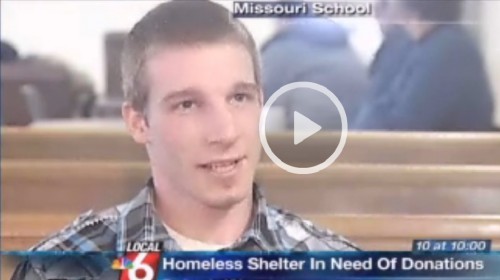
    Well things are not going that great for our ‘friend” Kyle Barwan. It seems that he is currently homeless. But it seems that he some how managed to be one of the main people interviewed on a news story for a homeless shelter’s need for donations. I mean for some strange reason donations have dropped off. Weird right?

    The number of people served is increasing and the amount of donations are dropping. A few rooms with games and a T.V., make up a temporary place for 24 year old Kyle Barwan to call home.

    “Things got really hectic and I had no where to go. My family couldn’t help out and the economy got real bad, I came here and they were quick to take me in,” said Barwan.

    Barwan has been living at River City Mission for three weeks.

    “This is probably one of the best places to go, when you have no where to go,” said Barwan.

    The mission provides a place to stay, hot meals, and even entertainment. Executive Director Shirley Barlow said the community’s generosity makes it all possible.

    Well I know that it can be tough when you have burned all your bridges because you have scammed everyone that cared about your or trust you that for some strange reason they are not helping you now. I mean getting caught tricking people out of thousands of dollars by the way of lying about your military service can added up quick. Oh and I see your latest arrest was just this past November.

    More to come.

    Update: Goes under the following names/usernames.

    Kyle Reacher, Felucifer, Klutch, Klutch_Reborn

  • Remembering the Past:

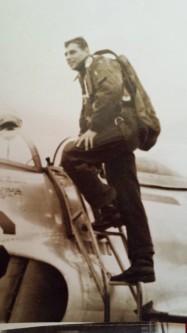
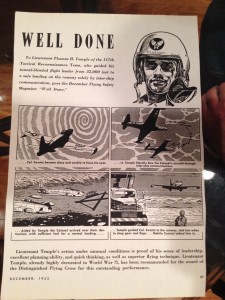
    More specifically family history. In this case this is about my relatives, who I know as Uncle Tommy. At the time he was Lieutenant Thomas H. Temple. With family items you heard bits and fragments of stories so you never get the whole image. Well here I was able to find out more due to a long thought lost article about my Great uncle helping out a fellow pilot in 1952 Iceland.

    Korea 1952 Dec

    He was with the 117th Tactical Reconnaissance Team that were flying RF-80s. I have only found one other reference to this event that is described briefly.

    On approach to Keflavik, Col.Maynard T. Swartz suffered the bends at 32,000 feet, when a nitrogen bubble lodged in his brain. Fortunately, he was led down by his wingman and was talked down by colleagues on the ground.

    The only thing I was able to find out about the 117th was it is now part of the Alabama National Air Guard with some photos of their RF-4 Phantoms during Desert Storm. The person that he saved was on a C-53 on D-Day according to this link.

    I do not know if my Great Uncle was awarded the DFC or not though. I wonder if anyone has heard of anything about this event?

    Update : October 2nd 2015

    I got a reply from Col Swartz’s son and I wanted to added it here.

    Sporkmaster,

    Warren, I just ran across your RFI on this site while searching Google for this very same incident! I might be able to fill in a couple of gaps in your story, as Lt Col Maynard T. Swartz was my dad. As most veterans of his era, he didn’t discuss his military record much, but he did talk about this incident with me and had an original copy of your Dec ’52 Fight Safety Magazine. He spoke highly of your Great Uncle and, believe it or not, almost named me “Tom” after him!

    My dad’s bends were caused by a slow pressurization leak in his RF-80 cockpit, and he essentially went blind. Bailout was not an option as the sea survival rate was only a few minutes off Keflavik, so Lt Temple stayed glued to him and skillfully talked him all the way down to short final, where mobile control took over to touchdown. Your Great Uncle was written up for a DFC, but for some reason or another, the USAF powers didn’t award it to him, which my dad was upset about. Cleary, his actions were heroic. My dad left the Reserves in ’53 and returned to Omaha, NE, where he was in the commercial printing business until he passed in ’95, while I was stationed in London. Incidentally, per your comment, he was actually one of the first C-47s over Normandy, in the early morning hours of D-Day, as he dropped Pathfinders for the invasion… where he also realized that he had eaten and swallowed an entire cigar he had in his mouth during the sortie!

    So, thanks to your Great Uncle saving my dad’s life, I just happened to have been born in ’54, graduated from Annapolis in ’78, produced a couple of daughters and retired from the Navy as a CDR/P-3C pilot in 2003. Since then, I’ve been employed as a defense contractor down in Tampa at HQ, USCENTCOM.

    From my family to yours, a special thanks will always be given for the skill and professionalism of Lt Thomas H. Temple!

    Best regards,
    Jerry

    Jerry C. Swartz, CDR, USN (Ret)
    Tampa, FL

    And I found a photo of my Great Uncle Tommy when he was flying this type of aircraft.

    Uncle Tommy 4

  • Remember December 6th

    dec6three1

    I know the date of the attack was December 7th, but I want to take a different view. Because on December 6th 1941, the 7th was going to be a ordinary non-eventful day.

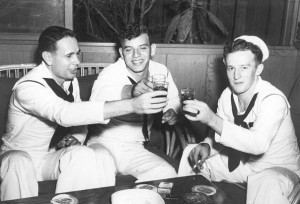
    Jack Miller and his shipmate, Clifford Olds(right) joined fellow sailor Frank Kosa (Center) for a night at the “Monkey Bar”. It was December 6, 1941 in Pearl City, Oahu, and Miller and Olds were on liberty from the USS West Virginia. A barmaid snapped their picture and offered it for sale. “What a scam” they thought-keep it.

    The next day Clifford Olds along fellow shipmates Ronald Endicott, and Louis “Buddy” Costin were trapped in the USS West Virginia after the order for Set Zed was given.

    Every sailor knew fate could place them in a doomed area to be drowned like rats. Old Timers would tell 17 and 18 year old “boots” that if that time came “just inhale water quickly and get it over”. This, the “grizzled Ones” claimed, was preferable to a slow death in a pitch-black void.

    Except that Clifford Olds, Ronald Endicott, and Louis “Buddy” Costin survived the attack and the compartment that they were in was intact. They lived off of C-rations near by, water from a operational water pump that was in the vicinity and any available batteries for a light source. The had a calendar that they used to keep themselves orientated to how many days had passed. They were recovered on Spring of 1942.

    Late spring 1942 found Navy salvage teams finally getting to work on the WV. An Inventive series of tremic cement patches were fitted to her port side, and enough water pumped out to partially float the once grand ship. BB48 was nudged across the Harbor into drydock and the grim task of finding bodies began. For Commander Paul Dice, compartment A-111 was expected to be like the rest: Put on gas masks, place some goo into a bodybag and let the Medical boys worry about identification. They had seen it all, but this compartment was different. Dice first noticed the interior was dry and flashlight batteries and empty ration cans littered the floor. A manhole cover to a fresh water supply was opened. Then he saw the calendar. It was 12″x14″ and marked with big red Xs that ended December 23. Hardened salvage workers wept uncontrollably as they realized the fate of these men. Word quickly spread among salvage crews: Three men had lived for 16 days to suffer the most agonizing deaths among the 2800 victims at Pearl Harbor.

    They oldest one was twenty one at the time of the attack. Perhaps I should have given advance warning that this story did not have a happy ending, but I think that it helps drive the point I am trying to make. Now lets go back to December 6th 1941 when the sailors were at the bar.

    We remember Veterans of the older generation in the contributions and deeds that they performed that allow us to enjoy the life that we live today. But I think that we often forget that they were young too at one point. That they would sometimes do the same crazy things that teens and twenty year olds are know to do. For example Frank Kosa, the Sailor in the middle seems to be enjoying his booze very much. How many times have we been offered a overpriced service by a attractive waitress. Go to a place like Hooters if you want to experience this first hand. I think Clifford Olds is giving a nice irritated look of why someone is interrupting a toast among friends. That they acted like “Boots”.

    But I wonder what were the biggest worries about December 7th 1941 were going to be on December 6th 1941? The dreading having to do PMCS. Wondering why I have CQ on the weekend again. Making sure the family gets to Church on time. The second question is does anyone remember these things after December 7th 1941? How much do these things amount to a hill of beans afterwards?

    To put this into perspective, does anyone remember what they were doing on 10th 2001 or what their biggest concern or worry was on that day?

    Which comes to my point of take advantage of today, do not let worries and concerns about tomorrow distract from taking for granted what each of us has today. Because we cannot know what tomorrow will bring.

    That is why I say to remember December 6th along with December 7th. It should not only be remembered for those who died, be remembered that they lived.

  • We can’t let him die alone

    With the passing of Retired Master Sergeant Nicholas Oresko there were a few things that I believe should be brought up. One is about some of the hardest challenges that War Veterans can face is after the war is over. But even with our Nation’s increasing numbers of Combat veterans, there are things that people assume and take for granted that would never happen. For Retired Master Sergeant Nicholas Oresko it was outliving all of his immediate family .

    I tried to imagine that I was in his place. Advance age with wife and children no longer living going into a high risk surgery. I mean with all of that retaining the will to live and not just ‘give up” would be extremely hard. It seems that there were others who shared this concern.

    “They understood the type of person we were talking about and said, ‘We can’t let him die alone,’” Robitaille said, adding that people have come from as far away as Maine and Maryland to visit Oresko during the week. “He’s loved throughout the Army. He’s an American hero.”

    Oresko had no living immediate family, but he was never alone at the hospital after being taken there earlier in the week from a Cresskill assisted living facility, Carbone said. Veterans and young members of various branches of military service were at his side, with more than two dozen at the hospital Friday afternoon before he was taken to have surgery.

    “The kids held his hand and prayed with him,” Carbone said.

    The support that he received in light of this heart breaking challenge is what makes this a story.