Category: Veterans Issues

  • The McVeigh zombie in the New York Times

    In the pages of the New York Times, another Leftist egg head, Kathleen Belew reminds us of Timothy McVeigh and his military service in the wake of the unreasonable coverage that Frazier Glenn Miller has spawned with his killing spree last Sunday. Ms. Belew is apparently working on a book about Vietnam veterans and the “radical right” whatever that means. But of course, in her closing paragraphs, she reminds us about Timothy McVeigh’s bombing of the federal building in Oklahoma City;

    Mr. Miller obviously represents an extreme, both in his politics and in his violence. A vast majority of veterans are neither violent nor mentally ill. When they turn violent, they often harm themselves, by committing suicide. But it would be irresponsible to overlook the high rates of combat trauma among the 2.4 million Americans who have served in our wars in Iraq and Afghanistan, the full impact of which has not yet materialized.

    […]

    During Mr. Miller’s long membership in the white power movement, its leaders have robbed armored cars, engaged in counterfeiting and the large-scale theft of military weapons, and carried out or planned killings. The bombing by Timothy J. McVeigh, an Army veteran, of the federal building in Oklahoma City in 1995, which killed 168 people, was only the most dramatic of these crimes. When we interpret shootings like the one on Sunday as acts of mad, lone-wolf gunmen, we fail to see white power as an organized — and deadly — social movement.

    That Mr. Miller was able to carry out an act of domestic terror at two locations despite his history of violent behavior should alarm anyone concerned about public safety. Would he have received greater scrutiny had he been a Muslim, a foreigner, not white, not a veteran? The answer is clear, and alarming.

    Miller left the military in 1979, so somehow I don’t think that 35 years later, his service as a company clerk in Vietnam had much to do with what he did last Sunday. Timothy McVeigh was a Bradley gunner in Desert Storm. Since I was trained in the same specialty, I can attest with some measure of authority that nothing he did that day in Oklahoma City was part of his training in the Army.

    Much to the chagrin of the Southern Poverty Law Center and it’s adherents, the military doesn’t teach soldiers to be terrorists as a general rule. As Ms. Belew carefully points out, most veterans are not a danger to the general society and their only real example of one who was, is McVeigh and it’s fairly tiring that they drag out his rotting corpse and wave it like a bloody shirt.

    I don’t know of one veteran who defends McVeigh and his actions. I served in the same division with McVeigh during Desert Storm and, as I said, I went through some of the same training and I have never plotted in my head or out of my head to do what he did. I take offense at being compared to him, as I’m sure all veterans take offense.

    She asks if law enforcement isn’t inherently racist because Miller hasn’t been picked up before Sunday because he was white. Does she suggest that everyone who is suspected of a crime with no proof be picked up and tossed in jail, because there were a couple of stank-ass hippies who plotted some bombings in Ohio in the last few years that support my contention that stank-ass white hippies should be tossed in jail. Why isn’t Ms. Belew writing a book about Occupation stank-ass hippies who are plotting to blow up America?
  • Of sheep, sheepdogs and valor thieves

    Of sheep, sheepdogs and valor thieves

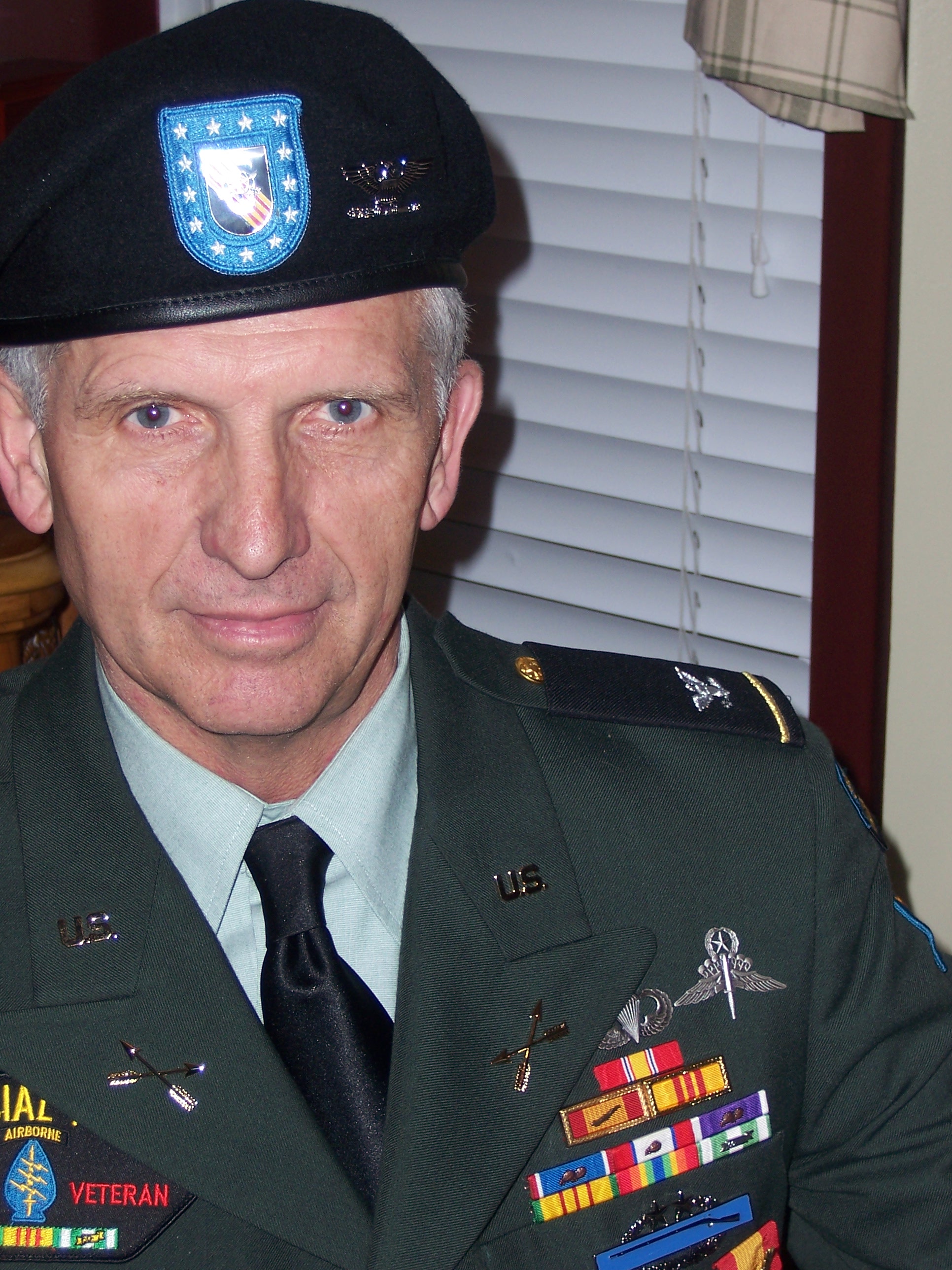
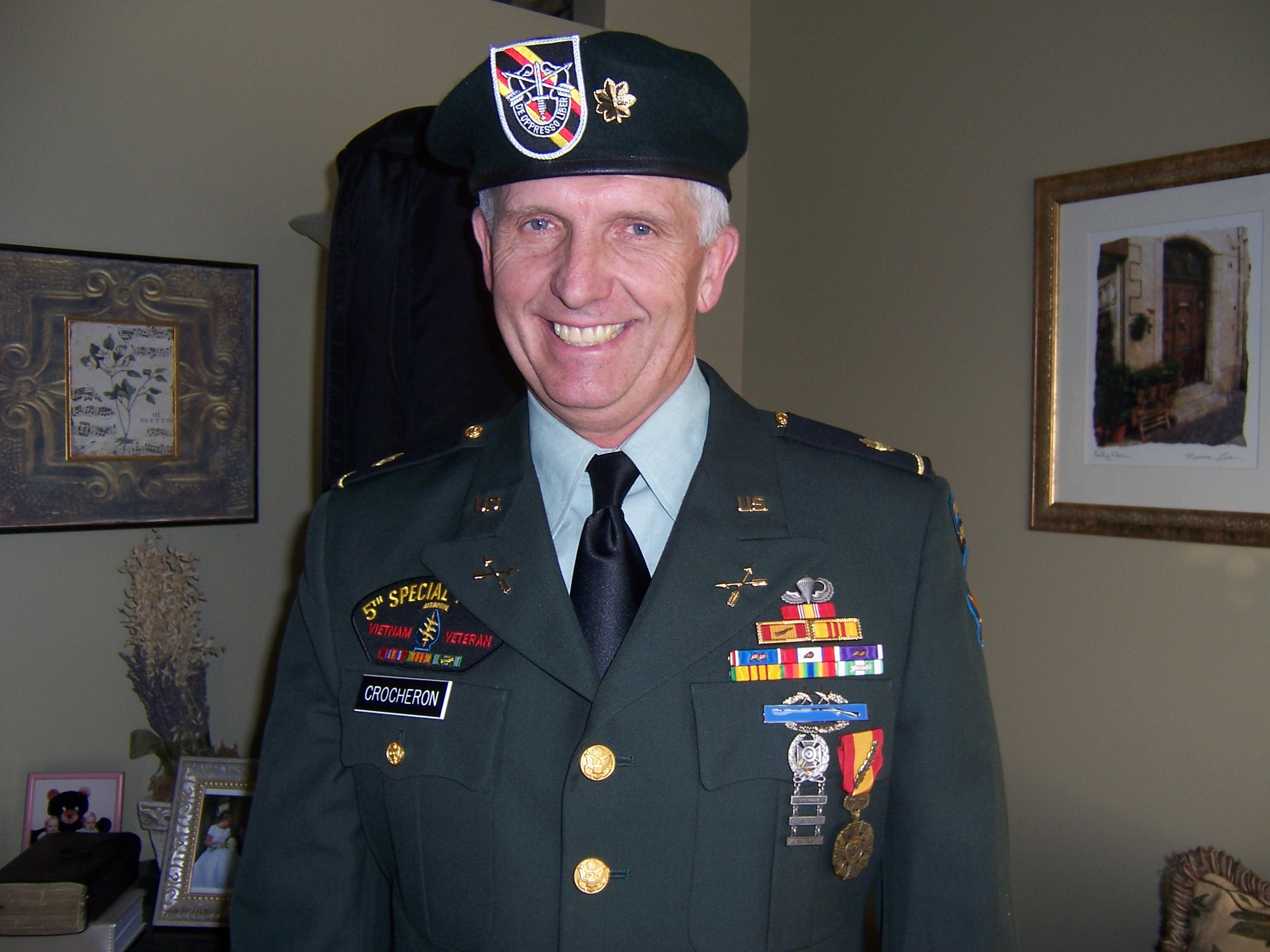
    Kenneth Crocheron 3

    Chockblock sends us a link to Foreign Policy in which guest columnist Army Major Brad Hardy articulates well how valor thieves widen the gap between the sheep and the sheepdogs who protect them.

    Hardy uses our old friend Ken Crocheron as an example. Crocheron, you might remember dressed up in some sort of clown suit that barely resembled an Army uniform to entertain a sick child. Of course, when he was finally exposed, the family was embarrassed that he had fooled them for so long. Of course, they weren’t the only people he had fooled. He’d been parading around in his get-up for years.

    Here at TAH, we’ve seen the same scenario play out hundreds of times. We’ve even seen valor thieves who were so committed to their false persona that they hired thugs to get it back for them, they’ve even killed themselves because they couldn’t be the ass-clown they once were. But Hardy sees a bigger problem;

    [F]or something like this to go on as long as it did says two things about our society. First, it indicates that the Army remains a trusted and admired profession, but almost to a fault. The Army’s manual on the Profession of Arms, Army Doctrine Reference Publication (ADRP) 1, states that “trust reflects the confidence and faith that the American people have in the Army to effectively and ethically serve the Nation, while resting assured that the Army poses no threat to them.”

    A broad assumption is that civilians will tend to defer to the military to do the right thing. Maybe it’s the professed values, generally honorable conduct in war, authoritative tone, uniform, haircuts, or heroic portrayal in movies. But jokers like Crocheron, even if unaffiliated with the Army, erode that earned trust. Society may start to second-guess the confidence and question their faith that ADRP 1 touts. The Crocherons of the world destroy public trust in the Army by exploiting it. He abused it to gain unearned prestige and access to a family’s young child. The next time that family sees a uniformed servicemember, they may not be so supportive.

    Sometimes, it’s hard for civilians to accept that the people they trusted aren’t the valor thieves they turn out to be, either. For example, we saw folks come to the defense of Christopher David Duke the other day. We veterans, who smell something wrong with these phonies are questioned on our truthfulness while the phonies, who are really sociopaths, continue to string them along and even use them to combat the truth.

    Joe, who was Duke’s initial defender, had his “come to Jesus” moment last night in a phone call with me. But then today another one pops up. That’s just indicative of how people want to believe that they know heroes. If I was in Wilson, North Carolina law enforcement, I’d start paying attention to the doings of Chris Duke around town. I’m fairly convinced that he’s hiding other things that he’s doing wrong.

    If you read his “Birth of an Operator (.pdf)” you can’t miss how married he is to that story, and if I ever post the recording of our conversation yesterday, you’ll see how good he is at making himself the victim when he’s called out on his lies. But, he’s just like all of the others we’ve seen. Mostly, it’s because civilians admire them so much and their phony background, that they get the idea that without their lies, they’re nothing.

    Hardy ends his thoughts;

    As a part of society, the Army must do better at educating the society it serves about its culture so that future scam artists are detected. The Army must continue to share its culture, as it is part of the broader fabric of American heritage.

    Braggarts like Duke and Crocheron suck all of the oxygen out of the room, however. The real heroes melt from the spotlight and they’re the quiet professionals, not writing grand faux-biographies or telling war stories in a bar. So, therein lies the problem.

  • Detroit veteran instigated fight

    The other day we read about Adam Wagner, the young veteran in Detroit who was beaten outside of a local 7-Eleven convenience store by three others. Today we read that he may have thrown the first punch and he’s looking at possible charges for the incident himself;

    Worthy’s office ruled no charges would be issued against the men in connection with the altercation that started outside a Westland 7-Eleven around 1:30 a.m. April 2. After reviewing evidence, the veteran, Adam Wagner, was both the complaining witness and the initial aggressor and continued to be the aggressor in the conflict, according to the prosecutor’s office.

    Wagner was the biggest man of the four and began the fight by hitting the smallest of the other three men, Worthy said. The man who was hit fled. A fight continued with Wagner and two other men.

    “The complainant then continued to pursue them for over a half mile on foot while the two men tried to hide from him,” Worthy said in a release. “When the complainant found the men, he started the fight all over again.”

    At that time, Wagner suffered injuries “consistent with a fistfight” and was treated and released at a local hospital.

    “Since the veteran was the initial and only aggressor, the actions of the three other men are not a crime and we are declining to issue any charges,” she said.

    That kind of dilutes his claim that it was veteran hate that fueled the fight.

  • Moran seeks pay raise for Congress

    Moran the inebriated sot

    Regulars here at This Ain’t Hell are more than aware that military retirees and disabled veterans have been under the gun when it comes to what we earned as far as benefits go. From as far back as 2009 when this administration tried to make us buy our own health insurance to cover our pre-existing conditions which are the result of our unflinching service to the country, Congress and the White House have focused on hiking our healthcare costs and cutting the meager pay and benefits we earned.

    Well, that inebriated sot, James Moran, Democrat congressman from northern Virginia has decided that those same Congressmen who want to penalize us for believing them, deserve more pay, according to Roll Call;

    Virginia Democrat James P. Moran said he plans to highlight the injustice by introducing an amendment to the Legislative Branch bill during its full committee markup, and at floor consideration of the bill. Moran made the comments while the bill that funds member’s $174,000 salaries was being marked up in the Legislative Branch subcommittee.

    “I think the American people should know that the members of Congress are underpaid,” Moran told CQ Roll Call. “I understand that it’s widely felt that they underperform, but the fact is that this is the board of directors for the largest economic entity in the world.”

    Says the guy who has a shorter commute to his home than most people who work in DC – a quick drive over the 14th Street Bridge into his district. Congressman, who work three days a week when they’re not on weeks-long “breaks” only gets paid $174,000/year – if they did that for 52 weeks (and they don’t) it figures out to $139/hour. When I lived in DC, I did just fine making $10/hour when I started at my government job. In fact, every time I got a pay raise, that extra went into savings, so I lived on that same $10/hour for the ten years that I lived in the DC Metro area.

    But, yeah, cut the pay of veterans while you’re trying to raise your own pay – that doesn’t look greedy at all. Of course, Moran is retiring this year, so he’s leading this charge so no one who needs to win an election this year will look hypocritical.

  • SPC Ivan Lopez; the anomaly

    Yesterday, thousands of veterans suffering from PTS didn’t shoot anyone, however one, Ivan Lopez did kill three people and left 16 injured. One female military policewoman confronted Lopez and he did what he should have done before he started his spree. I heard Lopez’ name early in the erratic news broadcasts and checked AKO (Army Knowledge Online) but found nothing on any Ivan Lopez at Fort Hood – they must have scrubbed his account before releasing his name.

    LTG Mark Milley, Third Corps and Fort Hood commander of the sprawling central Texas Army base, said in a press briefing that Lopez was being treated for PTS although the diagnosis wasn’t finalized quite yet. Well, we know that people who do have PTS don’t normally hurt other people, they hurt themselves, but not the rest of us. So it’s unfair of Milley and the media to check off the PTS box as the cause for this incident.

    From Fox News;

    The suspect had arrived at Fort Hood in February from another base in Texas. He was taking medication, and there were reports that he had complained after returning from Iraq about suffering a traumatic brain injury, Milley said. The commander did not elaborate.

    An FBI official told Fox News there no initial indication that the gunman was motivated by any religiously-fueled ideology. “But it is still early in the investigation and we are not ruling anything out,” the official said.

    Late Wednesday, investigators had already started looking into whether the gunman’s combat experience caused lingering psychological trauma. Among the possibilities they planned to explore was whether a fight or argument on base triggered the shooting.

    Lopez was a truckdriver, so while I’ll buy into the TBI theory, the PTS not so much. The media is reporting that Lopez bought the Smith & Wesson .45 recently, and since the military doctors hadn’t diagnosed him yet, that seems reasonable. I’m sure that he hadn’t shown any predisposition to violence, so there was no reason to alert the FBI to put him on the NICS system.

    But, the media has arrived at their preconceived notion that it was PTS that made him kill people, so case closed, but like I said, how do they explain the fact that everyday, thousands of veterans with PTS haven’t murdered anyone?

  • The Economics of Veteran Unemployment

    Veteran unemployment rates are 9.2% for those serving after 9/11. That statistic is from the Bureau of Labor Statistics as of February 2014. Last year at the same time it was 9.4%. Comparatively, the unemployment rate for non-veterans is 6.9%, and was 7.9% the previous year. For veterans of other eras, their unemployment rate is 6.3% and was 6.9%.
    It is a startling statistic–as well as deeply disturbing. Why do our veterans leave the military, only to find themselves less employable than their civilian counterparts, especially our newest generation?
    The problem was glaringly obvious to me when I returned home from my third tour to Afghanistan and I found myself working at a food court serving pizza. I was happy for the opportunity and glad that someone was willing to hire me. I worked hard and tried to reduce the impact of my National Guard obligations on them as best I could–even if it was just a cashier position. But it burned. Six months prior I was managing repair and installation projects for cellular and data networks. I was a Staff Sergeant during my drill weekends, managing a platoon of combat medics, who supported a cavalry squadron. And then I took off my uniform, grabbed my visor and apron and always made sure to ask if the customer wanted a caesar salad with their order.
    My situation wasn’t unique, and it wasn’t until I connected two very important lessons that either the veterans need to accept or civilian employers need to educate themselves about. (Sadly, my guess is that capitalism will win and Veterans will need to accept their fate.) First, was when a friend, who had never served and had worked in the civilian market in an executive position, made this casually ignorant comment about military leadership. “Your experience doesn’t translate. You just tell your guys what to do and they do it. Things don’t work like that in the civilian world.”
    I wish. I wish it were that easy, but he didn’t know any better.
    Second, was when I was studying my Labor Economics textbook. It discussed the amount of experience that a person gains while working in a position, and how that experience makes them more valuable. This experience is only applicable to that position, however.
    That is the problem. That is the barrier that we can’t overcome: the combination of the belief that our experience doesn’t translate, and the simple fact that we don’t have experience in the civilian market. Many of our skills can be translated, but a civilian employer doesn’t know which ones. In addition, we are simply entry level employees in the eyes of those organizations seeking qualified applicants. There is no doubt that we have gained skills and experience, but rarely in the fields of employment we are attempting to gain access to, which is why so many of us must behave like someone freshly entering the market, with no job skills, because that is what we are–at least in the eyes of the hiring managers.
    The hard part for us is that we know we do have skills, the kind of skills that civilian employers are demanding. I can see it, as I push through college. I’m forced to take classes dedicated to speaking in front of a group, writing professional correspondence, and simply working in a team. That was three separate courses–summarized, two 100 level courses, and a 400 level course. Taking these courses, is to simply prove to my future civilian employer that I am capable of functioning and communicating in a professional environment. All of these were things I learned in the military: teaching classes to my peers and subordinates, briefing my superiors, and working in a team.
    Many of the issues have to do with our pride. Every veteran I know complains about attending college with these “kids.” It is a perfectly understandable frustration. We now operate under completely different frames of reference than most of America. Why should we have to stand in line with all these kids, people who didn’t serve, and be treated as their equals? We shouldn’t, but then again, in the eyes of the greater capitalist machine–those firms that would hire us–we are viewed simply for what production value we can offer. The hiring manager as a human being appreciates and perhaps, even sympathizes with our plight, but they have a job to do, and that job is to hire as many qualified applicants as they can for the lowest cost.
    To do this, they have pre-established requirements that an applicant must meet, simple easy to assess criteria to determine what our production value is to the hiring firm. Veterans are not easily assessed. We don’t have the same certifications, and our experience doesn’t translate well onto paper to fill in their check boxes. As a result, we aren’t hired.
    Why doesn’t the military simply support us with these civilian certifications? We do the same jobs right? Two reasons: cost and retention. Many certifications require training that goes beyond the scope of the job that the military requires of the veterans. Why would they train us, so that we could leave? Training is expensive, and it would be a waste of taxpayer money to train us then let us go. It sucks, but it is reality.
    So there we are: the veterans of foreign wars, combat proven individuals capable of thinking critically and performing under the kind of stress that the civilian market can’t reproduce. This, my generation of veterans, is the same experience as those veterans who came before us. But none of that matters. What we need to do is gain the credentials which the civilian market has established to ease the burden on their hiring managers. Then, once we have entered those positions, we, as human beings, can be evaluated more closely. Our productivity can be measured and our experience can be really put to the test against our civilian counterparts. That is where we will show the value of our experience and our productive capabilities.

  • Dear Ms. Jodi Rives Meier; how do you like these apples?

    Jodi Rives Meier

    I’m sure you remember Jodi Rives Meier, the part-time instructor at Butte College’s Chico, California who, being smarter than us criticized veteran students as generally unprepared and largely unteachable in regards to taking her rigorous classes in Communications. The college president tossed aside her comments and made this statement in support of veterans who are students;

    [T]he views expressed by this part-time faculty member in no way reflect the values of the college or its position toward veterans. Many faculty, staff, and administrators at Butte College have parents, sons, daughters and other loved ones who are service members or veterans. Many are veterans themselves and some are still serving. In spite of this, personal views, however offensive, expressed on personal social media sites are free speech. That being said, taking offense to views and comments of this faculty member does not justify personal attacks on her or her family. Threatening any individual with physical harm for any reason, regardless of difference in opinions or views, is deplorable.

    Oh, and yeah, by the way let’s turn it around on the people who are using their own rights to free speech and criticizing Ms. Meier. But, moving on, Kevin sends us an article from The Army Times about a Veterans Students Association study which refutes Ms. Meier’s contentions;

    Some 59 percent of veterans within the study earned a bachelor’s degree in the six-year timeframe typically considered to calculate graduation rates. In comparison, just under 56 percent of students across all four-year schools graduated in that timeframe, according to the most recent Education Department data available.

    About 43 percent of student vets earned associate degrees within the three-year timeframe typically used to calculate that degree’s graduation rate. Meanwhile, only 33 percent of students across all two-year institutions graduated in that timeframe, Education Department data show.

    So, about 1/3 more students who are veterans graduate from Butte College’s associate degree programs than those who don’t benefit from military service. Like I said initially, maybe it isn’t veterans who do poorly in Ms. Meier’s classes, maybe it is the teacher who is failing.

  • Stephen Peck and US Vets

    stephen_peck

    ABC News sends us their latest in their “Stand Up For Heroes” series about actor Gregory Peck’s son Stephen who was drafted in 1968 and served in Vietnam;

    Peck’s time at war had a huge impact on his life. “I didn’t want to let it affect me but the combat experience is something that stays with you and those images and the things we experienced, the camaraderie between soldiers you serve with is also something that stays with you,” says Peck. When he came back, he pursued what he thought would be his long-time career. He enrolled in a graduate school cinema program in 1972 and went on to become a documentary filmmaker.

    His life changed in 1990 when Peck made a film about a group of homeless veterans living on the beach in Venice, Calif. “I didn’t tell a lot of people I served in Vietnam because in those years you didn’t do that. Around that time those feelings about the war and Vietnam came back to me and I began to think about my experience and talking with other veterans, and produced a film about the combat experience.” After that, Peck knew he had to do something to help other fellow veterans and he switched careers to do so. “I was making documentary films so I was an observer on the problem but I wasn’t an active participant in solving the problem,” says Peck. So he went to school and earned a degree in social work from the University of Southern California with the goal of devoting himself to helping veterans.

    Peck is now the CEO of U.S. Vets, a nonprofit organization serving over 3,000 homeless and at-risk veterans.


    ABC US News | ABC Business News