Category: Syria

  • Conditions for U.S. Pullout from Syria

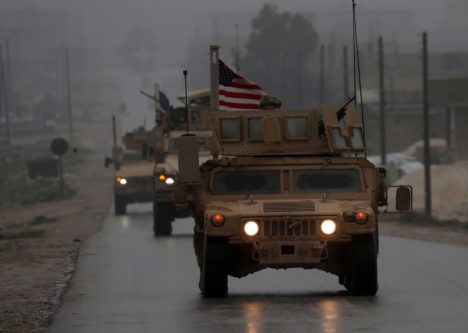
    U.S. military convoy in Manbij, Syria. Photo by Delil Souleiman/AFP (via Getty Images).

    Conditions have been listed to accommodate U.S. pullout from Syria. First, what’s left of the Islamic State must be defeated. Additionally, we need the ability to ensure the success, and safety, of our Kurdish allies during the remainder of the battle against ISIS… As well as their safety afterwards.

    From Military Times:

    John Bolton said there is no timetable for the pullout, but insisted the military presence is not an unlimited commitment.

    “There are objectives that we want to accomplish that condition the withdrawal,” Bolton told reporters in Jerusalem before heading to Turkey on Monday, where he will be joined by the chairman of the U.S. Joint Chiefs of Staff Gen. Joseph Dunford. “The timetable flows from the policy decisions that we need to implement.”

    Those conditions, he said, included defeating what’s left of ISIS in Syria and protecting Kurdish militias who have fought alongside U.S. troops against the extremist group.

    You can read more here.

  • NBC reports Turkish President promised President Trump he’d finish ISIS in Syria

    erdogan
    OAN Newsroom

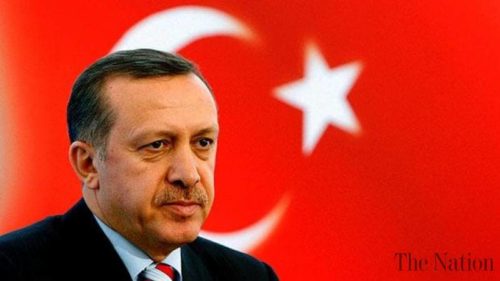
    The president of Turkey reportedly promises that his country will finish the fight against ISIS in Syria, according to an NBC News report on Saturday citing senior White House officials.

    Turkish President Tayyip Erdogan allegedly gave his word to President Trump as a “friend,” stating that if the U.S. were to pull out of Syria, Turkey would be able to handle the remaining ISIS fighters in the country’s northern region.

    Trump tweeted,

    I am in the White House, working hard. News reports concerning the Shutdown and Syria are mostly FAKE. We are negotiating with the Democrats on desperately needed Border Security (Gangs, Drugs, Human Trafficking & more) but it could be a long stay. On Syria, we were originally…

    ….going to be there for three months, and that was seven years ago – we never left. When I became President, ISIS was going wild. Now ISIS is largely defeated and other local countries, including Turkey, should be able to easily take care of whatever remains. We’re coming home!

    Trump claimed Middle Eastern countries and NATO allies such as Turkey, could handle the fight on terror. Maybe so, but I see no mention of the Kurds, and Turkey’s intentions towards them.

    Read the article at: One America News Network

  • Russia’s Reaction to U.S. Syria Pullout

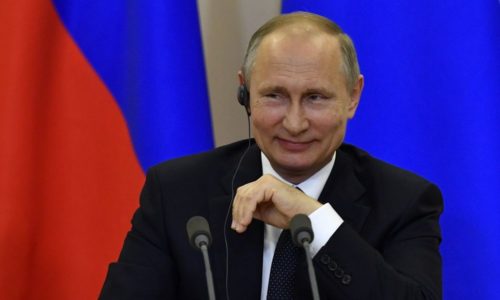
    “Do we need American troops? I don’t think so… Let’s not forget their presence is illegal as they neither have a UN mandate nor a Syrian government invitation, like we do.” – Vladimir Putin

    According to President Trump, ISIS has been beaten down to the point that countries in the area can deal with them effectively. Would Russia be ecstatic over this decision for the U.S. to pull out?

    With the U.S. largely removed from the picture on the ground, it’s up to Turkey and others to counter balance the Russians, Iranians, and other actors. We have the Kurds, and we still have the ability to continue to conduct air strikes over the area.

    There’s also the chance that the Russians and Iranians could influence momentum on the ground in their favor. ISIS could be “removed and dislodged”, thus leaving us a Syria that’s grateful to Russia and Iran.

    For their part, the Russians are being cautious.

    Just as the decision to pull out surprised those within the U.S., and among our allies, it also surprised our enemies and adversaries. They’re praising what they believe is a new advantage on their part to frame and shape the new direction a new Syrian government could take.

    From Al Monitor:

    First, he agreed with Trump that the Islamic State was on the ropes, while adding that there was still “danger of these groups pouring into neighboring regions, Afghanistan in particular, and other countries to where they originate from.”

    Second, the Russian president echoed the skepticism of many of his lieutenants.

    “As for the pullout, I don’t know what it means,” he said, commenting, The United States has “been in Afghanistan for 17 years and almost every year they say they are pulling out.”

    Finally, Putin tore into Western countries — the United States, France and Germany in particular — for allegedly pressuring the UN to block progress by the Astana trio.

    “Do we need American troops [in this situation]? I don’t think so,” Putin said. “Let’s not forget their presence is illegal as they neither have a UN mandate nor a Syrian government invitation, like we do.”

    You can read more here.

  • Syria shoots down Russian plane.

    With friends like this, who needs enemies?

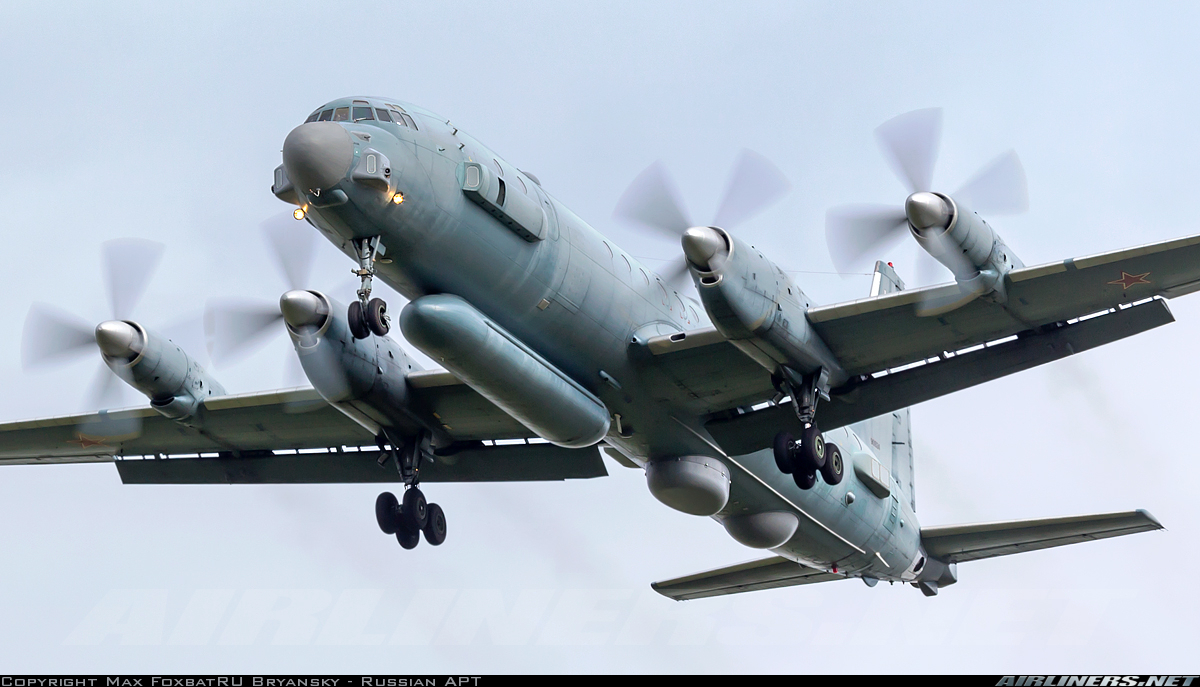
    A Russian maritime patrol aircraft with multiple personnel on board was inadvertently shot down by Syrian regime anti-aircraft artillery on Monday after the Syrians came under attack by Israeli missiles, according to a US official with knowledge of the incident

    The US official said the regime was actually trying to stop a barrage of Israeli missiles. A second official confirmed that Israel was responsible for the missile strikes on the Syrian regime.
    The Russian state news agency TASS reported that a Russian IL-20 military aircraft with 14 personnel on board disappeared over the Mediterranean on Monday. According to TASS, the ministry of defense specified that “the mark of IL-20 went off the radars disappeared during the attack of four Israeli F-16 aircraft on Syrian targets in the province of Latakia.”
    The Israelis had fired multiple missiles against targets in the coastal area of Latakia where Russian has based much of its military presence, including aircraft. In an attempt to strike back against the Israelis, the Syrians launched extensive anti-aircraft fire, the official said and the Russian aircraft was hit.
    The US found out about the incident because Syrian forces broadcast an emergency search and rescue radio call on an international frequency. The US then got a direct message from another country about the type of aircraft and circumstances of the incident. The official would not identify that country, but it is likely that Russia is the only nation that would know exactly what type of aircraft was shot down.
    A spokesman for the Pentagon told CNN that the missiles were not fired by the US military but would not speak as to who was behind the strikes. An Israel Defense Forces spokesman declined to comment on the reports.
    It’s a CNN story so it will be Trump’s fault in the end.
  • The inside story of how a US Navy pilot shot down a Syrian jet

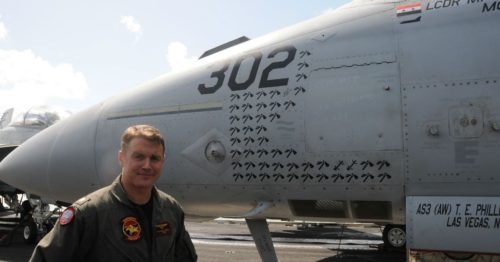
    LCDR Tremel

    The Russian built SU-22, NATO code name “Fitter” didn’t fare very well against Navy Tomcats back in the day. They’ve continued with this tradition against Navy Hornets.

    Navy LCDR Michael “M.O.B.” Tremel was sipping his coffee at 20,000 feet, at a leisurely 700 Kts, doing his part supporting US, Kurds, and friendly Arabs fighting ISIS. Little did he know he was about to become the first American pilot to shoot down an enemy aircraft, in battle, in 20 years.

    Tremel had a hunch the day’s mission would be different than the others he had flown into the gut of war-ravaged Syria, dropping bombs to protect friendly forces in the fight against the Islamic State.

    “Defending guys on the ground is what I’ve done my whole career,” the F/A-18E Super Hornet pilot told Navy Times last week at the Tailhook Association’s annual convention, where he received the Distinguished Flying Cross for becoming the first American pilot to shoot down an enemy plane since 1999.

    Tremel didn’t want to talk too much about those troops on the ground, but according to his medal citation they included an Air Force Joint Terminal Attack Controller, or JTAC, who was calling in strikes for Syrian rebels fighting Islamic State militants in their Raqqa
    stronghold.

    The beauty of the day clashed not only with the fighting below but also the thorny international politics that animate what strategists contend is a proxy war in Syria.

    It pits Syrian strongman Bashar al-Assad and his Hezbollah and Russian allies against a shifting array of insurgents backed by Gulf Arab states and Turkey, plus Kurdish militias largely supported by the United States.

    These days, the complicated battles on the ground are matched by a jumble of jets in the sky.

    “You have Russian aircraft, Turkish aircraft, Iraqis, the Syrian air force,” Tremel said.

    That’s not want Tremel saw outside his cockpit in 2014, three years into the Syrian civil war, when he joined one of the first U.S. sorties into the divided country to bomb Islamic State positions.

    The rules of engagement briefed to the “Golden Warriors” of Strike Fighter Squadron 87 stressed caution. Russian aviators appeared to reciprocate by flying “very professionally, and so did we,” Tremel said.

    Tremel and his wingman, Lt. Cmdr. Carl “JoJo” Krueger, began their day with a launch off the carrier George H.W. Bush in the eastern Mediterranean Sea.

    They swung south of Cyprus and then jetted over Turkey toward Syria.

    His radar soon picked up an unknown aircraft closing fast on the U.S.-allied Kurdish and Arab militias bannered as the Syrian Democratic Forces.

    It was a Syrian Su-22 Fitter. Tremel said he tried to prod the pilot to move south and away from the friendly forces he was shepherding below.

    “At any point in time, if this aircraft would head south and work its way out of the situation, it’d be fine with us,” Tremel said. “We could go back to executing (close-air support).”

    That didn’t happen.

    “He ended up rolling in, dropping ordnance, two bombs on those defended forces,” Tremel said.

    Tremel went for the Sidewinder missile.

    “It was really crazy, swinging that master arm for the first time in combat with an air-to-air missile selected,” he recalled.

    But it didn’t work.

    “Real time, I thought I might have been too close,” Tremel said. “I thought maybe I hit (the jet) but it didn’t fuse in time.”

    So Tremel turned to the AIM-120, an advanced medium-range missile.

    “That got the job done from about half a mile,” he said.

    His actions on that day in 2017 won him a Distinguished Flying Cross, and would secure his own place among Naval Aviation icons.
    The lucky SOB.
    *grin*

    To view the article in its entirety, click on the link provided.
    Navy Times
  • Night Stalkers Warrant Officer ID’d

    The Defense Department has identified the U.S. soldier killed in a helicopter crash Sunday night along the Iraq-Syria border.

    ‘Night Stalkers’ Warrant Officer Killed in Iraq Crash Identified

    Chief Warrant Officer 3 Taylor J. Galvin died Aug. 20 in Baghdad, Iraq, “as a result of injuries sustained when his helicopter crashed in Sinjar, Nineveh Province, Iraq,” officials said in a release.  Galvin, a Spokane, Washington native, was 34.

    https://www.military.com/daily-news/2018/08/21/night-stalkers-warrant-officer-killed-iraq-crash-identified.html

    Thanks to GDContractor for the link.


  • Assad wants American troops out of Syria and threatens to attack

    assad
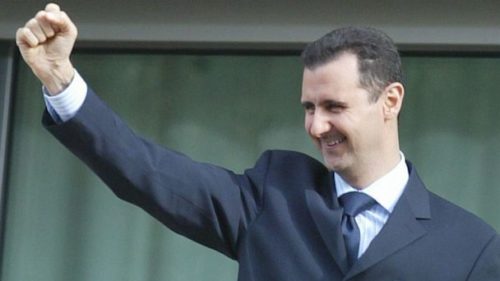
    Military Times is reporting Syrian President Bashar Assad has threatened to attack a region held by U.S.-backed Kurdish fighters in northeastern Syria, saying in an interview broadcast on Russia Today channel on Thursday that American troops should leave the country.

    The remarks reflect that despite pressure on multiple fronts, Assad is seeking to consolidate control after seven years of civil war.

    With military backing from Russia and Iran, he has reclaimed most of the territory lost to rebels in the wake of the popular uprising that swept the country in 2011, and quickly descended into all-out civil war. But large areas remain beyond his control, including the expansive region north of the Euphrates River that is administered by the Syrian Kurds.

    Speaking to the Russian channel, Assad said he has opened the door to negotiations with the Kurdish-run administration while also preparing to “liberate by force.”

    Forces loyal to Assad and the Syrian Kurds have clashed sporadically over the eastern oil province of Deir el-Zour. Last year, they led rival campaigns against the Islamic State group, and maintain a protracted front against each other along the Euphrates.

    The United States, which supports the Kurdish-led Syrian Democratic Forces, operates air bases and outposts in the Kurdish-administered region. “The Americans should leave,” Assad said. “Somehow, they are going to leave.”

    The U.S. has had a military presence in the country since early 2016 to train and advise Kurdish and Arab rebel forces fighting ISIS in northern and eastern Syria. The number of these mostly special operations forces in Syria had grown to around 500.

    Hundreds more Marines arrived in Syria to provide artillery support to U.S.-backed Syrian rebels to retake Raqqa, ISIS’s de facto capital in Syria.

    Army Rangers operate in Manbij to essentially act as a visible presence to prevent the Turkish military and Kurdish forces from fighting each other in the city retaken from ISIS months ago, the officials said, bringing the total number of US military personnel to about 2000.

    The U.S. has conducted over 7,800 airstrikes in Syria as of March 28, according to the Department of Defense.

    Also, a senior U.S. general has confirmed that hundreds of Russians fought – and died – in a major battle against American forces and their local counterparts in Syria.

    The skirmish occurred on Feb. 7, 2018 when forces aligned with Syria’s dictator Bashar Al Assad, backed by Russian mercenaries from a shadowy company called Wagner, which were under the direct control of the Kremlin, launched an attack on U.S. forces and members of the U.S.-backed Syrian Democratic Forces, a predominately Kurdish group, in eastern Syria. The opposing force consisted of tanks and heavy artillery.

    After a massive American counter-attack involving air and artillery strikes beat back the opposing troops, reports emerged afterwards suggesting that as many as 200 Russians had died in the engagement.

    I don’t think Assad’s Russian allies have any intentions of going head to head against the US presence in Syria, so he’d have to go it alone. Good luck with that.

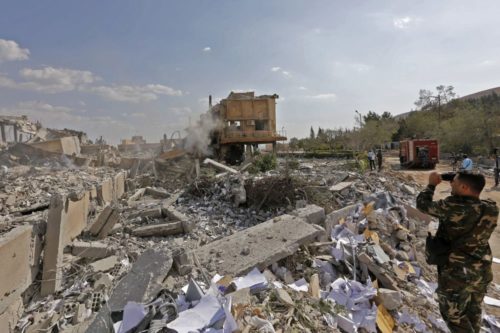
  • AAR- How the U.S. and Allies Attacked Syria

    syria rubble

    Bloomberg

    President Trump’s outrage over another WMD attack by Syria’s President al-Assad was clear. For the second time in his presidency, the U.S. commander-in-chief commanded a reprisal.

    While images of sick and dying civilians inundated global media all week, USS Winston Churchill sped toward the Mediterranean to join a flotilla of allied warships, including another U.S. warship, USS Donald Cook; both very capable Arleigh Burke-class guided missile destroyers.

    It was all a con.

    Both vessels carry as many as 90 BGM-109 Tomahawk Land Attack Cruise Missiles (TLAM)– the majority of weapons used in the Friday evening strike on Syria — neither ship actually fired a shot. Instead, they were stalking horses, a distraction from an assault Assad’s government could do little to defend itself against.

    It worked. Pentagon officials on Saturday said they faced little resistance to their targeted attack on what they said were three Syrian chemical weapons facilities. Most of the Syrian countermeasures, including defensive ballistic missiles, were fired after U.S. and allied weapons hit their targets, Lieutenant General Kenneth McKenzie told reporters on Saturday.

    “No Syrian weapon had any effect on anything we did,” McKenzie said. He described the joint U.S., French and U.K. strike as “precise, overwhelming and effective.”

    As the strategy of how to respond developed, Trump appeared to telegraph his intentions with a tweet on April 11: “Russia vows to shoot down any and all missiles fired at Syria. Get ready Russia, because they will be coming, nice and new and ‘smart!”’ The Russians reacted by sortieing 11 warships from the Syrian port of Tartus.

    Russian Ships Depart Tartus

    In the White House, Trump met with military officials and made several calls to his French and British counterparts, President Emmanuel Macron and Prime Minister Theresa May. Trump was presented with five large target options for potential strikes. The president listened as Pentagon chief Jim Mattis, Joint Chiefs Chairman Marine Corps General Joe Dunford and other military leaders outlined the options.

    Each potential target was discussed, and was determination was focused on limiting the risk of escalation by Russia. There was agreement among Trump’s top national security staff about conducting strikes, but debate about how hard to hit the Syrians. UN Ambassador Nikki Haley was reportedly especially blunt in her assessment of the Syrian regime. In a private meeting with Trump and national security officials earlier in the week, Haley was a leading voice pushing for a robust military response to the chemical weapons attack on humanitarian grounds.

    Chairman JCS General Dunford told reporters Friday that the U.S. sought targets that would limit any involvement with Russian military forces in Syria, and reduce the risk of civilian casualties.

    With the allies on board and USS Winston Churchill arriving in the Mediterranean region, the attack was nearly under way. As the president addressed the nation at 9 p.m. Washington time on Friday, a barrage of 105 U.S., U.K. and French missiles converged on Syria. They came from the Red Sea, the Arabian Gulf and the Mediterranean, homing in from three directions to overwhelm whatever missile defenses Assad’s regime might deploy. Russia’s advanced air defense system didn’t engage the allied weapons.

    “A perfectly executed strike last night,” Trump tweeted early Saturday. “Could not have had a better result. Mission Accomplished!”

    The targets included a scientific research facility near Damascus, and two chemical weapons facilities outside the city of Homs, the US military said, though reports said the buildings had been evacuated in recent days.

    Until next time…