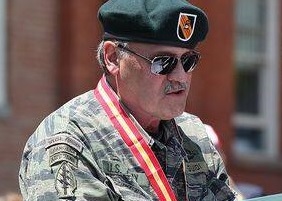
Category: Stolen Valor Act

  • Stolen Valor laws in Maine and Delaware

    Yesterday, two states joined the growing number which have their own Stolen Valor laws – Maine and Delaware. WCSH6 says that the Maine law is a little tougher;

    This bill takes that a step further [from the Federal Stolen Valor Act] by saying “anyone impersonating”. For example, a person asking for money on the side of the road saying they are a homeless vet. If they were not able to prove they were a veteran, they would be fined. Most veterans have their Military I.D.’s on them at all times or have access to them.

    The article on the Maine law references a fine, but doesn’t say how much the fine is. In Delaware, that’s all there is – a fine;

    According to a release from the Delaware House of Representatives, House Bill 80, as amended, expands the crime of criminal impersonation to include those who falsely claim to be current or past members of the U.S. military for the purpose of “obtaining money, property, or other tangible benefit.” The legislation also apparently applies to veterans who try to benefit by deceptively claiming a higher rank then they achieved.

    State Representative Rich Collins says the Class A misdemeanor carries a minimum fine of $1,000 that cannot be suspended by a judge.

  • New York Senate passes Stolen Valor law

    New York Senate passes Stolen Valor law

    Senator Thomas Croci

    The New York State Senate has passed a law that makes stolen valor a crime. The bill written by Senator Thomas Croci makes the crime of presenting a false military history a Class E felony;

    “Men and women who bravely serve our country deserve to have their honor and their uniform protected. Anyone who would wear a uniform or decoration who has not earned it for the purpose of obtaining money or other benefits should be held accountable. Sadly, occurrences such as these have become all too common. Requiring the criminals to pay a stolen valor fee is a fitting way to ensure that our real veterans are honored appropriately,” stated Senator Croci, Chair of the State Senate Committee on Homeland Security, Veterans, and Military Affairs.

    The punishment comes with a paltry $250 fine that will be earmarked for the Veteran’s Cemetery Fund to establish a state veterans’ cemetery. I’m guessing that there’s also jail time included in that, since it is a felony.

  • Stolen Valor, dispelling rumors

    Stolen Valor, dispelling rumors

    The Fayetteville Observer paid homage to us and our friends the other day in their editorial section when they wrote about stolen valor.

    It’s also fortunate that we’ve got groups like Green Beret Posers Exposed, This Ain’t Hell and Guardian of Valor. Those volunteers check the military records of people who claim to be heroes, and they expose the frauds on websites.

    […]

    “It’s just about righting wrong,” Tim Howle of Green Beret Posers Exposed told an Observer reporter. “We hold certain values of honesty and integrity as a basis for our being. If nobody else is going to stand up to these guys, we feel we have to do it.”

    Tim Howle can take credit for the bust we did yesterday of “Sonny” Cool. The problem with the Fayetteville Observer piece is that they are continuing the rumor that stolen valor is now legal because the Ninth Circuit says so. It’s not. The law that the Stolen Valor Act affects is Title 18 of the U.S.Code, Section 704, which still makes it a crime to buy and sell the stuff that phonies wear;

    18 U.S. Code § 704 – Military medals or decorations

    (a)In General.—
    Whoever knowingly purchases, attempts to purchase, solicits for purchase, mails, ships, imports, exports, produces blank certificates of receipt for, manufactures, sells, attempts to sell, advertises for sale, trades, barters, or exchanges for anything of value any decoration or medal authorized by Congress for the armed forces of the United States, or any of the service medals or badges awarded to the members of such forces, or the ribbon, button, or rosette of any such badge, decoration or medal, or any colorable imitation thereof, except when authorized under regulations made pursuant to law, shall be fined under this title or imprisoned not more than six months, or both.

    (b)Fraudulent Representations About Receipt of Military Decorations or Medals.—

    Whoever, with intent to obtain money, property, or other tangible benefit, fraudulently holds oneself out to be a recipient of a decoration or medal described in subsection (c)(2) or (d) shall be fined under this title, imprisoned not more than one year, or both.

    (c) Enhanced Penalty for Offenses Involving Congressional Medal of Honor.—

    (1)In general.—
    If a decoration or medal involved in an offense under subsection (a) is a Congressional Medal of Honor, in lieu of the punishment provided in that subsection, the offender shall be fined under this title, imprisoned not more than 1 year, or both.

    (2)Congressional medal of honor defined.—In this subsection, the term “Congressional Medal of Honor” means—
    (A) a medal of honor awarded under section 3741, 6241, or 8741 of title 10or section 491 of title 14;
    (B) a duplicate medal of honor issued under section 3754, 6256, or 8754 of title 10or section 504 of title 14; or
    (C) a replacement of a medal of honor provided under section 3747, 6253, or 8747 of title 10or section 501 of title 14.

    (d) Enhanced Penalty for Offenses Involving Certain Other Medals.—
    (1)In general.—
    If a decoration or medal involved in an offense described in subsection (a) is a distinguished-service cross awarded under section 3742 of title 10, a Navy cross awarded under section 6242 of title 10, an Air Force cross awarded under section 8742 of section?[1] 10, a silver star awarded under section 3746, 6244, or 8746 of title 10, a Purple Heart awarded under section 1129 of title 10, a combat badge, or any replacement or duplicate medal for such medal as authorized by law, in lieu of the punishment provided in the applicable subsection, the offender shall be fined under this title, imprisoned not more than 1 year, or both.
    (2)Combat badge defined.—
    In this subsection, the term “combat badge” means a Combat Infantryman’s Badge, Combat Action Badge, Combat Medical Badge, Combat Action Ribbon, or Combat Action Medal.

    The Ninth Circuit’s decision 1) has nothing to do with the above law, 2) has no effect outside the jurisdiction of the Ninth Circuit way over there on the other side of the country. Elvin Swisher was arrested under the 2005 version of the law, and he didn’t directly profit from wearing his Purple Heart on the witness stand – the reason he was prosecuted, so the Ninth Circuit merely upheld their decision of their previous rulings. Their ruling last month had nothing to do with the way the law is written now.

    We do appreciate the Fayetteville Observer’s endorsement of our work, though.

  • Rahn inspires Minnesota Stolen Valor Act

    Rahn inspires Minnesota Stolen Valor Act

    KSTP reports that State Representative Jeff Howe was inspired by the story of Richard Rahn’s valor theft in late 2014 to present his own bill to the Minnesota legislature because the current state laws make pretending to be a military officer is a misdemeanor, but Rahn’s impersonation of an enlisted soldier isn’t illegal.

    Howe’s bill would make it a crime to also impersonate active or reserve component military service members, veterans—regardless of rank.

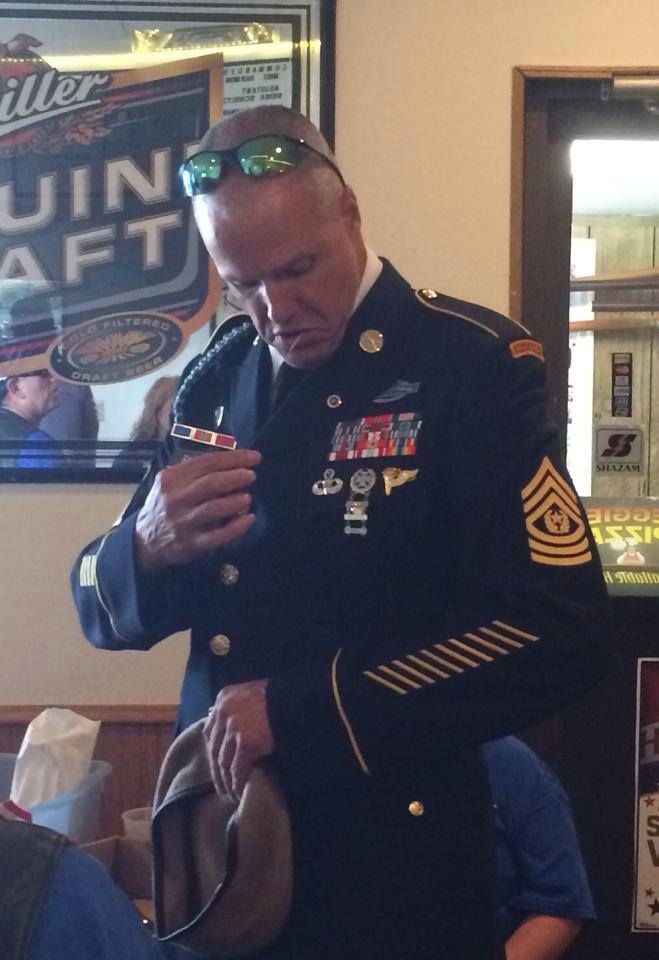
    Rahn marched in parades, attended Legion events and prayed in the homes of fallen soldiers while wearing the uniform of an army Sergeant Major with a Ranger Tab, the Bronze Star and Purple Heart medal.

    “It started off all so innocent enough and it just got way out of hand, and for that I’m truly sorry,” Rahn said in an interview with KSTP reporter Eric Chaloux.

    Rahn admitted he didn’t earn the uniform he wore instead bought them.

    “If they are looking to defraud someone, I’ve got an issue with that,” Howe said.

    Of course, several of the badges and ribbons that Rahn wore were covered by the Federal Stolen Valor laws, but Federal prosecutors are too busy these days. Luckily, Rahn also violated gun laws, so he’s in the hoosegow, otherwise, he’d be out and about.

  • Stolen Valor bill filed in Virginia

    The Winchester Star reports that Delegate Chris Collins has filed a Stolen Valor bill in the Virginia legislature that would make pretending to have an enhanced military career for the purpose of gaining a tangible benefit a Class 1 misdemeanor.

    Class 1 misdemeanors carry a maximum punishment of 12 months in jail and/or a $2,500 fine.

    During a Friday morning phone interview, [29th District Delegate Chris Collins, R-Frederick County] said he had been approached by veterans groups advocating for such legislation. He has also discussed the issue with 31st District Del. Scott Lingamfelter, R-Woodbridge, a retired U.S. Army colonel, Collins said.

    “We’re aware of people who have dressed up as soldiers and gotten free stuff, or have asked for money, or they claim to be a veteran and try to get the sympathies of nonprofits,” Collins said.

    Yeah, Virginia is almost as bad as Florida or New Jersey when it comes to phonies defrauding charities and citizens.

  • TAH on Lars Larson’s Radio Show

    TAH on Lars Larson’s Radio Show

    So, MCPO and I were on the Lars Larson Show on Tuesday night. We discussed the 9th Circuit’s decision to allow Elvin Swisher to continue to wear his Purple Heart that he didn’t earn in his pretend secret war against North Korea and China.

    Honestly, from a business standpoint, as a Stolen Valor blog, this will be good for business. Why would I think that? Well, here’s what the mudbrained halfwit constituency of TAH says about it;

    Airborne ….! All you fucking Leggs…. (non-airborne personnel)

    See how much trouble you stolen valor cottage industry people are in today…. After last Monday when the supreme court sent your stupid asses a flying..

    Now you know I can go fashion my own medal of honor (replica) and wear it around the parades as a replica, right..? NONE of your fucking business anymore.

    That trident navy seal thingymajiggy that don Shipley and his current duty navy seals are conspiring together is pretty much, going to poof, now. Huh..?

    Oh Shit. Now don’t forget the black guy Veteran Mr. Hall out in New Orleans who got fired because of Don Shipley (singing & dancing with his wife) about Hall’s trident tattoo on the mobbed victims arm.

    Now that sounds like a pretty strong lawsuit case right there.. Maybe a civil rights case specifically.

    How many lawyers do you weenies want to help you all now..? Less today, huh.

    The Iceland IMMI new-media loves you guys… In Iceland shows who you all really are. Not pretty like you all like to think about yourselves valiant efforts so far.

    In reality.. “You are on the wrong side of history”.

    In the upcoming court appearances… which you all are invited.. “It will be really, really, really hard to shove that Bernath honorary cpo nothing up the Judges’ ass, as stolen valor at all

    Meanwhile I believe Americas Stolen Valor cottage industry for current duty military fun and now profit “has jumped the shark” in California. (R.I.C.O. Act)

    Any current duty U.S. Military stolen valor vigilante activities on a Government’s network and against authentic combat disabled Vietnam War Veterans is a very provable case outright.

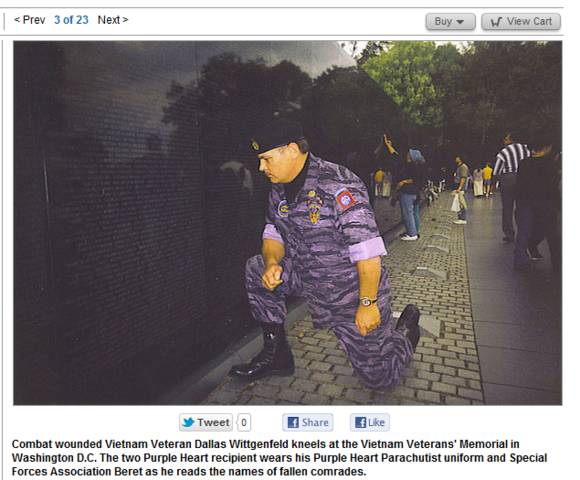
    I have a Special Forces Association X Green Beret awarded to me and an Associate Life Membership also awarded to me.

    You bloggers are fucked, now.

    I think my civil rights have been violated all over the fucking place and attached to the stolen valor military community. Got that picture, dumb asses.

    Did I mention I am 100% combat disabled…

    2 Purple Hearts, valor in combat, Infantry Air-Medal, combat infantry badge, airborne ranger trained with jump-pay, and Ranger Scrolls on each shoulder as a Private First Class in Vietnam. See, you are double-fucked big time..…

    By the way. Have you got any real proof of stolen valor or just 3rd party news accounts. Any witnesses, any affidavits, any pictures of stolen valor, wearing any medals that were not mine..? Nooo!

    See how much trouble you people are in now..

    Good.

    The LRP-41 Cometh… lrp41@cfl.rr.com

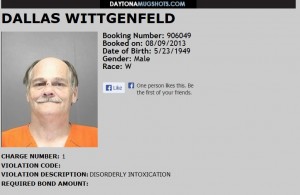
    Somehow, Dallas Wittgenfeld thinks that we’re governed by the 9th Circuit way over there on the West Coast. Even if we were somehow in their jurisdiction, their decision was on the powers of government to enforce 18 U.S.C. section 704. Just like I’m not tethered by the Bill of Rights to allow everyone a chance to express their opinion here, I’m also not responsible for allowing people their “free speech” in regards to stealing valor. I’m not the government, so the 9th Circuit’s decision doesn’t affect anything we do here. You would have thought that Wittgenfeld would have learned to keep his mouth shut when the Supreme Court overturned the Alvarez case.

    Oh, yeah, Dallas, the 9th Circuit is NOT the Supreme Court – you need a better lawyer.

    Wittgenfeld mugshot

  • 9th Circuit overturns portion of old Stolen Valor law [UPDATED]

    9th Circuit overturns portion of old Stolen Valor law [UPDATED]

    Guidi

    Let’s start by looking at the Defendant on this one, just so you get an idea of what he did.  From the opinion:

    Defendant Elven Joe Swisher enlisted in the United States Marine Corps on August 4, 1954, a little over a year after the Korean War ended. In August 1957, he was honorably discharged from the Marine Corps into the reserves. Upon discharge, Swisher was given a DD-214 discharge document, a typewritten form that provided his name, education, type of discharge, last duty assignment, last date of service, and similar information regarding his military service. The form required a listing of Swisher’s “decorations, medals, badges, commendations, citations and campaign ribbons awarded or authorized.” In the authenticated copy of Swisher’s original DD-214, the term “N/A” (not applicable) is written in the field.

    In 2001, more than forty years after his discharge, Swisher filed a claim for service-related Post-Traumatic Stress Disorder (PTSD). In his application, Swisher claimed he suffered from PTSD as a result of his participation in a secret combat mission in North Korea in August or September 1955. Along with his application, Swisher provided a self-published narrative that described the North Korea operation.

    According to the narrative, Swisher was wounded in battle, and subsequently presented with a Purple Heart by an unnamed captain who visited him in the hospital. The same captain told him he was “entitled to and should wear the National Defense Medal, Korean War Service Medal and the Korean War U.N. Service Medal and Ribbons.” Swisher claims he also received a Silver Star and a Navy Commendation Medal and Ribbon with a Bronze “V.”

    All of that was nonsense, he fraudulently created a DD214, applied for VA benefits, and got caught.  He apparently had to pay the VA back.  Nonetheless, at a trial for another individual, Swisher showed up wearing a variety of medals, including a purple heart, which got him busted under the Stolen Valor Act.

    Now, some background here so you understand what is going on.   The first Stolen Valor Act, passed in 2005 had two portions.  The first was that you couldn’t wear medals you didn’t earn, and the second is that you couldn’t claim to have earned medals that you hadn’t actually earned.  A guy named Xavier Alvarez was convicted on the second after claiming he’d received the Medal of Honor and a few other things.  It went up to the Supreme Court, who in a very convoluted and divided opinion said that that portion, the claiming medals part, violated the Constitution.  The vote on that was 3-2-4.  Three said it was always unconstitutional, two said that it was unconstitutional in this case because it needed a fraud element added, and four said it should stand.  [Correction on that as I think about it, it was 4-2-3 I believe.  Either way, a plurality, not a majority, so the 2 in the middle are the controlling ones.]

    Subsequently, the Congress fixed the law, said that claiming medals for the purpose of securing something of value was illegal, and that’s where we stood until yesterday.  Technically, we still stand there, because while numerous reporters are getting it wrong, what the 9h Circuit yesterday decided was that the original law’s prohibition on WEARING medals was also unconstitutional, basing it on the same grounds the Supreme Court found in Alvarez on the claiming medals portion.

    The opinion is not all that interesting or shocking, and I’m not going to quote from it, only because it is REALLY dense legal-ease that most people will not understand.  But it basically dealt with whether this was a compelling government issue, and if it was (and they agreed it was) whether the government answer to addressing it was the least restrictive method.  The majority felt that it was not, and again argued for a database or something similar.

    I, of course, found the dissent more compelling, but a few notes first before I go into what the dissent said.  This decision is not entirely unexpected and has a limited impact on things.  It actually goes directly against what another circuit (the 4th) decided in a substantially similar case, so it will likely end up at the Supreme Court again.  Worst case scenario there is that the Supreme Court says that the wearing medals portion has to be re-written just as the claims about military awards, to say something like “whoever wears unearned military medals with the intent to deceive for purposes of gaining something of tangible benefit shall be found guilty and…..”  Etc.  That’s worst case.

    Either way, it doesn’t effect the new Stolen Valor Act (Law) and it really doesn’t change anything.  Swisher was wearing the medal apparently to add credence to his testimony in a case, so if the law was rewritten, he probably would he been swept up under that one.  Either way, Swisher doesn’t get off scot free, because he was already convicted of a host of other things, like making false statements in court, altering a federal document (his DD-214) etc.

    But some portions from the dissent, which I found compelling.  They started by noting the difference between spoken words and the actions of wearing the medal.

    The statute at issue here, however, does not police “white lies,” nor does it prohibit lying generally. Instead, it targets a very specific lie that implicates a very specific government interest, an interest which the full court here and the Supreme Court in Alvarez agrees is significant. And importantly, the lie the government wishes to punish cannot be uttered with words; it can only be accomplished by falsely wearing the nation’s medals. Although the Court in Alvarez found that the harm caused by the form of the lie regulated by § 704(b) did not outweigh the First Amendment harm, the interests implicated by § 704(a) must be weighed differently from those at issue in Alvarez under § 704(b). The harm to the government’s interest in upholding the military honors system caused by the false wearing of its medals is greater than the harm caused by “bar stool braggadocio.”

    And then they talked about who the victims of this type of behavior are:

    The false and deceptive wearing of military medals “dilutes the value” of military honors generally, by conveying the impression that “everyone” earns them. Moreover, such conduct also dilutes the symbolic value of the medal itself, hampering the government’s ability to reward those it has concluded are worthy of recognition. The purpose of a military medal is not only that it conveys the government’s appreciation for an individual’s service to the individual, but that it conveys the government’s commendation of that individual to others, identifying the medal winner “as an example worthy of emulation.” United States v. Alvarez, 617 F.3d 1198, 1234 (9th Cir. 2010) (Bybee, J., dissenting). The value of the military medal, like the value of a trademark, is that it is both recognizable and publicly understood to convey a specific message: in this case, the message that the wearer has done something worthy of admiration. When those who are unworthy are allowed to wear the medal, the government can no longer identify its heroes in a way that is easily discernible by the public….

    This is a key response, because one of the complaints of the majority is that there was no specified harm to individuals by someone wearing the medal.  The dissent makes clear its opinion that anyone who actually earned those awards has the value of them diluted.

    Lastly, the dissent looked at the “proposed answer” to the Stolen Valor problem, a nation-wide database.  Now, opinions on this one differ amongst even those on our side, but I tend to agree with the justice writing the dissent here Circuit Judge Bybee:

    Finally, the majority, following Alvarez, 132 S. Ct. at 2550–51 (Kennedy, J.) (plurality opinion); id. at 2556 (Breyer, J., concurring in the judgment), proposes a database of medal winners as a means to counteract Swisher’s deception.10 Maj. Op. at 31–32. To my mind, this is no solution at all to the problem of individuals falsely wearing medals. If the public has to check the database to confirm that a medal wearer actually earned the medal, the purpose of the medal itself is utterly defeated. If we can no longer trust what we can see, the only honor the United States can confer on its heroes is a listing in a database. Once wearing the medal itself doesn’t signify anything more than a presumption of a property right, the nation’s highest honors will have become, literally, virtual.

    He addresses this more fully earlier too, which I include here out of order, because I think it makes a great deal of sense:

    But as anyone knows who has witnessed the President awarding the Congressional Medal of Honor or a promotion ceremony pinning a new officer—or even an Olympic medals ceremony or a Cub Scout court of honor—there is value, both symbolic and tactile, in the awarding of a physical emblem. If there is important value in the act of awarding a physical medal, there is important value in the wearing of it.

    Anyway, the bottom line is this: there is now a split in the courts on whether wearing of certain medals violates the law, and it will end up in the Supreme Court most likely, which will get another shot at explaining what the best way to deal with this is.  Various guys who lie about their military service are crowing about this “major victory” for them, but the exact opposite is true as it regards those of us who publish their falsehoods.  The courts have now twice said that the proper way to deal with such people is to take it to the court of public opinion, in other words, publish how these people lied and shame them for it.  The problem there is that they then sue us, and we have to go to court to defend actions which the Supreme Court explicitly told us to do.  Either way, this isn’t the great victory they think it is.  All this will do is push it up the chain again, get more publicity for the people that lied, and force the Supreme Court to enunciate more clear guidelines.

    But either way, the new Stolen Valor Act is completely intact, and if you try to scam the government or anyone else with your fake stories of heroism, you will likely get arrested.

    Don’t believe me?  Just ask Robert Guidi of New Jersey (pictured above) who was arrested after claiming to be a Green Beret Sniper and POW during Vietnam in order to get a charitable group to build him a $30,000 deck which he can’t enjoy from his current residence at the Morris County Correctional Facility.

    UPDATE:  [DELETED]

    It appears I was wrong, and have deleted that portion.  It looks like the wearing portion was repealed.  But now I’m even more confused, because the 4th Circuit case upheld it.

    But a footnote in the dissent states:

    Both provisions of the Stolen Valor Act were amended following Alvarez, subsequent to the events that gave rise to Swisher’s case. Congress removed the “wearing” provision in § 704(a), apparently preemptively, and more substantively revised § 704(b) to comply with the Court’s holding in Alvarez. See Stolen Valor Act of 2013, Pub. L. No. 113-12, § 2, 127 Stat. 448 (2013). Thus, the precise provisions at issue here are no longer in effect. As amended, however, the statute would still appear to cover Swisher’s conduct. Section 704(b) now reads: “Whoever, with intent to obtain money, property, or other tangible benefit, fraudulently holds oneself out to be a recipient of a decoration or medal . . . shall be fined under this title, imprisoned not more than one year, or both.” 127 Stat. 448.

    But the dissent also notes that:

    Concomitantly, because § 704(a) requires proof of deceptive conduct, any harm to First Amendment interests is less than in Alvarez, and the less restrictive alternatives discussed in Alvarez, less effective.

    The majority today ignores these distinctions, and discusses the outcome of this case as though Alvarez renders it a foregone conclusion. But it is not. Alvarez does not clearly compel the result here—indeed, that was the conclusion reached by a panel of our court in United States v. Perelman, 695 F.3d 866, 872–73 (9th Cir. 2012), in which we upheld § 704(a) under the lesser scrutiny applied to conduct regulations laid out in O’Brien.1 It was also the conclusion reached by the Fourth Circuit, which found that § 704(a) would survive strict scrutiny. United States v. Hamilton, 699 F.3d 356, 371–74 (4th Cir. 2012). While I do not entirely agree with the reasoning in these cases, they demonstrate that the reach—and indeed the holding—of Alvarez is unclear. Alvarez gives uncertain guidance as to how false statements should be analyzed, especially if Justice Breyer’s opinion controls under Marks v. United States, 430 U.S. 188, 193 (1977).

    So I have no idea.

    UPDATE x2:

    I think I may have figured this out.  Congress seems to have taken out the bifurcated thing that they had about speech and wearing medals 704(a) & (b) and changed the wording.  So it now reads:

    “Whoever, with intent to obtain money, property, or other tangible benefit, fraudulently holds oneself out to be a recipient of a decoration or medal . . . shall be fined under this title, imprisoned not more than one year, or both.” 127 Stat. 448.

    My guess is that wearing a medal could be assumed to be “hold[ing] oneself out to be a recipient of a decoration or medal” and so they assumed that both now required the mens rea, or guilty mind, which means there was a fraud element.

    Which makes this case more interesting, because then the question becomes this:

    Does wearing a medal one did not earn while testifying before a court satisfy the requirement of the statute for “tangible benefit”?

    That’s a VERY interesting question.  Because Congress punted on what a tangible benefit was.  If you are asked to be Grand Martial (Marshall?) of a parade, is that a “tangible benefit”?  What exactly *is* a tangible benefit?

  • This Ain’t Hell and the Stolen Valor Act

    TSO is currently writing an explanation of the 9th Circuit Court’s decision yesterday in the Elven Swisher case, so I won’t get into that, I’ll let the lawyers get down in the legal weeds. But, of course, Dallas “Witless” Wittgenfeld, the second greatest legal mind in the country has determined that, somehow, the Swisher decision of the 9th Circuit means the end of the Stolen Valor Community, because the 9th Circuit said that Stolen Valor is “free speech” and that’s it’s legal. The work that we do has nothing to do with the government or with the law – we are only about the Truth. Even if the Supreme Court says that the 9th Circuit was correct and that the government can’t regulate stolen valor, that doesn’t stop us from telling the truth.

    When the Supreme Court overturned US v. Alavarez a few years back, they acknowledged our participation in the Stolen Valor realm when Justice Kennedy wrote;

    The remedy for speech that is false is speech that is true. This is the ordinary course in a free society. The response to the unreasoned is the rational; to the uninformed, the enlightened; to the straight-out lie, the simple truth.

    […]

    Society has the right and civic duty to engage in open, dynamic, rational discourse.

    […]

    The American people do not need the assistance of a government prosecution to express their high regard for the special place that military heroes hold in our tradition. Only a weak society needs government protection or intervention before it pursues its resolve to preserve the truth. Truth needs neither handcuffs nor a badge for its vindication.

    In other words, people have a right and a duty to do that which the government can’t do. Although the court has said that the government can’t punish people for wearing awards and uniforms and making statements that are false, that doesn’t mean that we can’t expose them to the world for being liars.

    I find it difficult to believe that Dallas Wittgenfeld, a Vietnam veteran and a former drill sergeant, would celebrate the court’s decision, but that’s just how shallow his intellect is. Shallow enough to associate himself with a fake petty officer with a sketchy and sordid history, both as a veteran and as a civilian.

    The bottom line is that nothing the courts decide impacts that which we do here. Of course, phonies will all interpret the decision as Wittgenfeld did and we’ll see another explosion of phonies like we did when the Supreme Court overturned Alvarez, thinking that they now have the government’s blessing to be phonies. We are not the government. The court’s decision may have made stolen valor legal in the eyes of the government, they haven’t made what we do illegal.