Category: Real Soldiers

  • Josh Burns; special forces soldier saving the world

    Josh Burns; special forces soldier saving the world

    Josh Burns

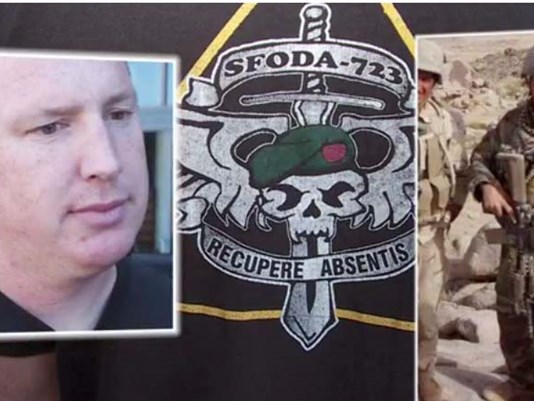
    Chief Tango sends us a link to WWLTV which tells the story of special forces soldier Josh Burns on the day that he rescued a mother and child from a submerged truck in Ruddick, Louisiana.

    State Police say a white pick-up truck, with double-rear tires and a trailer, cut off the dump truck, sending it over the edge of the northbound span. Below, and in between the two bridges, a man popped out of the water.

    “Was very frantic, he started yelling something, couldn’t hear him, then he ended up saying his kid was in the truck,” Burns said.

    Fueled by the bond of fatherhood, and driven by his experience as a Green Beret, Burns jumped into the chilly waterway to help.

    “I think I was more afraid how I would feel about myself if I had just watched a family drown and I just sat there,” he said about the decision.

    You should read the rest of his daring rescue at the link.

  • WWII flying ace celebrates 95th birthday

    WWII flying ace celebrates 95th birthday

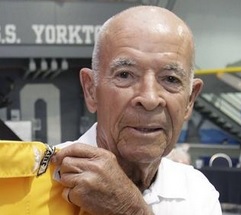
    Abner Aust

    Someone sent us a link to the story of Abner Aust in the Highland News-Sun who celebrated his 95th birthday in Frostproof, Florida which calls him the “the last World War II flying ace”;

    Wearing a bright yellow flight suit he bought while flying combat tours in Vietnam, Aust talked briefly about how he shot down five enemy airplanes in the fading days of World War II in the Pacific.

    As a young pilot, he flew a P-51 into combat from a base at Iwo Jima in August 1945, days after the atomic bombs were dropped, but Japanese flyers still took to the air to try and stop their county’s inevitable surrender.

    Later, Aust says, he served in Korea as an air defense planner and later led a jet fighter wing in the Vietnam war, logging dozens of combat flights and earning a host more medals. All told, the former flyer says, he earned the Legion of merit, the Distinguished Flying Cross with three clusters, a Bronze Star, the Air Medal with 25 clusters and a number of Vietnamese medals. He also was submitted for the Silver Star for gallantry.

    He invited the guests at his birthday back for his 100th birthday, too.

    Abner Aust may be a flying ace (Wiki verifies it), but he’s no angel. In 2000, he went to jail for two years for paying someone to burn his ex-wife’s house down and while he was in prison, he was convicted of trying to find someone to kill his ex-wife. In 2012, he filed a phony $1 million lien against his ex-wife’s house. I guess those of you with ex-wives have those sorts of problems.

    Spite might have something to do with his longevity.

  • Desmond Doss, the man, the myth, the legend.

    [youtube https://www.youtube.com/watch?v=JKdwsWdH3A4&w=460&h=315]

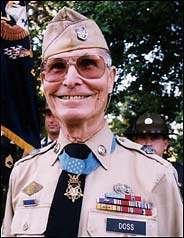
    So with the upcoming movie Hacksaw Ridge, people are learning about the actions of Corporal Desmond Doss. TSO’s previous post gave a good idea about what the man did, but I want talk about who he was.

    I first read about him when assigned to give a oral presentation about a Medal of Honor recipient for WLC. He was a Medic and that was something I could relate to. But also that it was a reminder that heroes can come from even the most unlikely of places. His actions in the Pacific made the the Army to finally see that.

    He was born in February 7th 1919 and learned the trade of carpentry from his father, who was cabinet maker. He was a devote 7th Day Adventist. We worked at the Newport News Shipbuilding & Dry Dock Company and declined a work related Draft Deferment when drafted in 1942. In in own words he said this.

    “I felt like it was an honor to serve my country, according to the dictates of my conscience.”

    “I didn’t want to be known as a draft dodger, but I sure didn’t know what I was getting into.”

    Basic Training at Fort Jackson in 1942 as a Medic and assigned to the 77th Infantry Division. Ostracized by fellow Soldiers for religious views on not working on the Sabbath (Saturday) and refusal to take a life. Recommend for Court Martial as “mentally unfit” for service. Later in the Pacific he recieved two Bronze Stars for service as a medic in Guam and the Leyte Island in the Philippines during 1944.

    “I made It a practice to go out on patrol with the men. The non-com warned me not to, but I told him, it may not be my duty but it was what I believed in. I knew these men; they were my buddies, some had wives and children. If they were hurt, I wanted to be there to take care of them. And when someone got hit, the others would close in around me while I treated him, then we’d all go out together.”

    On the day that he lowered over 72 fellow Soldiers down the hill to safety he kept saying one thing and one thing only. “Lord, help me get one more. Just ONE more.” Just reading when he went though was humbling, let alone what it must have been like on that hill.

    They were my men and I couldn’t go off and leave them even if it cost me my life. So I stayed there and let the men down by rope about 35 feet to the place where they could be taken by litter to the aid station.

    If that was not a example of what a medic should be, I do not know what is.

    CPL Desmond Doss stayed in the Army until 1946. He lost a lung to Tuberculosis in the same year. The infection and loss of a lung contributed to his medical complications later in life.

    I found a few of his favorite phrases.

    Anything that’s not worth doing right to start with is not worth doing at all.

    It’s not how much you know, but what you do with what you know.

    When asked about what advice he had for current and future medics, he had this to say.

    The best advice I can give is put your heart and soul into your work. If you like what you’re doing, the Lord will bless. I know some thought I was better. Well I felt like I was. We put our heart and soul into our work. I feel like, especially for the medics, it’s the most rewarding work there is.

    It is something that all in the medical profession should remember and take to heart.

    Since today is the day he received the Medal of Honor, he talks about that day in the video. Start on 4:45 and let it play
  • 72 years ago today conscientious objector Desmond Doss receives Medal of Honor

    72 years ago today conscientious objector Desmond Doss receives Medal of Honor

    Cross posted from paying home.

    Desmond Doss is truly one of the most extraordinary Americans to ever serve.  Some people might disagree with his pacifist beliefs (as I do) but what you can’t disagree with is that this is one of the more incredible Medal of Honor citations you’ll ever read:

    He was a company aid man when the 1st Battalion assaulted a jagged escarpment 400 feet high. As our troops gained the summit, a heavy concentration of artillery,mortar and machine gun fire crashed into them, inflicting approximately 75 casualties and driving the others back.

    MoH.doss

    Pfc. Doss refused to seek cover and remained in the fire-swept area with the many stricken, carrying all 75 casualties one-by-one to the edge of the escarpment and there lowering them on a rope-supported litter down the face of a cliff to friendly hands. On May 2, he exposed himself to heavy rifle and mortar fire in rescuing a wounded man 200 yards forward of the lines on the same escarpment; and 2 days later he treated 4 men who had been cut down while assaulting a strongly defended cave, advancing through a shower ofgrenades to within eight yards of enemy forces in a cave’s mouth, where he dressed his comrades’ wounds before making 4 separate trips under fire to evacuate them to safety. On May 5, he unhesitatingly braved enemy shelling and small arms fire to assist an artillery officer. He applied bandages, moved his patient to a spot that offered protection from small arms fire and, while artillery and mortar shells fell close by, painstakingly administered plasma. Later that day, when an American was severely wounded by fire from a cave, Pfc. Doss crawled to him where he had fallen 25 feet from the enemy position, rendered aid, and carried him 100 yards to safety while continually exposed to enemy fire. On May 21, in a night attack on high ground near Shuri, he remained in exposed territory while the rest of his company took cover, fearlessly risking the chance that he would be mistaken for an infiltrating Japanese and giving aid to the injured until he was himself seriously wounded in the legs by the explosion of a grenade. Rather than call another aid man from cover, he cared for his own injuries and waited 5 hours before litter bearers reached him and started carrying him to cover. The trio was caught in an enemy tank attack and Pfc. Doss, seeing a more critically wounded man nearby, crawled off the litter; and directed the bearers to give their first attention to the other man. Awaiting the litter bearers’ return, he was again struck, by a sniper bullet while being carried off the field by a comrade, this time suffering a compound fracture of one arm. With magnificent fortitude he bound a rifle stock to his shattered arm as a splintand then crawled 300 yards over rough terrain to the aid station. Through his outstanding bravery and unflinching determination in the face of desperately dangerous conditions Pfc. Doss saved the lives of many soldiers. His name became a symbol throughout the 77th Infantry Division for outstanding gallantry far above and beyond the call of duty.

    There’s a movie coming out by Mel Gibson about Doss, and there’s a fairly good documentary that alas has mostly subtitles and such.  But here are two videos, one about Desmond himself, and the second is a preview of the forthcoming movie:

  • LTC David P. Diamond saving the world

    LTC David P. Diamond saving the world

    David P. Diamond

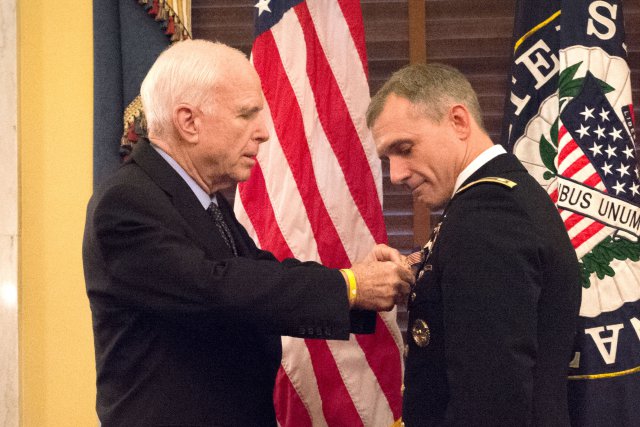
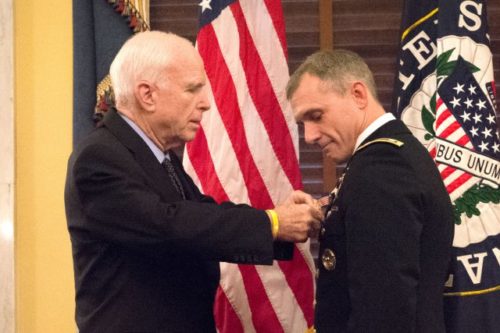
    Chief Tango sends us a link to the story of Lieutenant Colonel David P. Diamond ho was awarded the Soldiers Medal by Senator John McCain on Capitol Hill last month for his actions at the Boston Marathon on April 15, 2013, when two terrorists detonated a bomb at the finish line of the race.

    Diamond had just completed a personal best time in the marathon when the bomb detonated near by. He ran towards the sound of the blast and began treating the victims that he found there. You can read the complete account of his actions that at the link.

    “This [award] is really a reflection of my profession of arms, not of myself,” Diamond said, after receiving the medal. He serves now as legislative affairs officer within the Office of the Secretary of Defense. “I come from great stock, and great training and great leadership. It’s a culture, a family we have developed together. Those actions are really representative of what we all do in the military.”

  • Gene Wilder passes

    Gene Wilder passes

    Gene_Wilder_1970

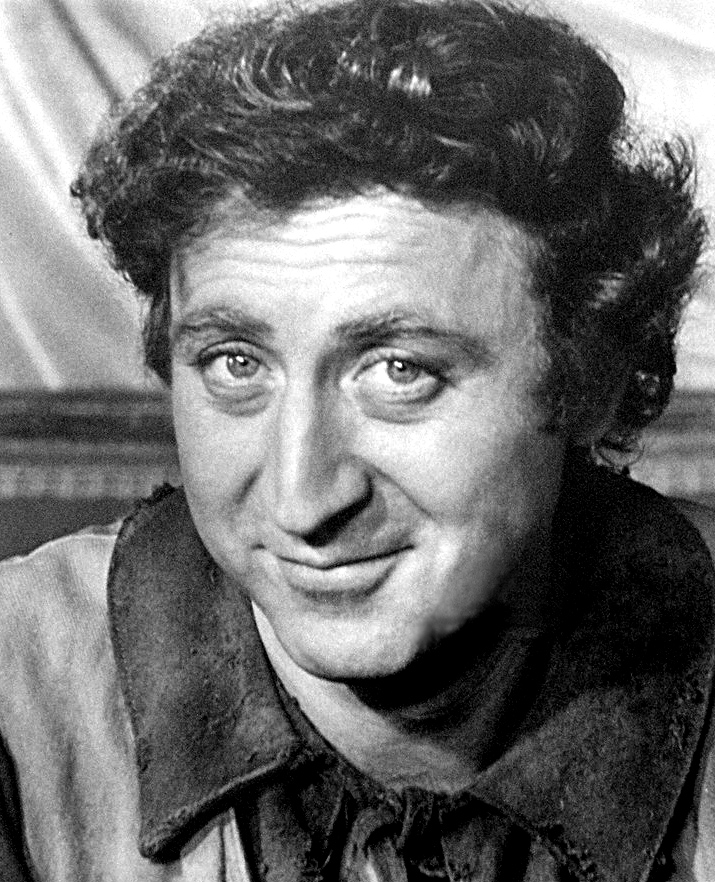
    I joined the Army in the year of Gene Wilder – he starred in both Blazing Saddles and Young Frankenstein in 1974. We’d entertain ourselves in the barracks during basic training with quotes from those two movies. Anyway, we get the sad news that Gene Wilder has passed. Wiki notes that, like most of his generation, he was an Army veteran;

    Wilder was drafted into the Army on September 10, 1956. At the end of recruit training, he was assigned to the medical corps and sent to Fort Sam Houston for training. He was then given the opportunity to choose any post that was open, and wanting to stay near New York City to attend acting classes at the HB Studio, he chose to serve as paramedic in the Department of Psychiatry and Neurology at Valley Forge Army Hospital, in Phoenixville, Pennsylvania. In November 1957, his mother died from ovarian cancer. He was discharged from the army a year later and returned to New York.

  • Louis E. Dorfman DOES have a Purple Heart

    Louis Dorfman

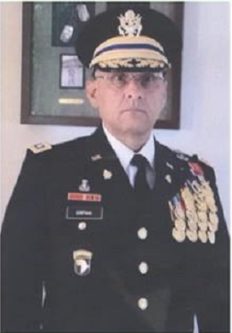
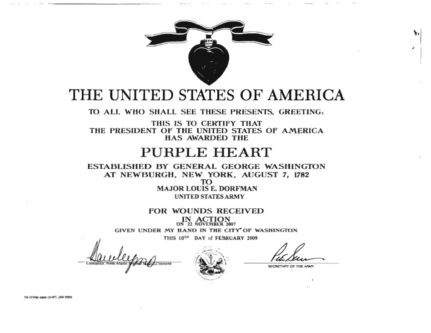
    There was some discussion earlier this month about Louis Dorfman, the retired Lieutenant Colonel who gave a Purple Heart Medal to Donald Trump. The short answer is “yes” he was awarded a Purple Heart, there is nothing stolen valor about him;

    Dorfman PH citation

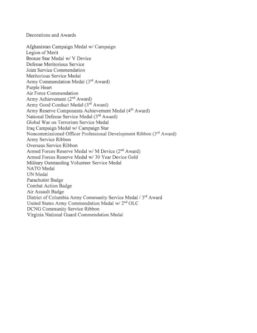
    Dorfman FOIA Awards

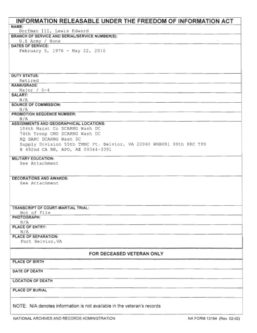
    Dorfman FOIA

    I’m sure his rank is different between his FOIA and his claims because he didn’t have 3 years in grade before he retired.

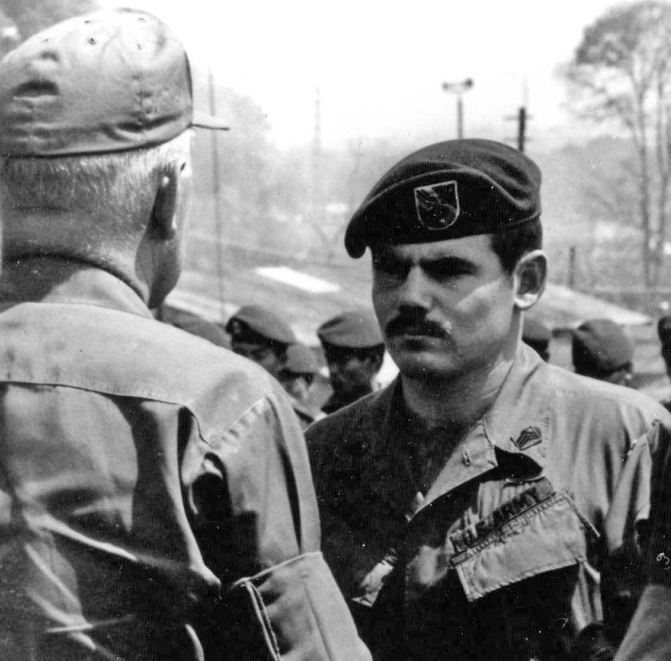
  • Gary Rose, another Vietnam Medal of Honor?

    Gary Rose, another Vietnam Medal of Honor?

    Gary Rose

    The New York Times talks a bit about Sergeant Gary Rose whose upgrade of his Distinguished Service Cross is one presidential signature away from a Medal of Honor for his actions in Laos during Operation Tailwind – the real one, not the CNN fantasy. According to the article, the real operation was to disrupt the logistics train from North Vietnam to South Vietnam through Laos where US troops were forbidden to operate. For that reason, Sergeant Rose’s Medal of Honor wasn’t approved but Tailwind veterans are demanding that be rectified now. His DSC citation reads like this;

    [T]o Sergeant Gary M. Rose, United States Army, for extraordinary heroism in action in connection with military operations involving conflict with an armed hostile force in the Republic of Vietnam while serving as a medical aidman with a company-size exploitation force, Command and Control (Central), Task Force 1, 5th Special Forces Group (Airborne), 1st Special Forces. On 12 September 1970, his company was engaged by a well armed hostile force. Enemy B-40 rockets and mortar rounds rained while the foe sprayed the area with small arms, automatic weapons, and machine gun fire, wounding many and forcing everyone to seek cover. One ally, was unable to reach protective shelter due to his weakened condition. Sergeant Rose, braving the bullet-infested fire zone, sprinted fifty meters to his downed comrade’s side. The sergeant then used his own body to protect the casualty from further injury while treating his wounds. After stopping the blood flow from the wound, Sergeant Rose carried the man back through the bullet-ridden zone to protective cover. As the belligerents accelerated their attack, Sergeant Rose continued to disregard his own safety as he ran from casualty to casualty, administering emergency first aid. Suddenly, a B-40 rocket impacted just meters from Sergeant Rose, knocking him from his feet and inflicting wounds throughout his body. Ignoring his own pain, Sergeant Rose struggled to his feet and continued to administer medical treatment to the other injured soldiers. As night approached, the order was given to dig defensive slit trenches. Sergeant Rose, his own wounds yet untreated, worked tirelessly to excavate many trenches for the severely injured who were unable to dig their own, stopping only when all the casualties had been placed in safe positions. All through the night and into the next day, the foe pounded the allied force with a continuous barrage of B-40 rockets and mortars. Despite the deadly volleys falling around him, Sergeant Rose displayed a calm professionalism as he administered medical treatment to countless men; two were so severely wounded that they would have died without the sergeant’s vigilant care. Finally, on 14 September, the company was successfully extracted from the embattled area by helicopter support ships. Sergeant Rose, though tired and wounded, refused evacuation until all other casualties were safely out of the area.

    His comments in the New York Times article prove to me that he deserves the Medal of Honor;

    “I just try to go through life doing as much good as I can,” he said with a shrug.

    Over the decades, he has rarely thought about Operation Tailwind, he said, and is a bit embarrassed about the Medal of Honor.

    “I didn’t do anything heroic,” he said. “I was just doing my job like everyone else.”

    “It’s all a blur,” he continued. “I was oblivious. I was just so focused on the wounded that I didn’t see the machine guns.”

    He paused, then added: “I don’t want to make it sound like I’m brave. The trembling, the throwing up, the fear, that always happened, but only after. In the moment, I was just concentrating on what I had to do. I didn’t want to let anyone down.”