Category: Real Soldiers

  • Canada’s award to Fort Bragg unit

    Will sends us a link from WRAL, a Raleigh, North Carolina TV station, which reports that for the first time ever, the canadian government is presenting an award of the Canadian Commander-in-Chief Unit Commendation to an American unit, 1st Battalion, 3rd Special Forces Group for their actions in a September, 2006 battle in Afghanistan’s Kandahar Province.

    Members of the battalion assisted Canadian forces in an attack on an insurgent stronghold in the district of Panjwai, west of Kandahar.

    The Fort Bragg Special Forces stared down a much larger enemy force over days of intense fighting to protect Canadian soldiers and hold their position. The battle, code named Operation Medusa, is chronicled in the book “Lions of Kandahar.” Over nine days, the group killed more than 500 enemy fighters, a success that paved the way for Afghan Security Forces to establish a presence in the area.

  • Wounded warrior, Col. Greg Gadson, in Battleship

    CI sends us a video of an interview on Fox News with wounded warrior Colonel Greg Gadson, who could end up being the only redeeming quality of the upcoming movie “Battleship”;

    From NJ.com an interview with Col. Gadson and his connections to the World Champion New York Giants (I had to rub that in, TSO);

    Col. Greg Gadson, a double amputee who lost his legs in Iraq, was introduced to the Giants in 2007 by his friend and former Army football teammate Mike Sullivan. For the four seasons since he gave a few speeches to the Super Bowl XLII champs, he’s been an inspiration for the Giants’ players and coaches.

    He’s also the Director of the U.S. Army Wounded Warrior Program.

  • Veteran teaches gangmembers a hard lesson

    Streetsweeper sends us a link to a article from the Colorado Greeley Tribune the heart warming story of two gang members who thought that they were going to beat up a gay fellow who turned out to be 24-year-old Michael Lamonday — a business student at Aims Community College, a twice-deployed Iraq and Afghanistan war veteran, and a newlywed.

    They cornered him in the bathroom of a bar and had their asses handed to them, which made arresting them relatively easy for the local cops;

    Both of the alleged attackers wound up in the hospital with injuries from the scuffle.

    As [Lamonday and his friend] left the bathroom, they said Meza and Tapia were attempting to instigate a larger group to go after them and chase them.

    Lamonday was just trying to avoid pissing off his new wife;

    “I was just minding my own business,” Lamonday said. “One of the things, my wife doesn’t like very much, is if someone insults me, I’m usually the first to say something. I wasn’t trying to look for trouble. I was letting them know I’m not a homo.”

    Lamonday and his friend first contacted Lamonday’s wife, who called police, then took them to the ER. When they arrived, Tapia and Meza were already there, one with a dislocated shoulder, he said.

    Cuz wives are tougher to deal with than a gang of thugs, trust me.

  • Army Sgt. Julia Bringloe saves dozens during 60-hour operation

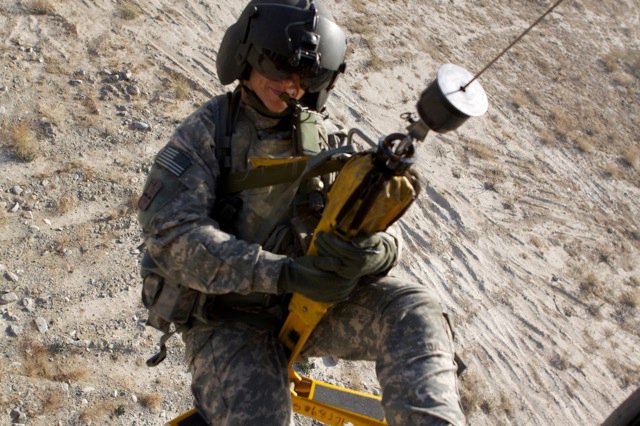
    Our buddy, Auntie Brat links to an article written by one of my editors, Robert Johnson at Business Insider about an Army sergeant, Army Sgt. Julia Bringloe, who was awarded a Distinguished Flying Cross;

    On the rocky soil, she hauled a wounded soldier from his stretcher and hooked him to her cable for the ride 150 feet back up into the chopper, which was still desperately clawing for purchase in the rarefied air.

    As the hoist pulled them up, the cable swung Bringloe and her patient straight into a nearby tree where she swung her body around to protect his, breaking her leg.

    “In some of the write-ups I’ve seen you would think my leg was dangling off of (my torso),” Bringloe told Paul Ghiringhelli at the Fort Drum paper. “But really it was just a small fracture.”

    Back at base when Bringloe brought the wounded to the infirmary, one of her pilots, Chief Warrant Officer Erik Sabiston noticed her leg, and asked her if she needed to quit.

    Bringloe said it wasn’t an option. “I was the only medic in the valley and it was a huge mission,” she told The Daily.

    You need to read the rest about this heroic woman who apparently had very few thoughts about herself during this operation. According to Johnson, Bringloe is one of only six women to be awarded the DFC along with Amelia Earhart. Here’s the narrative for that award;

    The President of the United States of America, authorized by Act of Congress, July 2, 1926, takes pleasure in presenting the Distinguished Flying Cross to Sergeant Julia A. Bringloe, United States Army, for exceptionally valorous achievement while assigned to Charlie Company, 3d Battalion, 10th Aviation Regiment, Task Force PHOENIX, during Operation ENDURING FREEDOM XI. Her heroic actions as an air ambulance flight medic while in support of Operation HAMMER DOWN in Afghanistan’s Watahpor Valley from 25 June to 27 June 2011 resulted in the evacuation and treatment of eleven wounded soldiers while under constant enemy fire and contributed to the overwhelming success of the Command’s mission. Her bravery is in keeping with the finest traditions of military heroism and reflects distinct credit upon herself, Task Force PHOENIX, Task Force FALCON, Combined Joint Task Force-1 and the United States Army.
    NARRATIVE TO ACCOMPANY AWARD:
    Sergeant Julia Bringloe, United States Army, distinguished herself by conspicuous gallantry and intrepidity in action in the face of the enemy of the United States as an Air Ambulance Flight Medic with Charlie Company, Task Force PHOENIX, FOB FENTY, from 25 June to 27 June 2011 in support of OPERATION ENDURINGING FREEDOM (OEF) XI. During Operation HAMMER DOWN, Sergeant Bringloe and her crew of Dustoff 73 provided direct medical evacuation (MEDEVAC) support to Task Force BRONCO in Afghanistan’s forbidding Watahpor Valley. Throughout the multi-day operation, Sergeant Bringloe repeatedly faced a disciplined enemy determined to engage her and her crew in the most extreme, high altitude mountain environment in order to conduct life saving evacuations of eleven soldiers. No matter how minor or severe the injury, each casualty was absolutely debilitating to the freedom of maneuver of the Task Force BRONCO soldiers, making them a stationary target to a lethal enemy. Sergeant Bringloe and her Dustoff crew were the only assets which could overcome these challenges to extract the wounded soldiers. She constantly exposed herself to enemy fire by guiding her medical aircraft into the most confined spaces conducting one-wheel landings on qalat roof tops, or by riding the extremely vulnerable hoist to her patients below from hover altitudes as high as 150 feet. At one location where there were several wounded soldiers located inside a qalat, her sister ship Dustoff 72 received such heavy enemy fire in attempting to evacuate, that they were forced to return to FOB BENTY for an emergency landing due to a critical loss in hydraulic components. This did not stop Sergeant Bringloe or her crew from pressing on to retrieve the wounded soldiers from the qatar. Using the cover of darkness and suppression fires from overhead Apache support and the troops on the ground, she was able to expertly guide her crew onto the roof top surrounded by trees to evacuate three wounded soldiers. With an extremely dark, no moon night, they received constant fire from the surrounding enemy shooting to the sound of their hovering aircraft. During this tremendously demanding maneuver, the Apache aircraft provided continuous suppression fires within 100 meters of their location. Once the wounded were on board, Sergeant Bringloe immediately began treatment of the soldiers while they rushed them to FOB WRIGHT. One of the soldiers had received a life threatening gunshot wound to his face. Without the crew’s daring rescue or Sergeant Bringloe’s medical treatment en route to the Forward Surgical Team, the soldier would not have survived much longer on the mountain. Sergeant Bringloe later found herself returning to the same qalat to retrieve an Afghan soldier who had been killed in action. At this point, the ground element had been stuck in the same location for almost 48 hours due to the constant enemy fire and casualties they had received. Due to the extremely confined area, Sergeant Bringloe and her crew decided to hoist the Afghan Hero out. She again exposed herself to the enemy while riding the hoist, lowering to the embattled qalat and packaging the fallen soldier into a Skedco. Once ready, she remained out in the open manning the tag line ensuring the Afghan Hero made it up to the hovering aircraft while the ground forces provided security. With the fallen soldier on board, her crew immediately returned the jungle penetrator (JP) to her for her own extraction. As soon as she began securing herself to the JP, the encircled enemy opened fire on her with a fierce determination to take her out. Despite the chaos around her, she didn’t hesitate in her job, securing herself and instructing her crew to continue with her own extraction, ultimately hoisting her away giving the ground forces the freedom to move and engage the surrounding enemy. In her final mission of Operation HAMMER DOWN, Sergeant Bringloe and her crew faced inclimate weather to extract a soldier suffering from a shrapnel wound that had become infected. In addition to the casualty, the unit on the ground was critically low on food, water, and medical supplies. With cloud cover coming in all around the mountain location at 10,000 feet, she and her crew were able to navigate into the area and begin another hoist operation. Once again, she fearlessly lowered herself to the ground despite the dangerous weather situation. While she readies the patient for extraction, her crew chief lowered the vital supplies to the waiting troops below. When she was ready and secure, Sergeant Bringloe looked up and saw the clouds slowly engulfing her aircraft above. She immediately signaled her crew chief to begin raising the hoist to get them away from the ground. While Sergeant Bringloe and her patient were still t0 feet below the aircraft on the hoist line, the Dustoff aircraft was finally swallowed by the cloud cover and the crew committed to instrument flight as the crew chief continued to cable Sergeant Bringloe and her patient up, ultimately getting them safely into the aircraft. The crew successfully conducted inadvertent IMC procedures despite the surrounding mountain terrain. They eventually broke out of the clouds and were able to recover to FOB WRIGHT, delivering the patient to much needed higher care. Throughout Operation HAMMER DOWN, Sergeant Bringloe and her Dustoff crew conducted continuous turns into the Watahpor Valley, evacuating a total of 11 wounded American Soldiers. Despite an unwavering and lethal enemy, challenging night operations in confined areas, and a constant deteriorating weather situation, she provided desperately needed food, water, and medical re-supply and extracted two Afghan soldiers killed in action (KIA). Her determination to perform in such exhausting conditions over three days was nothing short of remarkable. These contributions gave the ground force commanders freedom of maneuver which unquestionably contributed to the overwhelming success of the command’s mission. Sergeant Bringloe’s heroic actions were a critical part in the success of Task Force BRONCO and Operation HAMMER DOWN. As a result of her abilities as an Air Ambulance Flight Medic and courageous disregard for her own safety, Sergeant Bringloe demonstrated her superior skills and bravery as a flight medic few others could replicate, all while under the most extreme of situations. Her selfless courage demonstrated by putting the lives of others above her own are beyond reproach. Sergeant Bringloe’s actions are in keeping with the finest traditions of military heroism and reflect distinct credit upon herself, this Command, and the United States Army.

    Nice to know you’re out there for folks who depend on you, Sergeant.
  • NRA Life of Duty: Ed Eaton “Honor Returned”

    The folks at Life of Duty send us this video of Vietnam veteran Ed Eaton;

    NRA Life of Duty presented by Brownells has just debuted a new video from their Ed Eaton “Choosing Honor” collection entitled “Honor Returned”. In this impactful video, Ed recounts his emotional return to Vietnam some 25 years after he fought for his country, his life and his brothers in arms. Ed chokes up when remembering the words of gratitude spoken to him by a prestigious Vietnam General – gratitude to the American soldiers for not harming their women and children during the war. “John Kerry, where were you? Jane Fonda where are you?” says Ed.

    Sergeant Ed Eaton was only nineteen years old the night he truly became a hero – the night he fought off two separate groups of Viet Cong with nothing but a broken sniper rifle and the cover of the night.

  • US Bobsledder leaves sport for the military

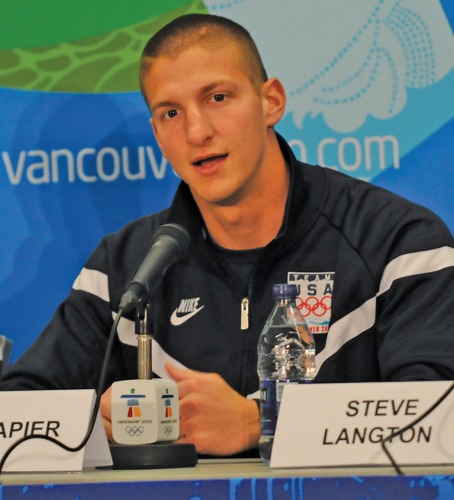
    SGT K sends a link to an ESPN article which reports that John Napier, a member of the US bobsled team has told his team that he’s leaving the sport so that he can go back in the military. He says that he hopes to join a special forces unit in the Army or the Navy. The article says that the Schenectady, N.Y. man deployed once to Afghanistan with his Vermont National Guard unit as an infantryman and “saw combat” on that tour.

    “After Afghanistan, I had a lot of rational and irrational ideas about sport,” Napier said, according to the Times Union. “I never got the taste of selflessness that I did in Afghanistan. There is not a morning that I don’t wake up and miss it.”

    “I don’t want to compete at something just because I was good at something,” he said, according to the Times Union. “That is not where my heart is.”

    From the Albany Times Union;

    The scales of his two passions — the military and bobsledding — started to tip away from sport. It wasn’t about the rush of conflict; rather, it was the bond in conflict representing your county that no national sports team can replicate.

    “It was the camaraderie,” he said.

    “There is something itching inside of me,” he said.

    To frighten the bejesus out of Joe, Apparently, Napier is an “unashamed Christian“.

  • Staff Sgt. Ryan Lowe, saving the world one person at a time

    Jennifer Caprioli at Army.mil tells the story of SSG Ryan Lowe of the 563rd Military Police Company, 91st MP Battalion at Fort Drum who happened by one of my favorite fishing sites when I lived in Redwood, NY at Butterfield Lake. Ryan was reconning from some fishing himself when he noticed Richard Stefanko fall from his new boat into the frigid waters.

    Without thinking of his own safety, SSG Lowe jumped in after Stefanko;

    “You’re trained — ever since basic (training) — to respond with half instinct and half of what you’re (supposed) to do,” he explained. “In the military police, a lot of it is just helping people out who are in bad situations.”

    Lowe, who has been deployed twice, said he believes combat training prepared him to take better courses of action when dealing with situations.

    “When I got to the boat, I realized the severity of the situation. He was struggling with the way the vest was keeping him afloat,” he said. “By the time I got to him … he wasn’t able to talk to me, and that’s when I realized I had to get him back to shore and out of the water.

    “I was trying to talk to him, but he wasn’t able to talk real well,” Lowe noted. “I could see on his face that he was struggling.”

    He grabbed Stefanko’s lifejacket and pulled the disoriented man to shore.

    Once on shore, Lowe used his body to support Stefanko as he began to recover from the cold water.

    After a few minutes, Stefanko began to show signs of recovery.

    “He was starting to stand on his own, and he was beginning to talk to me,” Lowe said of Stefanko. “He just kept saying, ‘you saved my life.’”

    “(Lowe) was very professional,” Stefanko noted. “He stayed right with me. He made sure I was OK.”

    What real heroes say;

    “It’s real hard to grasp that it meant that much to (Stefanko). I never expected any attention for this,” Lowe said. “I just saw a guy who needed help, so I went out and helped him. I don’t think I did (anything heroic).”

    Unfortunately, SSG Lowe didn’t urinate on a Koran, so we’ll never read his story in the New York or LA Times.

  • PFC Lucas McKinney; saving the world one person at a time

    Country Singer sends us a link to the story of a brand new National Guardsman who joins my list of real superheroes;

    “I was outside of the store talking with customers when a woman pulled up in a car saying there was a man lying on the ground and not moving,” recounted [PFC Lucas McKinney, a member of the Tennessee Army National Guard’s 278th Armored Cavalry Regiment].

    He then ran to the man, finding him not breathing and without a pulse.

    “I immediately started to give CPR,” said McKinney, who received his initial EMT and CPR training while he was at the military’s Advanced Initial Training in Fort Sam Houston, Texas. He returned to Tennessee only two months ago.

    “At first I thought the man had just fainted, but when I realized something more serious was wrong, I just did what the Army trained me to do,” said McKinney.

    “He remained calm and didn’t hesitate,” said Milan Kacar, the manager on duty that day. “He definitely knew what he was doing.”

    “This was the first time I have ever had to perform CPR on a person,” McKinney added.

    McKinney, who works part-time at Lowes, successfully resuscitated the man and remained by his side until paramedics arrived and took over.

    How about that? Army training works in real life. I’d rather bore you with a hundred of these stories everyday than the shitbags I usually have to write about.