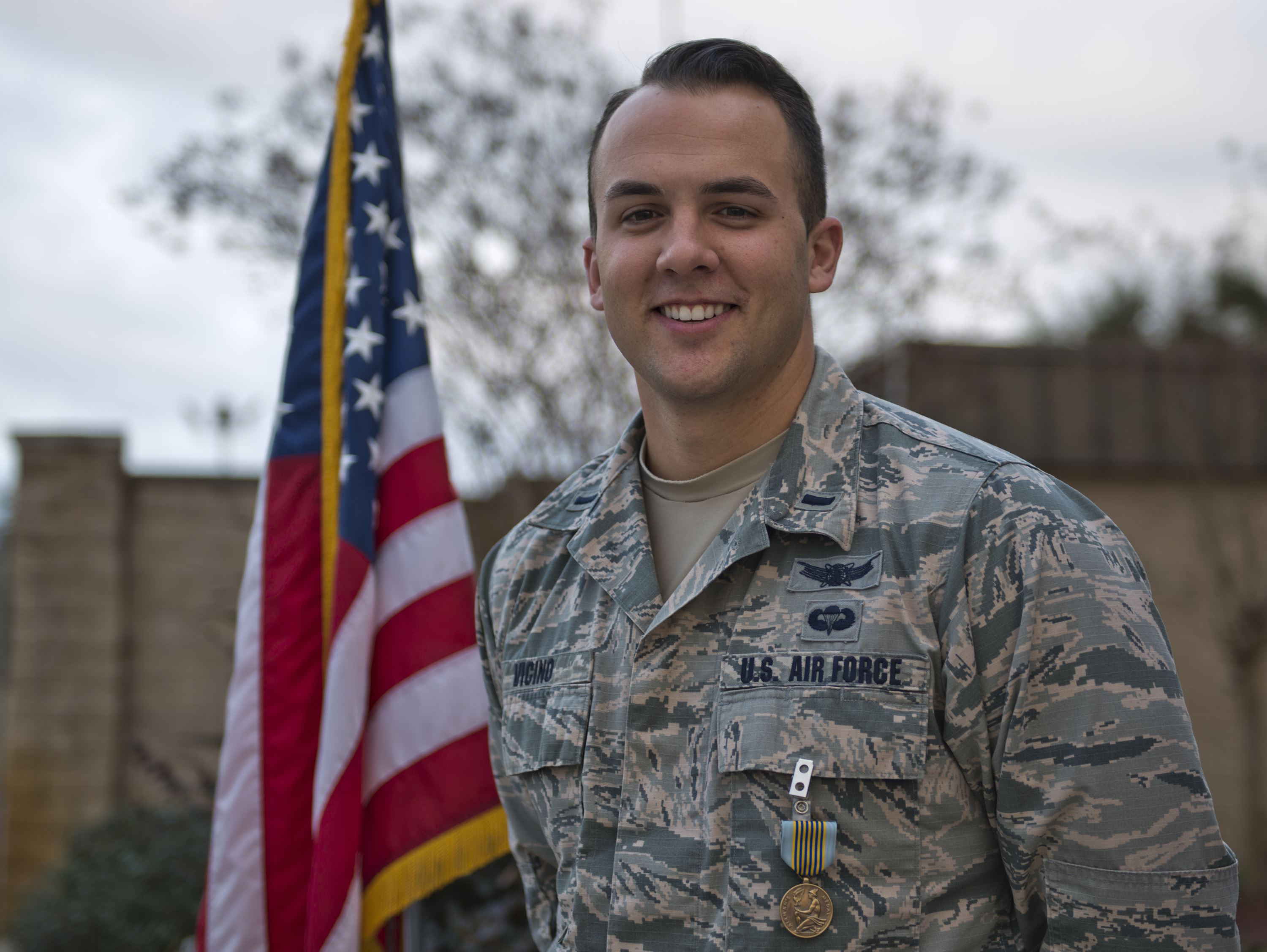
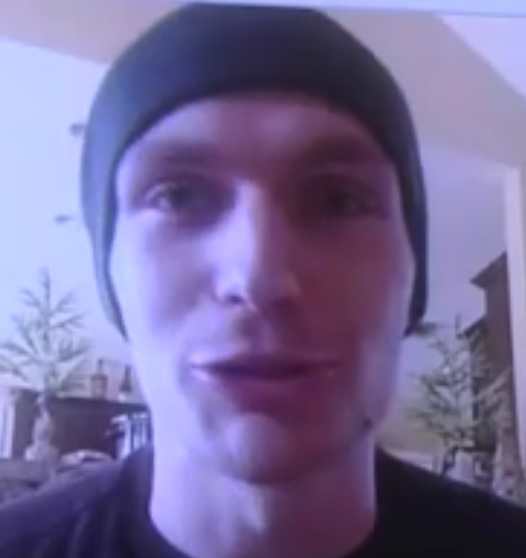
AW1Ed sends another story this morning, from the Air Force Times, which reports that First Lieutenant Dominic Vicino, assigned to the 20th Space Control Squadron at Eglin Air Force Base, Florida, was awarded the Airman’s Medal for his heroic actions last March at Miramar Beach, Florida.
Vicino noticed two people waving their arms in distress approximately 100 yards offshore on a day when swimming was prohibited because of “dangerous wildlife and life-threatening riptide conditions,” according to an Air Force press release.
He immediately dropped his belongings, ran to the water, and swam through the violent tide to carry the two to shore. Vicino, 24, then returned to rescue a lifeguard in distress.
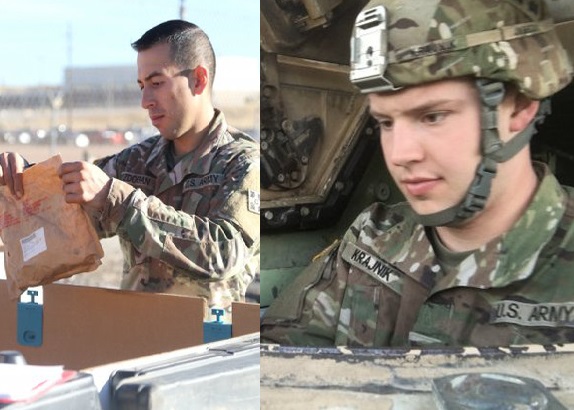
AW1Edsends a link to the Army Times that reports on two soldiers assigned to 3rd Armored Brigade Combat Team, 4th Infantry Division at Fort Carson, Colorado. Specialist Basar Bozdogan and Private First Class Jacob Krajnik who had heroically volunteered to drive intoxicated soldiers back from their night on the town last September. When a soldier cancelled his call for them, they came across a three-car accident.
The soldiers assisted the motorists from their cars, but there was one person who was unable to move.
“At first, I didn’t want to move him because he looked like he was injured pretty badly,” [Krajnik] said.
That’s when Krajnik saw the flames under the vehicle.
“It started to get bigger really fast,” he said. “I screamed to Bozdogan and yelled that the vehicle is catching on fire.”
The soldiers flung open the door, removed the injured man’s seatbelt and carried him to safety. As they were carrying him away, the car caught on fire.
“If we would’ve waited longer, it would’ve been a devastating situation,” Krajnik said. “He could’ve also suffered burn injuries, or even died.”
The Army Times says that the pair have been nominated for the Soldiers Medal for their heroism, but they don’t think they’re heroes;
“I joined the Army to save lives here and abroad,” Bozdogan said. “It doesn’t matter where I’m at, I just have that instinct to react when I see someone who needs help. It’s not all about being a hero. It’s about making a split-second decision at the right moment to ensure the safety of others.”
WSPA reports that Alexei Newell was driving back to Georgia after seeing his oncologist in North Carolina when he passed a trailer truck which had crashed and pinned the driver. Newell stopped to help and ended up leading a rescue effort;
“The driver side door was pinned by the trailer because of the way it crashed and I went over to the passenger side and checked the door handles and couldn’t get in, tried to kick the window out and someone tossed me up a stick and I smashed it out like that,” Newell said.
Alexei says it was a team effort with one person using their fire extinguisher to put out the fire that had already started on the engine. Alexei was able to get tot he driver to keep him calm and alert.
“I found his phone and gave it to him so he could call his wife and then it turned into me keeping his wife calm so I told her, my name is Lex I’m in the truck with your husband right now and everything is gonna be fine,” Newell said.
Newell says that he was diagnosed with Hodgkin’s Lymphoma recently but that after successful treatment, he is now cancer-free, which is always good news. RLTW.
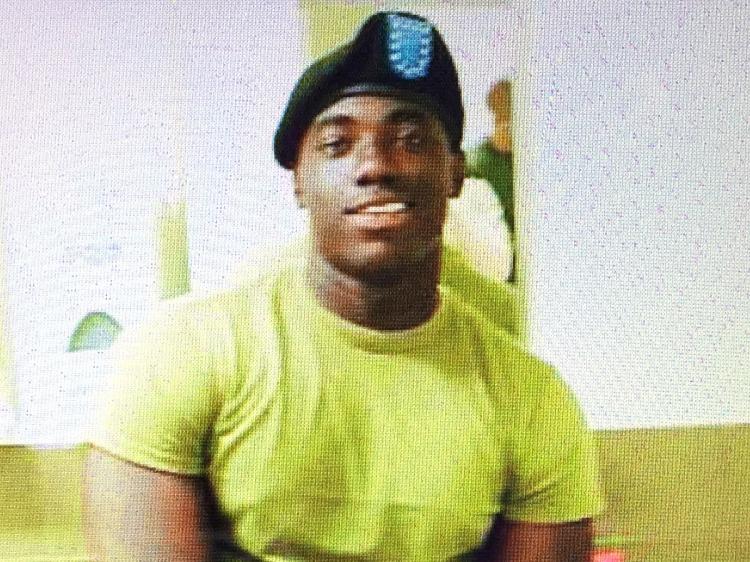
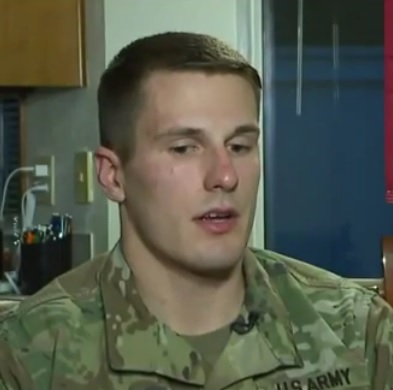
The New York Post reports that Army private, Emmanuel Mensah, was home on leave for the first time since he enlisted a year ago, when the building that he was staying in was consumed in fire. He helped several people to safety, but then succumbed to the inferno himself;
“He helped his roommate’s wife and children, they were trying to come out to the stairs and he stopped them.”
“He told them to come out the window .?.?. Then he went in and tried to rescue people out.”
Emmanuel’s body was recovered from another apartment on the same floor, the father said.
The “calm and lovely” young patriot had set his heart on becoming a soldier when the family moved to the US from their native Ghana five or six years ago, [his father] Kwabena said.
“When he came here he just said, ‘Dad, I want to join the Army,’?” he recalled.
“At first I didn’t agree with him, but I decided that’s his choice.”
Q13 Fox reports that Second Lieutenant Robert McCoy just barely avoided being struck by that train which fell off an overpass and hit some vehicles on the roadway below in DuPont, Washington yesterday;
“The train is going south and I’m just kind of driving, just driving, and I hear a loud noise and I look up and I see the train and it hits the concrete walls on the side and when it hits the walls — the walls kind of exploded — and the train just falls off. I see the train fall and it kind of falls on itself … and it hits three vehicles that were in front of me — a semi, a F-150 and a Kia Soul.”
An officer in the Army’s medical field at Joint Base Lewis-McChord, McCoy grabbed some equipment from his own vehicle and began dragging folks to safety, away from the dangling train car. He and another volunteer helped 30-40 passengers to safety;
“I couldn’t afford to be scared, I couldn’t afford to be shocked. I had to do what I am called to do and focus and channel that and help these peple around me get to safety as best as possible.”
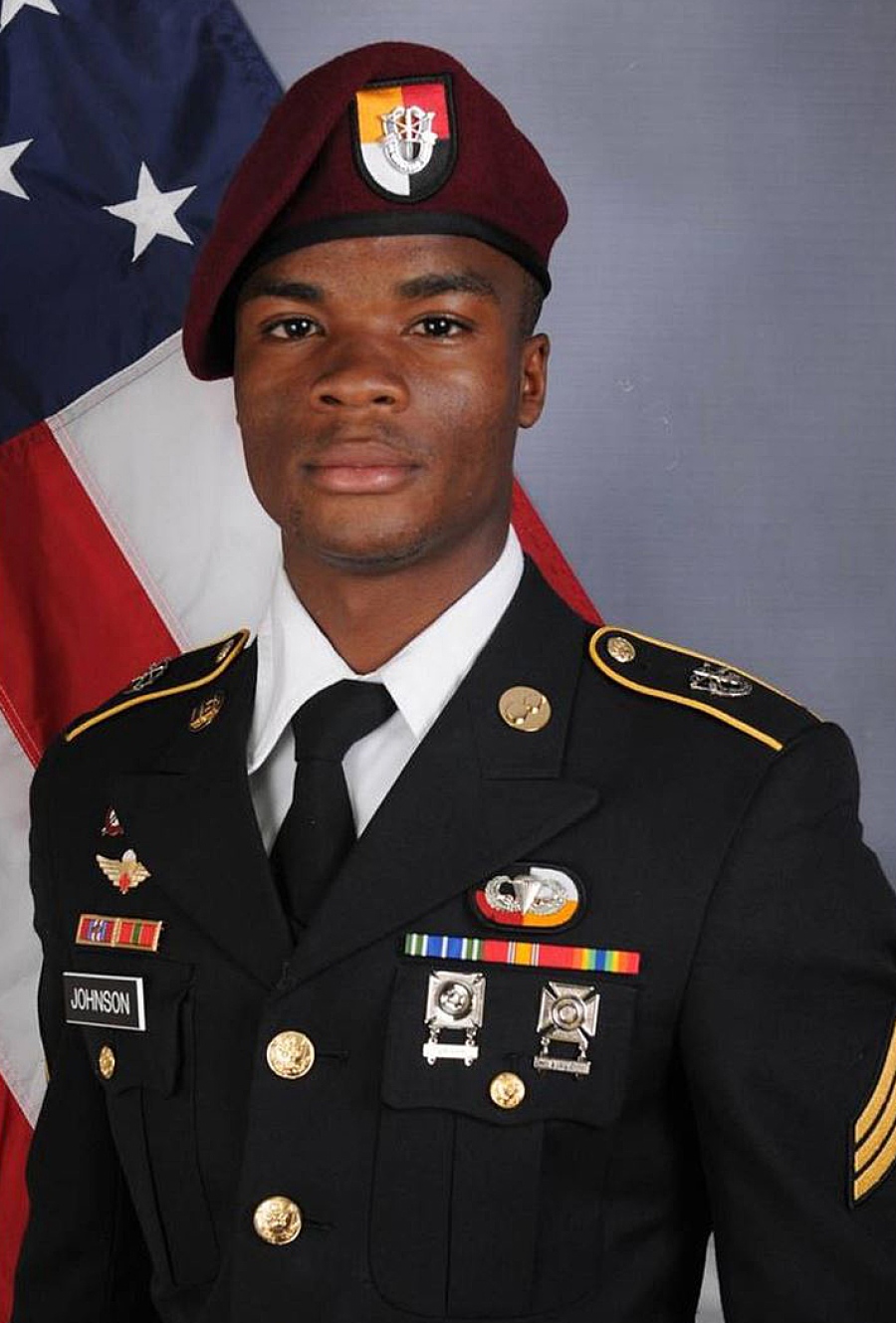
When the 12-man Special Forces team and their 30 Nigerian allies were ambushed on the Mali frontier a few months back, it was thought that Sergeant LaDavid Johnson had been captured, dragged away from the ambush site and executed, but Army investigators have concluded that initial scenario was false.
According to investigators, Johnson and two Nigerians tried to escape the ambush and get back to their vehicles but they were struck by gunfire. Sergeant Johnson was struck by at least 18 bullets while he returned fire on the ISIS-connected insurgents. According to the Associated Press;
The bodies of three U.S. Green Berets were located on the day of the attack, but not Johnson’s remains. The gap in time led to questions about whether Johnson was killed in the assault and not found, or if he was taken away by the enemy.
According to the officials, a medical examination concluded that Johnson was hit by fire from M-4 rifles — probably stolen by the insurgents — and Soviet-made heavy machine guns. It is believed he died in the attack.
The officials said Johnson was found under thick scrub brush where he tried to take cover. There were no indications he was shot at close range, or had been bound or taken prisoner, as several media reports have suggested.
We shamelessly snagged this from our partners at The Burnpit.
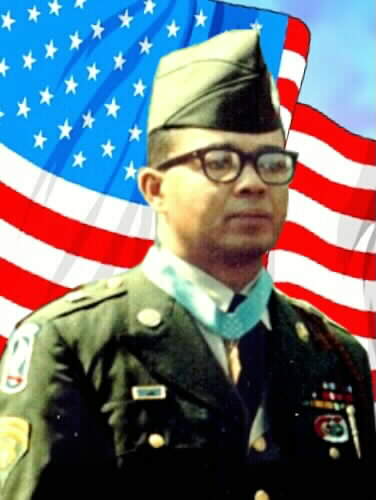
The 8th of November is the anniversary of Operation Hump near Bien Hoa, War Zone “D” in Vietnam where on November 8, 1965, 1st Battalion, 503rd Infantry Regiment of the 173rd Airborne Brigade were ambushed by about 1200 Viet Cong. Many of the paratroopers were injured or killed in the first few moments of the ensuing battle, but that didn’t slow down Specialist 6 Lawrence Joel, a medic, as he went on to earn the Medal of Honor for his actions in the 24-hour battle – the first living African-American to earn the MOH since the Spanish-American War;
For conspicuous gallantry and intrepidity at the risk of life above and beyond the call of duty. Sp6c. Joel demonstrated indomitable courage, determination, and professional skill when a numerically superior and well-concealed Viet Cong element launched a vicious attack which wounded or killed nearly every man in the lead squad of the company. After treating the men wounded by the initial burst of gunfire, he bravely moved forward to assist others who were wounded while proceeding to their objective. While moving from man to man, he was struck in the right leg by machinegun fire. Although painfully wounded his desire to aid his fellow soldiers transcended all personal feeling. He bandaged his own wound and self-administered morphine to deaden the pain enabling him to continue his dangerous undertaking. Through this period of time, he constantly shouted words of encouragement to all around him. Then, completely ignoring the warnings of others, and his pain, he continued his search for wounded, exposing himself to hostile fire; and, as bullets dug up the dirt around him, he held plasma bottles high while kneeling completely engrossed in his life saving mission. Then, after being struck a second time and with a bullet lodged in his thigh, he dragged himself over the battlefield and succeeded in treating 13 more men before his medical supplies ran out. Displaying resourcefulness, he saved the life of 1 man by placing a plastic bag over a severe chest wound to congeal the blood. As 1 of the platoons pursued the Viet Cong, an insurgent force in concealed positions opened fire on the platoon and wounded many more soldiers. With a new stock of medical supplies, Sp6c. Joel again shouted words of encouragement as he crawled through an intense hail of gunfire to the wounded men. After the 24 hour battle subsided and the Viet Cong dead numbered 410, snipers continued to harass the company. Throughout the long battle, Sp6c. Joel never lost sight of his mission as a medical aidman and continued to comfort and treat the wounded until his own evacuation was ordered. His meticulous attention to duty saved a large number of lives and his unselfish, daring example under most adverse conditions was an inspiration to all. Spc6. Joel’s profound concern for his fellow soldiers, at the risk of his life above and beyond the call of duty are in the highest traditions of the U.S. Army and reflect great credit upon himself and the Armed Forces of his country.
From The Burnpit;
Sergeant First Class Joel (who retired in 1973) had actually fought in Korea as well, and had earned a Silver Star in addition to his Medal of Honor. He passed away in 1983 from complications of diabetes and is interred in Arlington Cemetery adjacent to the Memorial Amphitheater. (Section 46 if you wish to go visit.)
While I couldn’t find video of the ceremony at first glance (more on that later) I did find a Youtube that had audio of President Johnson awarding it:
Interestingly, another African American, Milton Lee Olive III (also of the 173rd Airborne) was klled October 22nd of 1965, and was awarded the Medal of Honor after jumping on a grenade.
So, for the “rest of the story” let me admit up front I don’t listen to Country music, and had never heard of “Big and Rich” before, but everyone is telling me that they are a great band, great people, and draw big crowds. (One interesting thing I found out about them though was that they played in Vegas before that lunatic starting shooting up the crowd, and an off duty Minneapolis Police officer came into the bar they were drinking at and asked if anyone had a gun. Apparently John Rich handed him his pistol and the police officer took up a position at the door to protect people.)
Anyway, Big and Rich have a song “8th of November” about that day, and a friend of theirs whose life was saved by Joel’s heroics. They even have a tribute to Joel on the music video, narrated by Kris Kristofferson (who himself served in the Army and earned a Ranger Tab). Although the song itself is more about their friend, Niles Harris, the prelude talks about SFC Joel:
They also made a longer documentary which is pretty interesting if you have the time, as it shows some actual footage, the location in Vietnam and more:
So, if you are of a mind to do so today, tip one to Lawrence Joel, Niles Harris and the men The Herd lost that day. Glad I noticed this on the calendar for this day in history, because heroism like this should ALWAYS be remembered, and kudos to Big and Rich for reaching a larger audience than would normally be the case
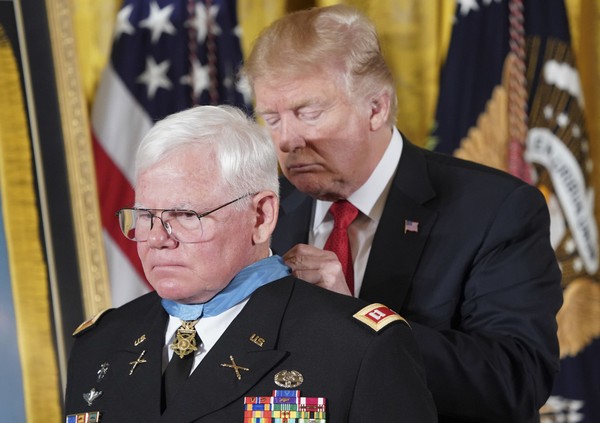
As we told you last month, Vietnam veteran, Gary Rose was awarded the Medal of Honor yesterday in the White House for his actions on September 12, 1970, according to Alabama.com;
As he began his speech, Trump addressed Rose’s two grandchildren who were present for the ceremony.
“We want you to know that the medal we will present today will forever enshrine your grandfather – and he is a good man, we just spoke to him for a long time – this will enshrine him into the history of our nation,” Trump said.
Trump praised Rose as tirelessly treating the wounded in his unit behind enemy lines in Laos from Sept. 11-14 without regard to his own injuries. Rose was credited with treating more than 60 soldiers during that four-day event known as Operation Tailwind. The president described the event as a “harrowing four-day mission.”
Rose was initially awarded the Distinguished Service Cross, but the enormity of his actions demanded the higher award. Some folks have credited Rose with saving more than a hundred of his fellow soldiers during the secret mission behind enemy lines, such as they were lines during that war. The citation for Sergeant Rose’s DSC read;
The President of the United States of America, authorized by Act of Congress, July 9, 1918 (amended by act of July 25, 1963), takes pleasure in presenting the Distinguished Service Cross to Sergeant Gary M. Rose, United States Army, for extraordinary heroism in action in connection with military operations involving conflict with an armed hostile force in the Republic of Vietnam while serving as a medical aidman with a company-size exploitation force, Command and Control (Central), Task Force 1, 5th Special Forces Group (Airborne), 1st Special Forces. On 12 September 1970, his company was engaged by a well armed hostile force. Enemy B-40 rockets and mortar rounds rained while the foe sprayed the area with small arms, automatic weapons, and machine gun fire, wounding many and forcing everyone to seek cover. One ally, was unable to reach protective shelter due to his weakened condition. Sergeant Rose, braving the bullet-infested fire zone, sprinted fifty meters to his downed comrade’s side. The sergeant then used his own body to protect the casualty from further injury while treating his wounds. After stopping the blood flow from the wound, Sergeant Rose carried the man back through the bullet-ridden zone to protective cover. As the belligerents accelerated their attack, Sergeant Rose continued to disregard his own safety as he ran from casualty to casualty, administering emergency first aid. Suddenly, a B-40 rocket impacted just meters from Sergeant Rose, knocking him from his feet and inflicting wounds throughout his body. Ignoring his own pain, Sergeant Rose struggled to his feet and continued to administer medical treatment to the other injured soldiers. As night approached, the order was given to dig defensive slit trenches. Sergeant Rose, his own wounds yet untreated, worked tirelessly to excavate many trenches for the severely injured who were unable to dig their own, stopping only when all the casualties had been placed in safe positions. All through the night and into the next day, the foe pounded the allied force with a continuous barrage of B-40 rockets and mortars. Despite the deadly volleys falling around him, Sergeant Rose displayed a calm professionalism as he administered medical treatment to countless men; two were so severely wounded that they would have died without the sergeant’s vigilant care. Finally, on 14 September, the company was successfully extracted from the embattled area by helicopter support ships. Sergeant Rose, though tired and wounded, refused evacuation until all other casualties were safely out of the area.