Category: Real Soldiers

  • Felipe Trujillo Roybal; Another Warrior Lost to History

    Felipe Trujillo Roybal; Another Warrior Lost to History

    FELIPE TRUJILLO ROYBAL

    We lost another one of those three-war, two-star, CIB recipients recently. Command Sergeant Major Felipe Trujillo Roybal, 82d Airborne in WWII, jumping in Normandy, a Korean War veteran and Special Forces in Vietnam, made his final jump off into that great unknown March 22d in William Beaumont Army Medical Center in El Paso. CSM Roybal served from 1937 to 1972, a truly historic three and a half decades of American military history encompassing three of the four major wars that American troops served in during the 20th Century. I’m sure the Sergeant Major could have written one hell of a book.

    We are losing these WWII veterans at an increasing rate and I would remind those who read here that if they know of a WWII vet who is capable of travel, you should bust your butt to see that they get to see their beautiful and wonderful memorial in Washington D.C. if at all possible. I took my father-in-law a couple of months after it opened and it was one of the most meaningful experiences of my life which I wrote about here.

  • First Sergeant William Howard saving the world

    First Sergeant William Howard saving the world

    1SG William Howard

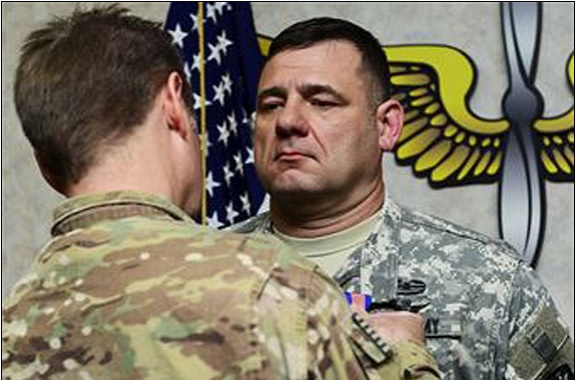
    First Sergeant William Howard of Hotel Company, 1st Battalion, 222nd Aviation Regiment at Joint Base Langely-Eustis was awarded the Soldiers Medal for his actions in Afghanistan on July 3, 2014, according to af.mil. Howard reacted to a rocket attack on a hangar on the Kabul Air Base;

    Fearing the safety of those inside the hangar, Howard quickly entered a vehicle and sped toward the attack site. Upon arrival, he confirmed the second floor of the building was clear, but heard shouting from fellow Soldiers, indicating personnel trapped on the first floor.

    As Chief Warrant Officer 4 Kevin Huggins and Chief Warrant Officer 3 Robert Moran called on Howard for help and Larry Hottot, he heard shouting and banging from a nearby door, behind which was a prayer room for Afghan soldiers.

    “The doors were locked from [both sides] and warped from the heat,” said Howard. “We started using anything and everything we could to pry open those doors before someone brought us a heavy duty pry-bar.”

    Once the doors were opened, two soldiers emerged under their own power followed by a cloud of smoke and heat, but three others remained inside, incapacitated.

    “We just went in there without thinking,” said Howard. “We needed to get them all out no matter what.”

    The Virginian Pilot quotes the hulking First Sergeant;

    “I didn’t do any of that for a medal; it wasn’t about that for me,” Howard said in the release. “The memory of those guys, before and after, is more of reward then anything I can receive. I did it for them, not for anybody else.”

    Thanks to Chief Tango for the link.

  • Master Sergeant Matthew A. Garcia saving the world

    Master Sergeant Matthew A. Garcia saving the world

    Matt Garcia

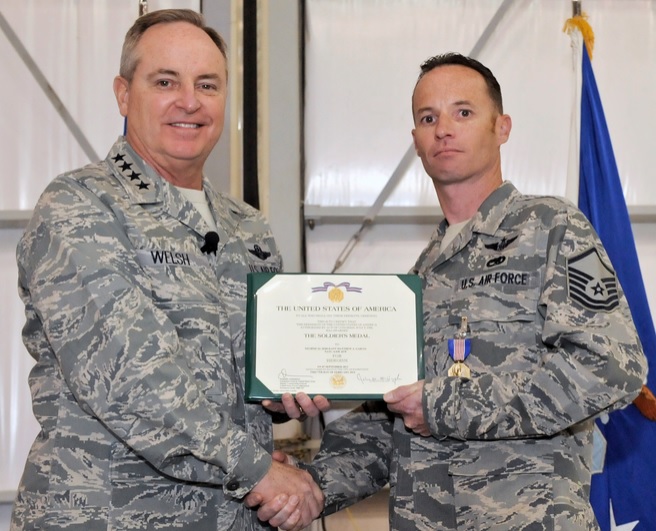
    Chief Tango sends us brief links to the story of Air Force Master Sergeant Matthew A. Garcia who was awarded the Army’s Soldiers Medal for his quick thinking and disregard for his own safety while he rescued two helicopter pilots when their aircraft landed on an IED;

    While deployed in support of Operation Enduring Freedom, Garcia saved the lives of two pilots who were critically injured after landing their helicopter on an improvised explosive device in Afghanistan. Garcia jumped 10 feet from his helicopter into hostile territory and a field of IEDs to provide lifesaving emergency care and move the two pilots out of the line of fire.

  • Clinton Woodley gets his awards

    Clinton Woodley gets his awards

    Clinton Woodley

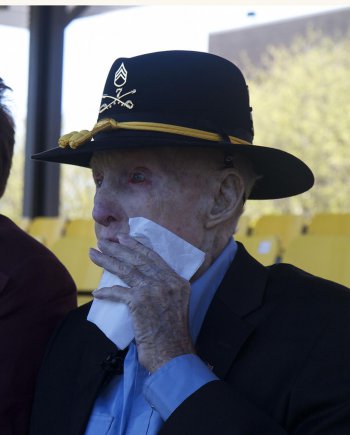
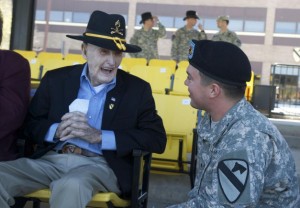
    The folks at the 1st Cavalry Division PAO send us the story of 96-year-old Clinton Woodley who they honored on Friday. They tell me that when Clinton joined the storied division, they still had horses. From army.mil;

    “It is a distinct honor to have Sgt. Woodley, his daughter Ms. Shari Bankston and her family along with many friends and supporters with us today so we can present four awards that he earned more than 70 years ago, and are long overdue,” said Maj. Gen. Michael Bills, commanding general 1st Cavalry Division.

    Woodley enlisted in the U.S. Army on July 31, 1940, and was initially stationed at Fort Bliss, Texas, as a mounted cavalryman riding along the Texas-Mexico border.

    A few years later, he continued to serve in the First Team as the division underwent a major change.

    “Sgt. Woodley was there when the division turned in their horses to fight as dismounted cavalry during the Second World War, and he served with the distinction in the Pacific theater of operations from 1943-1945, participating in multiple campaigns to help end the war against Japan,” Bills said.

    During the war, Woodley served as an infantryman in the campaigns to liberate the Bismarck Archipelago, Luzon, New Guinea, the Southern Philippines and the Admiralty Islands, before mustering out of the Army on Sept. 13, 1945.

    The Killeen Daily Herald reports that the division commander pinned some awards to the troop that he didn’t know that he’d earned, with his daughter at his side;

    With obvious emotion, the 96-year-old veteran said a quiet “thank you,” before receiving the Bronze Star Medal, the American Campaign Medal, the Asiatic-Pacific Service Medal with four bronze service stars and the World War II Victory Medal for his years of service in the Pacific Theater from 1943 to 1945.

    “It’s very emotional that my father is receiving the recognition,” said Woodley’s daughter, Shari Bankston. “I’m very proud and honored that he is my father.”

  • 1LT Dayton Gilbreath saving the world

    1LT Dayton Gilbreath saving the world

    Dayton Gilbreath

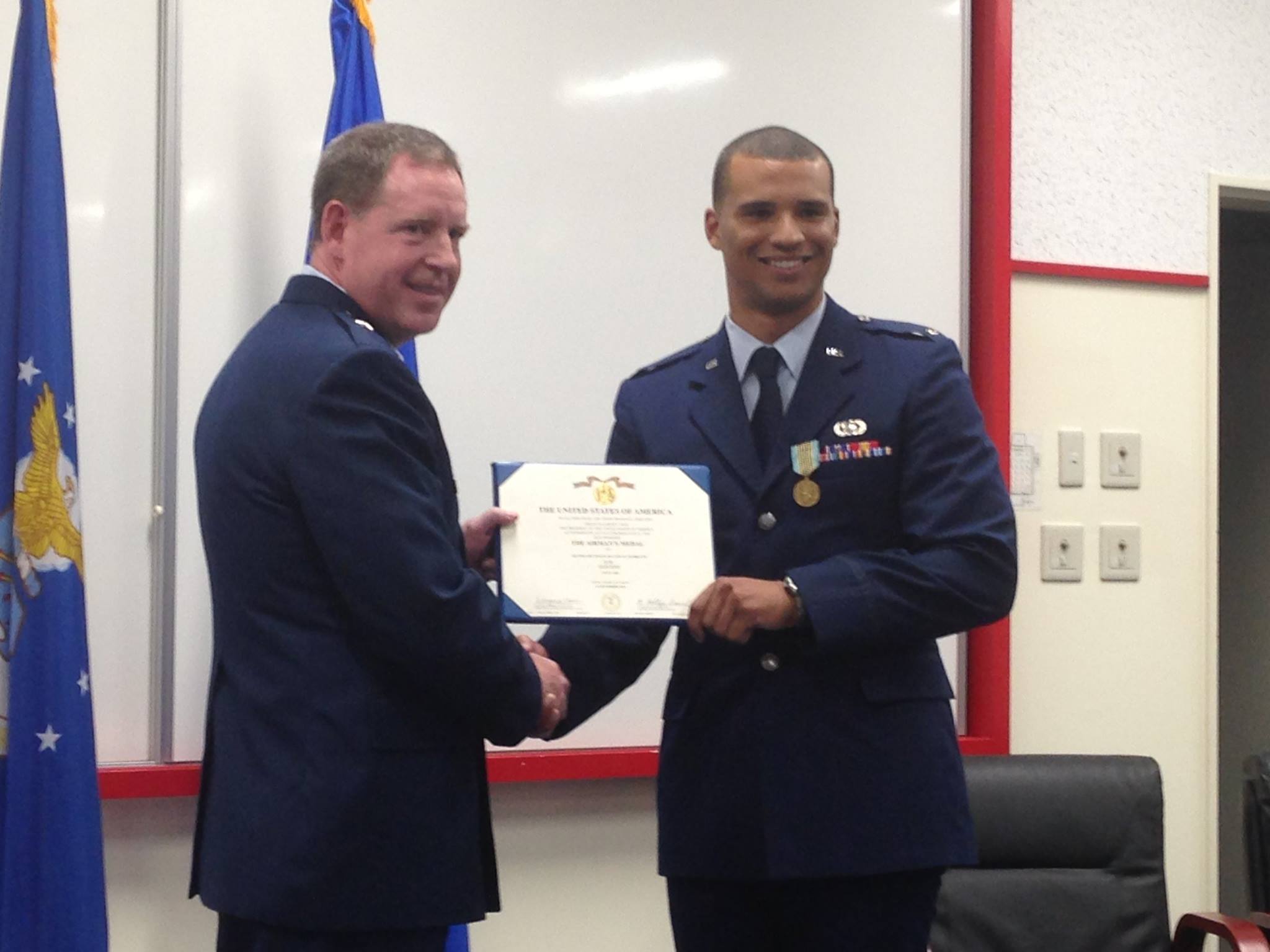
    Air Force 1LT Dayton Gilbreath was on a sail boat in the Adriatic when a fellow Air Force member tried to kill himself by diving off of the boat into choppy seas. Gilbreath was only one of two members of the boating party that witnessed the attempt, so he dived into the same choppy seas to rescue the fellow;

    Gilbreath swam up to the Airman, who promptly dove underwater in an attempt to drown himself. After retrieving his unconscious body, Gilbreath returned to the surface only to discover that the boat hadn’t turned around for them.

    Panicking, Gilbreath tried to calm himself down while keeping both his head and the larger, unconscious Airman’s head above water.

    As the Airman in his arms regained consciousness, Gilbreath knew he would need to think of a way to get both of them back to the boat. Since dragging one of the largest Airman on the trip through crashing waves against his will would likely not work, Gilbreath had to get creative.

    “He was in a couple of my classes, but I didn’t know anything about him besides that he’s a football player, so I thought he must be competitive,” Gilbreath said. “I said ‘I’ll race you to the boat,’ and sure enough he took off swimming toward the boat.”

    His actions and quick thinking earned 1LT Gilbreath the Airmans Medal because we don’t leave anyone behind…even if they want to be left behind. Thanks to Chief Tango for the links.

  • “Stop crying. I have to get these people out safely.”

    The following is not fiction. But first, a bit of background.

    I’d also suggest grabbing a Kleenex or two.

    . . .

    Depending on which source you consult, there are either six or eight Celtic nations. Five of the six commonly-accepted ones are the Irish, Welsh, Bretons, Scots, and the original inhabitants of the Isle of Man.

    The sixth commonly-accepted Celtic nation is the Cornish: the inhabitants of Cornwall, the south-westernmost part of Great Britain. Though today part of England, the people there are of Celtic origin; they are descendants of the Celtic Cornovii tribe. They are today a recognized minority nationality within Great Britain.

    They were referred to in early English accounts as the “West Welsh”. Their culture, though Anglicized, is considered to be based on Celtic vice Anglo-Saxon traditions.

    Celtic peoples have traditionally been considered brave, stouthearted people, both in peace and war.  The Cornish are no exception.

    Though small in population and area, Cornwall has produced a number of persons of noted accomplishment. This article deals with one of them.

    . . .

    Roughly 100 days before the start of World War II, a boy was born in a small town in Cornwall.

    During the war, his hometown was headquarters to a US Army unit preparing for D-Day – as were many other towns in the UK. The boy came to idolize the GIs. His association with them led to his desire to be a soldier.

    The boy grew to be a young man. He was gifted athletically, was smart and perceptive, and was charismatic.

    At age 16, he left home to join the Army. At 17, he joined and trained with the British Parachute Regiment. He then served in an intel assignment in Cyprus between 1957 and 1960.

    It was hardly a quiet assignment. This was during the height of the EKOA insurgency in Cyprus.

    At the end of this assignment, the man accepted an assignment as a paramilitary police inspector for the Northern Rhodesia Police – today, the Zambia Police Service. He served there from 1960-1963.

    This assignment changed his life – again, at least in part due to the presence of an American soldier. In Northern Rhodesia the Cornish man became lifelong friends with a US soldier who was there at the time. He also developed a lifelong hatred of Communism.

    In 1963, the Cornish man returned to England and became a policeman for a short time. He then emigrated to America.  Accounts vary whether it was because “Britain is fresh out of wars” or not.  But his hatred of Communism was indeed part of the reason.

    Since World War II, he’d always wanted to be a soldier.  Now, he again became one – for his new country. He joined the US Army.

    The Army saw potential in the young British immigrant. They sent him to OCS, and then to Vietnam.

    In Vietnam, unlike most new “90 day wonders” he actually knew what he was doing. (That stands to reason, since before going to Vietnam he had close to 6 years of military and/or paramilitary experience during times of hostilities – including 3 years in the African bush.) He was tactically proficient, leading from the front; he maintained a hard but upbeat attitude that was infectious.  He was also a calming influence during combat.  During truly nasty times, he sang to his men to keep their spirits up and to keep their mind off their peril.

    He was highly decorated during his time in Vietnam, earning the Silver Star and Bronze Star for Valor.  He was WIA and received the Purple Heart.

    He also cared deeply for his men. If they were wounded, he’d spend time with them, trying to reassure them.

    He did this even when they were mortally wounded.

    After Vietnam, the man became a US citizen. But not long after that, he left active duty – though it was obvious he was destined for high rank if he stayed. Many who knew him think dealing with the loss of his troops in combat was what finally led him to leave active service after Vietnam.  He simply couldn’t stand the thought of losing any more of his men.

    The man went to school, earning a degree, then a law degree. He taught college. And the man remained in the Army Reserve. He retired from the Army Reserve in 1990 – as a Colonel.

    In many cases, that would be the end – early active duty including war, retirement from the Army Reserve after a successful career, then a quiet normal life thereafter.

    But for this man, that was wasn’t the case at all.

    . . .

    In the mid-1980s, the man decided to return to the security business from academia. He became chief of security for a large Wall Street firm.

    That firm had offices in the World Trade Center. The man was worried; he thought that the building was insecure, and that his charges were at risk.

    He contacted his old friend from his days in Northern Rhodesia – that same US soldier who’d been instrumental in convincing him to come to America in the first place. The two of them inspected the building from a security perspective.

    His friend told him that the parking garage was the primary place of vulnerability. He pointed out that the major load-bearing columns supporting the building were exposed there. He also said that a truck full of explosives could be parked next to one of them, and might bring down the building.

    If this sounds eerily familiar – it should. That’s precisely what happened several months afterwards – in February, 1993, during the World Trade Center bombing. The Cornish man and his friend had been unable to convince those managing World Trade Center security to implement adequate security measures for their parking garage.

    In the aftermath, though the tower did not collapse 6 persons were killed; over a thousand were injured; and the building suffered serious damage. A larger bomb using better explosives (the one used was estimated to have been only around 600kg of improvised ANFO explosive) could well have dropped the tower.

    Adequate security measures for the parking garage were implemented afterwards.

    . . .

    The Cornish man was still worried, however. He thought that the attack would be repeated; he just didn’t know how. So he again reached out to his former Army friend, and asked him his opinion on how a future attack would occur.

    His friend, after viewing the building’s physical security, predicted an attack from the air. He specifically predicted that the World Trade Center would likely be rammed by a cargo plane, possibly carrying explosives or some form of non-nuclear WMD, and would cause the building to collapse.

    Yeah.  Really.

    The man from Cornwall tried to get his employer to move the firm’s offices to a complex outside the World Trade Center. Unfortunately, their lease ran through 2006 – so the move would be delayed that long.

    As chief of security, the Cornish man did what he could. He implemented regular emergency evacuation drills, and convinced management to back them. They were inconvenient, yes. But the man from Cornwall was resolute – he knew somehow that a future attack would come, and that they’d be needed. And management kept backing him.

    . . .

    The Cornish man had developed cancer. And by 2001, he was 62 years old.

    His daughter was getting married in mid-September of that year. However, one of his subordinates had planned an overseas family vacation including at least part of the second full week in September. The Cornish man was covering for his subordinate until he returned.

    He was thus at the World Trade Center on the morning of 11 September 2001 – in Tower 2. He heard the impact of the first plane striking Tower 1, then saw it burning.

    World Trade Center authorities advised everyone to shelter in place. The Cornish man’s response to that order has been variously reported as being typically British – and rather coarse. The rough equivalent of his actual words appears to be, “Screw that, I’m getting my people out of here.”

    The evacuation began prior to the second plane hitting Tower 2. Fortunately, that plane hit above the floors on which their firm’s offices were located.  The building shook violently, but held; the evacuation continued.

    During the evacuation, as he’d done in Vietnam the Cornish man sang to those evacuating – to calm them, and to keep their mind off the danger and on more immediate matters. As before . . . it worked.

    His employer had nearly 2,700 personnel who worked at the World Trade Center complex. All but a handful of them – various accounts put the total lost from his company at between 6 and 13 – got out alive.

    When the vast majority of people from his firm had been evacuated, the man from Cornwall was told by a colleague he needed to evacuate himself now. His response? “As soon as I make sure everyone else is out”.

    The Cornish man was last seen on the 10th floor of the South tower, heading upward. Shortly thereafter, the South Tower collapsed.

    His remains were never found.

    . . .

    Why does an individual do something like this? How do they find the strength of will, and the guts, to face virtually certain death to save others when they have an honorable “out”?

    Honestly, I don’t know. IMO it’s simply off the scale of normal human behavior.

    Perhaps the man feared he was eventually going to die from cancer, and that emboldened his acts that day. A cynic might even say he chose intentionally to end his life quickly, and took foolish chances that day because he had little to lose.

    Perhaps that was a part of it; perhaps not. However, I don’t really think so. I think the man from Cornwall simply felt it was his duty to get everyone out of that building that he could.

    Remember: he was chief of security for his company, and this was an emergency. He was therefore the site commander; everyone else there that day were his troops. He was simply doing his duty – and taking care of his troops.

    . . .

    The Cornish man’s given name was Cyril. He didn’t much care for it, and on joining the British army chose to go by a diminutive form of his middle name – “Rick”, short for Richard.

    His full birth name was “Cyril Richard Rescorla”. Much has been written about him. I’ll not attempt to list those various sources here; a quick Internet search will yield more than I care to list. But reading even a fraction of that will show I’ve only scratched the surface concerning his life and heroism. He truly was an example for all – and a living definition of the word “hero”.

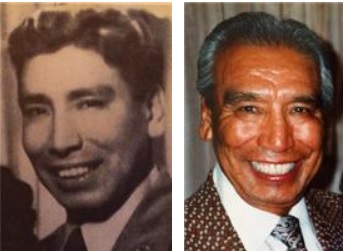
    Here are two rather famous photos of the man. The first shows him as a young man:
    Yes, this was indeed the same “Rick Rescorla” who fought at the Battle of Ia Drang in 1965. That’s his photo on the cover of “We Were Soldiers Once . . . And Young.”

    The second photo, nearly as iconic, was taken nearly 36 years later during the evacuation of the World Trade Center.  It shows him in action that day – as well as the bloating caused by some of the anti-cancer treatments he’d been taking:

    . . .

    There is a theory that some men are simply not destined to die in bed, but are fated instead to die on their feet. Perhaps that’s true.

    If that’s true, Rick Rescorla was certainly one such man.

    Rest in peace, Colonel. In the words of a great British poet: “You’re a better man than I am.”


    (Author’s note: the title of this article comes from the last telephone conversation between Rescorla and his second wife, which occurred as he was evacuating the Morgan-Stanley offices in the World Trade Center complex. The full quote from which that is taken is as follows: 

    “Stop crying. I have to get these people out safely.

    If something should happen to me, I want you to know I’ve never been happier. You made my life.”

    At the time of his death, Rescorla and his second wife Susan had been married just over 2 1/2 years.)
  • SPC Amanda Dillard; saving the world, one person at a time.

    Soldiers Medal SPC Amanda Dillard

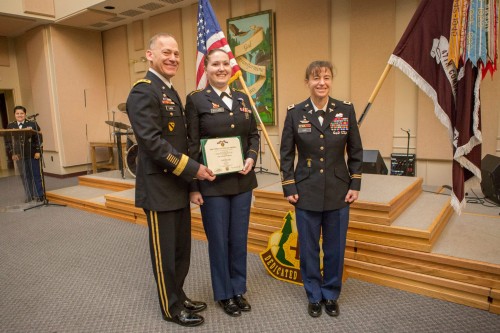
    Today I had the honor of witnessing Specialist Amanda Dillard of the 47th Combat Support Hospital presented with the Soldiers Medal for her actions in assisting the driver of a recent and severe car accident. Now to say “assisted” would be a gross understatement. I will have to ask your indulgence, because I do not have the award write up and I could not find a news story link when it happened around late 2014. Trying to remember the story from the presentation, it went something like this.

    Specialist Amanda Dillard was driving off of JBLM at the end of the day when she came across a truck that had slid off the road and crashed into a tree head on. The truck totaled with the black smoke coming out of the engine. Dillard went through the passenger side to assess the situation. The driver suffered a C-2 fracture along other injuries that were not described. To make matters worse, the driver was going in and out of consciousness. He was able to survive the crash because she immobilized his head and neck for at least thirty minutes before medical personal arrived on the scene. During the times that the driver would come around, she kept him calm and comforted as much as possible. Specialist Amanda Dillard said that she used jokes and light conversation to help distract from their situation. She visited him at the hospital during his recovery to see how he was doing. She did not inform anyone about her actions that day. The only reason that 47th Combat Support Hospital found out about her actions was because of a was a member of the emergency service was able to contact one of her NCOs, who then informed the unit.

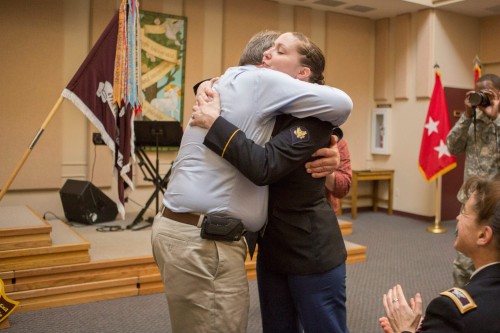
    SPC Amanda Dillard Hug Truck Driver

    During the presentation the driver of the truck spoke how amazing grateful he was to her and how things could have been drastically worse had she not done what she did. Saving the world, one person at a time.

    UPDATED March 15 2015.

    Here is a news story written by the JBLM Northwest Guardian about the award ceremony.

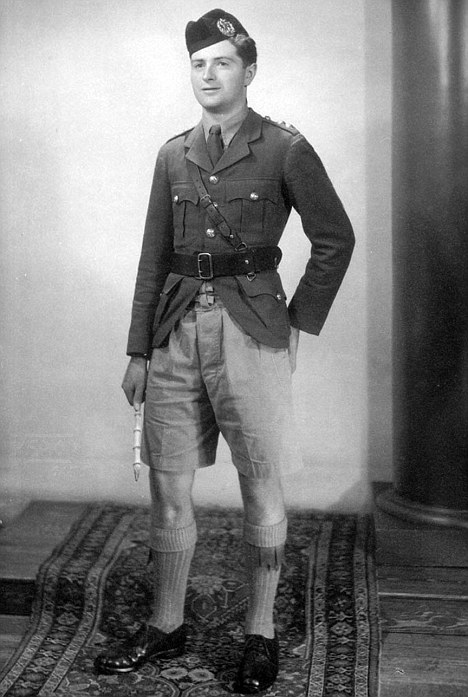
  • Tommy MacPherson; the “Kilted Killer”

    Tommy MacPherson; the “Kilted Killer”

    Tommy MacPherson

    Claymore sends us a link in War History Online which tells the tale of superbadass Major Tommy MacPherson who passed away last November. Here’s a summary of his World War II exploits;

    Served as an officer in the No.11 Scottish Commandoes in WW2
    In 1941, during a daring four man raid to capture Erwin Rommel in North Africa, he was captured by the enemy.
    In a span of 2 years, he escaped a total of 7 times till finally making it back to the UK.
    Days after his return, he was ordered by Winston Churchill himself to “Set Europe ablaze”
    He parachuted behind enemy in lines in France and began a long campaign of destruction alongside the French resistance.
    Virtually every single night, he would either kill Germans or destroy their supplies and communications.
    On one occasion when a German staff car was approaching a level crossing Macpherson booby-trapped the barrier arm so it crashed down on the vehicle, decapitating the local commandant and his driver
    He single handedly captured 23,000 men and 1,000 vehicles in one night by simply convincing a German General that he was in command of the Allied forces in the area.
    As a touch of class, he would ride around the enemy country side in a black French car with a British flag attached to it. The Germans placed a 300,000 franc bounty on his head
    He then went to Italy and pretty much did all of the above again.
    Wounded numerous times and awarded the Military Cross for his actions
    One of the most decorated soldier in history

    With three Military Crosses, three Croix de guerre, a Légion d’honneur, and a papal knighthood for his heroics during the Second World War, Sir Tommy Macpherson is the most decorated living soldier of the British Army.

    You should read the whole story at the link – it’s a pretty incredible story, that my cutting and pasting wouldn’t do justice.