Category: No Longer Missing

  • Another Three Return

    DPAA has identified and accounted for the following formerly-missing US personnel.

    From World War II

    PVT Donald E. Brown, US Army, assigned to A Company, 745th Tank Battalion, was lost in France on 28 July 1944. He was accounted for on 29 June 2018.

    PFC Willard Jenkins, US Army, assigned to C Company, 307th Airborne Engineer Battalion (307th AEB), 82nd Airborne Division, was lost in The Netherlands on 20 September 1944. He was accounted for on 5 July 2018.

    From Korea

    PFC Joe S. Elmore, US Army, assigned to A Company, 1st Battalion, 32nd Infantry Regiment, 7th Infantry Division, was lost in North Korea on 2 December 1950. He was accounted for on 5 July 2018.

    From Southeast Asia

    None

    Welcome back, elder brothers-in-arms. Our apologies that your return took so long.

    Rest easy. You’re home now.

    . . .

    Over 72,000 US personnel remain unaccounted for from World War II; over 7,600 US personnel remain unaccounted for from the Korean War; over 1,500 remain unaccounted for in Southeast Asia (SEA); 126 remain unaccounted for from the Cold War; 5 remain unaccounted for from the Gulf Wars; and 1 individual remains unaccounted for from Operation Eldorado Canyon. Comparison of DNA from recovered remains against DNA from some (but not all) blood relatives can assist in making a positive ID for unidentified remains that have already been recovered, or which may be recovered in the future.

    On their web site’s “Contact Us” page, DPAA now has FAQs. The answer to one of those FAQs describes who can and cannot submit DNA samples useful in identifying recovered remains. The chart giving the answer can be viewed here. The text associated with the chart is short and can be viewed in DPAA’s FAQs.
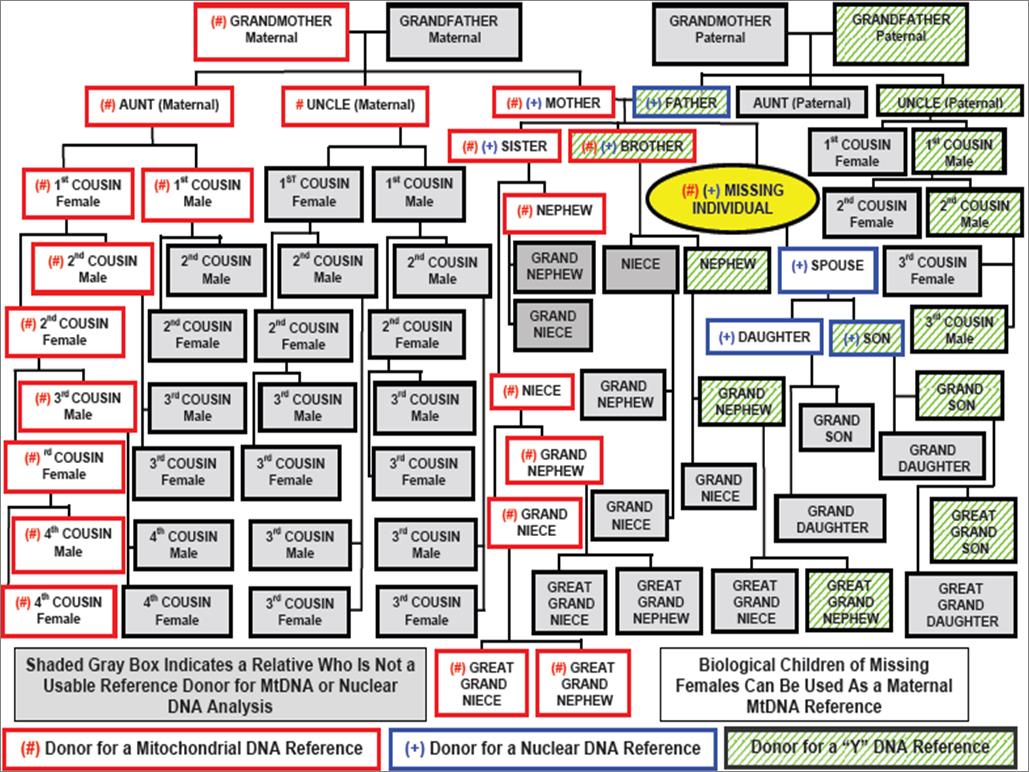
    If your family lost someone in one of these conflicts and you qualify to submit a DNA sample, please arrange to submit one. By doing that you just might help identify the remains of a US service member who’s been repatriated but not yet been identified – as well as a relative of yours, however distant. Or you may help to identify remains to be recovered in the future.

    Everybody deserves a proper burial. That’s especially true for those who gave their all while serving this nation.

  • Another Four Return

    DPAA has identified and accounted for the following formerly-missing US personnel.

    From World War II

    FM1c Raymond R. Camery, US Navy, assigned to the crew of the USS Oklahoma, was lost at Pearl Harbor, HI, on 7 December 1941. He was accounted for on 28 June 2018.

    FM1c Walter F. Schleiter, US Navy, assigned to the crew of the USS Oklahoma, was lost at Pearl Harbor, HI, on 7 December 1941. He was accounted for on 21 June 2018.

    S1c Daniel L. Guisinger, Jr., US Navy, assigned to the crew of the USS Oklahoma, was lost at Pearl Harbor, HI, on 7 December 1941. He was accounted for on 21 June 2018.

    From Korea

    Pfc Roger Gonzales, USMC Reserve, assigned to Company F, 2nd Battalion, 7th Marine Regiment, 1st Marine Division, was lost in North Korea on 29 November 1950. He was accounted for on 26 June 2018.

    From Southeast Asia

    None

    Welcome back, elder brothers-in-arms. Our apologies that your return took so long.

    Rest easy. You’re home now.

    . . .

    Over 72,000 US personnel remain unaccounted for from World War II; over 7,600 US personnel remain unaccounted for from the Korean War; over 1,500 remain unaccounted for in Southeast Asia (SEA); 126 remain unaccounted for from the Cold War; 5 remain unaccounted for from the Gulf Wars; and 1 individual remains unaccounted for from Operation El Dorado Canyon. Comparison of DNA from recovered remains against DNA from some (but not all) blood relatives can assist in making a positive ID for unidentified remains that have already been recovered, or which may be recovered in the future.

    On their web site’s “Contact Us” page, DPAA now has FAQs. The answer to one of those FAQs describes who can and cannot submit DNA samples useful in identifying recovered remains. The chart giving the answer can be viewed here. The text associated with the chart is short and can be viewed in DPAA’s FAQs.

    If your family lost someone in one of these conflicts and you qualify to submit a DNA sample, please arrange to submit one. By doing that you just might help identify the remains of a US service member who’s been repatriated but not yet been identified – as well as a relative of yours, however distant. Or you may help to identify remains to be recovered in the future.

    Everybody deserves a proper burial. That’s especially true for those who gave their all while serving this nation.

  • Another Two Are Home

    DPAA has identified and accounted for the following formerly-missing US personnel.

    From World War II

    2nd Lt. Robert R. Keown, US Army, assigned to 36th Fighter Squadron, 8th Fighter Group, US Army Air Forces, was lost in Papua New Guinea on 16 April 1944. He was accounted for on 28 November 2017; Jonn noted his burial last week in this article. Regrettably, I missed the original announcement of his accounting.

    SGT James K. Park, US Army, assigned to I Company, 26th Infantry Regiment, 1st Infantry Division, was lost in Germany on 23 November 1944. He was accounted for on 21 June 2018.

    From Korea

    None

    From Southeast Asia

    None

    Welcome back, elder brothers-in-arms. Our apologies that your return took so long.

    Rest easy. You’re home now.

    . . .

    Over 73,000 US personnel remain unaccounted for from World War II; over 7,800 US personnel remain unaccounted for from the Korean War; and over 1,600 remain unaccounted for in Southeast Asia (SEA). Comparison of DNA from recovered remains against DNA from some (but not all) blood relatives can assist in making a positive ID for unidentified remains that have already been recovered, or which may be recovered in the future.

    On their web site’s “Contact Us” page, DPAA now has FAQs. The answer to one of those FAQs describes who can and cannot submit DNA samples useful in identifying recovered remains. The chart giving the answer can be viewed here. The text associated with the chart is short and can be viewed in DPAA’s FAQs.

    If your family lost someone in one of these conflicts and you qualify to submit a DNA sample, please arrange to submit one. By doing that you just might help identify the remains of a US service member who’s been repatriated but not yet been identified – as well as a relative of yours, however distant. Or you may help to identify remains to be recovered in the future.

    Everybody deserves a proper burial. That’s especially true for those who gave their all while serving this nation.

  • Three More Return

    DPAA has identified and accounted for the following formerly-missing US personnel.

    From World War II

    FM1c Lewis F. Tindall, US Navy Reserve, assigned to the crew of the USS Oklahoma, was lost at Pearl Harbor, HI, on 7 December 1941. He was accounted for on 6 June 2018.

    Pfc Paull D. Gilman, USMC Reserve, assigned to Company M, 3rd Battalion, 8th Marine Regiment, 2nd Marine Division, Fleet Marine Force, was lost on Tarawa Atoll on 20 November 1943. He was accounted for on 5 June 2018.

    From Korea

    CPL Morris Meshulam, US Army, assigned to D Battery, 82nd Anti-Aircraft Artillery Automatic Weapons Battalion, 2nd Infantry Division, was lost in North Korea on 1 December 1950. He was accounted for on 5 June 2018.

    From Southeast Asia

    None

    Welcome back, elder brothers-in-arms. Our apologies that your return took so long.

    Rest easy. You’re home now.

    . . .

    Over 73,000 US personnel remain unaccounted for from World War II; over 7,800 US personnel remain unaccounted for from the Korean War; and over 1,600 remain unaccounted for in Southeast Asia (SEA). Comparison of DNA from recovered remains against DNA from some (but not all) blood relatives can assist in making a positive ID for unidentified remains that have already been recovered, or which may be recovered in the future.

    On their web site’s “Contact Us” page, DPAA now has FAQs. The answer to one of those FAQs describes who can and cannot submit DNA samples useful in identifying recovered remains. The chart giving the answer can be viewed here. The text associated with the chart is short and can be viewed in DPAA’s FAQs.

    If your family lost someone in one of these conflicts and you qualify to submit a DNA sample, please arrange to submit one. By doing that you just might help identify the remains of a US service member who’s been repatriated but not yet been identified – as well as a relative of yours, however distant. Or you may help to identify remains to be recovered in the future.

    Everybody deserves a proper burial. That’s especially true for those who gave their all while serving this nation.

  • Another From Pearl Harbor Returns

    DPAA has identified and accounted for the following formerly-missing US personnel.

    From World War II

    Mus1c Henri C. Mason, US Navy, assigned to the crew of the USS Oklahoma, was lost at Pearl Harbor, HI, on 7 December 1941. He was accounted for on 4 June 2018.

    From Korea

    None

    From Southeast Asia

    None

    Welcome back, elder brother-in-arms. Our apologies that your return took so long.

    Rest easy. You’re home now.

    . . .

    Over 72,000 US personnel remain unaccounted for from World War II; over 7,700 US personnel remain unaccounted for from the Korean War; and over 1,500 remain unaccounted for in Southeast Asia (SEA). Comparison of DNA from recovered remains against DNA from some (but not all) blood relatives can assist in making a positive ID for unidentified remains that have already been recovered, or which may be recovered in the future.

    On their web site’s “Contact Us” page, DPAA now has FAQs. The answer to one of those FAQs describes who can and cannot submit DNA samples useful in identifying recovered remains. The chart giving the answer can be viewed here. The text associated with the chart is short and can be viewed in DPAA’s FAQs.

    If your family lost someone in one of these conflicts and you qualify to submit a DNA sample, please arrange to submit one. By doing that you just might help identify the remains of a US service member who’s been repatriated but not yet been identified – as well as a relative of yours, however distant. Or you may help to identify remains to be recovered in the future.

    Everybody deserves a proper burial. That’s especially true for those who gave their all while serving this nation.

  • Two More Return

    DPAA has identified and accounted for the following formerly-missing US personnel.

    From World War II

    Sgt. Alfonso O. Duran, US Army, assigned to 724th Bombardment Squadron (Heavy), 451st Bombardment Group, 15th Air Force, US Army Air Forces, was lost in Slovenia on 25 February 1944. He was accounted for on 22 May 2018. (See note.)

    From Korea

    None

    From Southeast Asia

    LCDR Larry R. Kilpatrick, US Navy Reserve, assigned to Attack Squadron One Hundred Five (VA-105), was lost in Vietnam on 18 June 1972. He was accounted for on 18 May 2018.

    Welcome back, elder brothers-in-arms. Our apologies that your return took so long.

    Rest easy. You’re home now.

    . . .

    Over 72,000 US personnel remain unaccounted for from World War II; over 7,700 US personnel remain unaccounted for from the Korean War; and over 1,500 remain unaccounted for in Southeast Asia (SEA). Comparison of DNA from recovered remains against DNA from some (but not all) blood relatives can assist in making a positive ID for unidentified remains that have already been recovered, or which may be recovered in the future.

    On their web site’s “Contact Us” page, DPAA now has FAQs. The answer to one of those FAQs describes who can and cannot submit DNA samples useful in identifying recovered remains. The chart giving the answer can be viewed here. The text associated with the chart is short and can be viewed in DPAA’s FAQs.

    If your family lost someone in one of these conflicts and you qualify to submit a DNA sample, please arrange to submit one. By doing that you just might help identify the remains of a US service member who’s been repatriated but not yet been identified – as well as a relative of yours, however distant. Or you may help to identify remains to be recovered in the future.

    Everybody deserves a proper burial. That’s especially true for those who gave their all while serving this nation.

    ———-

    Author’s Note: DPAA’s “Recently Accounted For” page lists an incorrect date of loss and accounting for Sgt. Duran. The DPAA press release associated with his recovery lists the correct dates. The correct dates from the press release are used above.

  • Three More Are Home

    DPAA has identified and accounted for the following formerly-missing US personnel.

    From World War II

    CPL Joseph Akers, US Army, assigned to C Company, 803rd Tank Destroyer Battalion, was lost in Germany on 11 November 1944. He was accounted for on 10 May 2018.

    From Korea

    SGT John W. Hall, US Army, assigned to Headquarters Battery, 503rd Field Artillery Battalion, 2nd Infantry Division, was lost in North Korea on 1 December 1950. He was accounted for on 16 May 2018.

    CPL DeMaret M. Kirtley, US Army, assigned to A Battery, 57th Field Artillery Battalion, 31st Regimental Combat Team, 7th Infantry Division, was lost in North Korea on 6 December 1950. He was accounted for on 11 May 2018.

    From Southeast Asia

    None

    Welcome back, elder brothers-in-arms. Our apologies that your return took so long.

    Rest easy. You’re home now.

    . . .

    Over 73,000 US personnel remain unaccounted for from World War II; over 7,800 US personnel remain unaccounted for from the Korean War; and over 1,600 remain unaccounted for in Southeast Asia (SEA). Comparison of DNA from recovered remains against DNA from some (but not all) blood relatives can assist in making a positive ID for unidentified remains that have already been recovered, or which may be recovered in the future.

    On their web site’s “Contact Us” page, DPAA now has FAQs. The answer to one of those FAQs describes who can and cannot submit DNA samples useful in identifying recovered remains. The chart giving the answer can be viewed here. The text associated with the chart is short and can be viewed in DPAA’s FAQs.

    If your family lost someone in one of these conflicts and you qualify to submit a DNA sample, please arrange to submit one. By doing that you just might help identify the remains of a US service member who’s been repatriated but not yet been identified – as well as a relative of yours, however distant. Or you may help to identify remains to be recovered in the future.

    Everybody deserves a proper burial. That’s especially true for those who gave their all while serving this nation.

  • Another Returns

    DPAA has identified and accounted for the following formerly-missing US personnel.

    From World War II

    ENS Harold P. DeMoss, US Navy Reserve, assigned to Fighting Squadron 100 (VF-100), was lost on Oahu, HI, on 23 June 1945. He was accounted for on 9 May 2018. (see note)

    From Korea

    None

    From Southeast Asia

    None

    Welcome back, elder brother-in-arms. Our apologies that your return took so long.

    Rest easy. You’re home now.

    . . .

    Over 73,000 US personnel remain unaccounted for from World War II; over 7,800 US personnel remain unaccounted for from the Korean War; and over 1,600 remain unaccounted for in Southeast Asia (SEA). Comparison of DNA from recovered remains against DNA from some (but not all) blood relatives can assist in making a positive ID for unidentified remains that have already been recovered, or which may be recovered in the future.

    On their web site’s “Contact Us” page, DPAA now has FAQs. The answer to one of those FAQs describes who can and cannot submit DNA samples useful in identifying recovered remains. The chart giving the answer can be viewed here. The text associated with the chart is short and can be viewed in DPAA’s FAQs.

    If your family lost someone in one of these conflicts and you qualify to submit a DNA sample, please arrange to submit one. By doing that you just might help identify the remains of a US service member who’s been repatriated but not yet been identified – as well as a relative of yours, however distant. Or you may help to identify remains to be recovered in the future.

    Everybody deserves a proper burial. That’s especially true for those who gave their all while serving this nation.

    ———-

    Author’s Note: While DPAA’s listing of personnel Recently Accounted For indicates ENS DeMoss was accounted for on 11 May 2018, the DPAA press release announcing his accounting indicates he was accounted for on 9 May 2018. I have chosen to use the press release date in this article.