Category: No Longer Missing

  • More Return from World War II and Korea

    DPAA has identified and accounted for the following formerly-missing US military personnel.

    From World War II

    • ENS Verdi Sederstrom, US Navy, assigned to the crew of the USS Oklahoma, was lost on 7 December 1941 at Pearl Harbor. He was accounted-for on 21 July 2016.

    • MM1 Earl Melton, US Navy, assigned to the crew of the USS Oklahoma, was lost on 7 December 1941 at Pearl Harbor. He was accounted-for on 21 July 2016.

    • 2nd Lt. Marvin B. Rothman, 311th Fighter Squadron, 58th Fighter Group, US Army Air Forces, US Army, was lost on 11 April 1944 on New Guinea. He was accounted-for on 15 July 2016.

    • 1st Lt. Robert L. McIntosh, 27th Fighter Squadron, 1st Fighter Group, US Army Air Forces, US Army, was lost on 12 May 1944 in Italy. He was accounted-for on 17 February 2014. (Assuming the accounted-for date is accurate, apparently the formal announcement of 1st Lt. McIntosh’s recovery and accounting was severely delayed.)

    From Korea

    • CPL Curtis J. Wells, C Company, 65th Engineer Combat Battalion, 25th Infantry Division, US Army, was lost on 27 November 1950 in North Korea. He was accounted for on 21 July 2016.

    • CPL Larry M. Dunn, B Company, 2nd Engineer Combat Battalion, 2nd Infantry Division, US Army, was lost on 1 December 1950 in North Korea. He was accounted for on 16 July 2016.

    • SGT James L. Campbell, 31st Regimental Combat Team, US Army, was lost on 2 December 1950 in North Korea. He was accounted for on 26 July 2016.

    • CPL Charles A. White, G Company, 2nd Battalion, 7th Infantry Regiment, 3rd Infantry Division, US Army, was lost on 3 December 1950 in North Korea. He was accounted for on 14 July 2016.

    • CPL Ronald M. Sparks, D Company 1st Battalion, 38th Infantry Regiment, 2nd Infantry Division, US Army, was lost on 12 February 1951 in South Korea. He was accounted for on 27 July 2016.

    • MSG Ira V. Miss, Jr., Headquarters Company, 3rd Battalion, 38th Infantry Regiment, 2nd Infantry Division, US Army, was lost on 13 February 1951 in South Korea. He was accounted for on 25 July 2016. (Note: DPAA’s roster of newly accounted for personnel gives an incorrect date of loss for MSG Miss that predates the beginning of the Korean War. The date of loss given here is from the DPAA press release concerning his identification and formal accounting.)

    Welcome back, elder brothers-in-arms. Our apologies that your return took so long.

    You’re home now. Rest in peace.

    . . .

    Over 73,000 US personnel remain unaccounted for from World War II; over 7,800 US personnel remain unaccounted for from the Korean War; and over 1,600 remain unaccounted for in Southeast Asia (SEA). Comparison of DNA from recovered remains against DNA from some (but not all) blood relatives can assist in making a positive ID for unidentified remains that have already been recovered, or which may be recovered in the future.

    On their web site’s “Contact Us” page, DPAA now has FAQs. The answer to one of those FAQs describes who can and cannot submit DNA samples useful in identifying recovered remains. The chart giving the answer can be viewed here. The text associated with the chart is short and can be viewed in DPAA’s FAQs.
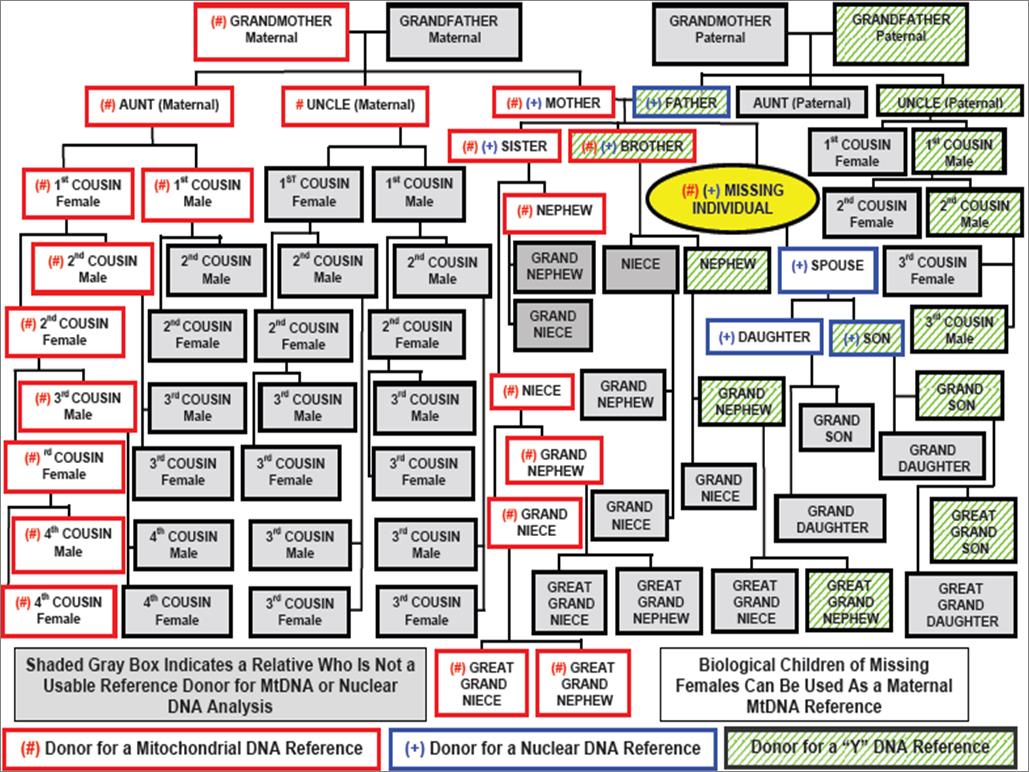
    If your family lost someone in one of these conflicts and you qualify to submit a DNA sample, please arrange to submit one. By doing that you just might help identify the remains of a US service member who’s been repatriated but not yet been identified – as well as a relative of yours, however distant. Or you may help to identify remains to be recovered in the future.

    Everybody deserves a proper burial. That’s especially true for those who gave their all while serving this nation.


    (Author’s Note: a regrettable editing error resulted in the replacement of information regarding several individuals previously identified in this article with information regarding other newly accounted for individuals. Those names originally replaced have been restored above. Mea culpa.)

  • More Return Home

    DPAA has identified and accounted for the following formerly-missing US military personnel.

    From World War II

    • Pfc. George H. Traver, Company K, 3rd Battalion, 8th Marine Regiment, 2nd Marine Division, USMC, was lost on 20 November 1943 on Tarawa Atoll. He was accounted-for on 24 May 2016.

    • Pvt. Dale R. Geddes, Company H, 2nd Battalion, 8th Marine Regiment, 2nd Marine Division, USMC, was lost on 20 November 1943 on Tarawa Atoll. He was accounted-for on 13 April 2016.

    From Korea

    • MSG Charles J. Brown, L Company, 3rd Battalion, 8th Cavalry Regiment, US Army, was lost on 2 November 1950 in North Korea. He was accounted-for on 29 June 2016.

    • SFC Lawrence Smith, A Company, 1st Battalion, 38th Infantry Regiment, US Army, was lost on 12 February 1951 in South Korea. He was accounted-for on 6 July 2016.

    Welcome back, elder brothers-in-arms. Our apologies that your return took so long.

    You’re home now. Rest in peace.

    . . .

    Over 73,000 US personnel remain unaccounted for from World War II; over 7,800 US personnel remain unaccounted for from the Korean War; and over 1,600 remain unaccounted for in Southeast Asia (SEA). Comparison of DNA from recovered remains against DNA from some (but not all) blood relatives can assist in making a positive ID for unidentified remains that have already been recovered, or which may be recovered in the future.

    On their web site’s “Contact Us” page, DPAA now has FAQs. The answer to one of those FAQs describes who can and cannot submit DNA samples useful in identifying recovered remains. The chart giving the answer can be viewed here. The text associated with the chart is short and can be viewed in DPAA’s FAQs.

    If your family lost someone in one of these conflicts and you qualify to submit a DNA sample, please arrange to submit one. By doing that you just might help identify the remains of a US service member who’s been repatriated but not yet been identified – as well as a relative of yours, however distant. Or you may help to identify remains to be recovered in the future.

    Everybody deserves a proper burial. That’s especially true for those who gave their all while serving this nation.


    Notes:
    1. Hat-tip to TAH reader chindonya for links to DPAA’s FAQ page and the chart of eligible DNA donors.
    2. The delay in acknowledging the accounting-for of Marines Traver and Geddes here was due to delay in the public announcement of their change in status. Neither individual’s name appeared on the DPAA website until this week.

  • Two More Are Accounted-For

    DPAA has identified and accounted for the following formerly-missing US military personnel.

    From World War II

    • Flight Officer Judson B. Baskett, 1305th Army Air Force Base Unit, US Army Air Forces, US Army, was lost in Malaysia on 27 November 1945. He was accounted-for on 15 June 2016.

    From Korea

    • CWO Adolphus Nava, B Battery, 38th Field Artillery Battalion, 2nd Infantry Division, US Army, was lost on 30 Novemer 1950 in North Korea. He was accounted-for on 22 June 2016.

    Welcome back, elder brothers-in-arms. Our apologies that your return took so long.

    You’re home now. Rest in peace.

    . . .

    Over 73,000 US personnel remain unaccounted for from World War II; over 7,800 US personnel remain unaccounted for from the Korean War; and over 1,600 remain unaccounted for in Southeast Asia (SEA). Comparison of DNA from recovered remains against DNA from some (but not all) blood relatives can assist in making a positive ID for unidentified remains that have already been recovered, or which may be recovered in the future.

    On their web site’s “Contact Us” page, DPAA now has FAQs. The answer to one of those FAQs describes who can and cannot submit DNA samples useful in identifying recovered remains. The chart giving the answer can be viewed here. The text associated with the chart is short and can be viewed in DPAA’s FAQs.

    If your family lost someone in one of these conflicts and you qualify to submit a DNA sample, please arrange to submit one. By doing that you just might help identify the remains of a US service member who’s been repatriated but not yet been identified – as well as a relative of yours, however distant. Or you may help to identify remains to be recovered in the future.

    Everybody deserves a proper burial. That’s especially true for those who gave their all while serving this nation.


    (Note: hat-tip to TAH reader chindonya for links to DPAA’s FAQ page and the chart of eligible DNA donors.)

  • More Belatedly Come Home

    DPAA has identified and accounted for the following formerly-missing US military personnel.

    From World War II

    • CPL Frederick G. Collins, Jr., 263rd Quartermaster Company, US Army, US Army, was lost in the Philippines on 19 November 1942. He was accounted-for on 7 June 2016.

    From Korea

    • CPL Charles B. Crofts, Headquarters Company, 1st Battalion, 32nd Infantry Regiment, 7th Infantry Division, US Army, was lost on 2 December 1950 in North Korea. He was accounted-for on 7 June 2016.

    • SGT Harold L. Curtis, I Company, 3rd Battalion, 31st Infantry Regiment, US Army, was lost on 12 December 1950 in North Korea. He was accounted-for on 8 June 2016.

    • PFC William R. Butz, K Company, 3rd Battalion, 31st Infantry Regiment, 7th Infantry Division, US Army, was lost on 12 December 1950 in North Korea. He was accounted-for on 8 June 2016.

    Welcome back, elder brothers-in-arms. Our apologies that your return took so long.

    Rest in peace.  You’re home now.

    . . .

    Over 73,000 US personnel remain unaccounted for from World War II; over 7,800 US personnel remain unaccounted for from the Korean War; and over 1,600 remain unaccounted for in Southeast Asia (SEA). Comparison of DNA from recovered remains against DNA from some (but not all) blood relatives can assist in making a positive ID for unidentified remains that have already been recovered, or which may be recovered in the future.

    On their web site’s “Contact Us” page, DPAA now has FAQs. The answer to one of those FAQs describes who can and cannot submit DNA samples useful in identifying recovered remains. The chart giving the answer can be viewed here. The text associated with the chart is short and can be viewed in DPAA’s FAQs.

    If your family lost someone in one of these conflicts and you qualify to submit a DNA sample, please arrange to submit one. By doing that you just might help identify the remains of a US service member who’s been repatriated but not yet been identified – as well as a relative of yours, however distant. Or you may help to identify remains to be recovered in the future.

    Everybody deserves a proper burial. That’s especially true for those who gave their all while serving this nation.


    (Note: hat-tip to TAH reader chindonya for links to DPAA’s FAQ page and the chart of eligible DNA donors.)

  • DPAA Accounts for Three More

    DPAA has identified and accounted for the following formerly-missing US military personnel.

    From World War II

    • PVT Evans E. Overbey, 93rd Bombardment Squadron, 19th Bombardment Group, US Army Air Forces, US Army, was lost in the Philippines on 19 November 1942.  He was accounted-for on 1 June 2016.

    From Korea

    • SGT Bailey Keeton, D Company, 1st Battalion, 32nd Infantry Regiment, 7th Infantry Division, US Army, was lost on 2 December 1950 in North Korea. He was accounted-for on 2 June 2016.

    From Southeast Asia

    • Col. Patrick H. Wood, Detachment 5, 38th Aerospace Rescue and Recovery Squadron, USAF, was lost on 6 February 1967 in Vietnam. He was accounted-for on 27 May 2016.

    Welcome back, elder brothers-in-arms. Our apologies that your return took so long.

    You’re home now.  Rest in peace.

    . . .

    Over 73,000 US personnel remain unaccounted for from World War II; over 7,800 US personnel remain unaccounted for from the Korean War; and over 1,600 remain unaccounted for in Southeast Asia (SEA). Comparison of DNA from recovered remains against DNA from some (but not all) blood relatives can assist in making a positive ID for unidentified remains that have already been recovered, or which may be recovered in the future.

    On their web site’s “Contact Us” page, DPAA now has FAQs. The answer to one of those FAQs describes who can and cannot submit DNA samples useful in identifying recovered remains.  The chart giving the answer can be viewed here.  The text associated with the chart is short and can be viewed in DPAA’s FAQs.

    If your family lost someone in one of these conflicts and you qualify to submit a DNA sample, please arrange to submit one. By doing that you just might help identify the remains of a US service member who’s been repatriated but not yet been identified – as well as a relative of yours, however distant. Or you may help to identify remains to be recovered in the future.

    Everybody deserves a proper burial. That’s especially true for those who gave their all while serving this nation.


    (Note:  hat-tip to TAH reader chindonya for links to DPAA’s FAQ page and the chart of eligible DNA donors.)

  • More MIAs Return

    DPAA has identified and accounted for the following formerly-missing US military personnel.

    From World War II

    • MM1 Harold F. Carney, US Navy, assigned to the crew of the USS Oklahoma, was lost at Pearl Harbor, HI, on 7 December 1941.  He was accounted-for on 21 April 2016.

    • Seaman 2nd Class Vernon N. Grow, US Navy, assigned to the crew of the USS Oklahoma, was lost at Pearl Harbor, HI, on 7 December 1941.  He was accounted-for on 2 June 2016.

    • PHM3 Howard P. Brisbane, US Navy, assigned to Headquarters Company, 2nd Battalion, 8th Marines, 2nd Marine Division, USMC, was lost on 20 November 1943 on Tarawa Atoll.  He was accounted-for on 2 June 2016.

    • Pfc. Charles E. Oetjen, Company E, 2nd Battalion, 8th Marines, 2nd Marine Division, USMC, was lost on 20 November 1943 on Tarawa Atoll.  He was accounted-for on 6 May 2016.

    • Pfc. James B. Johnson, Company K, 2nd Battalion, 8th Marines, 2nd Marine Division, USMC, was lost on 20 November 1943 on Tarawa Atoll.  He was accounted-for on 18 April 2016.

    • Pfc. James F. Mansfield, Company K, 2nd Battalion, 8th Marines, 2nd Marine Division, USMC, was lost on 20 November 1943 on Tarawa Atoll.  He was accounted-for on 6 May 2016.

    • Pfc. Elmer L. Mathies, Headquarters Company, 2nd Battalion, 8th Marines, 2nd Marine Division, USMC, was lost on 20 November 1943 on Tarawa Atoll.  He was accounted-for on 29 January 2016.

    • Pfc. Roland E. Schaede, Company M, 3rd Battalion, 8th Marines, 2nd Marine Division, USMC, was lost on 20 November 1943 on Tarawa Atoll.  He was accounted-for on 6 May 2016.

    • Pvt. Harry K. Tye, Company E, 2nd Battalion, 8th Marines, 2nd Marine Division, USMC, was lost on 20 November 1943 on Tarawa Atoll.  He was accounted-for on 6 May 2016.

    From Korea

    • SGT Harold Spakrs, L Company, 3rd Battalion, 8th Cavalry Regiment, 1st Cavalry Division, US Army, was lost on 2 November 1950 in North Korea.  He was accounted-for on 11 May 2016.

    Welcome back, elder brothers-in-arms.  You’re home now.

    Our apologies that your return took so long.  Rest in peace.

    . . .

    Over 73,000 US personnel remain unaccounted for from World War II; over 7,800 US personnel remain unaccounted for from the Korean War; and over 1,600 remain unaccounted for in Southeast Asia (SEA). Comparison of mitochondrial DNA (mtDNA) from recovered remains against mtDNA from a matrilineal descendant can assist in making a positive ID for unidentified remains that have already been recovered, or which may be recovered in the future.

    DPAA’s web site now has what appears to be a decent “Contact Us” page. The page doesn’t have instructions concerning who can and cannot submit a mtDNA sample or how to submit one, but the POCs listed there may be able to refer you to someone who can answer that question – or may be able to answer the question themselves. If you think you might possibly qualify, please contact one of those POCs for further information.

    If your family lost someone in one of these conflicts and you qualify to submit a mtDNA sample, please arrange to submit one. By doing that you just might help identify the remains of a US service member who’s been repatriated but not yet been identified – as well as a relative of yours, however distant. Or you may help to identify remains to be recovered in the future.

    Everybody deserves a proper burial. That’s especially true for those who gave their all while serving this nation.


    Author’s Note:  DPAA is indeed “slipstreaming” delayed announcements of personnel accounting into their web page listing of personnel who were MIA and have been recently accounted for.  That web page lists personnel by date accounted for, earliest first, so delayed entries do NOT show up at the top of the list.  These delayed announcements account for the apparent delay in publicizing the recovery and identification of a number of the personnel above.

  • More Return Home

    DPAA has identified and accounted for the following formerly-missing US military personnel.

    From World War II

    • LTJG Aloysius H. Schmitt, assigned to the crew of the USS Oklahoma, was lost on 7 December 1941 at Pearl Harbor, Hawaii. He was accounted for on 18 May 2016.

    • Warrant Officer Daryl H. Goggin, assigned to the crew of the USS Oklahoma, was lost on 7 December 1941 at Pearl Harbor, Hawaii. He was accounted for on 25 May 2016.

    • FM1 Frank E. Nicoles, assigned to the crew of the USS Oklahoma, was lost on 7 December 1941 at Pearl Harbor, Hawaii. He was accounted for on 20 May 2016.

    • Seaman 2nd Class Challis R. James, assigned to the crew of the USS Oklahoma, was lost on 7 December 1941 at Pearl Harbor, Hawaii. He was accounted for on 20 May 2016.

    From Korea

    • SFC Richard Davis, K Company, 3rd Battalion, 8th Cavalry Regiment, 1st Cavalry Division, US Army, was lost on 2 November 1950 in North Korea. He was accounted for on 23 May 2016.

    From Vietnam

    • LCDR Frederick P. Crosby, Light Photographic Squadron (VFP) 63, US Navy, was lost on 1 June 1965 in Vietnam. He was accounted for on 25 May 2016.

    Additionally, as Jonn noted the other day the remains of 1st Lt. Donald W. Bruch, Jr., 333rd Tactical Fighting Squadron, USAF, have also been recovered and repatriated.  1st Lt. Bruch was lost on 29 April 1966 in Vietnam.  He was accounted for on 30 November 2015.  Either I missed DPAA’s announcement of his accounting at the time or DPAA’s announcement of his accounting was delayed.

    Welcome back, elder brothers-in-arms. Our apologies that your return took so long.

    You’re home now. Rest in peace.

    . . .

    Over 73,000 US personnel remain unaccounted for from World War II; over 7,800 US personnel remain unaccounted for from the Korean War; and over 1,600 remain unaccounted for in Southeast Asia (SEA). Comparison of mitochondrial DNA (mtDNA) from recovered remains against mtDNA from a matrilineal descendant can assist in making a positive ID for unidentified remains that have already been recovered, or which may be recovered in the future.

    DPAA’s web site now has what appears to be a decent “Contact Us” page. The page doesn’t have instructions concerning who can and cannot submit a mtDNA sample or how to submit one, but the POCs listed there may be able to refer you to someone who can answer that question – or may be able to answer the question themselves. If you think you might possibly qualify, please contact one of those POCs for further information.

    If your family lost someone in one of these conflicts and you qualify to submit a mtDNA sample, please arrange to submit one. By doing that you just might help identify the remains of a US service member who’s been repatriated but not yet been identified – as well as a relative of yours, however distant. Or you may help to identify remains to be recovered in the future.

    Everybody deserves a proper burial. That’s especially true for those who gave their all while serving this nation.


  • More Belatedly Return

    DPAA has identified and accounted for the following formerly-missing members of the US military.

    From World War II

    CPT Elwood J. Euart , HQ 103rd Field Artillery Battalion, 43rd Infantry Division, US Army, was lost on 26 October 1942 in Vanuatu. He was accounted for on 11 May 2016.

    1st Lt. Donald L. Beals, 494th Fighter Squadron, 48th Fighter Group, 9th Air Force, US Army Air Forces, was lost on 17 April 1945. The location of 1st Lt. Beals’ loss was not provided by DPAA; however, the 9th Air Force was assigned to the European Theater of Operations during World War II. He was accounted for on 10 May 2016.

    Welcome home, elder brothers-in-arms.

    Rest easy. You’re home now.

    . . .

    Over 73,000 US personnel remain unaccounted for from World War II; over 7,800 US personnel remain unaccounted for from the Korean War; and over 1,600 remain unaccounted for in Southeast Asia (SEA). Comparison of mitochondrial DNA (mtDNA) from recovered remains against mtDNA from a matrilineal descendant can assist in making a positive ID for unidentified remains that have already been recovered, or which may be recovered in the future.

    DPAA’s web site now has what appears to be a decent “Contact Us” page. The page doesn’t have instructions concerning who can and cannot submit a mtDNA sample or how to submit one, but the POCs listed there may be able to refer you to someone who can answer that question – or may be able to answer the question themselves. If you think you might possibly qualify, please contact one of those POCs for further information.

    If your family lost someone in one of these conflicts and you qualify to submit a mtDNA sample, please arrange to submit one. By doing that you just might help identify the remains of a US service member who’s been repatriated but not yet been identified – as well as a relative of yours, however distant. Or you may help to identify remains to be recovered in the future.

    Everybody deserves a proper burial. That’s especially true for those who gave their all while serving this nation.