Category: No Longer Missing

  • Three More Are Home

    DPAA has identified and accounted for the following formerly-missing US personnel.

    From World War II

    • F1c Charles R. Casto, US Navy, assigned to the crew of the USS Oklahoma, was lost at Pearl Harbor, HI, on 7 December 1941. He was accounted for on 15 March 2017.

    • Pvt. Donald S. Spayd, USMC Reserve, assigned to Company F, 2nd Battalion, 8th Marines, USMC, was lost on Tarawa on 20 November 1943. He was accounted for on 16 March 2017.

    From Korea

    • PFC Robert E. Mitchell, Company F, 38th Infantry Regiment, 2nd Infantry Division, US Army, was lost in South Korea on 6 September 1950. He was accounted for on 13 March 2017.

    Welcome back, elder brothers-in-arms. Our apologies that your return took so long.

    Rest in peace. You’re home now.

    . . .

    Over 73,000 US personnel remain unaccounted for from World War II; over 7,800 US personnel remain unaccounted for from the Korean War; and over 1,600 remain unaccounted for in Southeast Asia (SEA). Comparison of DNA from recovered remains against DNA from some (but not all) blood relatives can assist in making a positive ID for unidentified remains that have already been recovered, or which may be recovered in the future.

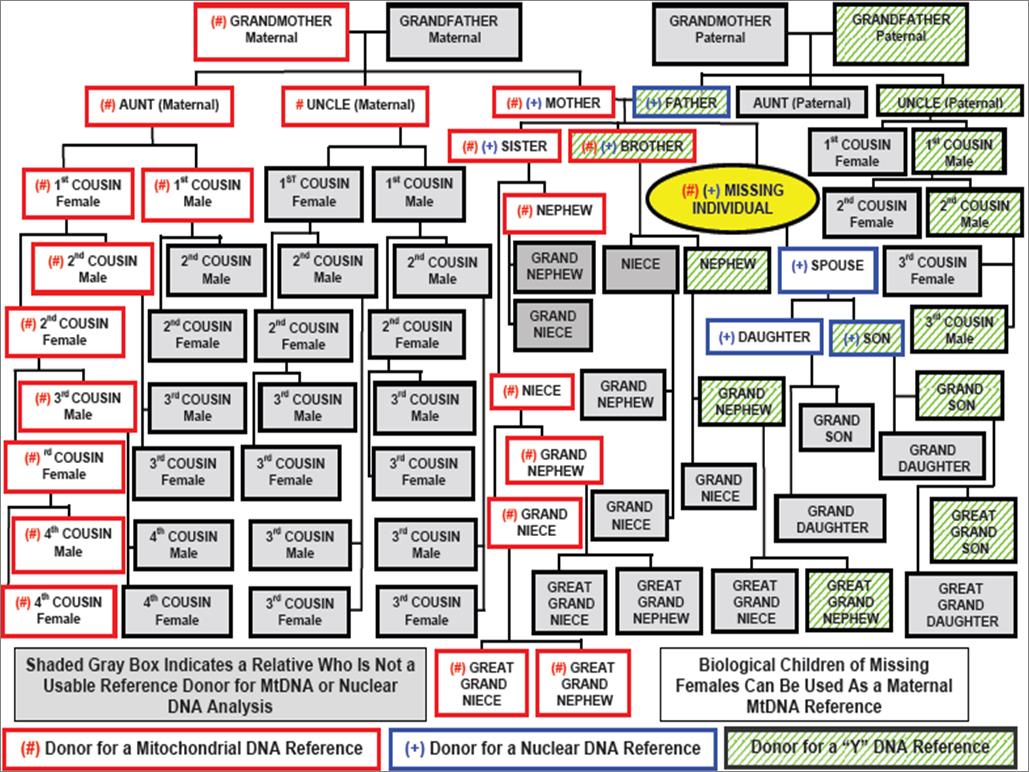
    On their web site’s “Contact Us” page, DPAA now has FAQs. The answer to one of those FAQs describes who can and cannot submit DNA samples useful in identifying recovered remains. The chart giving the answer can be viewed here. The text associated with the chart is short and can be viewed in DPAA’s FAQs.

    If your family lost someone in one of these conflicts and you qualify to submit a DNA sample, please arrange to submit one. By doing that you just might help identify the remains of a US service member who’s been repatriated but not yet been identified – as well as a relative of yours, however distant. Or you may help to identify remains to be recovered in the future.

    Everybody deserves a proper burial. That’s especially true for those who gave their all while serving this nation.
     

  • Five Are MIA No More

    DPAA has identified and accounted for the following formerly-missing US personnel.

    From World War II

    • F1c Elmer T. Kerestes, US Navy, assigned to the crew of the USS Oklahoma, was lost at Pearl Harbor, HI, on 7 December 1941. He was accounted for on 6 March 2017.

    • 1st Lt. Robert E. Oxford, 425th Bomber Squadron, 308th Bomb Group, 14th Air Force, US Army Air Forces, US Army, was lost in India on 25 January 1944. He was accounted for on 6 March 2017.

    From Korea

    • PFC Manuel M. Quintana, K Company, 3rd Battalion, 29th Infantry Regiment, US Army, was lost in South Korea on 27 July 1950. He was accounted for on 4 March 2017.

    • SGT Willie Rowe, L Company, 3rd Battalion, 9th Infantry Regiment, 2nd Infantry Division, US Army, was lost in North Korea on 25 November 1950. He was accounted for on 2 March 2017.

    From Southeast Asia

    • Capt. Daniel W. Thomas, USAF Reserve, serving on active duty with 23rd Tactical Air Support Squadron, USAF, was lost in Laos on 6 July 1971. He was accounted for on 25 February 2017.

    Welcome back, elder brothers-in-arms. Our apologies that your return took so long.

    Rest in peace. You’re home now.

    . . .

    Over 73,000 US personnel remain unaccounted for from World War II; over 7,800 US personnel remain unaccounted for from the Korean War; and over 1,600 remain unaccounted for in Southeast Asia (SEA). Comparison of DNA from recovered remains against DNA from some (but not all) blood relatives can assist in making a positive ID for unidentified remains that have already been recovered, or which may be recovered in the future.

    On their web site’s “Contact Us” page, DPAA now has FAQs. The answer to one of those FAQs describes who can and cannot submit DNA samples useful in identifying recovered remains. The chart giving the answer can be viewed here. The text associated with the chart is short and can be viewed in DPAA’s FAQs.

    If your family lost someone in one of these conflicts and you qualify to submit a DNA sample, please arrange to submit one. By doing that you just might help identify the remains of a US service member who’s been repatriated but not yet been identified – as well as a relative of yours, however distant. Or you may help to identify remains to be recovered in the future.

    Everybody deserves a proper burial. That’s especially true for those who gave their all while serving this nation.


    Author’s Note: Capt. Thomas was accounted for on 25 February 2017; SGT Rowe, on 2 March 2017; and PFC Quintana, on 4 March 2017. However, their accounting was not announced on DPAA’s web site until this week.

  • Five More Return

    DPAA has identified and accounted for the following formerly-missing US Sailors.

    From World War II

    • F1c Lawrence H. Fecho, US Navy, assigned to the crew of the USS Oklahoma, was lost at Pearl Harbor on 7 December 1941. He was accounted for on 23 February 2017.

    • F1c Walter B. Rogers, US Navy, assigned to the crew of the USS Oklahoma, was lost at Pearl Harbor on 7 December 1941. He was accounted for on 23 February 2017.

    • F1c Charles W. Thompson, US Navy, assigned to the crew of the USS Oklahoma, was lost at Pearl Harbor on 7 December 1941. He was accounted for on 17 February 2017.

    • StM1c Cyril I. Dusset, US Navy, assigned to the crew of the USS Oklahoma, was lost at Pearl Harbor on 7 December 1941. He was accounted for on 23 February 2017.

    • S1c Paul S. Raimond, US Navy, assigned to the crew of the USS Oklahoma, was lost at Pearl Harbor on 7 December 1941. He was accounted for on 23 February 2017.

    Welcome back, elder brothers-in-arms. Our apologies that your return took so long.

    Rest in peace. You’re home now.

    . . .

    Over 73,000 US personnel remain unaccounted for from World War II; over 7,800 US personnel remain unaccounted for from the Korean War; and over 1,600 remain unaccounted for in Southeast Asia (SEA). Comparison of DNA from recovered remains against DNA from some (but not all) blood relatives can assist in making a positive ID for unidentified remains that have already been recovered, or which may be recovered in the future.

    On their web site’s “Contact Us” page, DPAA now has FAQs. The answer to one of those FAQs describes who can and cannot submit DNA samples useful in identifying recovered remains. The chart giving the answer can be viewed here. The text associated with the chart is short and can be viewed in DPAA’s FAQs.

    If your family lost someone in one of these conflicts and you qualify to submit a DNA sample, please arrange to submit one. By doing that you just might help identify the remains of a US service member who’s been repatriated but not yet been identified – as well as a relative of yours, however distant. Or you may help to identify remains to be recovered in the future.

    Everybody deserves a proper burial. That’s especially true for those who gave their all while serving this nation.

  • Another Is Accounted For

    DPAA has identified and accounted for the following formerly-missing US Sailor.

    From World War II

    • FC3c Robert L. Pribble, US Navy, assigned to the crew of the USS Oklahoma, was lost at Pearl Harbor on 7 December 1941. He was accounted for on 14 February 2017.

    Welcome back, elder brother-in-arms. Our apologies that your return took so long.

    You’re home now.  Rest in peace.

    . . .

    Over 73,000 US personnel remain unaccounted for from World War II; over 7,800 US personnel remain unaccounted for from the Korean War; and over 1,600 remain unaccounted for in Southeast Asia (SEA). Comparison of DNA from recovered remains against DNA from some (but not all) blood relatives can assist in making a positive ID for unidentified remains that have already been recovered, or which may be recovered in the future.

    On their web site’s “Contact Us” page, DPAA now has FAQs. The answer to one of those FAQs describes who can and cannot submit DNA samples useful in identifying recovered remains. The chart giving the answer can be viewed here. The text associated with the chart is short and can be viewed in DPAA’s FAQs.

    If your family lost someone in one of these conflicts and you qualify to submit a DNA sample, please arrange to submit one. By doing that you just might help identify the remains of a US service member who’s been repatriated but not yet been identified – as well as a relative of yours, however distant. Or you may help to identify remains to be recovered in the future.

    Everybody deserves a proper burial. That’s especially true for those who gave their all while serving this nation.

  • Eight More Return Home

    DPAA has identified and accounted for the following formerly-missing US personnel.

    From World War II

    • GM1c Arthur C. Neuenschwander, US Navy, assigned to the crew of the USS Oklahoma, was lost at Pearl Harbor on 7 December 1941. He was accounted for on 6 February 2017.

    • SK2c Glenn G. Cyriack, US Navy, assigned to the crew of the USS Oklahoma, was lost at Pearl Harbor on 7 December 1941. He was accounted for on 7 February 2017.

    • Mus1c Elliot D. Larsen, US Navy, assigned to the crew of the USS Oklahoma, was lost at Pearl Harbor on 7 December 1941. He was accounted for on 8 February 2017.

    • F1c Michael Galajdik, US Navy, assigned to the crew of the USS Oklahoma, was lost at Pearl Harbor on 7 December 1941. He was accounted for on 3 February 2017.

    • F1c William H. Kennedy, US Navy, assigned to the crew of the USS Oklahoma, was lost at Pearl Harbor on 7 December 1941. He was accounted for on 7 February 2017.

    • S2c George T. George, US Navy, assigned to the crew of the USS Oklahoma, was lost at Pearl Harbor on 7 December 1941. He was accounted for on 8 February 2017.

    • F3c Robert N. Walkowiak, US Navy, assigned to the crew of the USS Oklahoma, was lost at Pearl Harbor on 7 December 1941. He was accounted for on 3 February 2017.

    From Korea

    • SGT Donald D. Noehren, Headquarters and Headquarters Service Company, 2nd Engineer Combat Battalion, 2nd Infantry Division, US Army, was lost in North Korea on 30 November

    Welcome back, elder brothers-in-arms. Our apologies that your return took so long.

    Rest in peace. You’re home now.

    . . .

    Over 73,000 US personnel remain unaccounted for from World War II; over 7,800 US personnel remain unaccounted for from the Korean War; and over 1,600 remain unaccounted for in Southeast Asia (SEA). Comparison of DNA from recovered remains against DNA from some (but not all) blood relatives can assist in making a positive ID for unidentified remains that have already been recovered, or which may be recovered in the future.

    On their web site’s “Contact Us” page, DPAA now has FAQs. The answer to one of those FAQs describes who can and cannot submit DNA samples useful in identifying recovered remains. The chart giving the answer can be viewed here. The text associated with the chart is short and can be viewed in DPAA’s FAQs.

    If your family lost someone in one of these conflicts and you qualify to submit a DNA sample, please arrange to submit one. By doing that you just might help identify the remains of a US service member who’s been repatriated but not yet been identified – as well as a relative of yours, however distant. Or you may help to identify remains to be recovered in the future.

    Everybody deserves a proper burial. That’s especially true for those who gave their all while serving this nation.


    Author’s Note: best as I can tell, the rate abbreviations and order (by enlisted grade) above are indeed correct – e.g., ordered by date of loss, then by rank, with highest-ranking individuals first. In 1941, the Navy’s rank/rate structure was somewhat different than today; for example, all enlisted “2nd Class” rates were not necessarily of the same enlisted grade. This reference was used in sorting out the 1941 Navy rank/rate structure while ordering the list above.

  • Another Returns

    DPAA has identified and accounted for the following formerly-missing US airman.

    From World War II

    • 2nd Lt. John D. Mumford, 318th Fighter Squadron, 325th Fighter Group, 15th Air Force, US Army Air Forces, US Army, was lost in the Ukraine on 6 June 1944. He was accounted for on 17 January 2017.

    Welcome back, elder brother-in-arms. Our apologies that your return took so long.

    You’re home now. Rest in peace.

    . . .

    Over 73,000 US personnel remain unaccounted for from World War II; over 7,800 US personnel remain unaccounted for from the Korean War; and over 1,600 remain unaccounted for in Southeast Asia (SEA). Comparison of DNA from recovered remains against DNA from some (but not all) blood relatives can assist in making a positive ID for unidentified remains that have already been recovered, or which may be recovered in the future.

    On their web site’s “Contact Us” page, DPAA now has FAQs. The answer to one of those FAQs describes who can and cannot submit DNA samples useful in identifying recovered remains. The chart giving the answer can be viewed here. The text associated with the chart is short and can be viewed in DPAA’s FAQs.

    If your family lost someone in one of these conflicts and you qualify to submit a DNA sample, please arrange to submit one. By doing that you just might help identify the remains of a US service member who’s been repatriated but not yet been identified – as well as a relative of yours, however distant. Or you may help to identify remains to be recovered in the future.

    Everybody deserves a proper burial. That’s especially true for those who gave their all while serving this nation.

  • Seventeen More Are Home

    While I’ve been decisively engaged (and on the road) the past few weeks, DPAA has started 2017 with the proverbial bang. Since my last article, DPAA has identified and accounted for the following formerly-missing US personnel.

    From World War II

    • Mr. John D. Armstrong, civilian volunteer with Central Aircraft Manufacturing Company, American Volunteer Group, “Flying Tigers”, was lost on 8 September 1941 in Burma. He was accounted for on 4 January 2017.

    • Mr. Maxx C. Hammer, Jr., civilian volunteer with Central Aircraft Manufacturing Company, American Volunteer Group, “Flying Tigers”, was lost on 22 September 1941 in Burma. He was accounted for on 4 January 2017.

    • Mr. Peter W. Atkinson, civilian volunteer with Central Aircraft Manufacturing Company, American Volunteer Group, “Flying Tigers”, was lost on 25 October 1941 in Burma. He was accounted for on 4 January 2017.

    • Mess Attendant 1st Class Ralph M. Boudreaux, US Navy, assigned to the crew of the USS Oklahoma, was lost on 7 December 1941 at Pearl Harbor. He was accounted for on 3 January 2017.

    • F3c Glaydon I.C. Iverson, US Navy, assigned to the crew of the USS Oklahoma, was lost on 7 December 1941 at Pearl Harbor. He was accounted for on 22 December 2016.

    • Coxswain Verne F. Knipp, US Navy, assigned to the crew of the USS Oklahoma, was lost on 7 December 1941 at Pearl Harbor. He was accounted for on 22 December 2016.

    • 2nd Lt Ernest Matthews, Headquarters Company, Headquarters Battalion, Division Special Troops, 2nd Marine Division, USMC, was lost on Tarawa on 20 November 1943. He was accounted for on 4 January 2017.

    • GySgt Sidney A. Cook, Company E, 2nd Battalion, 8th Marine Regiment, 2nd Marine Division, USMC, was lost on Tarawa on 20 November 1943. He was accounted for on 4 January 2017.

    • Cpl Walter G. Critchley, Company F, 2nd Battalion, 8th Marine Regiment, 2nd Marine Division, USMC, was lost on Tarawa on 20 November 1943. He was accounted for on 4 January 2017.p>

    • Pfc Larry Roberts, Special Weapons Group, 2nd Defense Battalion, Fleet Marine Force, USMC, was lost on Tarawa on 20 November 1943. He was accounted for on 4 January 2017.

    • Pfc James O. Whitehurst, Company E, 2nd Battalion, 8th Marine Regiment, 2nd Marine Division, USMC, was lost on Tarawa on 20 November 1943. He was accounted for on 4 January 2017.

    • Pvt Gene J. Appleby, Company A, 508th Parachute Infantry Regiment, US Army, was lost in the Netherlands on 17 September 1944. He was accounted for on 28 December 2016.

    • 2nd Lt. Charles E. Carlson, 62nd Fighter Squadron, 56th Fighter Group, Eighth Air Force, US Army Air Forces, US Army, was lost in Germany on 23 December 1944. He was accounted for on 9 January 2017.

    • 1st Lt. William J. Gray, 391st Fighter Squadron, 366th Fighter Group, US Army Air Forces, US Army, was lost in Germany on 16 April 1945. He was accounted for on 5 January 2017.

    From Korea

    • SGT James W. Sharp, B Battery, 57th Field Artillery Battalion, 31st Regimental Combat Team, 7th Infantry Division, US Army, was lost on 6 December 1950 in North Korea. He was accounted for on 10 January 2017.

    • SGT Edward Saunders, K Company, 3rd Battalion, 9th Infantry Regiment, 2nd Infantry Division US Army, was lost on 12 February 1951 in South Korea. He was accounted for on 20 December 2016.

    From Southeast Asia

    • 1st Lt William C. Ryan, Marine Fighter Attack Force 115, Marine Aircraft Group 13, 1st Marine Aircraft Wing, Fleet Marine Force Pacific, USMC, was lost on 11 May 1969 in Laos. He was accounted for on 3 January 2017.

    Welcome back, elder brothers-in-arms. Our apologies that your return took so long.

    You’re home now. Rest in peace.

    . . .

    Over 73,000 US personnel remain unaccounted for from World War II; over 7,800 US personnel remain unaccounted for from the Korean War; and over 1,600 remain unaccounted for in Southeast Asia (SEA). Comparison of DNA from recovered remains against DNA from some (but not all) blood relatives can assist in making a positive ID for unidentified remains that have already been recovered, or which may be recovered in the future.

    On their web site’s “Contact Us” page, DPAA now has FAQs. The answer to one of those FAQs describes who can and cannot submit DNA samples useful in identifying recovered remains. The chart giving the answer can be viewed here. The text associated with the chart is short and can be viewed in DPAA’s FAQs.

    If your family lost someone in one of these conflicts and you qualify to submit a DNA sample, please arrange to submit one. By doing that you just might help identify the remains of a US service member who’s been repatriated but not yet been identified – as well as a relative of yours, however distant. Or you may help to identify remains to be recovered in the future.

    Everybody deserves a proper burial. That’s especially true for those who gave their all while serving this nation.

  • DPAA and 2016 – By the Numbers

    No formerly missing US military personnel were announced as having been accounted for by the Defense POW/MIA Accounting Agency (DPAA) during the final week of 2016.  But their work last year IMO nonetheless deserves kudos.

    During 2016, DPAA formally accounted for 141 US military personnel.  These personnel had been lost during past conflicts, but their remains were either previously not recovered or not definitively identified during or after the conflict.

    Of those personnel now accounted for, 77 were from World War II.  The vast majority (68) of these personnel were lost in the Pacific Theater of Operations.  Two actions provided the majority (59) of those recovered:  Pearl Harbor (35) and Tarawa (24).  The losses at Pearl Harbor accounted for by DPAA during 2016 were all members of the crew of the USS Oklahoma.

    An additional 60 US military members who were lost during the Korean War were accounted for by DPAA during 2016.  Of those, 46 were lost in North Korea, with most apparently being lost during operations IVO the Chosun Reservoir during late November/early December 1950.  The remaining 14 were lost in South Korea.

    Four US personnel lost in Southeast Asia were accounted for by DPAA during 2016.  Three were lost in Vietnam; one was lost in Laos.

    The “bottom line”:  during 2016, DPAA accounted for one US military member lost in previous conflicts every approximately 2.5 calendar days.  The earliest US casualty accounted for by DPAA during 2016 was lost at Pearl Harbor – which occurred over 75 years ago.  The latest US casualty accounted for by DPAA last year occurred during March, 1968 – over 48 years ago.

    It’s not often that a Federal bureaucracy deserves our thanks – and our gratitude.  But IMO, DPAA certainly does.  Because of DPAA’s work, 141 American families will begin 2017 knowing that a long-lost family member lost during a past war has been properly laid to rest.

    Everyone deserves a decent burial.  That’s particularly true regarding those who gave all in the service of this nation.

    Happy New Year, all.