Category: Search and Rescue

  • Navy crew ejects from strike fighter over Philippine Sea

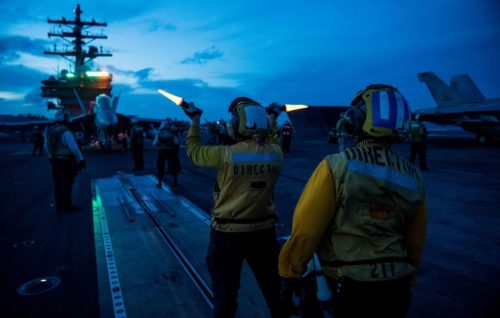
    flight deckCrew members from the aircraft carrier Ronald Reagan on July 6 direct an F/A-18F Super Hornet from Strike Fighter Squadron 102. The Reagan was sailing the Philippine Sea. (MC2 Kenneth Abbate/Navy)

    …cause of mechanical glitch under investigation
    By: Carl Prine

    An F/A-18F Super Hornet strike fighter assigned to the aircraft carrier Ronald Reagan suffered what authorities say was a “mechanical issue” during “routine operations” on Monday over the Philippine Sea, forcing the crew to eject.

    A search and rescue MH-60S Seahawk from the “Golden Falcons” of Helicopter Sea Combat Squadron 12 retrieved the Carrier Air Wing 5 crew, and medical personnel aboard the Reagan pronounced both aviators to be in “good condition,” according to the Japan-based 7th Fleet.

    Officials said that the carrier had resumed normal operations and the crash is under investigation.

    The F/A-18F is the two-seat variant for the Super Hornet.

    Not the E Ticket ride I would want to take. The good news is both were recovered. A large part of that outcome is the emergency radios and other signaling devices that were available to them, and they were trained to use. Its a very big ocean, SAR crews need all the help they can get for a sucessful rescue.
    The rest of the article may be found at The Navy Times
    lima beans

  • One of the greatest Coast Guard rescues to be celebrated

    Coast Guard

    The Navy Times reports that, beginning Aug. 13, the historical association is planning five days of events to commemorate the 100th anniversary of the Mirlo rescue — one of the most daring in Coast Guard history.

    Mirlo, a British tanker loaded with gasoline was torpedoed seven miles off the shore from Chicamacomico, North Carolina. The badly needed fuel was headed for England in support of it’s forces in Europe during WW-1.

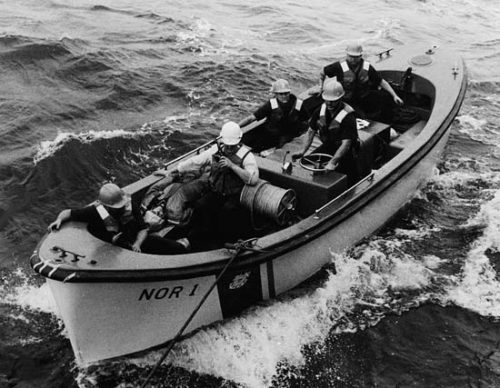
    The six-man U.S. Coast Guard lifesaving crew in Rodanthe led by Capt. John Allen Midgette Jr. pulled the surf boat from its shed to begin what would be a seven-hour rescue.

    “We call that boat the seventh hero,” said Ralph Buxton, a board member with the Chicamacomico Historical Association, pointing to the 26-foot wooden vessel that still sits at the Chicamacomico Life-Saving Station. “It performed perfectly that day.”

    Beginning Aug. 13, the historical association is planning five days of events to commemorate the 100th anniversary of the Mirlo rescue — one of the most daring in Coast Guard history.

    In earlier years, the crew had to row to foundering ships. But on that day in 1918, they turned to a boat with the latest 12-horsepower motor, Buxton said.

    “That made a huge difference,” he said. “The motorized surf boats were state-of-the-art technology then.”

    surf boat

    The crew launched it into 15-foot waves coming one set after another. It took four tries to get past the massive breakers.

    “That was like a semitruck coming at you at 30 miles an hour and another one coming just eight seconds after that,” said Carl Smith, retired Coast Guard officer and a board member of the historical association.

    The crew motored toward the tanker, now split in two from multiple explosions. The water was on fire with burning fuel. Midgette and his men maneuvered through flames as the heat charred the paint on the boat and singed the men’s hair.

    One lifeboat and the captain’s gig were launched with several tanker crew members aboard. A second lifeboat overturned, leaving men hanging on in the burning waters.

    Midgette first brought those men aboard his boat and then helped bring the other boats closer to shore. The surf boat safely unloaded its cargo of survivors, then made three more trips to get the others in the boats beyond the breakers. The crew rescued 42 of 51 aboard the Mirlo.

    Midgette later recorded in the log, “Crew very tired.”

    Always Prepared- Semper Paratus is the official motto of the US Coast Guard. The unofficial motto is, “You have to go out, but you don’t have to come back.” It’s as true today as it was in 1918.

  • Helicopter Sea Combat Squadron 25 rescues a Chinese mariner

    According to Stars & Stripes, a call went out from the Belgian cargo ship Wangaratta that a crewman was desperately ill and needed medical attention.

    [Helicopter Sea Combat Squadron 25 (HSC-25)] crewmembers, including aircraft commander Lt. Samantha Telles-Goins, headed for the ship about 120 miles west of Guam. They then brought the distressed mariner aboard for an airlift evacuation.

    “This was my first lifesaving Medical Evacuation as a member of HSC-25,” Telles-Goins said in the statement. “Seeing all of my training pay off successfully was a very rewarding experience.”

    The sailors took the mariner to Naval Hospital Guam, and he was later transferred to Guam Memorial Hospital for treatment, according to the Navy statement.

    I guess the Navy is a force for good in the world. They should make a commercial.

  • Navy team rescues climbers caught on 8,800-foot ‘Forbidden Peak’

    Navy SAR
    The Navy Times reports that NAS Whidbey Island is in the news again, and this time it doesn’t involve a sky penis. Seems a daring duo attempted to climb the dismally named “Forbidden Peak” and found themselves in trouble. At night. So, they called for help.

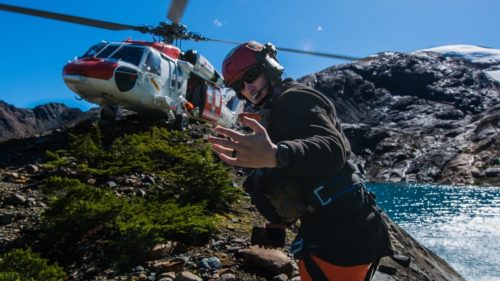
    A search and rescue team from Naval Air Station Whidbey Island successfully rescued two climbers stuck on an 8,800-foot peak in the North Cascades in the dead of night.

    The five-person SAR team received the call late Tuesday evening and arrived at the location just before midnight. The climbers were waiting near a vertical rock face at the base of a snow shoot on a summit called Forbidden Peak.

    The SAR team made several passes over the peak to ensure they could safely airlift the climbers in the challenging altitude and temperature.

    The climbers were transported in a MH-60S helicopter to Harborview Medical Center in Seattle, Washington.

    The Forbidden Peak rescue marked the 11th mission for the NAS Whidbey Island SAR team this year. The unit is authorized to perform civilian search and rescue and medical evacuation operations so long as they do not interfere with primary military duties.

    I have no idea of the skill level and equipage of the pair of unfortunate climbers, but this could be a case of self-inflicted wounds. If indeed found to be irresponsible, they should foot the bill for the ride home.

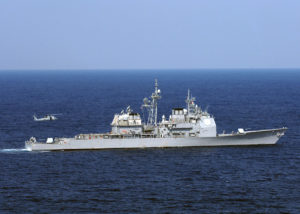
  • USS Hue City saving the world

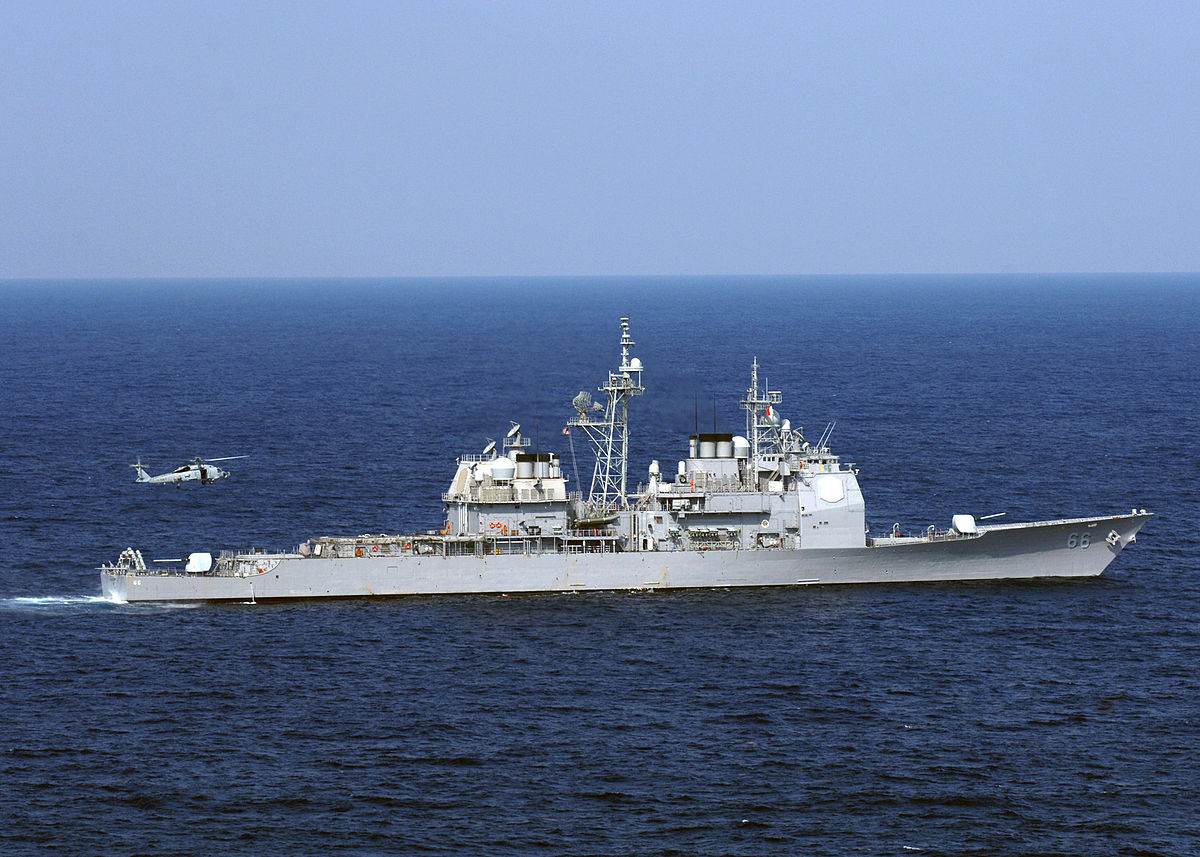
    USS Hue City saving the world

    According to the Navy Times, USS Hue City (CG-66), a Ticonderoga class-guided-missile cruiser, responded to a Coast Guard request for help off the coast of Georgia to rescue the crew of a 42-foot fishing vessel Barbara Lynn;

    It only took the cruiser about 20 minutes to arrive at the vessel’s last reported position.

    “The crew of the USS Hue City…when within approximately 1 mile of the last known position of the distress, reported seeing orange flares, flashing lights and located a raft with three fishermen aboard surrounded by debris,” the Coast Guard release said.

    Hué City’s rescue swimmer, Sonar Technician (Surface) 3rd Class Nathan Andrade, a native of Stockton, California, swam to the life raft to assist as Hue City maneuvered nearby.

    Andrade then harnessed each fisherman, while the crew lifted the survivors on board using litters.

    The rescue took just two hours to complete and there were no reported injuries as a result.

    Thanks to AW1Ed for the link.

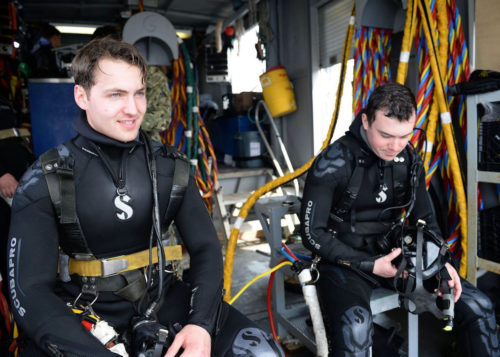
  • Navy Divers Thomas Parhiala and John McLeod, Saving the World

    Navy Divers

    Navy Times is reporting a pair of Navy divers were in the right place at the right time on March 23 when they witnessed a Jeep Cherokee careen off the road near Rockport, Maine, and into Chickawaukie Lake.

    Navy Diver Third Class Thomas Parhiala, of Salem, New Hampshire, and Navy Diver Third Class John McLeod, of Wiscasset, Maine, were on a quick trip to McLeod’s hometown to pick up his motorcycle when they saw the Jeep suddenly swerve off the highway.

    “It was getting dark and it was one of those surreal experiences as we both saw the Cherokee go into the water about 400 yards in front of us,” Parhiala, who was driving, told Navy Times. “We both kind of looked at each other and said ‘did you see that?’”

    Nothing more needed to be said. The men stopped the vehicle, ran down the sharp 20-foot embankment and went headfirst into the water, swimming out to the vehicle.

    “The vehicle was in the water and sinking, but the passenger window was either open or gone and the driver was just floating between the front seat and back seat,” Parhiala said

    While pulling the man from the vehicle, the sailors looked around to make sure there weren’t others who needed help.

    “He started to come to, so I started screaming at him asking if anyone else was in there,” McLeod said. Both recalled the driver, Jonathan Marr, 35, of Thomaston, Maine, saying “no.”

    But to be sure, Parhiala stayed to look around. McLeod, meanwhile, swam Marr to shore.

    The rescue only took a few minutes from start to finish, but by the time they were back on shore, additional motorists had stopped, and some had called for help.

    Neither have met or talked to Mann since the incident, and the divers say they don’t believe they did anything special. Their first priority was taking care of the driver, they said, then getting themselves warm.

    “We just did what had to be done,” Parhiala said. “It wasn’t anything special, we just happened to be the first ones on the scene.”

    Well done, gentlemen, damn well done! This old helo rescue swimmer is proud of you both.