Category: It’s science!

  • CBD is about to revolutionize the veteran community and PTSD, taking America by storm

    reefer
    Melissa Leon

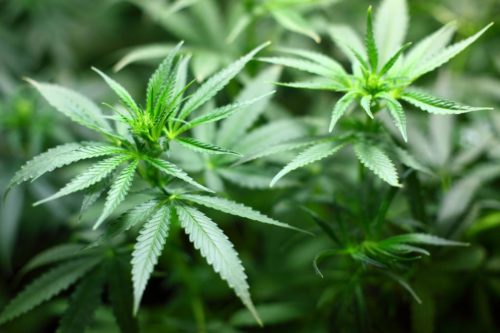
    CBD is the latest product taking the United States by storm, and chances are you’ve probably already heard about it by now.

    The CBD market has grown so much that it has drawn in everyone from U.S. senators to multi-billion-dollar companies – and the veteran community, where it already has a huge following of vets who use the product to help with PTSD.

    Even Coca-Cola, the world’s largest soda company, released a statement earlier this year saying it is closely watching the growth of CBD “as an ingredient in functional wellness beverages around the world,” leading to speculation of a future CBD-infused drink.

    The CBD market is expected to grow to $22 billion by 2022 – an astronomical growth compared to its expected $591 million this year.

    Many people already swear by CBD’s pain-relieving, anxiety-relieving properties, delivered without a “high” or any psychoactive effects on body functions. There are veterans who say it has helped them deal with anxiety and PTSD more than anything they can get prescribed by the VA or a doctor.

    Veterans’ Experience

    We spoke with several veterans who have experience using CBD oil, specifically to treat PTSD.

    U.S. Army veteran Mike Stedman said he was taking anti-depressant and anti-anxiety pills for PTSD after he got out of military in March 2017.

    A friend recommended CBD oil to him, so he tried it.

    “I tried and it said ‘wow, it’s actually really good,’” Stedman, 24, recently told American Military News.

    He has been taking it for about a year and six months, Stedman said, and he orders it online.

    “When I wasn’t taking it, I had really bad anxiety and was constantly on the alert. I’d go out to public places and it was too much,” Stedman explained.

    “I started taking it, and everything calmed down. I’m more tolerable in public places. I love flying again. I used to hate being in planes with other people,” he said.

    “The good thing about CBD is, it doesn’t get you high or anything. You have THC and CBD [from hemp] – there are two compounds. THC gets you high, but CBD is what helps you relax and takes your nerves away, makes you calm,” Stedman explained.

    Plus, you don’t get addicted to CBD oil, he pointed out.

    Any port in a storm. To read the entire artical (and you should) go to American Military News.

  • The Spanish Flu 100 Years and Counting

    This link will take you to a full article (not pay-walled) on the Spanish flu pandemic, which may have originated in China as avian or swine flu, but erupted in a virulent way during and after World War I.

    https://wwwnc.cdc.gov/eid/article/12/1/05-0979_article

    From the article: “The impact of this pandemic was not limited to 1918–1919. All influenza A pandemics since that time, and indeed almost all cases of influenza A worldwide (excepting human infections from avian viruses such as H5N1 and H7N7), have been caused by descendants of the 1918 virus, including “drifted” H1N1 viruses and reassorted H2N2 and H3N2 viruses. The latter are composed of key genes from the 1918 virus, updated by subsequently incorporated avian influenza genes that code for novel surface proteins, making the 1918 virus indeed the “mother” of all pandemics.”

    Prior to World War I, the causes of influenza were unknown. There were no separate strain names for the various types, such as swine flu or bird flu. Anyone could catch a “congestion of the lungs” and subsequently die of pneumonia after recovering from the “congestion”.  There were no vaccines for it or anything else back then.

    The post-war flu pandemic resulted in 50 million to 150 million deaths worldwide, although there was no actual census count. But we had another serious scare in 2006. Remember the bird flu pandemic? The research for the 2006 pandemic had already started at CDC in 1995, with researchers reconstructing the virus’s structure from autopsied materials left over from WWI and the Spanish Flu pandemic.  Shortly after that, the 1997 H5N1 avian influenza A pandemic broke out in Hong Kong. The finding that H1N1’s descendants include swine flu and avian flu RNA resulted in corporations like the one I worked for at the time offering flu and pneumonia vaxes while at work, for a modest fee.

    Here’s a 2006 article from American Family Physician regarding the 1997 outbreak and the 2006 pandemic:  https://www.aafp.org/afp/2006/0901/p783.html

    The UK had a popular TV series titled “Survivors”, which was about a worldwide pandemic caused by a combined RNA flu vaccine which was supposed to stop the flu, but instead it became as aggressive as the bug in Stephen King’s “The Stand”, which was based on the same idea. Both “bugs” were recombinant shifting antigen viruses constantly seeking new hosts for survival.  In both stories, the surviving populations were sparse, and if the viruses shifted into new hosts such as dogs or cats, humans were doomed.

    All I’m saying is, get your flu shot because the swine flu and avian flu viruses mutate and combine at will, always on the search for new hosts so that they can spread.  It’s survival. Oranges and lemons help repel it. Must be something about ascorbic acid, eh? That, and bacon.  And your VA flu shot is free, too.

    Let’s just help the flu bugs not survive, because if there were two major episodes of flu in less than 10 years (1997 and 2006), with air transportation the way it is now, it will happen again.

  • Space crew survives plunge to Earth after Russian rocket fails

    russian launch

    October 11, 2018

    By Shamil Zhumatov

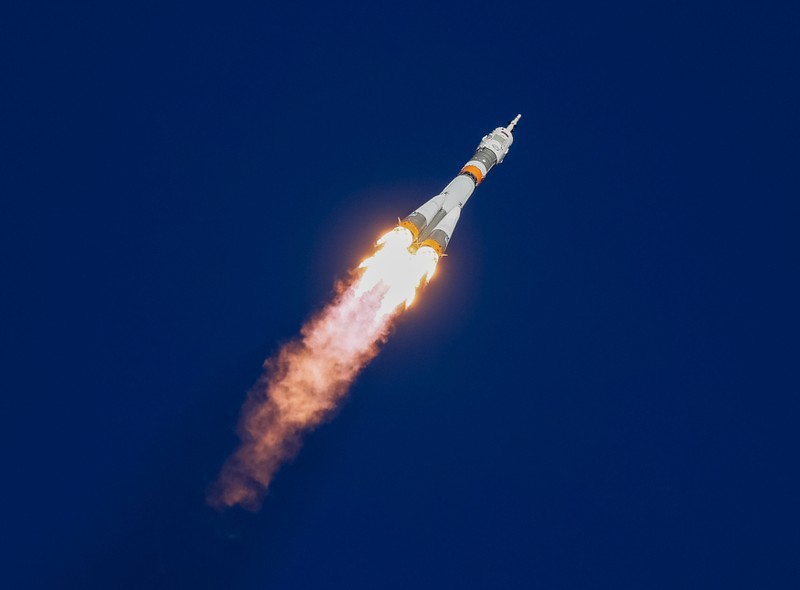
    BAIKONUR COSMODROME, Kazakhstan (Reuters) – The two-man U.S.-Russian crew of a Soyuz spacecraft en route to the International Space Station was forced to make a dramatic emergency landing in Kazakhstan on Thursday when their rocket failed in mid-air.

    U.S. astronaut Nick Hague and Russian cosmonaut Alexei Ovchinin landed safely without harm and rescue crews who raced to locate them on the Kazakh steppe quickly linked up with them, NASA, the U.S. space agency, and Russia’s Roscosmos said.

    Seems the second stage engine failed to ignite upon first stage separation. The Soyuz capsule carrying the two men then separated from the malfunctioning rocket and made what NASA called a “steep ballistic descent” to Earth. The crew experienced loads of up to 7Gs on the descent.

    Russian recovery crews dispatched from Baikonur aboard helicopters reached Ovchinin and Hague by radio before arriving at the landing site and reported both crew members were in good shape. Photographs later were posted by the Russian space agency Roscosmos, showing both men relaxing in Dzhezkazgan, chatting with support personnel.

    It was not immediately known what might have gone wrong with the Soyuz FG booster, but Dmitri Rogozin, director general of Roscosmos, said a State Commission would investigate the mishap, adding in a tweet “the Soyuz MS emergency rescue system worked. The crew is saved.

    The failure is a setback for the Russian space program, and the latest in a string of mishaps. Time for SpaceX to step up to the next level, and provide manned missions to the ISS.

    The entire article may be viewed Here.

  • Magic Mushroom Psychedelics for Your Depression?

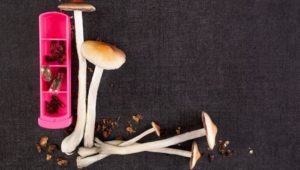
    Have you jabbed someone by insinuating that they hung out in the forest messing around with magic mushrooms? Those mushrooms are contributing to research that could result… Maybe… In another prescription medicine that gets “abused”.

    But, that’s just a possibility in the future.

    The FDA approved the use of the psychedelic part of this magic mushroom in a drug test. They’re following through on the results of previous studies. There’s a possibility that the psychedelic portion of this mushroom may aid with dealing with depression.

    From FOXBusiness:

    For years, many psychedelic scientists have been theorizing that hallucinating on so-called magic mushrooms could possibly reboot the brain and clear out negative thoughts that may contribute to depression.

    And this:

    Compass Pathways says psilocybin therapy, which combines a dose of psilocybin, a psychoactive medicine and the active ingredient in “magic mushrooms,” with psychological support has shown promising signals of efficacy and safety as a treatment for depression in academic studies in both the U.K. and U.S.

    If this test succeeds with all phases, and if the FDA approves the resulting formula, could you imagine the restrictions and controls that would be required? Or, the process of creating the drug could minimize or eliminate the magical effects.

  • NASA’s Parker Solar Probe blasts off on epic journey to ‘touch the Sun’

    solar launch

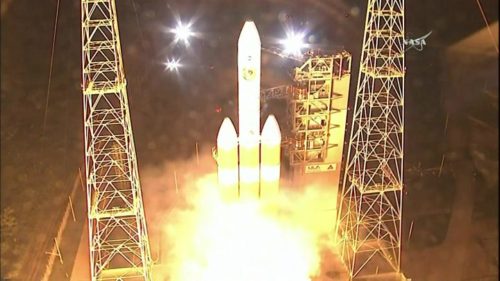
    Fox News repotrs NASA’s Parker Solar Probe has launched from Cape Canaveral Air Force station, home of the of the United States Air Force Space Command’s 45th Space Wing, on its historic mission to the Sun. The probe lit up the night sky as it blasted off at 3:31 a.m. EDT.

    “It was a very quiet launch countdown, it went off like clockwork,” NASA Launch Director Omar Baez said. “Parker Solar Probe has been one of our most challenging missions to date.”

    About four minutes into flight, the Delta IV port and starboard booster engines shut down and separated from the second stage. After second stage engine ignition, the payload fairing also was jettisoned. The second stage main engine cut off and separated.

    Shortly afterward, mission managers confirmed that the spacecraft’s solar arrays successfully deployed. The spacecraft, provided by Northrup Grumman, was operating on its own power.

    Carried by a United Launch Alliance Delta IV Heavy rocket, Parker lifted off from Cape Canaveral’s Space Launch Complex 37. The launch had intially been scheduled for early Saturday, but last-minute technical glitches ate away at the launch window, prompting a 24-hour delay.

    The $1.5 billion mission will take humanity closer to the Sun than ever before. Parker will be the first spacecraft to fly through the Sun’s corona, the outermost part of the star’s atmosphere. It is expected to reach the Sun in November.
    Parker will face “brutal” heat and radiation during an epic journey that will take it seven times closer than the previous closest spacecraft, Helios 2, in 1976

    Parker must withstand heat of nearly 2,500 degrees Fahrenheit to complete its audacious mission. To achieve this, the probe will be protected by a special 4.5-inch-thick carbon-composite shield. Safe inside the spacecraft, however, the probe’s payload will be operating at room temperature.

    Harnessing Venus’ gravity, Parker will complete seven flybys over seven years to gradually bring its orbit closer to the Sun. On its closest approach in 2024, the probe will be traveling at approximately 430,000 mph, setting a new speed record for a manmade object.

    The Sun’s corona, which can be seen during a total solar eclipse, is usually hidden by the bright light of the star’s surface. The probe, named after pioneering solar physicist Dr. Eugene Parker, will provide a wealth of invaluable data.
    Scientists expect to shed new light on the Sun’s potential to disrupt satellites and spacecraft, as well as electronics and communications on Earth.

    Instruments on board Parker will study magnetic fields, plasma and energetic particles as well as imaging solar wind, a flow of ionized gases that stream past the Earth at more than a million miles an hour.

    Eugene Parker first theorized the existence of the solar wind. To honor his contribution to science, the probe is NASA’s first spacecraft to be named after a living person.

    The probe, which was designed and built by the Applied Physics Laboratory at Johns Hopkins University, is also carrying more than 1.1 million names to the Sun. In March, members of the public were invited to be a part in the historic mission by submitting their names to be placed on a memory card that the spacecraft will take into space. In May, NASA confirmed that, over a seven-week period a total of 1,137,202 names were submitted.

    Parker Solar Probe is the fourth mission this year for NASA’s Launch Services Program, which is responsible for launch service acquisition, integration, analysis and launch management for each mission. It’s good to be back.

  • Jason Seaman saving the world

    Jason Seaman saving the world

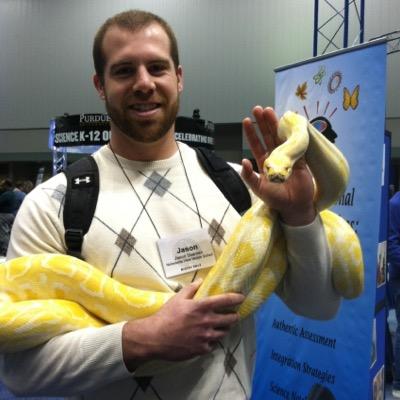
    The Chicago Tribune reports that Jason Seaman, a 29-year-old science teacher disarmed a gunman at Noblesville West Middle School in Noblesville, Ind.;

    Seventh-grader Ethan Stonebreaker told The Associated Press that when the alleged gunman, also a student at the school, entered the classroom and opened fire, “Our science teacher immediately ran at him, swatted a gun out of his hand and tackled him to the ground. If it weren’t for him, more of us would have been injured for sure.”

    Seaman’s mother, Kristi, posted on Facebook on Friday afternoon that her son was shot three times while intervening with the shooting; in the abdomen, hip and forearm but was “doing well” after surgery.

    Seaman released a statement through Indianapolis’ WTHR employee Jim Johnston on Twitter.

    “First of all, thank you to the first responders from Noblesville and Fishers for their immediate action and care. I want to let everyone know that I was injured but am doing great. To all the students, you are all wonderful and I thank you for your support. You are the reason I teach,” the statement read.

  • Astronomers Release Stunning Images of Nearby Galaxies

    hubble

    Newsweek reports astronomers released images from the most wide-ranging ultraviolet light survey of nearby star-forming galaxies to date.

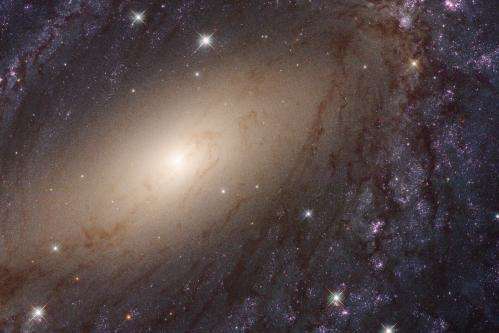
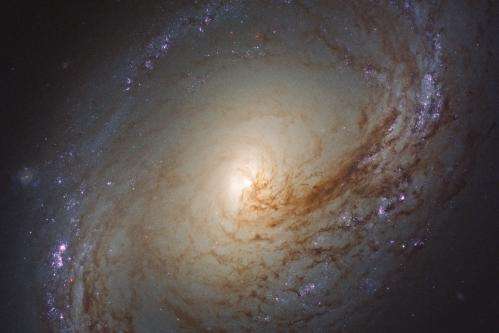
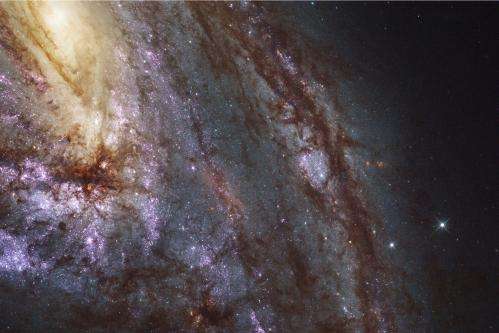
    The project, known as LEGUS (Legacy Extra Galactic UV Survey), researchers used Hubble’s Wide Field Camera 3, and the Advanced Camera to capture both ultraviolet and visible images of 50 neighboring galaxies, which lie within a 60 million-light-year radius of Earth, over the course of a year.

    Galaxy 1

    The astronomers captured images of around 8,000 young star clusters, or groups of stars which are gravitationally bound, and catalogued 39 million individual stars, ranging in age from one billion to several billion years old.

    The scientists hope data collected by the survey will provide new insights into the complexities of star formation and galaxy evolution.

    “There has never before been a star cluster [catalog] and a stellar catalog that included observations in ultraviolet light,” Daniela Calzetti, an astronomer from the University of Massachusetts Amherst, who led the LEGUS survey, said in a statement.

    “Ultraviolet light is a major tracer of the youngest and hottest star populations, which astronomers need to derive the ages of stars and get a complete stellar history. The synergy of the two catalogs combined offers an unprecedented potential for understanding star formation,” she said.

    Galaxy 2

    Even today, with access to unprecedented astronomical data, astronomers still do not understand many aspects of how stars form. The new findings may help to change that, as the data will be made available to researchers who want to investigate how star formation occurred in either one specific galaxy or set of galaxies.

    One of the main issues that the survey may help to address is the connection between star formation and the major structures that make up a galaxy, such as spiral arms.

    Galaxy 3

    Seems NASA is back in the game after cutbacks imposed by the previous administration. Manned asteroid exploration and both robot and manned missions to Mars are in the offing. Good to see you back, NASA.

  • China’s Tiangong-1 space station will crash to Earth within weeks

    Tiangong 1

    Live in northern China, the Middle East, central Italy, northern Spain or the northern states of the US, New Zealand, Tasmania, parts of South America and southern Africa? Then I have some bad news for you.

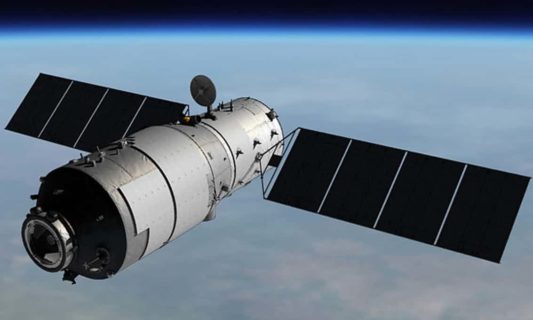
    The Guardian reports China’s first space station is expected to come crashing down to Earth within weeks, but scientists have not been able to predict where the 8.5-tonne module will hit.

    Estimates differ, but the US-funded Aerospace Corporation thinks the Tiangong-1 will re-enter the atmosphere during the first week of April, give or take a week, while the European Space Agency says the module will come down between 24 March and 19 April. They’re just a bit vague on the “where” part.

    “If this should happen, any surviving debris would fall within a region that is a few hundred kilometres in size,” said Aerospace, a research organization that advises government and private enterprise on space flight.

    “When considering the worst-case location … the probability that a specific person (ie, you) will be struck by Tiangong-1 debris is about one million times smaller than the odds of winning the Powerball jackpot.

    “In the history of spaceflight no known person has ever been harmed by reentering space debris. Only one person has ever been recorded as being hit by a piece of space debris and, fortunately, she was not injured.”

    “I would guess that a few pieces will survive re-entry. But we will only know where they are going to land after the fact.”

    Aerospace Corperation warned that the space station might be carrying a highly toxic and corrosive fuel called hydrazine on board, so there’s that. I certainly feel better, now. Thank you Chinese rocket scientists!