Category: Guns

  • Tully: Bury the Confederate flag, but what about guns?

    Tully: Bury the Confederate flag, but what about guns?

    A fellow by the name of Matthew Tully writes for the IndyStar and he complains therein that, even though hes fairly jubilant that the Confederate flag has received the attention that it has in recent days, but he’s rightfully more worried about guns. Probably because that ritarded fellow in South Carolina didn’t kill anyone with a flag.

    What was largely missing from the session, of course, was a serious debate about the violence that has hurt so many communities and neighborhoods across Indiana. It’s a debate that even many politicians who support gun control seem to avoid out of resignation, or out of fear about the consequences of even daring to raise the topic.

    Here’s another admission: I honestly don’t know what laws or policies would truly make cities like Indianapolis less prone to gun violence. I understand the arguments made by gun supporters — that cities such as Chicago and Washington, D.C., have been rocked for years by gun violence despite local laws aimed at controlling guns. It’s hard to imagine a scenario in which the culture of gun violence that is so prevalent in so many places changes significantly because of a law or two.

    I get it. There’s not an easy solution. And, yes, the right to bear arms is here to stay, and public support for that makes finding workable solution difficult. This is tough.

    But can’t we at least talk about it?

    Yes, please, let us have a discussion about gun control much like the discussion of the Confederate flag in recent days. The “discussion” that Tully and the folks on the left wants to have is nothing more than them telling the rest of us how we should feel about guns and if we don’t then we’re developmentally disabled, or racist or sexist or homophobic or some other manufactured slur that would make them feel bad about themselves if the term was used to describe them.

    Tully admits that he has no idea what new regulations would have prevented the shooting in Charleston, but he thinks that we should do something. Something rational, like taking down the Confederate flag from the South Carolina statehouse grounds.

    Tully blames the NRA for the lack of discussion on gun control – the NRA represents millions of gun owners. Mostly, our only voice. But, as far as a discussion that Tully wants, that is not forthcoming from the Left – they want to dictate to gun owners what we should do to surrender our rights to their feelings. I’ve been here for years hoping to have a discussion about guns – something that would actually reduce gun violence, but the only thing I get are stank-ass hippies who try to gun-shame me and my readers.

    Yeah. Let’s have a discussion about gun control, how to actually reduce needless gun violence in the country. Someone tell me what new regulations would do that – something that wouldn’t only affect legal gun owners. Something that would keep guns out of the hands of criminals. But if it turns into a discussion similar to the discussion about the Confederate flag, forget it.

  • Because we’re the problem

    Because we’re the problem

    First Coast News reports that an FBI agent warned the Jacksonville, Florida Sheriff Department that someone broke into his car and stole his handgun, his rifle, his body armor along with his gear bag.

    The police report says there were no signs of forced entry on the vehicle but the passenger side door was left open.

    The incident is one of six that the Jacksonville Sheriff’s Office is investigating from over the weekend where weapons were stolen from cars.

    This could probably be solved if we had tougher background checks for those of us who don’t have our weapons and equipment stolen from our LOCKED cars. In fact, I probably need an extra layer of background checks because I don’t leave any of my weapons unattended in full view in my car.

    The guns probably broke free from the car and they’re wrapped in a shirt somewhere just waiting for a felon and/or illegal alien to pick them up so the guns can go on a rampage.

  • Susan Gonzalez and the case for gun ownership

    Susan Gonzalez and the case for gun ownership

    First Coast News tells the story of Susan Gonzalez and her experience 18 years ago when she went to open the door when she thought her son was trying to get in – instead the door was ripped from it’s hinges and two men forced their way in to the house. While she fled her attackers, Gonzalez was shot. While she lay on the floor bleeding, her husband was shot while he struggled with the attackers. Susan recognized an opportunity to get her husband’s gun and she brought it bear on the situation and shot one of the attackers in the back. They both ran outside, but one didn’t get far before he collapsed from his wounds;

    “A lot of people are against guns because they say guns kill, ” said Gonzalez. “Guns saved my life and I was against guns. I now carry.”

    She has a concealed weapons permit and said she practices on a regular basis.

    “What happened to us, I would never in a million years would have dreamed it would happen to us,’ she said.

    […]

    “I can only hope that another woman or even man will take a look and realize there’s a reason to have guns for safety,” she said.

    She said many have criticized her for shooting the suspect, but she said what she did was to save her family.

    “Anyone that is a victim never expects to be a victim,” said Gonzalez. “You should be prepared.”

    Gonzalez’ story airs tomorrow night on Discovery Channel’s “Over My Dead Body”.

    In my searches for our “Feel Good Stories”, I regularly read articles about folks who didn’t have a gun when they needed one – usually ending badly for the innocent victims who did nothing to invite an attack on themselves or their families or their property, other than just living their lives in relative comfort.

    To see what I mean, Google “Home Invasion” sometime in the news category of searches. Scores of incidents across the country every day. All the police can do is investigate and punish the perpetrators which is very little help to the victims in many cases, if the criminals get caught at all.

  • Poll: Americans think that tougher laws won’t make us safer

    Poll: Americans think that tougher laws won’t make us safer

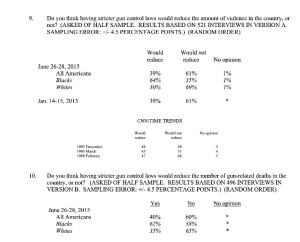
    The Washington Times reports that a CNN poll taken this past weekend among 1,000 Americans, 61% don’t think that tougher gun laws will reduce violence;

    Six in 10 Americans say having stricter gun control laws would not reduce the amount of violence or the number of gun-related deaths in the country, a new CNN/ORC poll said.

    Sixty-one percent of respondents said having stricter controls would not reduce the amount of violence in the country, while 39 percent said having stricter controls would do so.

    And 60 percent of respondents said having stricter laws would not reduce the number of gun-related deaths in the country, compared to 40 percent who said they would.

    So this is from the actual poll results.

    Will stricter gun control reduce violence

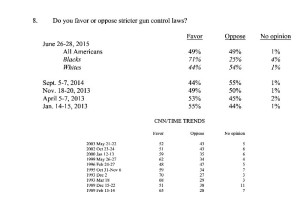
    But, at the same time, we’re about evenly split on whether we need more government control over our access to firearms.

    Doyou favor stricter gun control

    Apparently, the race of the responders has a lot to do with opinions on these questions.

  • Germans discuss personal defense

    While I was looking for today’s feel good story, I found this one from Hamburg, Germany about an elderly man who fended off two folks who tried to force their way into his home. He shot one of them and that feller died nearby. It’s much less common in Germany than it is in the United States, apparently. Earlier this month, another occurred in Hannover and I guess Germans lost their collective shit over the death;

    This user fears conditions like in the US: “Homeowner shoots burglar! Hannover is Germany’s new America.”

    Yeah, no. The article continues;

    Such cases of armed self-defense are extremely rare in Germany, says Thomas Bliesner, President of the Crime Research Institute Lower Saxony (KFN). “And they are not acceptable, it’s the responsibility of the state to provide safety and order, and not for citizens to take up arms,” he told DW.

    But sometimes homeowners lose control, said Bliesner, a psychologist. “People feel highly threatened and alarmed if someone intrudes into their private home, onto their property.”

    In extensive interviews with victims of burglaries, the KFN found that people are shocked and stressed out by the breach of their privacy, and feel “massively threatened.” Last year, the number of burglaries across Germany rose by 1.8 percent to more than 152,000 cases.

    “And if strangers enter your territory uninvited, people can be extremely aggressive and prone to violence,” Bliesner says.

    I’m actually surprised that has to be explained to readers of Deutsche Welle. The article explains that Germans must have a real good reason to own a gun in the first place, and then it must be locked in a safe. It also says that only 15% of burglaries are solved in Germany.

    In the case of the elderly gentleman, in the first story, police have released him, but the fellow in Hannover is still being investigated.

  • More Thoughts on Guns and Murders

    A comment by one of our regulars (VOV) the other day – along with a video posted by another reader in a different discussion – got me thinking.  And it led me to look at a few numbers.

    I know that’s a huge surprise.  Try to get over the shock.  (smile)

    What I ran across wasn’t really surprising to me, except in one area. But it might be of general interest, so I decided to post what I found and my conclusions.  They concern guns, murder, and the distribution of the latter.

    In 2012, the USA had a murder rate (which includes non-negligent homicides) of 4.7 per 100,000 population. That year, the US population was somewhat less than 314 million (313,873,685); there were somewhat under 15,000 murders (14,866).

    What I found interesting was where those murders occurred. As most of our regular readers might guess, it seems a disproportionate number of them occurred in cities.

    1.  All Cities over 250,000.

    I was able to find data on the murder rate in all US cities over 250,000.   I then did a bit of number crunching (Excel is good for that) to determine the number of murders in those cities. Roundoff error may have resulted in a minor error, since I used rounding to get integer totals – but I don’t think it did.  If it did, I doubt any error is more than by 1 or 2.  Here’s what I came up with:

    US Cities over 250,000

    Rest of USA

    Total Population 55,501,250 Total Population 258,372,435
    Total Murders 5,805 Total Murders 9,061
    Murder Rate 10.5 Murder Rate 3.5

    Yep – for all US cities over 250,000 in population, the aggregate murder rate is roughly 3x that of the rest of the country. Although US cities with population greater than 250,000 have less than 18% of the total US population, they account for 39% of US homicides.

    If you think that’s an indication that murder is much more of a problem in cities than in the rest of America – that’s correct. But stay tuned; there’s a bit of a plot twist coming.

    2.  All US Cities over 500,000.

    I decided to look next at cities over 500k in population (Excel makes sorting REALLY easy). There are 33 such US cities.

    The results were a mildly surprising.

    US Cities over 500,000

    Rest of USA

    Total Population 41,237,116 Total Population 272,636,569
    Total Murders 4,114 Total Murders 10,752
    Murder Rate 10.0 Murder Rate 3.9

    Interesting. Though still disproportionate, considering only cities with a population over 500,000 actually narrowed the “gap” a bit. While some of that is due to adding the cities between 250,000 and 500,000 in population (and their murders) back into the “rest of USA” category, having any drop-off at all still seems . . . well, a bit odd.

    3.  Well, How about 600,000+?

    Here ya go. Not much change, actually.  Curious.

    US Cities over 600,000

    Rest of USA

    Total Population 37,852,847 Total Population 276,020,838
    Total Murders 3,783 Total Murders 11,0833
    Murder Rate 10.0 Murder Rate 4.0

    4.  The “Top 10” – US Cities over 1,000,000

    So, I decided to look at only the “biggies” – e.g., the 10 largest US Cities. As it turns out, there are also precisely the US cities that top 1,000,000 in population. So, I took a look.  Here’s what I found.

    US Cities over 1,000,000 (“Top 10”)

    Rest of USA

    Total Population 25,494,200 Total Population 288,379,485
    Total Murders 2.,261 Total Murders 12,605
    Murder Rate 8.9 Murder Rate 4.4

    Interesting – and, frankly, a bit surprising.

    The numbers continue to converge, which along with the previous data indicates the problem doesn’t always get worse as cities get larger.  One would guess it should, but that doesn’t seem to be the case.

    5.  The “Worst Offenders”.

    So, let’s look instead at the “worst of the worst” and see what we can deduce. Sorting on murder rate and taking the “worst offenders”, here’s the list – and the numbers:

    The “Worst Offenders”

    State City Population Murder Rate Number of Murders
    Michigan Detroit 707,096 54.6 386
    Louisiana New Orleans 362,874 53.2 193
    Missouri St. Louis 318,667 35.5 113
    Maryland Baltimore 625,474 34.9 218
    New Jersey Newark 278,906 34.4 96
    California Oakland 399,487 31.8 127
    California Stockton 299,105 23.7 71
    Missouri Kansas City 464,073 22.6 105
    Pennsylvania Philadelphia 1,538,957 21.5 331
    Ohio Cleveland 393,781 21.3 84
    Tennessee Memphis 657,436 20.2 133
    Georgia Atlanta 437,041 19 83
    Illinois Chicago 2,708,382 18.5 501
    New York Buffalo 262,434 18.3 48
    Florida Miami 414,327 16.7 69
    Ohio Cincinnati 296,204 15.5 46
    Wisconsin Milwaukee 599,395 15.2 91
    Oklahoma Oklahoma City 595,607 14.3 85
    DC Washington 632,323 13.9 88
    Ohio Toledo 286,020 13.6 39
    Pennsylvania Pittsburgh 312,112 13.1 41

    Interesting. No apparent real rhyme or reason here. Some are large cities (Chicago, Philly); others are not. NYC and Boston didn’t make the list – but neither did Dallas, Houston, or LA. The list almost seems to have been culled at random from the list of US cities with population over 250,000.

    But whatever the underlying reasons these are the 21 US cities with the worst murder rates in the USA.  In fact, it’s all of the US cities with a population over 250,000 having a murder rate over 13.

    In the aggregate, those 21 cities have only 4% of the US population.  But they account for almost 20% of US murders – and their aggregate murder rate is just a hair less than 5x the national average.

    Significantly, though – those “gun crazy” states with really low ratings from the “Brady Bunch” don’t exactly seem overrepresented on the list.  None of the states with a Brady score of zero (AK, AZ, and UT) have a city on the list – and yes, each has a city large enough to be listed there.  In fact, if you do a quick count you’ll find that a handful of “states” – specifically, CA, PA, MD, NJ, IL, NY, MI, and the District of Columbia – account for almost half (10 of 21) of the cities listed.

    The average Brady Score of those eight “states” in 2011 was 51.375 (the “Brady Bunch” didn’t assign DC a Brady Score in 2011, but for computation here I’m arbitrarily assigning DC a Brady Score equal to that of NY). That average would meet the criteria for a “3-star” rating from the “Brady Bunch” with respect to the strength of their gun control laws.  Indeed, all of these states received at least 2 stars from the “Brady Bunch” in 2011.

    In fact, of the 11 states with a “2-star” or higher rating from the “Brady Bunch”, nearly 2/3 of them (7 of 11) have a city on the “worst offenders” list above.  I’m guessing it would be an even 2/3 (8 of 12) if the “Brady Bunch” had published a Brady Score for DC.

    In contrast, “gun crazy” TX – which has no cities on the list above – had a 2011 Brady Score of 4 and a 0 star rating from the “Brady Bunch”.  Plus, the US city with the lowest murder rate – Plano, with a 2012 murder rate of 0.4  (not a misprint; that really is intended to read “zero point four”) – is also in Texas.  Go figure.

    6.  Comments.

    A few caveats and comments before I get to my conclusions.

    The “cities” above are exactly that – legal and political entities.  They aren’t their entire metro area in many cases; they’re often ringed with smaller cities and towns (the famed “Suburbia”).  However, they do generally include the old, urban “inner city” areas for the  region in question.

    As I noted above, the number of murders for each city is calculated from the city’s population and its murder rate, then rounded to the nearest integer (best I can tell, it’s kinda hard to kill nine-tenths of a person).  So it’s possible that there may be a round off error in there somewhere – I don’t think there is, but since it’s possible I’ll mention that fact here.

    Data for 2012 national-level statistics was obtained a site called “disastercenter.com“.  They in turn give the source of their data as being FBI UCI statistics.  I didn’t verify that, but I did spot check their 2012 US murder rate against another source and found they matched – so I don’t think they’re “blowing smoke”.

    Data source for murder rate and population for 2012 for US cities of population 250,000 and over was Wikipedia.  Wikipedia data also appears to be taken from FBI UCI crime statistics.

    A personally retained softcopy of the “Brady Bunch” Brady Score Scorecard for 2011 was used to determined 2011 state Brady Scores.

    Microsoft Excel was used to “run the numbers”.

    . . .

    My conclusions?  Threefold.

    First:  gun murder does seem to be more a city problem than anything else.  But it’s not equally a problem in all cities – whether your talking big cities or smaller ones.   Some mid-size and large cities have a very good handle on the problem (San Diego and El Paso to name two), and even NYC and LA are doing a pretty good job; ditto for many other small- and mid-sized cities.  Others have issues, but aren’t sucking wind like the cities on the last list above.

    But some cities of all sizes have a major problem – including cities next door to other cities doing a good job, and with similar gun laws (e.g., Newark, NJ, and NYC).  Local conditions, policies, and quirks seem much more important than a city’s size.

    Second:  My original opinion about the Brady Score hasn’t changed.  The acronym for “Brady Score” is “BS” – and that’s perfectly descriptive.  Legal restrictions on firearms ownership by law-abiding citizens don’t seem to do squat to prevent murders.

    Chicago and DC legally banned most firearms until recently, and it’s still virtually impossible for a citizen without connections to get a handgun carry permit (or even legally purchase a gun) in either location.  But both are among the cities with murder rates grossly higher than the US average.  And of the US cities with the 10 worst (highest) murder rates, 6 of them are from states that the “Brady Bunch” awarded 2 or more stars in 2011 for having Brady Scores in the top 22% of states:  CA (2 – Oakland, Stockton), NJ (Newark), MI (Detroit), MD (Baltimore), and PA (Philadelphia).

    Third:   Little Marty-boi O’Malley should shut his dissembling, hypocritical mouth regarding guns and gun control.  He obviously doesn’t know sh!t from Shinola when it comes to preventing gun violence.

    Why do I say that?   One word:  Baltimore.  Look above for the details.
  • Army plans to replace M9

    Army plans to replace M9

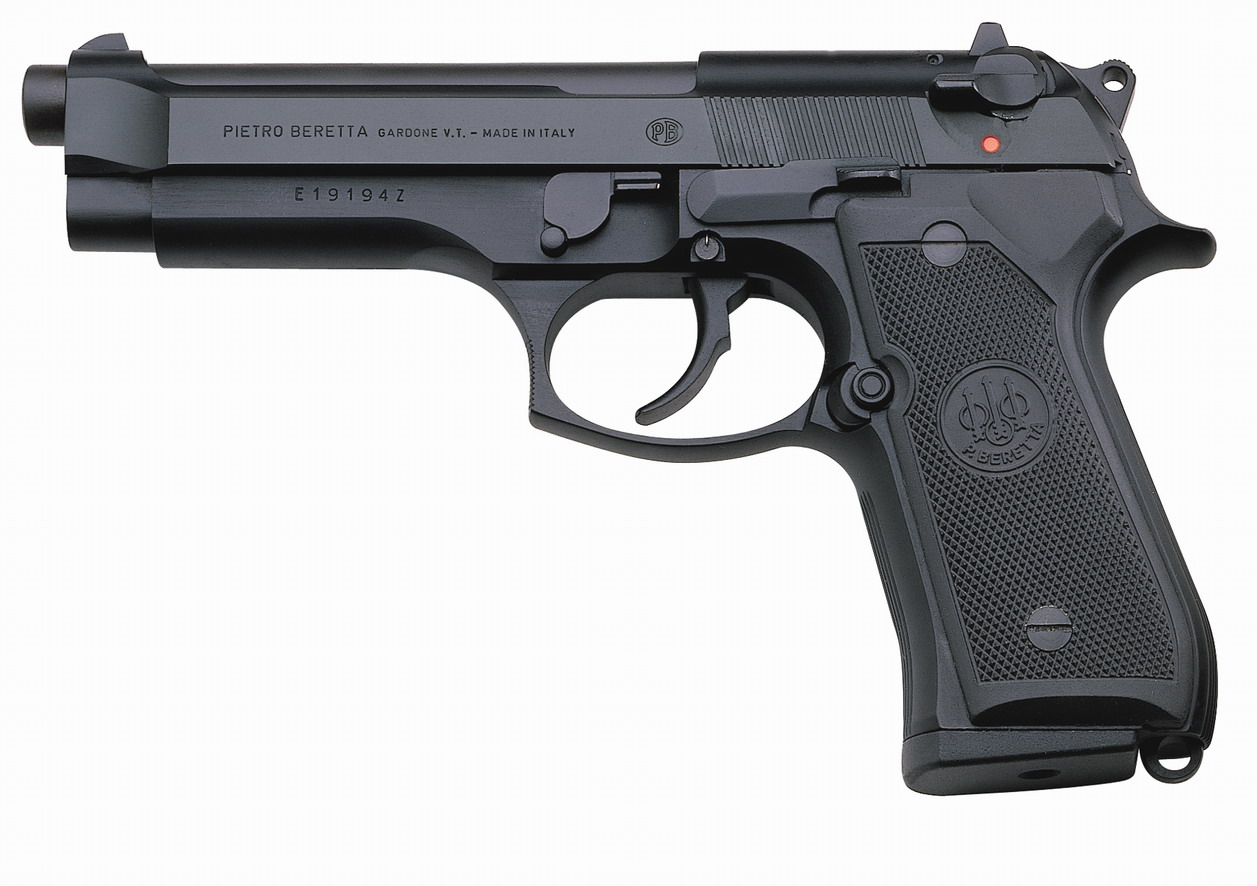
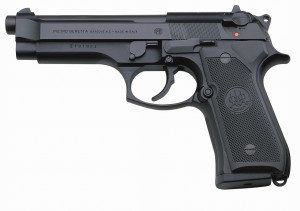
    beretta M9

    Someone sent a link to Guns & Ammo which reports that the Army is making moves to replace the M9 Beretta service handgun currently in use since it’s introduction in the mid-80s.

    On June 17, the Army released a new draft solicitation on the Federal Business Opportunities website that laid out the service’s plans to replace the M9 with the Modular Handgun System (MHS) by 2018. Army officials intend to begin the competition next year and eventually award a contract to a single gun manufacturer for 280,000 new pistols.

    The new draft solicitation explains the Army’s latest proposed competition schedule, procedures and requirements for the XM17 Modular Handgun System (MHS). These have all been modified following industry feedback and the decision of the Department of Defense (DOD) to allow the use of special purpose ammunition.

    The solicitation offer isn’t specific as to what the Army wants in the end;

    The MHS procurement is intended to be an open caliber competition, which means the choice of caliber is left to the discretion of the Offeror. Offerors are permitted to submit up to two (2) proposals configured to the specific caliber it chooses for evaluation. If an Offeror chooses to submit two (2) proposals, their submissions must all be chambered in a different cartridge of the Offeror’s choosing. In addition, each proposal must be submitted independently from each other.

    Each proposal will consist of either a two (2) handgun solution (one full size and one compact), or one (1) handgun solution that meets requirements for both a full size and compact weapon, plus the following ammunition: ball, special purpose, dummy drilled inert (DDI) and blank, as well as, accessories as listed in Section L.4.1.5.2.3. Offerors will have 150 days from the issue date of this RFP to submit proposal requirements as described in section L of the RFP.

    The Army hopes to make a selection of the final product by 2017;

    “When all is said and done,” Armstrong said, “the XM17 will provide Warfighters with greater accuracy, target acquisition, ergonomic design. The new handgun will also be more reliable, durable and easier to maintain.”

    Each vendor, or manufacturer, will be able to submit two separate handgun proposals with different calibers for testing.

    I suppose Colt will driving hard for the hoop since they filed for bankruptcy earlier this week. The day they filed, they sent me an email advertising for some “Colt” T-shirts, I hope that’s not their plan to get out of their troubles. Maybe if they dropped the MSRP for their Marine Corps 1911 a few thousand bucks, that would help, more than becoming a t-shirt vendor.

  • Obama: “We don’t have all of the facts, but….”

    Obama: “We don’t have all of the facts, but….”

    Wednesday night, Dylann Roof spent an hour among church goers in Charleston and then pulled out the gun that his father gave him for his birthday recently, and murdered nine people. So, yesterday, the President blamed the instrument that he used to commit that horrendous crime and he blamed legal gun owners. From the National Journal;

    “I’ve had to make statements like this too many times,” Obama said. “We don’t have all of the facts, but we do know that once again innocent people were killed in part because someone who wanted to inflict harm had no trouble getting their hands on a gun.”

    The president continued, suggesting that the country has to act to prevent gun violence. “Now is the time for mourning and for healing, but let’s be clear at some point, we as a country, we have to reckon with the fact that this mass violence does not happen in other advanced countries,” Obama said. “It doesn’t happen in other places with this kind of frequency. It is in our power to do something about it.”

    Really? We have the power to keep criminals from getting gifts from their fathers – that’s already unlawful. The implication in the president’s speech is that somehow tougher background checks would have prevented this terrible crime. Tougher background checks wouldn’t have prevented Adam Lanza from killing his mother to steal her guns – it did however, stop Lanza from buying a gun himself, but criminals commit crimes.

    It is already illegal for family members to arm each other when they can’t legally own guns otherwise. The father bears some responsibility in this crime if it turns out that he gave a gun to his drug-addled son. According to the media, Roof had been arrested for drug possession in recent months.

    Asked [by police] if he had any contraband, Mr. Roof said no, according to the report, but the officer searched him and found Suboxone, a prescription drug used to treat opiate addiction and frequently sold in illegal street transactions. Mr. Roof admitted that he did not have a prescription for the drug, the report said, and he was arrested and charged with felony drug possession. The case is pending.

    In April, Mr. Roof was charged with trespassing at the same mall. The police report said he had been barred from the mall for a year after the drug arrest. Mr. Roof was convicted on that charge, a misdemeanor.

    Some reports are that his parents gave him money to buy a gun, if that turns out to be true, that might indicate that the background checks didn’t work;

    A friend of the suspect accused of shooting and killing nine people inside a black church in Charleston said he told him a few weeks ago he had “a plan.”

    Joseph Meek Jr. said he was drinking vodka with 21-year-old Dylann Roof when Roof made the remark while he was railing against blacks.

    Roof didn’t elaborate on the plan, but Meek said he was worried. He said he knew his friend had a “Glock” — a .45 caliber pistol — in the trunk of his car.

    Meek said Roof told him he bought the gun with money he got from his parents for his birthday.

    With the way Roof was carrying on, Meek said he took the gun from the trunk of Roof’s car and hid it in his house, just in case.

    “I didn’t think he would do anything,” he said.

    But the next day, when Roof was sober, he gave it back.

    If current background checks didn’t work in this case, that doesn’t mean that legal gun owners need to pay a price for the government’s own failings in this regard. But, isn’t that always the way?