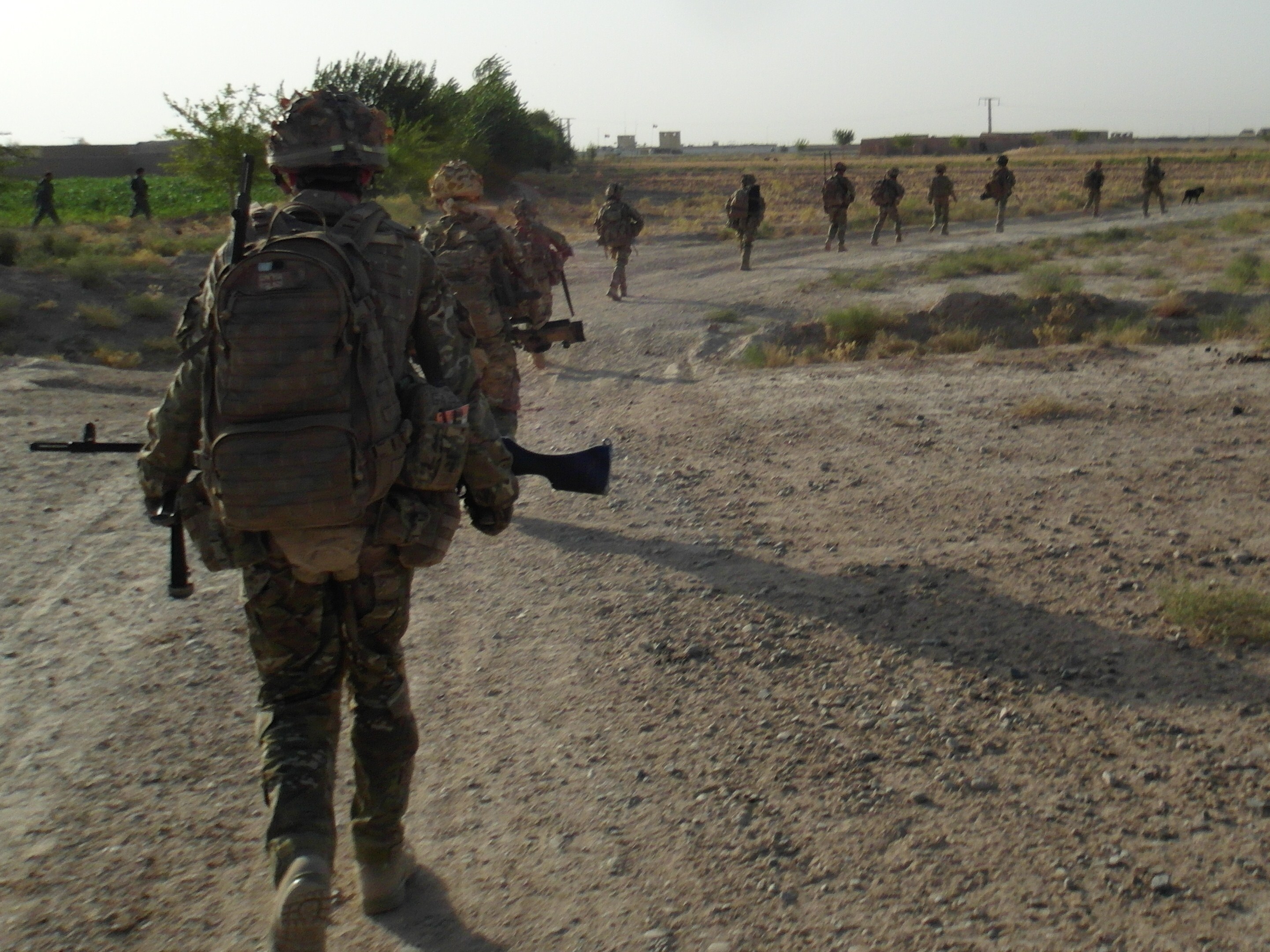
(Photo courtesy of SFC Holland)
The Washington Post has an article from Rajiv Chandrasekaran entitled “Remember the war in Afghanistan? Obama and Romney don’t seem to” about how both major candidates in the presidential campaign are basically ignoring the continuing war in Afghanistan. I kind of agree with him.
Chandrasekaran quotes Romney in his most scathing attack on the Obama Administration’s failed policy in Afghanistan;
Romney’s principal line of attack is that the president rejected a recommendation from the former top commander in Afghanistan, Gen. David H. Petraeus, to wait until the end of this year to bring home all the surge troops. Instead, Obama ordered them out of Afghanistan by the end of September.
“I have been critical of the president’s decision to withdraw the surge troops during the fighting season, against the advice of the commanders on the ground,” Romney told the Veterans of Foreign Wars last month. “President Obama would have you believe that anyone who disagrees with his decisions is arguing for endless war. But the route to more war — and to potential attacks here at home — is a politically timed retreat.”
While Obama is more low key about the war strategy;
In remarks to supporters and donors, he often cites the war, but usually in just one sentence that emphasizes how he is seeking to scale back U.S. involvement. (His two favored versions of that sentence: “We’re transitioning out of Afghanistan” and “We’re winding down the war in Afghanistan.”)
He rarely tries to make the case that his troop surge succeeded, that the more than 50,000 troops he sent over in 2009 and 2010 have pummeled the Taliban and increased the Afghan government’s chances of holding onto large swaths of the country.
While Chandrasekaran is correct that the surge worked, he avoids the facts that make Obama gun shy about mentioning the war. Yes, his surge worked, but not any large scale that would have influenced a successful conclusion of the war. It was merely a stopgap measure to appear as if he was a strong leader who could send troops to war.
Obama doesn’t want to remind his liberal base that he more than doubled the number of U.S. troops in Afghanistan. His decision in late 2009to send 30,000 more military personnel — made over the objections of Vice President Biden and several of his most senior White House advisers — was deeply unpopular with Democrats, even though he pledged to begin reducing forces in 2011.
His advisers even admit that they advised against pulling the trigger on bin Laden, his only useful and lasting decision. Yes, he’s responsible for his adviser’s advice…he hired them for their supposed expertise, and obviously they give him bad advice.
Much noise has been made about both candidates in regard to the number of veterans they attract to their side. As this last war proved, veterans are as interested in the application of military force as the soldiers who are sent to fight the wars. If either candidate wants veterans’ votes, they have to prove to us that they think they deserve it and make pronouncements about how they will apply the military to their goals during their upcoming term.
Yes, I understand that the economy is big issue, however the economy depends on the president’s willingness to protect our economic interests. Since being the commander-in-chief is the only job that the president can do mostly without Congress, the candidates need to talk about the war and convince veterans that he deserves our vote.