Author: Hondo

  • Three From Bob

    Had connectivity and a few minutes time, and today’s Sunday. But DPAA doesn’t seem to have accounted for anyone new during the past few days – so you’re getting this “walkabout” instead.

    Read on at your own risk. At least this time it’s short. (smile)

    . . .

    During the 1970s, many in the media anointed some guy named Springsteen from Ashbury Park, NJ, as next the “great American singer” and the “voice of his generation”. Seriously.

    Now, Mr. Springsteen is indeed talented.  And for those unfortunate enough to be from the Northeast, maybe he does speak for them.  Maybe.

    But regarding speaking for the rest of America . . . eh, no.  In that case IMO the media had their head firmly inserted up their 4th point of contact (as usual) and were also showing their East Coast bias.

    Because for the rest of America, IMO a different singer was the voice of that time and generation.  His work – not Springsteen’s – more closely captured the feelings and concerns of America during the 1970s and 1980s.

    That man was named Bob Seger.

    Here are three of the man’s best. All deal with universal subjects. And I’m guessing the last two will resonate particularly strongly with anyone who’s served in the military.

    Enjoy.


    Twenty years now, where’d they go . . .

  • And The Road Goes On Forever . . .

    Just thought I’d check in again from the road.

    No, the road doesn’t really go on forever.  But lately it certainly seems that way.

    But the scenery does sometimes compensate.


    Y’all take care.

  • Another Returns

    DPAA has identified and accounted for the following formerly-missing US airman.

    From World War II

    • 2nd Lt. John D. Mumford, 318th Fighter Squadron, 325th Fighter Group, 15th Air Force, US Army Air Forces, US Army, was lost in the Ukraine on 6 June 1944. He was accounted for on 17 January 2017.

    Welcome back, elder brother-in-arms. Our apologies that your return took so long.

    You’re home now. Rest in peace.

    . . .

    Over 73,000 US personnel remain unaccounted for from World War II; over 7,800 US personnel remain unaccounted for from the Korean War; and over 1,600 remain unaccounted for in Southeast Asia (SEA). Comparison of DNA from recovered remains against DNA from some (but not all) blood relatives can assist in making a positive ID for unidentified remains that have already been recovered, or which may be recovered in the future.

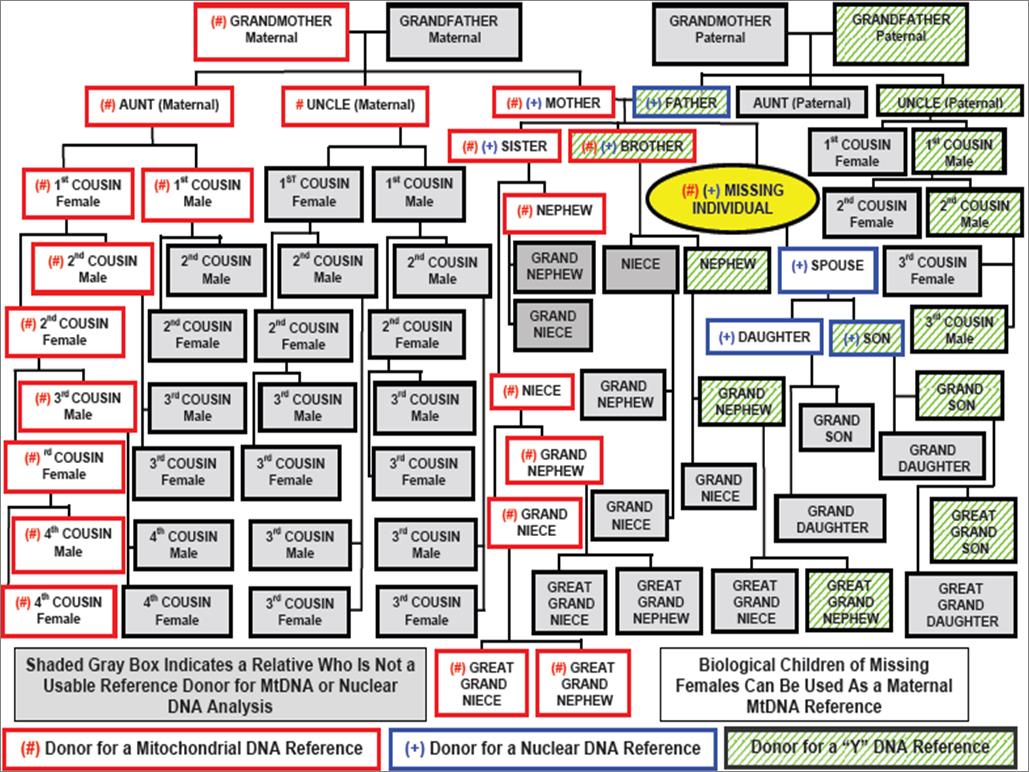
    On their web site’s “Contact Us” page, DPAA now has FAQs. The answer to one of those FAQs describes who can and cannot submit DNA samples useful in identifying recovered remains. The chart giving the answer can be viewed here. The text associated with the chart is short and can be viewed in DPAA’s FAQs.

    If your family lost someone in one of these conflicts and you qualify to submit a DNA sample, please arrange to submit one. By doing that you just might help identify the remains of a US service member who’s been repatriated but not yet been identified – as well as a relative of yours, however distant. Or you may help to identify remains to be recovered in the future.

    Everybody deserves a proper burial. That’s especially true for those who gave their all while serving this nation.

  • Two From Mr. Z

    Here are two by the late Warren Zevon. They somehow seemed apropos for a cold winter Sunday morning.

    The songs roughly “bookend” Zevon’s popular music career. The first is from his second album (the first one to see commercial success) in 1976. The second is from his final album, released roughly 2 weeks before his death from cancer in 2003.

    Both concern situations we’ve all likely experienced, either directly or through observation of someone close. If you’ve recently lost someone close, you might want to give the second tune a pass. Ditto the first if you’re currently having issues with someone you care about.

    Should you choose to listen to either or both, you might want to have a tissue handy.

    Zevon was known for being one of popular music’s out-of-control “wild men” during the 1970s, the era of “sex & drugs & rock & roll”. Much of his work then (and later) concerned harsh – and sometimes, dark – subjects. But he was also an incredibly astute chronicler of the human condition.

    And he was talented as hell.

    Rest in peace, Mr. Z. Gone far too soon.

  • No Rewind Button

    Just thought I’d do a quick check-in. Many thanks to all (DH, Ex-PH2, PT, and TSO) for holding down the fort while Jonn was under the weather and I wasn’t available to help.

    I heard this while on the road for the first time in a while. It somehow seems apropos. It’s a lovely song – even if the accompanying video’s imagery is IMO a bit overdone and heavy-handed.

    IMO, it’s also damn good advice. Sometimes each of us forgets three things:

    (1) you can’t change a damn thing about the past;

    (2) many things happen in life that are beyond your control; and

    (3) you can get through damn near anything if you can keep your wits about you and remember to pause . . . and breathe.


    I’m hopeful that things will settle down and allow a return to whatever passes for “normal” in terms of contributions here in another month or so. Till then, my contributions will likely be sporadic and infrequent.

    And yeah, IDC SARC – we know you’d hit it.  (smile)

  • Seventeen More Are Home

    While I’ve been decisively engaged (and on the road) the past few weeks, DPAA has started 2017 with the proverbial bang. Since my last article, DPAA has identified and accounted for the following formerly-missing US personnel.

    From World War II

    • Mr. John D. Armstrong, civilian volunteer with Central Aircraft Manufacturing Company, American Volunteer Group, “Flying Tigers”, was lost on 8 September 1941 in Burma. He was accounted for on 4 January 2017.

    • Mr. Maxx C. Hammer, Jr., civilian volunteer with Central Aircraft Manufacturing Company, American Volunteer Group, “Flying Tigers”, was lost on 22 September 1941 in Burma. He was accounted for on 4 January 2017.

    • Mr. Peter W. Atkinson, civilian volunteer with Central Aircraft Manufacturing Company, American Volunteer Group, “Flying Tigers”, was lost on 25 October 1941 in Burma. He was accounted for on 4 January 2017.

    • Mess Attendant 1st Class Ralph M. Boudreaux, US Navy, assigned to the crew of the USS Oklahoma, was lost on 7 December 1941 at Pearl Harbor. He was accounted for on 3 January 2017.

    • F3c Glaydon I.C. Iverson, US Navy, assigned to the crew of the USS Oklahoma, was lost on 7 December 1941 at Pearl Harbor. He was accounted for on 22 December 2016.

    • Coxswain Verne F. Knipp, US Navy, assigned to the crew of the USS Oklahoma, was lost on 7 December 1941 at Pearl Harbor. He was accounted for on 22 December 2016.

    • 2nd Lt Ernest Matthews, Headquarters Company, Headquarters Battalion, Division Special Troops, 2nd Marine Division, USMC, was lost on Tarawa on 20 November 1943. He was accounted for on 4 January 2017.

    • GySgt Sidney A. Cook, Company E, 2nd Battalion, 8th Marine Regiment, 2nd Marine Division, USMC, was lost on Tarawa on 20 November 1943. He was accounted for on 4 January 2017.

    • Cpl Walter G. Critchley, Company F, 2nd Battalion, 8th Marine Regiment, 2nd Marine Division, USMC, was lost on Tarawa on 20 November 1943. He was accounted for on 4 January 2017.p>

    • Pfc Larry Roberts, Special Weapons Group, 2nd Defense Battalion, Fleet Marine Force, USMC, was lost on Tarawa on 20 November 1943. He was accounted for on 4 January 2017.

    • Pfc James O. Whitehurst, Company E, 2nd Battalion, 8th Marine Regiment, 2nd Marine Division, USMC, was lost on Tarawa on 20 November 1943. He was accounted for on 4 January 2017.

    • Pvt Gene J. Appleby, Company A, 508th Parachute Infantry Regiment, US Army, was lost in the Netherlands on 17 September 1944. He was accounted for on 28 December 2016.

    • 2nd Lt. Charles E. Carlson, 62nd Fighter Squadron, 56th Fighter Group, Eighth Air Force, US Army Air Forces, US Army, was lost in Germany on 23 December 1944. He was accounted for on 9 January 2017.

    • 1st Lt. William J. Gray, 391st Fighter Squadron, 366th Fighter Group, US Army Air Forces, US Army, was lost in Germany on 16 April 1945. He was accounted for on 5 January 2017.

    From Korea

    • SGT James W. Sharp, B Battery, 57th Field Artillery Battalion, 31st Regimental Combat Team, 7th Infantry Division, US Army, was lost on 6 December 1950 in North Korea. He was accounted for on 10 January 2017.

    • SGT Edward Saunders, K Company, 3rd Battalion, 9th Infantry Regiment, 2nd Infantry Division US Army, was lost on 12 February 1951 in South Korea. He was accounted for on 20 December 2016.

    From Southeast Asia

    • 1st Lt William C. Ryan, Marine Fighter Attack Force 115, Marine Aircraft Group 13, 1st Marine Aircraft Wing, Fleet Marine Force Pacific, USMC, was lost on 11 May 1969 in Laos. He was accounted for on 3 January 2017.

    Welcome back, elder brothers-in-arms. Our apologies that your return took so long.

    You’re home now. Rest in peace.

    . . .

    Over 73,000 US personnel remain unaccounted for from World War II; over 7,800 US personnel remain unaccounted for from the Korean War; and over 1,600 remain unaccounted for in Southeast Asia (SEA). Comparison of DNA from recovered remains against DNA from some (but not all) blood relatives can assist in making a positive ID for unidentified remains that have already been recovered, or which may be recovered in the future.

    On their web site’s “Contact Us” page, DPAA now has FAQs. The answer to one of those FAQs describes who can and cannot submit DNA samples useful in identifying recovered remains. The chart giving the answer can be viewed here. The text associated with the chart is short and can be viewed in DPAA’s FAQs.

    If your family lost someone in one of these conflicts and you qualify to submit a DNA sample, please arrange to submit one. By doing that you just might help identify the remains of a US service member who’s been repatriated but not yet been identified – as well as a relative of yours, however distant. Or you may help to identify remains to be recovered in the future.

    Everybody deserves a proper burial. That’s especially true for those who gave their all while serving this nation.

  • DPAA and 2016 – By the Numbers

    No formerly missing US military personnel were announced as having been accounted for by the Defense POW/MIA Accounting Agency (DPAA) during the final week of 2016.  But their work last year IMO nonetheless deserves kudos.

    During 2016, DPAA formally accounted for 141 US military personnel.  These personnel had been lost during past conflicts, but their remains were either previously not recovered or not definitively identified during or after the conflict.

    Of those personnel now accounted for, 77 were from World War II.  The vast majority (68) of these personnel were lost in the Pacific Theater of Operations.  Two actions provided the majority (59) of those recovered:  Pearl Harbor (35) and Tarawa (24).  The losses at Pearl Harbor accounted for by DPAA during 2016 were all members of the crew of the USS Oklahoma.

    An additional 60 US military members who were lost during the Korean War were accounted for by DPAA during 2016.  Of those, 46 were lost in North Korea, with most apparently being lost during operations IVO the Chosun Reservoir during late November/early December 1950.  The remaining 14 were lost in South Korea.

    Four US personnel lost in Southeast Asia were accounted for by DPAA during 2016.  Three were lost in Vietnam; one was lost in Laos.

    The “bottom line”:  during 2016, DPAA accounted for one US military member lost in previous conflicts every approximately 2.5 calendar days.  The earliest US casualty accounted for by DPAA during 2016 was lost at Pearl Harbor – which occurred over 75 years ago.  The latest US casualty accounted for by DPAA last year occurred during March, 1968 – over 48 years ago.

    It’s not often that a Federal bureaucracy deserves our thanks – and our gratitude.  But IMO, DPAA certainly does.  Because of DPAA’s work, 141 American families will begin 2017 knowing that a long-lost family member lost during a past war has been properly laid to rest.

    Everyone deserves a decent burial.  That’s particularly true regarding those who gave all in the service of this nation.

    Happy New Year, all.

  • More Idiotic Progressive/SJW Complaints on Display

    Once again, courtesy of Heatstreet.

    Apparently, the libidiot SJW set claims that many newer animated and/or children’s films are racist and/or sexist.  Those films deemed by SJWs to be racist or sexist – or both – include Sausage Party (decidedly not a children’s film); The Secret Lives of Pets; and Disney’s latest, Sing.  Follow the links to see the details of their ridiculous claims.

    Not to be outdone, some British SJW­­­­s claim that many if not all Disney children’s movies are racist, sexist, or both – and have convinced British educational authorities to approve lesson plans teaching that to kids in British schools.

    Seriously:  are these fools capable of walking and chewing gum simultaneously?