Author: Hondo

  • A Promise Kept

    Two days ago, a US Korean War veteran landed in Pyongyang, Korea.  His name is Thomas Hudner.

    Hudner was a Naval aviator during the Korean War.  On 4 December 1950, his wingman – Jesse Brown – was shot down near the Chosin Reservoir.

    Hudner located the crash site, and noted his wingman was still alive. He then crash-landed his own aircraft near the remains of Brown’s plane.  He attempted to save his wingman.

    Sadly, Brown was severely injured – possibly fatally.  And in any case, Hudner was unable to free him, even after air-rescue arrived.

    Hudner stayed with his wingman until he’d lost consciousness.  The he departed with search and rescue.

    Brown’s last words to Hudner were a whispered, “If I don’t make it, please tell Daisy I love her.”  (Daisy was Brown’s wife.)  Hudner agreed. 

    Hudner’s last words to Brown were, “We’ll come back for you.”

    Hudner indeed kept the first promise: he sought out and told Mrs. Daisy Brown her late husband’s final words. And although it’s taken over 62 years, he’s now kept both promises.

    Hudner is in Pyongyang with a JPAC search party. They have secured permission to search for Ensign Jesse Brown’s body near the Chosin Reservoir in North Korea.

    . . .

    For the record: ENS Jesse L. Brown was the first African-American Naval Aviator. He was also the first US Navy officer killed in Korea. Obviously, that means that LT(JG) Thomas Hudner was white.

    Doug Sterner’s excellent site “Home of Heroes” has a wonderful article that gives much more background on LT(JG) Hudner and ENS Brown. Go there and read it; it’s definitely worth your time. Keep a kleenex or two handy.

    Doug’s article is entitled “No Man Should Die Alone”. I probably don’t need to explain what that means to anyone reading this site.

    For his actions that day, ENS Jesse Brown was awarded the Distinguished Flying Cross. Sadly, it also came with a posthumous Purple Heart.

    For his actions that day, LT(JG) Thomas Hudner was later awarded the Medal of Honor.
  • If You Think DC Stinks . . . .

    . . . today, you’re more correct than usual.  Yesterday a titan arum – a huge tropical plant often referred to as the “corpse flower” – began blooming at the US Botanic Garden.

    The “corpse flower” by all accounts smells like rotting flesh.  It’s expected to be at “peak stench” today, and to continue blooming for a day or two.

    So today, if you think you smell something foul wafting your way from DC – you just might.  And this time the stench might be coming from something other than the Federal bureaucracy or lobbyists.  (Smile)

  • Perhaps the Biggest “Shaft Job” in Baseball History

    Somewhat over twenty-three years ago, one of the strangest games in baseball history occurred.  A man pitched a complete game.  He gave up no hits.

    He lost the game 4-0.  And although he was originally credited with pitching a no-hitter, in a final ironic after-the-fact shafting that credit was taken away from him about a year later.  Today he is not even officially recognized as having pitched a no-hitter.

    (more…)

  • “Houston, uh . . . Tranquility Base here. The Eagle has landed.”

    I heard those words forty-four years ago today.  The memory of hearing them still gives me chills – and brings a tear to my eye.

    They were spoken by Neil Armstrong, Mission Commander of Apollo 11, as his response to a query from “Mission Control” at NASA’s Manned Spacecraft Center in Houston, TX (it was not renamed the Johnson Space Center until 1973).   They were spoken shortly after the Lunar Excursion Module Eagle had landed on the surface of moon in the Sea of Tranquility – becoming Tranquility Base.

    They were among the first words spoken by a human while on the surface of another world – Luna, our moon. They were, however, not the first words uttered by a human while on the surface of the moon.  That historical honor goes either to the announcement by Eagle’s Pilot Edwin Aldrin of “Contact light!” on receiving an indication that one of Eagle’s footpad probes had touched the lunar surface, or to one of several statements made by either Aldrin or Armstrong while executing the post-landing checklist a few seconds later as Eagle was settling onto the surface of the moon.

    The Apollo 11 crew consisted of one civilian NASA employee – Neil Armstrong – and two USAF officers assigned to NASA, Edward Aldrin and Michael Collins.  All three had a military aviation background, and all had served as test pilots before being selected for NASA’s astronaut program.  All three had been NASA astronauts for several years prior to the Apollo 11 mission; each had previously orbited the earth.

    Armstrong and Aldrin landed on the moon in Eagle.  The third member of the Apollo 11 crew, Michael Collins, remained with the Apollo 11 command module Columbia in orbit during the landing.

    The story of the Apollo 11 mission is well-known; I won’t re-hash the details.  The same is true of the crew’s post-astronaut lives.

    However, that day – and their accomplishment – are indeed worth remembering.

    As a related diversion, this article details a number of fascinating and little-known facts concerning the Apollo 11 mission; it’s worthwhile reading.  But IMO, it missed one of the more interesting little-known facts about the mission:  all three Apollo 11 crew members were born the same year (1930).

    Two of the crew of Apollo 11 are today still living:  Aldrin and Collins.  Sadly, Armstrong passed away last year.

    Rest in peace, Mr. Armstrong.  Best wishes for continued good health to each of you, Col. Aldrin and Maj. Gen. Collins.

    Thank you, gentlemen.  You won’t be forgotten.


    For those of you who’d like to relive the landing – or who were weren’t yet born or were too young at the time to remember it – here’s capsule video from the latter part of the LEM’s descent.  Enjoy.


    Author’s Postscript: in an ironic quirk of fate, Ted Kennedy likely owes his political career to the Apollo program begun under his late brother John, and particularly to the Apollo 11 mission. Eagle landed somewhat over 36 hours after Kennedy’s car had gone off a bridge at a place called Chappaquiddick.  That “little mishap” – which otherwise doubtless would have been front page news nationwide – was pretty much pushed out of the public’s consciousness by news of the moon landing.

    I wonder if the account Teddy gave to the Deity in 2009 concerning his actions that night bears much resemblance to the story he told to the US public – and in court – in 1969?

    Rest in peace, Mary Joe Kopechne.

  • How’s Gun Control Working Out for Brazil?

    Gun laws in Brazil are relatively severe.  Per Wikipedia (yeah, I know – but I don’t really have the desire to research Brazilian law in-depth myself), gun ownership in Brazil is legal, but heavily restricted.

    One must be 25 years of age to own a firearm in Brazil.  By law firearms must be registered with the government.  A registration tax of R$85 (R$ is the symbol for the Brazilian real) must be paid every three years.  Carrying a firearm outside one’s home requires a special permit.  However, changes in Brazilian federal policy instituted in 2002 made it effectively impossible to get such a permit today.

    Between 1980 and 2011, approximately 1,100,000 Brazilians were murdered.  The homicide rate increased by over 130% – from 11.5 per 100,000 population in 1980 to 27 per 100,000 in 2011.  Between 2008 and 2011 – a time when Brazil’s economy, like the rest of the world’s economy, cooled – 206,000 Brazilians were murdered (an average of roughly 51,500 per year).  And like in the US, murders in Brazil are far more common among males and the young.

    For comparison, the US murder rate is now 5.3 per 100,000 population.

    Murders in Brazil are now not only a Rio/Sao Paulo problem, either.  As commerce and commercial centers have spread across Brazil, so have the murders – murder “followed the money”, so to speak.

    That makes sense, actually.  Criminals certainly do.

    It’s estimated that there are around 17 million firearms in Brazil today.  Less than half (only about 8 million) are legally-owned.  I’m guessing it’s a safe bet that those used in the vast majority of crimes aren’t of the legally-owned variety.

    Yeah, that gun control thing is really working out great for the people of Brazil.  Maybe we ought to study their experience.  We could certainly learn a thing or two from it.

  • Perhaps “The Greatest Hero America Never Knew”

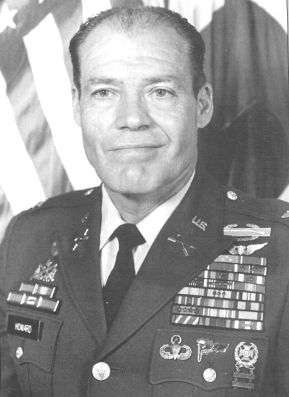
    COL Robert L. Howard, US Army
    July 11, 1939 – December 23, 2009
     

    Ask many Americans who Audie Murphy or Sergeant York or George Patton – or many other famous American military figures are – and you’ll likely get at least a fair number who know who you’re talking about. But ask them if they know who Robert Howard was, and I’d guess 95% or more would give you a blank look – or would say “He was some soldier, right?”.

    That’s a damn shame. The man deserves far better than that.

    (more…)

  • Another Returns

    DPMO has announced the identification of a US MIA from Southeast Asia.

    SP5 John L. Burgess, formerly of Sutton Bay, MI, B Company, 227th Aviation Battalion, 1st Cavalry Division, US Army, was lost in action on 30 June 1970.  SP5 Burgess was crew chief on a UH-1H that was hit by enemy fire, crashed, and burned near the Vietnam-Cambodian border in Phuoc Long Province, South Vietnam.  Also killed in the crash were 1LT Leslie F. Douglas, Jr.; 1LT Richard Dyer; and SFC Juan Colon-Diaz.  A fifth crew member – PFC John Goosman – was thrown clear of the wreckage, survived, and was rescued.

    Remains for Douglas, Dyer, and Colon-Diaz have been previously identified and individually interned.  However, until recently no remains belonging to SP5 Burgess had been definitively identified.  Subsequent investigations conducted between 1992 and 2012 recovered additional remains that were later identified as belonging to Burgess.

    Remains representing Dyer, Colon-Diaz, and Burgess were buried in a single-casket ceremony at Arlington National Cemetery on 2 July 2013.


    Welcome home, my elder brother-in-arms.  Rest in peace.

    . . .

    Over 73,600 US personnel remain unaccounted for from World War II; over 7,900 US personnel remain unaccounted for from the Korean War; and over 1,640 remain unaccounted for in Southeast Asia.  If you are a relative of one of the individuals listed here (World War II – critical need), listed here (Korea), or listed here (Southeast Asia) – please consider reading this link to see if you qualify to submit a mtDNA sample.

    If you qualify to submit a mtDNA sample, please submit one.   By submitting a mtDNA sample, you may be able to help identify US remains that have been recovered and repatriated but not yet positively identified.

    Everybody deserves a proper burial.  That’s especially true for those who gave their all in the service of this nation.

  • One Hundred Fifty Years Ago Today: Hell and High Water

    Note:  this is a republication of an article from several months ago.  Today, it’s apropos. Although actions continued at Culp’s Hill and Cemetery Hill on 3 July, this was indeed the main action of the day.

    ___________

    Gettysburg.

    To any American with even a rudimentary knowledge of military history, that word speaks volumes. The battle itself, its historical impact, the heroism, the second-guessing . . . . all of these are legendary. Literally hundreds of books have been written concerning various aspects of the battle and its aftermath.

    Yet certain parts of the battle remain under-appreciated today. That’s true even of some that are well-known.

    In fact, that’s true for one of the great acts of heroism which occurred at Gettysburg. IMO, it’s one of the greatest acts of collective heroism in military history – ranking with Gideon’s Band, the Spartans at Themopylae, and the Charge of the Light Brigade. Yet it is an action for which none of the participants received any substantial personal recognition other than after-the-fact praise. The human cost was extreme. And it remains controversial even today.

    But that’s to be expected. Any military operation involving 52+% casualties should be expected to have both heroic and controversial aspects. That’s especially true when it involves roughly 12,500 men.

    I’m referring to Pickett’s Charge.

    (more…)